What Happened to Sandy Koufax?
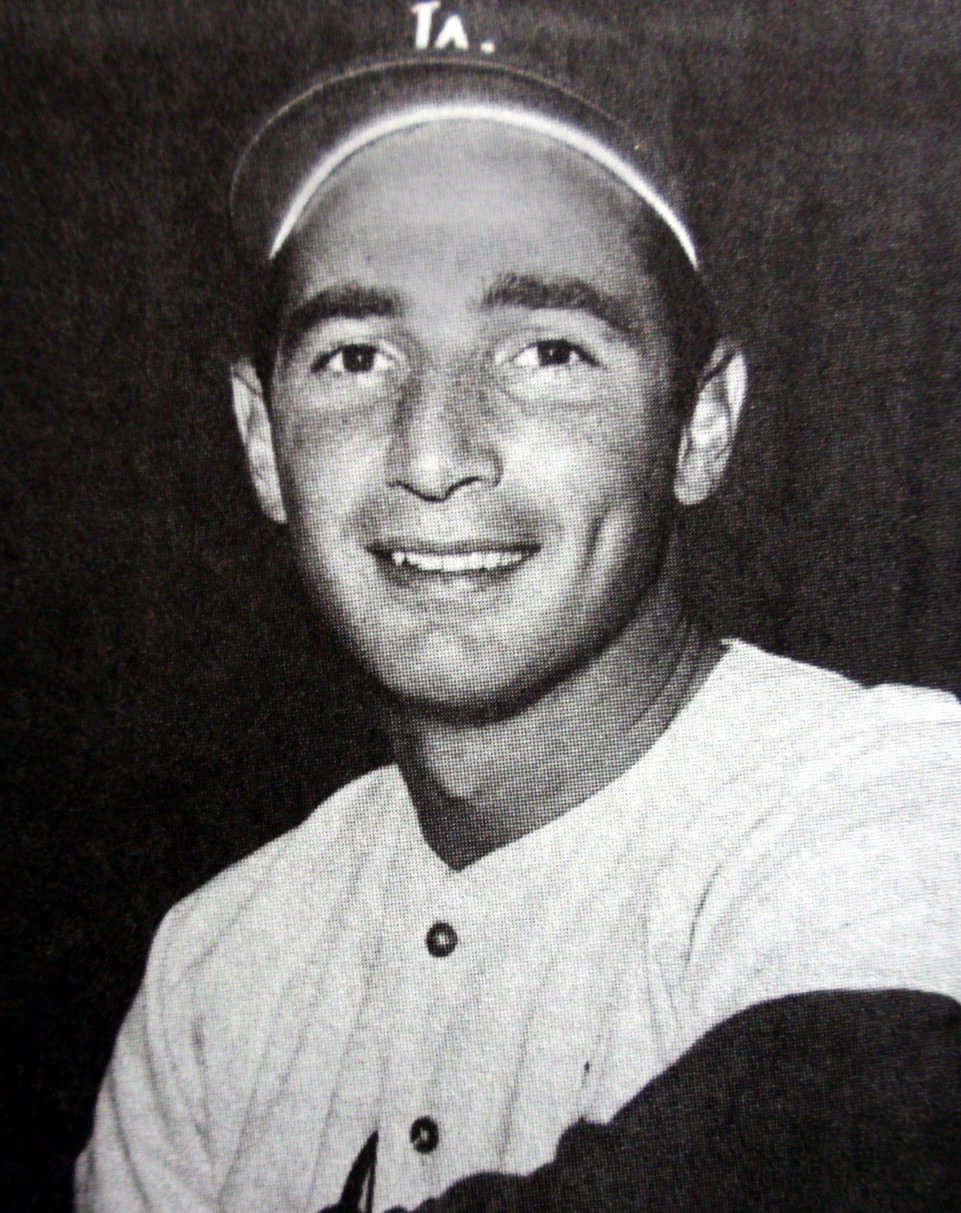
The Arm: 165-87, a 2.76 ERA, and Six Years of Dominance
Sandy Koufax was born December 30, 1935, in Borough Park, Brooklyn, and signed with the hometown Dodgers as a bonus baby - which meant, under the rules of the time, he had to stay on the major-league roster from day one. For his first six seasons he was famously wild, walking more batters than he struck out in some years, a hard thrower with no idea where it was going. Then, in 1961, it clicked. Over the next six seasons - the last six of his career - Koufax was the most dominant pitcher who ever lived: 129-47 with a 2.19 ERA, leading the league in ERA five straight years, in strikeouts four times, and in wins three times. He won the pitching Triple Crown (wins, ERA, strikeouts) three times. His fastball was legendary, his curveball was called the best ever thrown, and his control went from worst in the league to the best. The transformation remains one of baseball's great mysteries: the wild kid from Brooklyn who, at 25, suddenly became unhittable - and stayed unhittable for exactly six years, until his arm gave out.
The Peak: Three Cy Youngs and a Perfect Game
The numbers from 1963 to 1966 defy belief. Koufax won the Cy Young Award in 1963, 1965, and 1966 - all three unanimously, and back then there was only one Cy Young for all of baseball, not one per league. He was the 1963 National League MVP, a seven-time All-Star, and threw four no-hitters, including a perfect game against the Chicago Cubs on September 9, 1965 - striking out 14 in a 1-0 masterpiece. He won four World Series with the Dodgers (1955, 1959, 1963, 1965) and posted a 0.95 ERA in the postseason. His final season, 1966, was his best: 27-9, a 1.73 ERA, 27 complete games, five shutouts, 317 strikeouts. Seventeen days after becoming the first three-time Cy Young winner in history, he announced his retirement. He was 30 years old, at the absolute summit of the sport, and he was done. No pitcher has ever walked away at a higher peak - and in the 60 years since, no one has matched the six-year run.
Yom Kippur: The Game He Wouldn't Pitch
One decision defines Sandy Koufax off the field: his refusal to pitch Game 1 of the 1965 World Series because it fell on Yom Kippur, the holiest day in Judaism. Koufax, who was not particularly observant, sat out the most important game of the year out of respect for the holiday - and the Dodgers lost that game, then won the Series anyway behind his shutouts in Games 5 and 7. The decision made him a cultural icon far beyond baseball, especially for American Jews: the biggest star in the sport, sitting out the World Series for his heritage. It is still cited, six decades later, as one of the most principled stands in sports history. The episode captures what teammates always said about Koufax: a private, principled man who did what he thought was right and never explained himself. He did not hold a press conference about Yom Kippur. He just didn't pitch - and then he pitched two of the greatest games ever thrown.
The Retirement: November 18, 1966
The reason for the retirement was brutally simple: his left elbow was destroyed. Traumatic arthritis - the joint ground down by a decade of violent overhand throwing, treated in that era with cortisone shots, ice baths, and handfuls of painkillers - had made every pitch agony. 'I've got a lot of years to live after baseball,' Koufax said, 'and I would like to live them with the complete use of my body.' It was a gamble that paid off: he has lived nearly 60 years since with his health intact. But at the time, the announcement stunned the sport. He was 30, coming off a 27-win season, the best pitcher on earth - and he was quitting because his body had no more to give. In 2012, he revealed he had been diagnosed with cancer two years earlier and was a survivor - characteristically, he mentioned it once, at a charity gala, and moved on. The arm that made him immortal cost him his career at 30; the discipline that made him great preserved everything after.
After Baseball: Broadcasting and Privacy
Koufax's post-playing career was brief and, true to form, private. He spent several years as a television broadcaster for NBC in the late 1960s and early 1970s, but the booth never suited a man who disliked talking about himself, and he left. What followed was decades of deliberate obscurity. Koufax gave few interviews, wrote no tell-all memoir, did no autograph-show circuit, and became famous for his inaccessibility - the rare superstar who treated fame as an intrusion rather than a career. He had a brief estrangement from the Dodgers in 2003 over a newspaper article, resolved when owner Frank McCourt brought him back into the fold, and he returned to spring training as an instructor in 2013. Through it all, the mystique only grew: the less Sandy Koufax said, the more baseball wanted to hear from him. Clayton Kershaw, the Dodgers' modern ace, has spoken about their bond - Koufax as mentor, Kershaw as the heir who never quite reached the same impossible standard. The privacy was not bitterness. It was a choice, made once and kept for 60 years.
The Dodgers Advisor: Spring Training and the Statue
For years, Koufax served as a special advisor to Dodgers chairman Mark Walter - an honorary role that mostly meant showing up at spring training in Arizona to work with young pitchers, his mind for the game still razor-sharp at 90. He only recently stepped away from the formal advisory role, though the Dodgers made clear he is welcome anytime. The honors have piled up in his later years: in 2022, the Dodgers retired his number 32 alongside Jackie Robinson's 42, and unveiled a statue of Koufax in the center-field plaza at Dodger Stadium - the left-hander frozen mid-delivery, the most famous pitching motion in history, cast in bronze. He still appears at Dodger Stadium, and 2025 was a vintage year for sightings: during the Dodgers' World Series run against Toronto, Koufax was a fixture in the stands, staying for all 18 innings of the marathon Game 3 at age 89 while fans half his age headed for the exits. The stamina, at 90, remains the stuff of legend.
Health and the Long Life After Baseball
The gamble Koufax made in 1966 - quitting at 30 to save his body - looks better with every passing decade. He is 90 years old, moves well, and is mentally as sharp as the pitchers he mentors describe. The cancer diagnosis he revealed in 2012 (from two years earlier) was handled with typical Koufax understatement: one sentence at a charity gala - 'Today, I'm a survivor' - and no further discussion. He never needed Tommy John surgery, never became a cautionary tale of the arm destroyed by overuse, because he stopped before the damage became permanent. There is a quiet moral in it that modern baseball, with its pitch counts and innings limits, has finally absorbed: the arm is finite, and Koufax was the first superstar to treat it that way. He threw his last pitch at 30 and got 60 years of healthy life in return. Few trades in sports history have worked out so well.
Where Is Sandy Koufax Now? (October 2026)
As of October 2026, Sandy Koufax is 90 years old and living a quiet life in Southern California, still connected to the Dodgers organization that has defined his entire adult life. He no longer holds the formal special-advisor title, but he remains a welcome presence at Dodger Stadium and at spring training, where generations of pitchers seek out the man with the perfect mechanics and the perfect record of walking away. He has never cashed in his fame - no memoir, no reality show, no social media - and the 2022 statue in the center-field plaza may be the most public thing about him. What happened to Sandy Koufax is the simplest story in this series: the greatest pitcher alive retired at 30 because his elbow hurt, lived another 60 years on his own terms, and became, in his silence, the most respected figure in baseball. The 'Left Arm of God' threw its last pitch in 1966. The legend has never stopped.
Frequently asked questions
Why did Sandy Koufax retire at 30?
Traumatic arthritis in his left elbow. After a decade of violent overhand throwing - treated in that era with cortisone shots and painkillers - every pitch was agony. He announced his retirement on November 18, 1966, just 17 days after winning his third Cy Young Award, saying he wanted to live the rest of his life 'with the complete use of my body.' He was coming off his best season: 27-9 with a 1.73 ERA.
Is Sandy Koufax still alive?
Yes. As of October 2026, Sandy Koufax is 90 years old (born December 30, 1935) and living in Southern California. He still appears at Dodger Stadium - he was a fixture during the Dodgers' 2025 World Series run - and at Dodgers spring training, where he mentors young pitchers. In 2012 he revealed he had survived a cancer diagnosis from two years earlier.
What does Sandy Koufax do now?
He lives a quiet, private life. He served for years as a special advisor to Dodgers chairman Mark Walter - a role he recently stepped away from, though he remains welcome with the organization - and he still works with pitchers at spring training. He gives almost no interviews and has never written a memoir.
What happened on Yom Kippur in 1965?
Koufax refused to pitch Game 1 of the 1965 World Series because it fell on Yom Kippur, the holiest day in Judaism. The Dodgers lost that game but won the Series behind his shutouts in Games 5 and 7. The decision made him a cultural icon, especially for American Jews, and is still cited as one of the most principled stands in sports history.
What were Sandy Koufax's career stats?
In 12 seasons (1955-1966), all with the Dodgers, Koufax went 165-87 with a 2.76 ERA. He won three Cy Young Awards (1963, 1965, 1966 - all unanimous, when there was only one for all of baseball), the 1963 NL MVP, was a seven-time All-Star, threw four no-hitters including a 1965 perfect game, won four World Series, and posted a 0.95 postseason ERA. He entered the Hall of Fame in 1972 at 36, the youngest inductee ever.
Does Sandy Koufax have a statue?
Yes. In 2022 the Dodgers unveiled a statue of Koufax in the center-field plaza at Dodger Stadium, and retired his number 32 alongside Jackie Robinson's 42. The statue captures his famous pitching delivery in bronze.
Why is Sandy Koufax so private?
It has been a deliberate choice for 60 years. After a brief NBC broadcasting stint in the late 1960s, Koufax withdrew from public life - no memoir, no autograph circuit, few interviews. Teammates describe him as principled and introverted; he treats fame as an intrusion. The privacy has only deepened the mystique around him.
Did Sandy Koufax and Don Drysdale hold out together?
Yes. After the 1965 season, Koufax and teammate Don Drysdale staged a famous joint holdout, demanding - and eventually receiving - record contracts. It was one of the first successful salary actions by players in baseball history and a landmark in the sport's labor relations.
Sources
- Sandy Koufax - WikipediaWikipedia
- This Day in Dodgers History: Sandy Koufax Retires After the 1966 SeasonYardbarker
- Today in Dodgers History: Koufax RetiresDodgerBlue
- Where Is Sandy Koufax TodayAuto News