What Happened to Gabby Petito? The Case Explained (2026)
The Trip
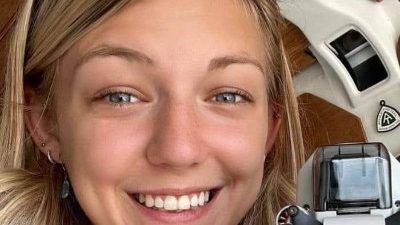
Gabrielle Venora Petito — born March 19, 1999, in Blue Point, New York — was a 22-year-old aspiring travel vlogger documenting a dream: a four-month van-life journey across the American West with her fiancé, Brian Christopher Laundrie, in a converted white Ford Transit van. They departed July 2, 2021, posting sun-drenched content to her “Nomadic Statik” YouTube channel and Instagram.
Behind the curated posts, there was trouble. On August 12, 2021, police in Moab, Utah, responded to a 911 call about a domestic dispute between the couple — bodycam footage later showed a distraught Petito telling officers they'd been fighting. Police separated them for the night but filed no charges. It was a missed warning sign that would haunt the case.
Petito was last seen alive on August 27, 2021, in Wyoming. Then: silence.
The Disappearance
On September 1, Laundrie drove the van back to his parents' home in North Port, Florida — alone — and refused to say where Petito was. Her family, unable to reach her, reported her missing on September 11. What followed was a media firestorm: the photogenic young woman, the van-life dream, the silent fiancé — the story consumed cable news and social media for weeks.
Internet sleuths pored over the couple's videos, spotting the van in a stranger's YouTube footage from Grand Teton National Park — a tip that helped focus the search. On September 19, 2021, FBI investigators found human remains in the Spread Creek area of Bridger-Teton National Forest. They were confirmed as Petito's. The coroner ruled the death a homicide by strangulation, estimating she'd died three to four weeks earlier.
The Manhunt and the Confession
By then, Laundrie was gone too — he'd disappeared into Florida's Carlton Reserve on September 13-14, prompting a massive manhunt. On October 20, 2021, his remains were found in the reserve, along with a notebook in which, the FBI later confirmed, he claimed responsibility for Petito's death. His cause of death was ruled a self-inflicted gunshot wound.
The FBI closed the case in January 2022: Laundrie killed Petito; Laundrie was dead. No trial, no full answers — just a confession in a waterlogged notebook and two young lives destroyed.
The Aftermath
Petito's family channeled grief into action: the Gabby Petito Foundation, founded in her memory, works on missing-persons cases and domestic-violence prevention — explicitly addressing the disparities critics noted (the “missing white woman syndrome” debate: why this case exploded while thousands of others, especially involving women of color, went unnoticed).
The family also pursued civil cases: they won a $3 million wrongful-death judgment against Laundrie's estate and settled a lawsuit against the Laundrie family. In 2024, they settled a separate lawsuit against the Moab police over the August 2021 stop.
The case changed protocols: law enforcement agencies reviewed how domestic-dispute calls are handled, and the “van life” community had a painful reckoning about the gap between curated content and reality.
The Legacy
What happened to Gabby Petito? A 22-year-old with a camera and a dream was killed by the person closest to her — and her death, played out in public, forced uncomfortable conversations about domestic violence, media bias, and the dangers hiding behind perfect Instagram grids.
Her foundation's work continues: funding searches for the missing, supporting survivors, pushing for better responses to the warning signs — like that August day in Moab — that too often go unheeded. Gabby Petito wanted to be known for her travels. She is remembered, instead, for what her death taught the living.
The 911 Call and the Bodycam
The August 12, 2021, Moab incident remains the case's most agonizing “what if.” A witness called 911 reporting a man slapping a woman; responding officers found Petito crying in the van, Laundrie calm. Bodycam shows Petito taking blame, saying she had anxiety — and officers, assessing Laundrie as the “victim,” separated them for the night with no charges.
Experts later called it a textbook missed intervention: the signs of coercive control were there, but the response framework wasn't. The Petito family's 2024 settlement with Moab police closed the legal chapter — but the training reforms it spurred continue.
The Sleuths: How the Internet Found the Van
The search's breakthrough came from a YouTuber's dashcam: a family filming their own van-life video near Grand Teton captured Petito's white Transit in the background — timestamped, geolocated. Internet sleuths flagged it, the FBI followed up, and the remains were found nearby.
It was citizen investigation at its most effective — and its most debated. The same crowds that helped also harassed innocent lookalikes and spun conspiracy theories. The case became the definitive example of true-crime crowdsourcing's power and peril.
The Bigger Conversation
Petito's case ignited the “missing white woman syndrome” debate: why did this disappearance consume the nation while thousands of missing Indigenous women, Black women, and others went unnoticed? Advocates used the spotlight to push for coverage equity — and the Petito Foundation explicitly works on cases beyond Gabby's.
The legacy, then, is double: a family's foundation doing concrete good, and a media reckoning about whose disappearances count. Gabby Petito's death taught the living — about domestic violence, about bias, about the van-life fantasy's dark edge. It's a terrible curriculum. It's also, now, permanent.
The Van-Life Reckoning
Petito's death forced the van-life community into painful self-examination: the movement's aesthetic — freedom, nature, perfect couples in converted Transits — had always hidden harder realities about money, isolation, and relationship strain on the road. Petito's curated feed vs. the Moab bodycam became the definitive contrast.
Creators started talking honestly about safety, about the pressure to perform happiness, about what the algorithm rewards and what it hides. The fantasy didn't die — but it got a permanent asterisk, in Gabby's name.
Two Lives, One Lesson
The case's cruelest symmetry: two 22-year-olds, a dream trip, and a dynamic that turned lethal. Domestic-violence experts used the timeline — the escalation visible in hindsight, the August 12 warning sign — as a teaching case: abuse doesn't always look like the movies, and the moment to intervene is before the tragedy.
What happened to Gabby Petito is, finally, a story about being believed too late. Her foundation's work — and the reforms her case spurred — is about making “too late” rarer. It's the only meaningful answer to an unbearable question.
Nomadic Statik
Petito's YouTube channel — “Nomadic Statik” — had one video when she disappeared: a dreamy, sun-soaked montage of the van trip's early weeks, all golden light and laughter. After her death, it became a memorial with millions of views — the dream as she wanted it seen, preserved against the reality.
The channel's comments are a collective graveside: strangers leaving flowers in text form, years later. The van-life dream, intact, in eight minutes of video — and everything it couldn't show.
Frequently asked questions
What happened to Gabby Petito?
The 22-year-old vlogger was killed by her fiancé Brian Laundrie during their 2021 van-life trip; her remains were found September 19, 2021, in Wyoming. Laundrie died by suicide weeks later, leaving a written confession.
How did Gabby Petito die?
Homicide by strangulation, per the coroner — estimated late August 2021.
Who killed Gabby Petito?
Her fiancé, Brian Laundrie, per his own written confession found with his remains in October 2021.
When did Gabby Petito disappear?
Last seen alive August 27, 2021; reported missing September 11, 2021.
What was the Moab police incident?
On August 12, 2021, Utah police responded to a domestic dispute between Petito and Laundrie but filed no charges — later a focus of criticism and a lawsuit (settled 2024).
What is the Gabby Petito Foundation?
Founded by her family: supports missing-persons searches and domestic-violence prevention.
How old was Gabby Petito?
22 — born March 19, 1999.