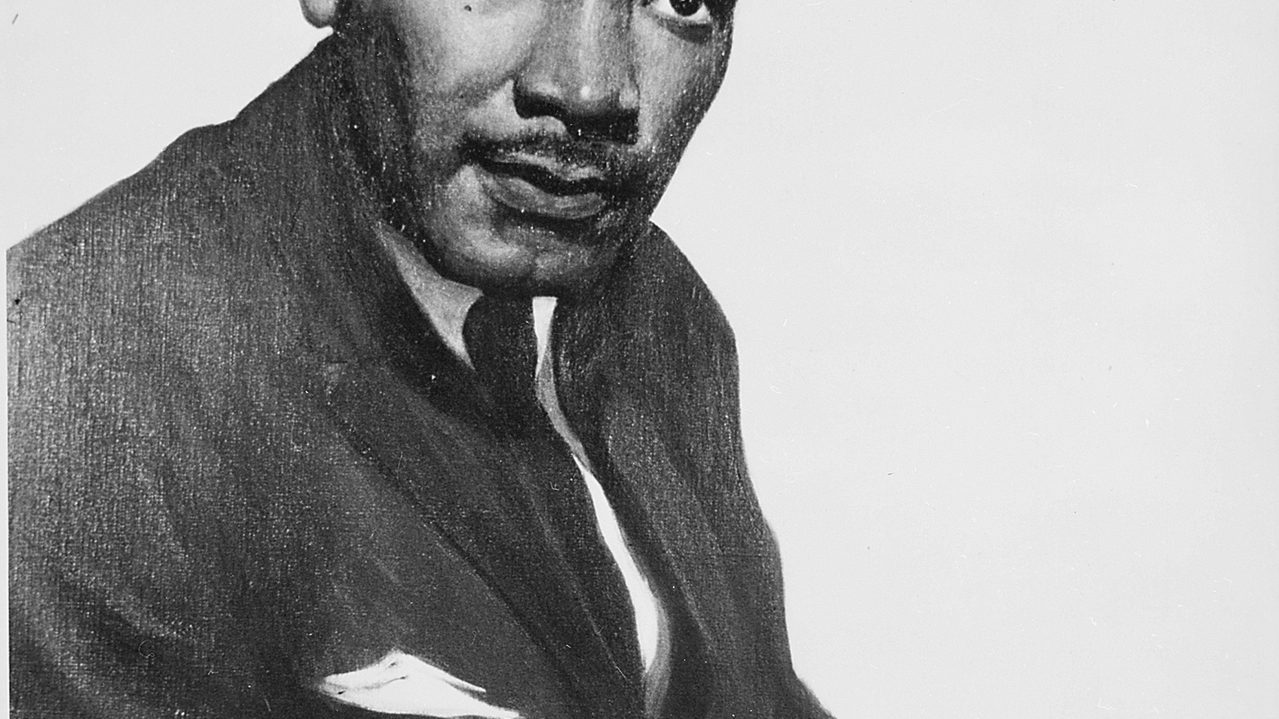
Short Answer: How Old Was MLK When He Died?
Martin Luther King Jr. was 39 years old when he was assassinated. He was born Michael King Jr. on January 15, 1929, in Atlanta, Georgia (his father later changed both their names to Martin Luther King), and he was shot on the balcony of the Lorraine Motel in Memphis on April 4, 1968.
He had come to Memphis to support striking sanitation workers — Black men marching with signs reading I Am a Man — and the night before his death he delivered his famous I've Been to the Mountaintop speech, with its eerie closing lines about having seen the promised land. He was killed by a single rifle shot at 6:01 p.m. and pronounced dead an hour later at St. Joseph's Hospital.
His youth at death is part of what makes his achievements staggering: by 39 he had led the Montgomery bus boycott, delivered the I Have a Dream speech, won the Nobel Peace Prize at 35 — then the youngest recipient — and reshaped American law through the Civil Rights Act of 1964 and the Voting Rights Act of 1965.
Wife: Coretta Scott King
King married Coretta Scott on June 18, 1953, in Marion, Alabama. Coretta was a trained singer studying at the New England Conservatory of Music in Boston, where King was earning his doctorate at Boston University. She set aside her own concert ambitions to support his ministry and, soon, the movement.
Coretta was far more than a bystander's wife: she marched, she spoke, and after his assassination she became the guardian of his legacy — founding the Martin Luther King Jr. Center for Nonviolent Social Change in Atlanta and leading the 15-year campaign that made his birthday a federal holiday in 1983. She died on January 30, 2006, and is buried beside him in Atlanta.
MLK's Four Children
The Kings had four children, all born in Montgomery and Atlanta during the movement's most intense years. Yolanda Denise King (born November 17, 1955) became an actress and activist; she died in 2007 at 51. Martin Luther King III (born October 23, 1957), now 68, is a human rights advocate who has led the King Center and the Drum Major Institute.
Dexter Scott King (born January 30, 1961) became an actor — he portrayed his father in the film The Rosa Parks Story — and later chaired the King Center; he died in January 2024 at 62. The youngest, Bernice Albertine King (born March 28, 1963), now 63, is a minister and the CEO of the King Center, and she delivered a memorable eulogy at Coretta's funeral.
When their father died, the children were 12, 10, 7 and 5. Coretta raised them amid grief and public scrutiny, and all four devoted their adult lives in various ways to civil rights work.
Early Life and Rise
King was the son of Martin Luther King Sr., pastor of Atlanta's Ebenezer Baptist Church, and Alberta Williams King. A gifted student, he entered Morehouse College at 15, then earned his divinity degree at Crozer Theological Seminary and his PhD at Boston University by 26.
In 1955, at 26, he was chosen to lead the Montgomery bus boycott after Rosa Parks' arrest — a 381-day protest that ended with desegregated buses and made King a national figure. He co-founded the Southern Christian Leadership Conference in 1957 and spent the next decade leading campaigns in Birmingham, Selma and Washington.
The March on Washington in August 1963 drew 250,000 people and produced the I Have a Dream speech. A year later, at 35, he became the youngest Nobel Peace Prize laureate of his era.
The Assassination and Its Aftermath
James Earl Ray, an escaped convict, pleaded guilty in 1969 to King's murder and was sentenced to 99 years in prison; he later recanted, fueling decades of conspiracy theories. A 1999 civil trial brought by the King family concluded that government agencies were party to a conspiracy — a verdict with no criminal standing but enduring cultural weight.
King's funeral in Atlanta drew hundreds of thousands of mourners. Riots erupted in more than 100 American cities. Within a week, Congress passed the Fair Housing Act — the last major civil rights law of the era — as a tribute.
Legacy: The King Family Today
Martin Luther King Jr. Day, observed on the third Monday of January, has been a federal holiday since 1986. The King Center in Atlanta, the National Civil Rights Museum at the Lorraine Motel in Memphis, and the Martin Luther King Jr. Memorial in Washington keep his work alive.
His children and grandchildren continue the mission: Bernice leads the King Center, Martin III campaigns for voting rights, and the family's stewardship of his papers and image remains central to how America remembers him. Nearly six decades after Memphis, his question — how long will justice take — still echoes.
I Have a Dream: The Speech
On August 28, 1963, before 250,000 people at the Lincoln Memorial, Martin Luther King Jr. delivered I Have a Dream — 17 minutes that became the most famous speech in American history. The improvised peroration (prompted, legend says, by Mahalia Jackson shouting Tell them about the dream, Martin!) envisioned a nation judged by character, not color.
The March on Washington — the largest demonstration the capital had ever seen — pressured the Kennedy administration and set the stage for the Civil Rights Act. King's oratory, rooted in the Black church and Gandhi's nonviolence, made him the movement's indispensable voice.
The speech's final lines, echoing the spiritual Free at last, are carved into the Martin Luther King Jr. Memorial in Washington — dedicated in 2011, the first memorial to a non-president on the National Mall.
The Final Campaign: Poverty and Memphis
In his last year, King expanded his mission from civil rights to economic justice — the Poor People's Campaign, aimed at uniting poor Americans of all races. It was controversial even among allies, and the FBI's surveillance of King intensified.
He went to Memphis in March 1968 to support striking sanitation workers — Black men paid poverty wages, marching with I Am a Man signs after two workers were crushed by a garbage truck. His I've Been to the Mountaintop speech on April 3 was his last public address, ending with the haunting line: I've seen the promised land. I may not get there with you.
He was killed the next evening. The Poor People's Campaign went ahead without him that summer — a tent city on the National Mall, smaller than dreamed, but a testament to how far his vision had grown beyond 1963.
The Nobel Prize and the FBI's War
In 1964, at 35, Martin Luther King Jr. became the youngest Nobel Peace Prize laureate — honored for his nonviolent leadership. He donated the prize money to the movement, and the award made him a global figure: the American conscience, recognized by the world.
The same government that celebrated him was destroying him. The FBI, under J. Edgar Hoover, waged a years-long campaign against King: wiretaps, surveillance, and the infamous 1964 anonymous letter urging him to kill himself before accepting the Nobel. The Bureau's files — partially declassified over decades — reveal an obsession that bordered on the pathological.
King knew he was watched; he spoke of it. The pressure contributed to the exhaustion and depression of his final years — the leader who carried a movement also carried the knowledge that his own government wanted him broken.
The Nobel medal and the FBI files are the twin artifacts of his legacy: the world's honor and his country's shame, awarded to the same man in the same decade.
Letter From Birmingham Jail
Martin Luther King Jr.'s Letter from Birmingham Jail (April 1963) — written in the margins of a newspaper, smuggled out in pieces — is the movement's founding text. Addressed to white clergymen who called his protests untimely, it's a masterclass in moral argument: the distinction between just and unjust laws, the urgency of now.
One has a moral responsibility to disobey unjust laws — the letter's core — became the philosophical backbone of the civil rights movement. Its closing vision (the beloved community) remains King's most quoted legacy after the Dream speech.
Written at 34, in a jail cell, on borrowed paper — it's the document that made the case for everything that followed: the March, the Act, the Nobel. The letter outlived the jail.
Frequently Asked Questions
How old was MLK when he died?
Martin Luther King Jr. was 39 years old. He was assassinated on April 4, 1968, in Memphis, Tennessee.
When was Martin Luther King Jr. born?
January 15, 1929, in Atlanta, Georgia. His birthday is now observed as a US federal holiday.
Who was MLK's wife?
Coretta Scott King. They married in 1953, and she devoted her life after his death to preserving his legacy until her own death in 2006.
How many children did MLK have?
Four: Yolanda, Martin Luther King III, Dexter and Bernice. They were aged 12, 10, 7 and 5 when he died.
How did MLK die?
He was shot on the balcony of the Lorraine Motel in Memphis on April 4, 1968, while supporting striking sanitation workers.
How old was MLK when he won the Nobel Prize?
He was 35 when he received the Nobel Peace Prize in 1964 — the youngest recipient at the time.
Are any of MLK's children still alive?
Martin Luther King III and Bernice King are living. Yolanda died in 2007 and Dexter died in 2024.
Sources
- Martin Luther King Jr. - WikipediaBirth January 15, 1929; assassination April 4, 1968; family; Nobel Prize 1964.
- The King CenterOfficial archive on King's life, family and legacy.
- NPR - MLKCoverage of King's legacy and the King family's civil rights work.