What Happened to Jeff Buckley? The Tragedy Behind Grace
The Short Answer
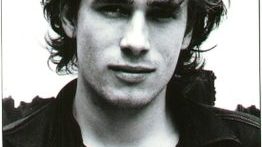
Jeff Buckley died on May 29, 1997, at age 30. Born Jeffrey Scott Buckley on November 17, 1966, in Anaheim, California, he was one of the most gifted singers of his generation — a voice of operatic range and devastating emotion that produced a single studio album, Grace (1994), now regarded as one of the greatest albums ever made. He drowned while swimming in the Mississippi River at Memphis, in an accident that cut short a career just reaching its peak.
Fans asking what happened to Jeff Buckley usually know he died young. The fuller story — the famous father, the masterpiece album, the posthumous legend — is one of music's great tragedies.
Who He Was: The Voice of Grace
Buckley was the son of Tim Buckley, the revered 1960s folk singer who died of an overdose in 1975 when Jeff was eight. Jeff met his father only once, and he spent his career both honoring and escaping that shadow.
Grace (1994) was a revelation: seven originals and three covers, including a version of Leonard Cohen's Hallelujah that became the definitive interpretation — the one that taught the world the song. His voice, spanning nearly four octaves, and his band's atmospheric rock made him a critics' darling and a growing live draw.
What Happened: Memphis, May 1997
In 1997, Buckley was in Memphis working on his second album, the follow-up to Grace. On the evening of May 29, he went for a spontaneous swim in the Mississippi River's Wolf River Harbor — fully clothed, singing Led Zeppelin's Whole Lotta Love, according to his friend and roadie Keith Foti, who was with him.
A passing boat's wake pulled him under. Foti lost sight of him. His body was found on June 4. The autopsy found no drugs or alcohol — it was a drowning accident, as senseless as it was sudden. He was 30 years old.
The Aftermath: A Legend Grows
Buckley's death froze him at the moment of promise, and his reputation has compounded ever since. Sketches for My Sweetheart the Drunk (1998), assembled from his Memphis sessions, showed the second album taking shape. His Hallelujah became a global standard — charting in the UK in 2008 after an X Factor performance, and now one of the most covered songs in history.
Musicians from Radiohead's Thom Yorke to Chris Martin to countless indie singers cite him as a primary influence. The 2012 biopic Greetings from Tim Buckley dramatized his relationship with his father.
Personal Life
Buckley never married and had no children. He was in a relationship with Joan Wasser (later known as Joan As Police Woman) at the time of his death. Friends described him as intense, funny, voraciously well-read — a romantic who lived inside music.
His mother, Mary Guibert, has managed his estate and legacy with care, overseeing the posthumous releases that built his legend.
Legacy
Grace appears on virtually every greatest-albums list ever compiled. What happened to Jeff Buckley? He made one perfect album, sang one perfect Hallelujah, and left before the world could disappoint him.
The Father He Barely Knew
Jeff Buckley's father, Tim Buckley, was a revered folk experimentalist of the late 1960s — albums like Goodbye and Hello and Starsailor made him a cult legend. He died of a heroin and morphine overdose in 1975, when Jeff was eight; father and son had met exactly once.
Jeff spent his career navigating that ghost: covering his father's songs early on, then deliberately forging a different path. The 2012 film Greetings from Tim Buckley dramatized their parallel stories, with Jeff's rise mirroring Tim's in eerie ways — prodigious talent, restless experimentation, early death.
Jeff once said he didn't want to be Tim Buckley's son in the music press — he wanted to be Jeff Buckley. Grace made sure of it.
The Making of Grace
Grace was recorded in Woodstock with producer Andy Wallace, and its creation was famously painstaking — Buckley chasing a sound that mixed Led Zeppelin's power, Nusrat Fateh Ali Khan's ecstasy, and Edith Piaf's drama. The result: seven originals (Mojo Pin, Last Goodbye, So Real) and three covers, including the Hallelujah that redefined Leonard Cohen's song.
The album sold modestly on release — a slow burn, not a blockbuster. But musicians heard it: Jimmy Page called Buckley the best singer of his generation, and Bob Dylan named him one of the greats. The live EPs (Live at Sin-e) captured a performer of terrifying intensity.
Every note of Grace sounds like a man who knew he had one shot — because, as it turned out, he did.
Hallelujah's Immortal Afterlife
Buckley's Hallelujah — recorded in a single take, all trembling restraint — became the definitive version of Cohen's song. After his death it grew: featured in films and TV, covered by hundreds of artists, and in 2008 it hit No. 1 in the UK when X Factor winner Alexandra Burke's version drove renewed interest in Buckley's original.
Cohen himself praised Buckley's interpretation, and the song is now a standard — sung at weddings, funerals, talent shows and memorials worldwide. It is arguably the most influential cover recording of the rock era.
For an artist with one album, Buckley's footprint is absurdly large: Grace on every greatest-albums list, Hallelujah everywhere, and a generation of singers trying — and failing — to sound like him.
Sketches for My Sweetheart the Drunk: The Unfinished Album
When Jeff Buckley died in May 1997, he was working on his second album — the difficult follow-up to Grace. The unfinished recordings were released posthumously in 1998 as Sketches for My Sweetheart the Drunk, and they reveal an artist pushing into stranger, darker territory: the sessions were raw, experimental, and unfinished by design.
Buckley had been unhappy with the initial Memphis sessions (with producer Tom Verlaine of Television) and was reworking the material when he died. The released sketches — Morning Theft, Everybody Here Wants You, The Sky Is a Landfill — show a songwriter moving beyond Grace's romanticism toward something more fractured and modern.
Fans and critics have spent decades debating what the finished album would have been. The sketches suggest it would have been divisive: less beautiful, more challenging — the sound of an artist refusing to repeat himself.
The posthumous releases continued: live albums, demos, the 2016 compilation You and I (early covers). Each release adds brushstrokes to the portrait without completing it — which feels appropriate. Buckley's catalog is a question mark, not a period: the greatest what-if in modern rock, preserved in amber at 30.
Live at Sin-e: The Legend Forged Live
Before Grace, there was Sin-e — the tiny East Village coffeehouse where Jeff Buckley held a Monday-night residency in 1993. The Live at Sin-e EP (and later the expanded Legacy Edition) captured the legend being forged: a voice, a Telecaster, and covers that reinvented every song touched.
His Hallelujah was born on that stage — the trembling, restrained arrangement that would redefine Leonard Cohen's song. So were his takes on Nina Simone, Edith Piaf, and his father's songs — each one a masterclass in interpretation.
Columbia signed him on the strength of those nights. The Sin-e recordings remain the purest document of the talent: no studio, no producer, just the voice that Jimmy Page called the best of a generation.
Jeff Buckley: Milestones
1966: Born in Anaheim, California — son of Tim Buckley, whom he'd meet once. 1975: Tim dies; Jeff is 8. 1993: The Sin-e residency — the legend begins. 1994: Grace — the masterpiece. 1995-1996: Relentless touring; the live reputation grows. 1997: Memphis sessions for album two; drowns in the Mississippi on May 29, aged 30. 1998: Sketches for My Sweetheart the Drunk — the unfinished album. 2000s-2020s: Hallelujah becomes immortal; Grace never leaves the greatest-albums lists. Forever: The what-if, preserved at 30.
Cohen's Blessing: The Hallelujah Lineage
Leonard Cohen himself anointed Jeff Buckley's Hallelujah: the songwriter praised the interpretation, acknowledging that Buckley's trembling, single-take recording had found something in the song even he hadn't fully realized.
The lineage is now legend: Cohen wrote it (1984), John Cale covered it (1991), Buckley transfigured it (1994) — and hundreds followed. But Buckley's remains the definitive: the version that plays at weddings and funerals, that topped the UK charts in 2008, that defines the song for the world.
For an artist with one studio album, the footprint is absurd: Grace on every greatest-albums list, Hallelujah everywhere, and a generation of singers trying — and failing — to sound like the voice that drowned at 30.
Frequently asked questions
What happened to Jeff Buckley?
He drowned on May 29, 1997, at age 30, while swimming in the Mississippi River at Memphis. It was an accident — no drugs or alcohol were involved.
How old was Jeff Buckley when he died?
30 years old. He was born on November 17, 1966, and died on May 29, 1997.
What is Jeff Buckley famous for?
His 1994 album Grace and his definitive cover of Leonard Cohen's Hallelujah.
Who was Jeff Buckley's father?
Tim Buckley, the acclaimed 1960s folk singer, who died in 1975 when Jeff was eight.
Did Jeff Buckley finish a second album?
No — he was working on it in Memphis when he died. Sketches for My Sweetheart the Drunk (1998) compiled those sessions.
Was Jeff Buckley married?
No. He never married and had no children.
How did Jeff Buckley's Hallelujah become famous?
His Grace recording became the definitive version, later charting worldwide and becoming one of the most covered songs ever.
Sources
- Jeff Buckley - WikipediaWikipedia
- Rolling Stone - Jeff BuckleyRolling Stone
- NPR - Jeff BuckleyNPR