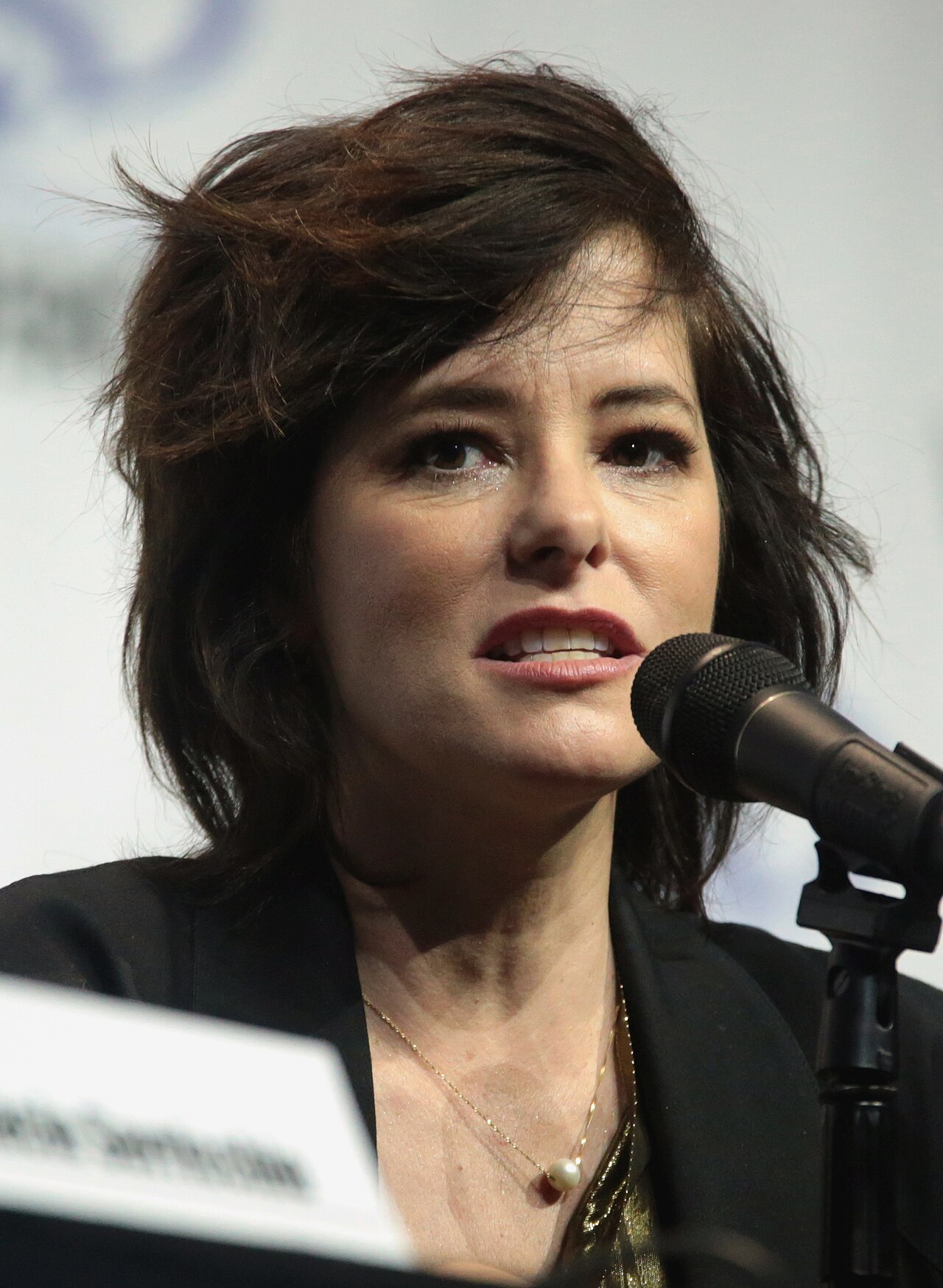
The $40,000-Per-Episode Figure
The number attached to Parker Posey’s White Lotus paycheck is $40,000 per episode, and it arrived in public the way most White Lotus salary news does: casually, from a cast member. Jason Isaacs, who played Posey’s on-screen husband Timothy Ratliff, told Vulture that the ensemble was paid $40,000 an episode — a sum he described as far lower than most viewers would assume for a hit HBO series. TV Tonight Australia picked up the interview and ran the math for readers, while SoapCentral noted that Isaacs framed the figure as surprisingly modest by prestige-TV standards.
The report gained its real weight when executive producer David Bernad confirmed the structure to The Hollywood Reporter: every actor on the season earned the same amount, and nobody was permitted to negotiate a better deal. Marie Claire UK’s coverage of the revelation emphasized the same point — the $40,000 applied to Posey exactly as it applied to the season’s breakout newcomers. There was no veteran premium, no quote-based escalator, and no back-channel bump for the most famous names on the call sheet. For an actress with Posey’s résumé, that put her on identical financial footing with performers a fraction of her experience.
Victoria Ratliff: The Role Posey Played
Posey’s $40,000-per-episode deal bought HBO one of the season’s defining performances. As Victoria Ratliff, the drawling, lorazepam-assisted wife of finance executive Timothy Ratliff, Posey anchored the season’s American family storyline — a clan of five whose luxury wellness retreat in Thailand slowly curdles as the father’s criminal exposure comes to light. Victoria floats through the crisis in a medicated haze, delivering some of the season’s most quoted lines in an exaggerated Southern accent that became an instant cultural talking point.
The character was a showcase built for Posey’s particular gifts: arch comedy, barely concealed panic, and the ability to make entitlement feel tragic. Critics singled her out from the moment the season premiered in 2025, and the performance quickly entered the awards conversation. It was the rare late-career role that asked an established actress to be both the comic relief and the emotional wound of her storyline — and Posey, who had spent the 1990s defining indie-film eccentricity, played it like she had been waiting thirty years for the part.
From Indie Queen to HBO Ensemble
To understand why Posey’s flat $40,000 fee is notable, consider the career it landed on top of. Born in Baltimore in 1968, Posey broke through with Richard Linklater’s Dazed and Confused in 1993 and spent the rest of the decade becoming the defining face of American independent cinema — Party Girl (1995), The House of Yes (1997), and a run of Christopher Guest mockumentaries including Waiting for Guffman (1996), Best in Show (2000), and A Mighty Wind (2003). Time magazine dubbed her the “Queen of the Indies” in 1997, a title that stuck for the rest of her career.
She never stopped working: studio turns in You’ve Got Mail (1998), Scream 3 (2000), and Superman Returns (2006); a memorably villainous Dr. Smith on Netflix’s Lost in Space from 2018 to 2021; and the HBO Max miniseries The Staircase in 2022. Across that run she collected two Primetime Emmy nominations and two Golden Globe nominations. The White Lotus was not a comeback so much as a coronation — prestige television finally giving one of film’s great character actors a role with the cultural footprint of a leading part, at a salary that treated her exactly like everyone else in the cast.
Why Everyone Gets the Same Paycheck
The equal-pay rule is a deliberate creative choice by series creator Mike White, and Bernad’s confirmation to The Hollywood Reporter made the mechanics explicit: the production tells every actor the number up front, and there is no negotiation. The logic is straightforward. The White Lotus is an ensemble show whose casting constantly rotates — new location, new guests, new power dynamics each season — and a flat rate removes salary haggling from a process that already involves juggling dozens of schedules. It also prevents the awkward arithmetic of paying a veteran ten times what the newcomer sharing their scenes earns.
Isaacs’ own comments hinted at the trade-off the cast accepts. He noted that actors rarely discuss money publicly because the sums look disproportionate next to ordinary wages, while also making clear the White Lotus number sits far below the top of the TV market — the kind of per-episode fees that turn up on shows like Severance, where stars can command $600,000 an episode or more. The cast signs on anyway, because a season of The White Lotus buys something money cannot: eight weeks as the center of the cultural conversation. For Posey, that exchange — $40,000 an episode for the most discussed performance of her recent career — looks, in retrospect, like a bargain for everyone involved.
What Eight Episodes at $40,000 Adds Up To
Simple multiplication puts Posey’s estimated season total at $320,000 for the eight-episode run — that is arithmetic, not a reported figure, and it excludes any residuals, bonuses, or backend participation, none of which have been disclosed. Even taken at face value, the number sits in an interesting middle zone of television pay: far above a working actor’s episodic guest rate, and far below the seven-figure-per-episode deals commanded by the leads of TV’s biggest franchises.
Context matters. In film, Posey has historically worked at indie and mid-budget salary levels rather than tentpole quotes, so a $320,000 season for a prestige HBO limited run is consistent with — not a comedown from — her established earning pattern. And the non-financial compensation was substantial: the role reignited her awards profile, introduced her to a younger audience that knew her mostly as a meme, and reminded the industry that few performers can steal an ensemble the way she can. In the prestige-TV economy, where visibility converts directly into the next offer, the flat fee starts to look less like a constraint and more like the price of admission.
The Awards-Season Payoff
If the salary was egalitarian, the recognition was not — at least not evenly distributed. Posey emerged from season 3 as one of its most decorated performers, with the kind of awards-season attention that had largely eluded her during her indie-film peak. Her two career Primetime Emmy nominations and two Golden Globe nominations, documented across her filmography, gained fresh company as Victoria Ratliff became a fixture of year-end lists and tribute montages.
There is a pleasing symmetry to it. The actress Time once anointed the “Queen of the Indies” finally got her mainstream coronation on a show that paid her exactly what it paid everyone else. The $40,000-per-episode figure will follow the season in every oral history; the performance is what people will actually remember. For Posey, that is arguably the better deal — paychecks fade, but a role that redefines a thirty-year career at the age of 56 does not.
The Flat-Fee Tradition
The $40,000 flat rate was not invented for season 3. The equal-pay structure has been a White Lotus signature since the first season, when Jennifer Coolidge’s career-reviving turn as Tanya McQuoid earned her the same episodic fee as her less famous co-stars — a policy that continued through the Sicily-set second season. The consistency is the point: by refusing to differentiate between Emmy winners and first-time television actors, the production keeps its casting conversations about creative fit rather than compensation.
For Posey, the policy meant her decades of film work bought her no financial advantage over the season’s newcomers — but it also meant she was evaluated, cast, and paid purely as an ensemble member. In an industry where salary often functions as a proxy for respect, the White Lotus model makes an unusual argument: that the most respectful thing a production can do is pay everyone exactly the same.
Frequently Asked Questions
How much did Parker Posey get paid per episode for The White Lotus?
A reported $40,000 per episode — the same flat rate paid to every cast member in season 3, with no negotiation permitted.
Who revealed the $40,000 figure?
Her co-star Jason Isaacs discussed it in a Vulture interview, calling it far lower than viewers would expect. Executive producer David Bernad later confirmed the structure to The Hollywood Reporter.
Did Parker Posey negotiate a higher salary?
No. Producer David Bernad confirmed to THR that nobody on the season was allowed to negotiate — veterans and newcomers alike earned the identical $40,000 per episode.
How many episodes was she in?
Season 3 ran for 8 episodes, and Posey appeared across the full season as Victoria Ratliff.
What does that total for the season?
Roughly $320,000 before any residuals or bonuses — that is simple multiplication (8 × $40,000), not a reported total. HBO has not disclosed any additional compensation.
Why is the pay so low compared to other HBO stars?
It is a deliberate ensemble model: creator Mike White’s production pays every actor the same flat rate to avoid bidding wars and keep the focus on the ensemble. The trade-off is massive cultural visibility.
Who did Parker Posey play in The White Lotus?
Victoria Ratliff, the Southern matriarch of a wealthy family whose Thailand wellness retreat unravels as her husband’s legal troubles surface.
Has Parker Posey commented on her salary?
She has not publicly discussed the figure herself; all reporting traces back to Isaacs’ interview and Bernad’s confirmation to trade press.