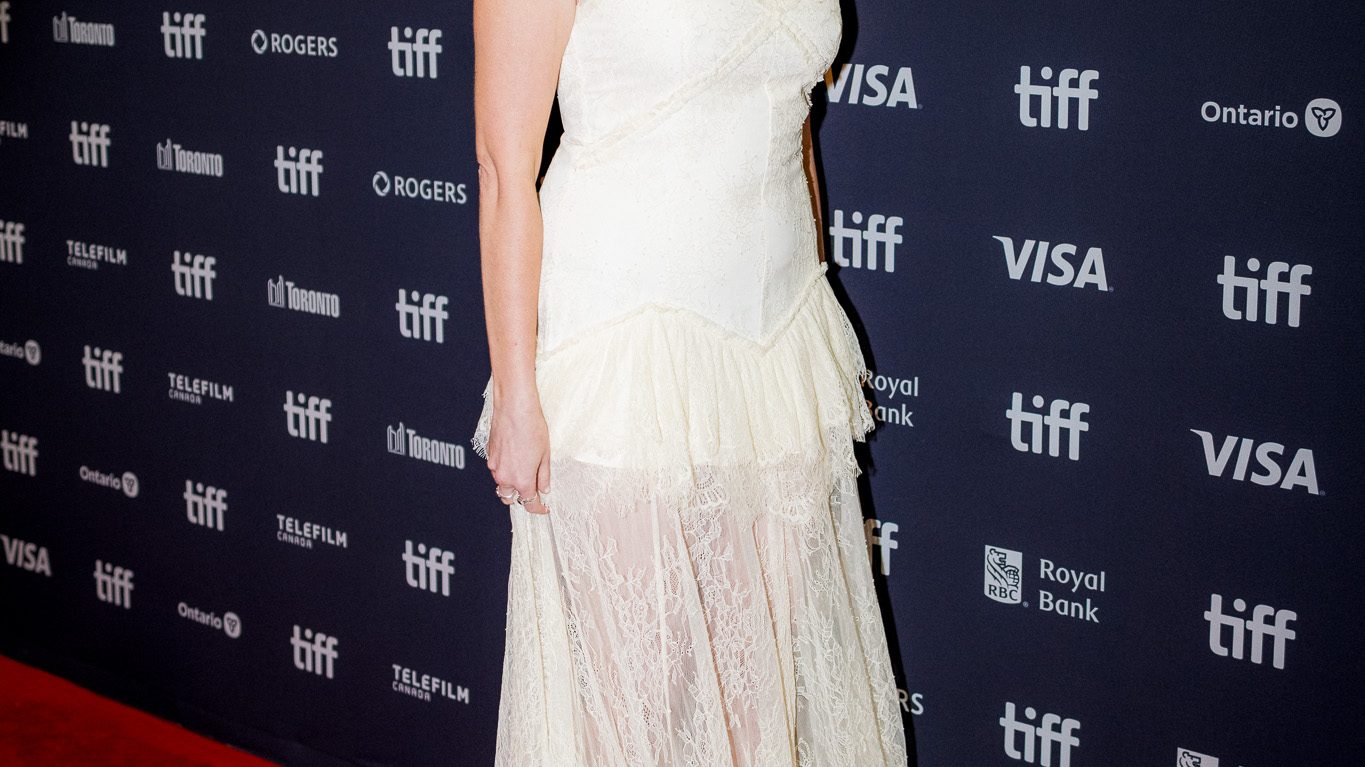
The $40,000 Reveal
The number is $40,000 per episode — and it did not come from a leak, a rumor, or an anonymous “source close to production.” It came from Jason Isaacs himself, on the record, in an interview with Vulture published in June 2025. Isaacs, who played the unraveling patriarch Timothy Ratliff in season 3, confirmed that every star of The White Lotus was paid $40,000 per episode, whether they were a veteran film actor or a relative newcomer. For the eight-episode season, that put every series regular at roughly $320,000 total.
The timing of the reveal mattered. Isaacs spoke in June 2025, months after season 3 finished airing its Thailand-set run on HBO that spring — eight episodes, premiering in February 2025, with Wood’s Chelsea emerging as a genuine fan favorite. By then the season was already an awards-season fixture, which made the contrast irresistible: the most talked-about ensemble on television, and every member of it earning less per episode than a mid-level network procedural pays its supporting players. Isaacs’ candor turned an open secret among industry watchers into a confirmed, quotable fact.
Isaacs did not pretend the number was generous. “Compared to what people normally get paid for big television shows, that’s a very low price,” he said — then added the line that explains the whole system: “We would have paid to be in it. We probably would have given a body part.” That is the deal Mike White’s show offers: below-market pay in exchange for the most coveted ensemble slot in prestige television, and actors keep saying yes.
Hollywood’s Most Radical Pay System
The flat fee is not an accident or a one-season experiment. Producer David Bernad told The Hollywood Reporter that equal pay has been the show’s policy since season 1: “They get paid the same, and we do alphabetical billing, so you’re getting people who want to do the project for the right reasons.” The system was born of necessity — the debut season was made during the pandemic for under $4 million per episode — but it survived success. Season 3 cost roughly $6-7 million per episode to produce in Thailand, and the $40,000 rule still held.
Casting director Meredith Tucker told THR the policy makes her job brutally simple: “You tell people this is what it is. And some won’t do it — and honestly, you can’t hold it against people who need to make a living.” Bernad’s word for the number is “not negotiable,” regardless of the name on the call sheet. In an industry where pay is the primary pecking order, The White Lotus runs a pay structure closer to a theater company than a television production.
What $320,000 for a Season Really Means
Eight episodes at $40,000 comes to about $320,000 for the season — Isaacs’ own math, stated plainly in the Vulture interview. To feel how small that is, stack it against the going rates: the Friends cast made $1 million per episode each in the show’s later seasons, twenty-five times the White Lotus rate. Game of Thrones leads were reportedly around half a million dollars an episode for the final season, more than twelve times what Wood and company took home. Even mid-tier streaming dramas routinely pay leads $150,000 to $500,000 per episode, per industry estimates cited by FandomWire.
And yet nobody on the season 3 call sheet looks underpaid in the ways that matter. The show is an awards machine and a cultural event; a season of it buys an actor more prestige, visibility, and future leverage than most $200,000-an-episode jobs ever could. The $320,000 is best understood not as a salary but as an entry ticket — the cast is effectively co-investing their market rate in the show’s halo, and cashing out in career capital.
Why Wood Was the Perfect Test Case
Aimee Lou Wood is the exact profile the flat-fee system was designed around — and the one it rewards most. When season 3 was cast, she was best known as Aimee Gibbs on Netflix’s Sex Education, a beloved ensemble player but not a proven above-the-title draw. Her role as Chelsea, the sunny, spiritually inclined girlfriend of Walton Goggins’ brooding Rick, became one of the season’s breakout performances and turned her into a transatlantic talking point.
Under a normal pay structure, a relative newcomer like Wood would have earned a fraction of what veterans like Isaacs, Parker Posey, or Michelle Monaghan commanded — that is simply how television salaries tier. The flat $40,000 erased that hierarchy entirely: Wood banked the same $320,000 as every established name on the call sheet, and as fellow newcomers Sam Nivola, Sarah Catherine Hook, and BLACKPINK’s LISA. For the least-established cast members, the system is arguably generous; for the veterans, it is a donation. Wood landed on the winning side of that math.
The Star Who Walked Away Over $40,000
The system has a famous casualty. Woody Harrelson was in talks to play Rick Hatchett — the role that ultimately went to Walton Goggins — and walked away when he learned the $40,000 salary could not be negotiated upward, per The Independent’s reporting on the casting saga. It is the clearest proof that “not negotiable” means exactly that: even an Oscar-nominated film star with decades of leverage could not move the number.
Harrelson’s exit is usually framed as a loss for the show, but Bernad and Tucker would likely call it the system working as designed. The flat fee is a filter as much as a budget line — it selects for actors who want the part more than the paycheck, which is precisely the ensemble chemistry the show trades on. Goggins took the role, took the $40,000, and delivered one of the most discussed performances of the year. The machine does not miss the people it filters out.
The Economics That Make It Work
The math only works because the show is an ensemble by design. A single-lead prestige drama cannot pay its star $40,000 an episode; the star would simply leave. But The White Lotus spreads its budget across a dozen-plus series regulars, films in locations where production dollars stretch, and converts the savings into scale — more characters, more storylines, more reasons to watch. Season 3’s $6-7 million per-episode cost is real money; it just goes to Thailand logistics, a huge cast, and Mike White’s vision rather than to individual quotes.
There is also a quieter economic logic: the show mints stars faster than it pays them. Wood arrived as a supporting player from a teen dramedy and left as a awards-season name with dramatically higher future quotes — the $280,000-odd she “left on the table’ versus a normal lead salary is dwarfed by what her next deal will be worth. HBO gets a world-class ensemble at a discount; the actors get the single best résumé line in television. Both sides keep signing the same contract.
The Career Dividend Nobody Talks About
The $40,000 was never the point of the deal — the dividend was. The White Lotus has a documented history of converting below-market salaries into career transformations, and the clearest example predates Wood: Jennifer Coolidge arrived at season 1 as a beloved but underused comedy veteran and left it an Emmy winner with a fully revived career, her quote and demand transformed by a single season of prestige television. That is the asset the flat fee buys, and it compounds for years.
Wood’s version of the dividend was compressed into a single season. She entered the Thailand shoot known primarily as Aimee Gibbs from Netflix’s Sex Education — a fan favorite, but one face in a large ensemble of a youth-skewing dramedy. She exited it as Chelsea, one of the most discussed characters of the television year, with American audiences and awards-season conversation attached to her name for the first time. The gap between a Sex Education supporting-player quote and a White Lotus breakout quote is the real paycheck here, and it dwarfs the $280,000-odd difference between $40,000 an episode and a standard HBO lead rate. Actors do the arithmetic: take the flat fee, take the halo, and let the next negotiation — the one after the world knows your name — be where the money is made. Wood’s post–White Lotus trajectory — bigger roles, bigger rooms, bigger quotes — is the system paying out exactly as designed.
The Bottom Line
How much did Aimee Lou Wood get paid per episode of The White Lotus? The reported figure is $40,000 — confirmed on the record by co-star Jason Isaacs in Vulture and by producer David Bernad in The Hollywood Reporter, applying equally to every series regular, for roughly $320,000 across the eight-episode third season. It is about a twenty-fifth of what the Friends cast made per episode, and the show’s producers describe the number as non-negotiable.
What is verified: the $40,000 flat rate (Isaacs, Bernad, casting director Meredith Tucker), the ~$320,000 season total, the under-$4M season 1 per-episode cost, the $6-7M season 3 per-episode cost, and the Woody Harrelson walk-away over the non-negotiable fee. What is not verified: anything HBO itself has published — the network has never released cast salaries. Treat the $40,000 as reported-but-solid, and note the lesson: in the one corner of Hollywood where everyone is paid the same, the breakout star and the veteran cash the identical check.
Frequently Asked Questions
How much did Aimee Lou Wood get paid per episode of The White Lotus?
A reported $40,000 per episode — the same flat fee every season 3 series regular received, confirmed by Jason Isaacs in Vulture.
Who confirmed the $40,000 figure?
Two first-hand sources on the record: co-star Jason Isaacs (Vulture interview, June 2025) and producer David Bernad (The Hollywood Reporter). Casting director Meredith Tucker corroborated the policy.
Did every cast member really earn the same amount?
Yes. Veterans like Isaacs, Parker Posey, and Michelle Monaghan earned the same $40,000 per episode as newcomers like Wood, Sam Nivola, Sarah Catherine Hook, and LISA.
How much did she make for the whole season?
Roughly $320,000 — $40,000 times the season’s eight episodes, per Isaacs’ own math.
Why is the pay so low for such a big show?
The equal-pay system dates to season 1, made during the pandemic for under $4 million per episode. Producer Bernad calls the $40,000 "not negotiable" — it filters for actors who want the project, not the paycheck.
Did any star turn down the show over the salary?
Woody Harrelson was in talks to play Rick Hatchett but walked away when told the $40,000 fee could not be negotiated. Walton Goggins took the role instead.
What did Jason Isaacs say about the low pay?
He called it "a very low price" compared to big television shows — then added: "We would have paid to be in it. We probably would have given a body part."
Sources
- ScreenRant — Isaacs confirms $40K/ep for all cast via Vulture; $320K season total
- Marie Claire UK — producer Bernad on equal pay and alphabetical billing via THR
- The Tab — "not negotiable" $40K; Harrelson walked away over the fixed salary
- Pinkvilla — casting director Tucker on the flat-fee policy via THR