What Happened to Zara Cully, Mother Jefferson?
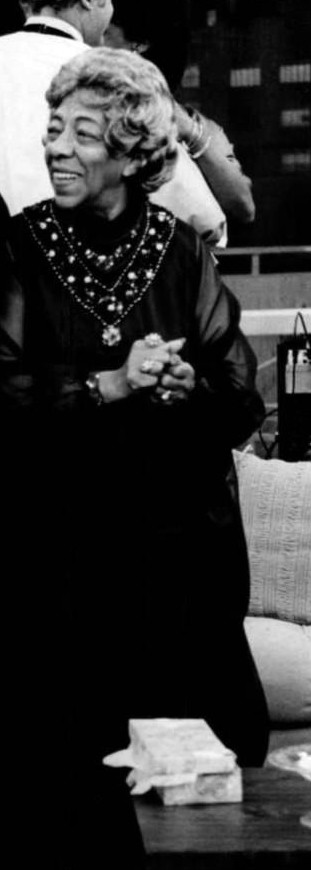
The Eldest of Ten in Worcester
Zara Frances Cully was born on January 26, 1892, in Worcester, Massachusetts, the eldest of ten surviving children born to Ambrose E. and Nora Ann Cully, and she grew up in a musical family, in a house where her father served as the music director of the church they attended, Zion AME Church, and where her younger brother, Wendell Cully, became a jazz trumpeter who played with Cab Calloway and Duke Ellington. She graduated from the Worcester School of Speech and Music, and she began, in her twenties, a career in the theater that would last, with only brief interruptions, for the next sixty years, in an era when a Black actress in America had to be twice as good as anyone else to get half the work, and she was, by every account, that good, and better.
She was, from the start, a performer of unusual range, and she worked in the theater, and in the movies, and on television, in the 1940s and 1950s and 1960s, in small parts and in supporting roles, in the kind of work that never made a star but that kept a working actress working, and she built, over decades, a list of credits that ran to dozens of plays and films and television shows, and a reputation, among the people who hired her, as a professional, who arrived on time, knew her lines, and made the scene work. She was, by 1974, 82 years old, and she had been acting for more than fifty years, and she was about to get the role that would make her famous to the whole country, and that would, in the end, be the last role she ever played.
Florida's Dean of Drama
Before the fame came, Cully had a whole other life, in Florida, where she moved after an appearance in New York City in 1940 made her known as one of the world's greatest elocutionists, and where she began producing, writing, directing, and acting in plays, and where, for fifteen years, she was a drama teacher at her own studio and at Edward Waters College, a historically Black college founded in 1866 to educate freed slaves, and where she became known as Florida's Dean of Drama. She was, in Jacksonville, a teacher, and a director, and a mentor, and a woman who shaped a generation of young Black actors, in an era when the South was still segregated, and when the work she did mattered, not just to her students but to the community, and to the state.
Upset by the racism she experienced in the Jim Crow-era South, Cully decided to move to Hollywood, where she became a regular performer at the Ebony Showcase Theatre, and where she began, in her seventies, the screen career that would, in time, make her famous. Her film credits by then included The Liberation of L.B. Jones in 1970, a starring role in Brother John in 1971, opposite Sidney Poitier, and the blaxploitation films Sugar Hill in 1974 and Darktown Strutters in 1975, and her television credits went back to the Golden Age of Television, including Playhouse 90, and The Mod Squad, and Night Gallery, and All in the Family, where, in 1974, she originated the role that would define her, and that would, in the end, outlive her.
Mother Jefferson Arrives at 82
Cully's first appearance as Mother Olivia Jefferson was in a guest appearance on an episode of All in the Family entitled Lionel's Engagement, which aired on February 9, 1974, when she was 82 years old, and the character, George Jefferson's meddling, opinionated, hilariously critical mother, proved so popular that when The Jeffersons became a spin-off, premiering on January 18, 1975, the producers kept Cully, even though they replaced the three actors who had played Tom, Helen, and Jenny Willis on that episode with different actors. Mother Jefferson was the character the audience wanted, and Cully was the actress they wanted to play her, and she played her, from 1975 until her death in 1978, as the sharp-tongued, fiercely protective mother who told George exactly what she thought of him, and who loved him anyway, and who became, over four seasons, one of the most beloved characters on television.
She played Mother Jefferson with a comic timing that had been honed over fifty years on the stage, and with a warmth that made the character more than a joke, and with a voice that could cut through a room and a look that could stop a scene, and she did it all at an age when most people have been retired for twenty years, and she did it while she was dying, which the audience did not know, and which she did not tell them, because she was, above all, a professional, and because the work was what mattered, and because Mother Jefferson was, in the end, the role of her life, and she was not going to give it up, not for illness, and not for anything.
Pneumonia, a Collapsed Lung, and the Missing Season
During the first 17 episodes of the third season of The Jeffersons, Cully was absent, due to a severe case of pneumonia caused by a collapsed lung, and the show went on without her, and the audience noticed, and the producers noticed, and when she recovered, she returned to the show, and she kept working, and she kept playing Mother Jefferson, through the fourth season, and into the fifth, until her health, which had never fully recovered, gave out for good. Her last credited performance was an appearance in the ninth episode of the fourth season, entitled The Last Leaf, which aired on November 12, 1977, three months before her death, and it was, by every account, a performance given by a woman who knew she was dying, and who was determined to work anyway, because the work was what she had always done, and what she would do until she could not do it anymore.
No special episode was created to center on her death, but it was addressed in the second episode of the fifth season, entitled Homecoming, part 1, which aired on September 27, 1978, seven months after her death, in a scene in which Louise Jefferson tells the family that Mother Jefferson has died, and the audience, which had loved her, mourned her, in the way that audiences mourn a character they have welcomed into their homes, week after week, for four years. She was, at her death, 86, and she was, by every account, one of the oldest performers active in television, and she had been, for fifty years, a working actress, and for four years, a star, and she had done it all without ever stopping, and without ever complaining, and without ever letting the audience see how ill she was.
One Marriage, Four Children
Cully was married once, to James M. Brown Jr., from 1914 until his death in 1968, a marriage of fifty-four years that produced four children: Mary Gale Polly Buggs, the wife of John A. Buggs, the deputy director of the U.S. Civil Rights Commission, Emerson T. Brown, James M. Brown III, and a baby daughter who died in 1919, and that ended, in 1968, with Cully a widow at 76, still working, still acting, still, by every account, determined to keep going, because the work was what she had, and what she loved, and what she would do until she could not do it anymore. She was survived, at her death, by her daughter Mary Gale and her son Emerson, and by her brother Wendell, and by a family that had watched her work, without stopping, for more than sixty years.
She did not talk much, in public, about her family, and she did not need to, because the work spoke for itself, and because the life she had built, over eighty-six years, was a life of work, and of teaching, and of performance, and of a marriage that had lasted fifty-four years, and of children who had grown up watching their mother do what she loved, and who had, in the end, watched her become famous, at 82, for a role she had been preparing for, in one way or another, for her entire life. She was, by every account, a private woman who played a very public character, and she kept the two apart, and she was, in the end, remembered for the character, and for the work, and for the fact that she had done it all, from Worcester to Jacksonville to Hollywood, without ever stopping, and without ever losing herself.
Lung Cancer at 86
Cully died at Cedars-Sinai Medical Center in Los Angeles on February 28, 1978, from lung cancer, aged 86, and the services were held on March 2, 1978, at the Church of Christian Fellowship in Los Angeles, and she was interred at Forest Lawn Memorial Park in Glendale, in the Freedom Mausoleum, Columbarium of Victory, with the cast and crew of The Jeffersons in attendance, including the show's producer, Norman Lear. She was posthumously awarded a special NAACP Image Award on June 9, 1978, at the 11th Annual NAACP Awards ceremony, a recognition that came too late for her to enjoy, but that put her name where it belonged, alongside the other greats of the medium, and that confirmed what the reruns had been saying all along: that Mother Jefferson was one of the great comic creations of 1970s television, and that the woman who played her was one of the great comic actresses of her generation.
The profiles all note, with a kind of wonder, that Cully never smoked and never drank, and yet died of lung cancer, and this article reports that fact without explaining it, because there is no explanation in the record, and because the fact, on its own, says something about the randomness of the disease, and about the woman who faced it, and kept working, and kept playing Mother Jefferson, until three months before she died. She was 86, she had been acting for more than sixty years, she had been famous for four of them, and she had died, in the end, of a disease that had nothing to do with how she had lived, and everything to do with how unfair life can be, even to a woman who had done everything right.
What Happened to Zara Cully, in the End
So what happened to Zara Cully? She became Mother Jefferson, she became the sharp-tongued, fiercely protective mother of George Jefferson, she played the role for four years, from 1975 until her death in 1978, she was 82 when she started and 86 when she died, she had been acting for more than sixty years, she had been Florida's Dean of Drama, she had taught at Edward Waters College, she had survived pneumonia and a collapsed lung and come back to the show, and she died on February 28, 1978, at Cedars-Sinai Medical Center in Los Angeles, of lung cancer, at 86, with the cast and crew of The Jeffersons at her funeral, and a special NAACP Image Award waiting for her, posthumously, in June.
What remains is Mother Jefferson, still telling George exactly what she thinks of him in reruns, still sharp, still funny, still fierce, and the example of a woman who started in Worcester, Massachusetts, in 1892, as the eldest of ten children, who taught drama in Florida for fifteen years, who moved to Hollywood in her seventies, who became famous at 82, and who kept working, through illness and through age, until three months before she died, because the work was what she had always done, and what she would do until she could not do it anymore, and because Mother Jefferson was, in the end, the role of her life, and she played it, for four years, better than anyone else could have.
Frequently asked questions
What happened to Zara Cully?
Zara Cully died on February 28, 1978, at Cedars-Sinai Medical Center in Los Angeles, at 86, of lung cancer. She had played Olivia Mother Jefferson on The Jeffersons from 1975 until her death, after originating the role on All in the Family in 1974.
Who did Zara Cully play on The Jeffersons?
Olivia Mother Jefferson, the sharp-tongued mother of George Jefferson, played by Sherman Hemsley. She first played the role on All in the Family on February 9, 1974, at age 82, and carried it to The Jeffersons when it spun off in 1975.
How old was Zara Cully when she became famous?
Eighty-two. She was 82 when she first played Mother Jefferson on All in the Family in 1974, and 86 when she died. She had been acting for more than fifty years before the role made her a star.
Why was Zara Cully absent from The Jeffersons season 3?
She was absent for the first 17 episodes of the third season due to a severe case of pneumonia caused by a collapsed lung. She recovered and returned to the show, and her last appearance aired November 12, 1977.
Who was Zara Cully married to?
She was married once, to James M. Brown Jr., from 1914 until his death in 1968. They had four children: Mary Gale Polly Buggs, Emerson T. Brown, James M. Brown III, and a baby daughter who died in 1919.
What did Zara Cully do before The Jeffersons?
She was a stage actress for decades, and for fifteen years a drama teacher in Florida, where she became known as Florida's Dean of Drama, teaching at her own studio and at Edward Waters College. Her films included The Liberation of L.B. Jones and Brother John.
Did Zara Cully smoke?
No. Profiles note that she never smoked or drank, yet died of lung cancer at 86. The record offers no explanation for the contradiction.
How did The Jeffersons handle Zara Cully death?
No special episode was made about her death. It was addressed in the second episode of season 5, Homecoming, part 1, which aired September 27, 1978, seven months after she died. She was posthumously given a special NAACP Image Award on June 9, 1978.
Sources
- EN WikipediaBirth, Mother Jefferson role, pneumonia absence, marriage, children, death
- Find a GraveBirth January 26, 1892, death February 28, 1978, lung cancer, NAACP Image Award
- SamePassageFame at 82, never smoked or drank, career spanning five decades