What Happened to William Boyd, Hopalong Cassidy?
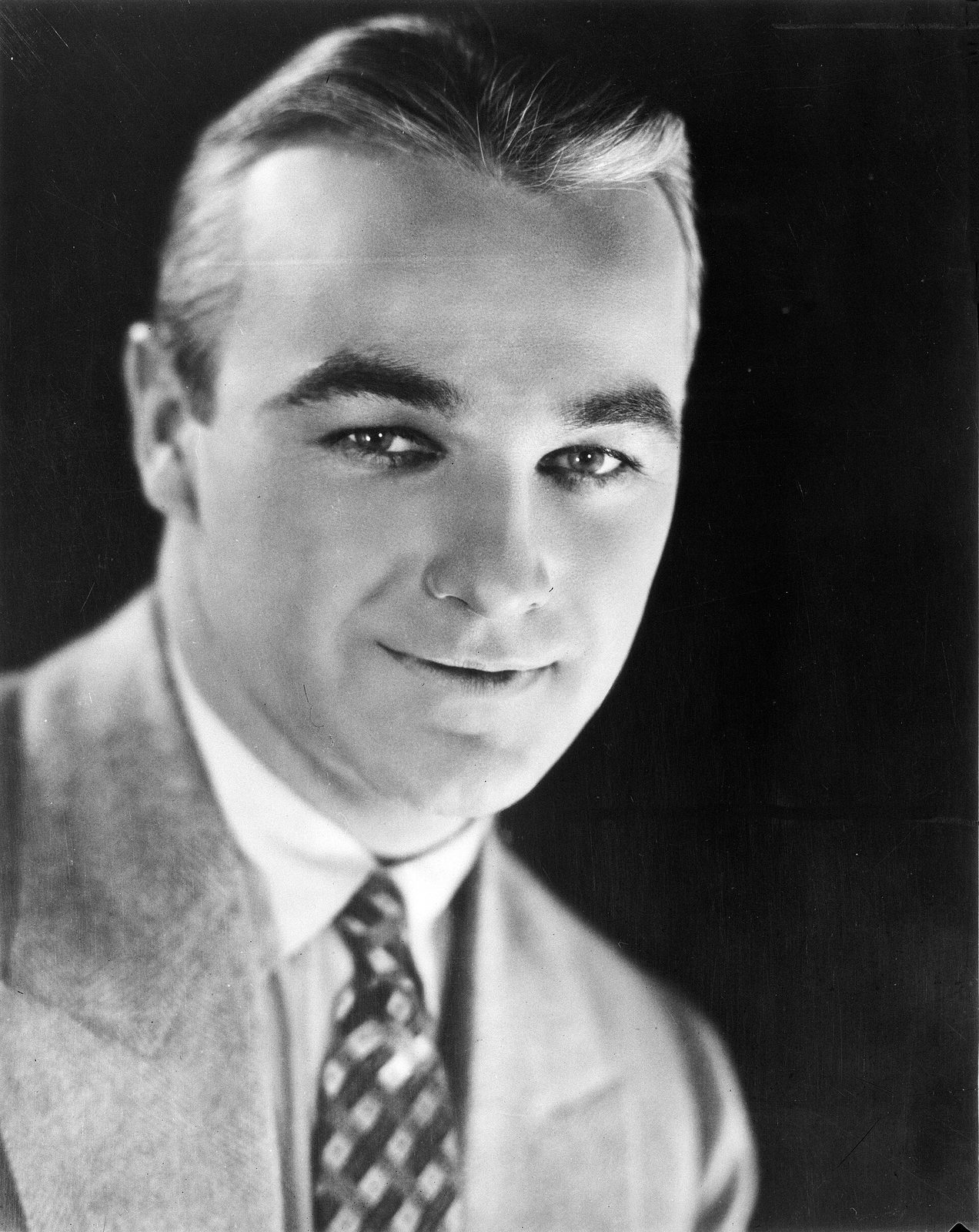
An Ohio Boy Who Went West
William Boyd was born William Lawrence Boyd on June 5, 1895, in Hendrysburg, Ohio, the second of four sons of a farm laborer, Charles William Boyd, and his wife Lida. He was reared in Cambridge, Ohio, and Tulsa, Oklahoma, where the family moved when he was a boy, and his childhood ended early: in 1913, while working for the Tulsa Water Department, his father was killed when a cap blew off a water line and broke his neck. The next year Boyd moved with his grandmother to Orange, California, and then to San Diego, and he worked as an orange picker, a surveyor, a tool dresser and an auto salesman before he ever set foot on a film set. He was tall, six feet, prematurely white-haired even in his early twenties, smooth-voiced and handsome, and he decided to go to Hollywood to be an actor.
He found work as an extra, including in Cecil B. DeMille's Why Change Your Wife?, and during World War I he enlisted in the army but was exempt from military service because of a heart condition. His first credited film work came in 1918, and for the next decade he climbed steadily, from bit parts to leading roles, on the strength of his looks, his voice and DeMille's patronage. He was, by the middle of the 1920s, a matinee idol and a romantic leading man, and nothing in his life so far suggested that he would one day be remembered as a cowboy.
DeMille's Matinee Idol
Boyd's breakout role was Jack Moreland in DeMille's The Road to Yesterday in 1925, which earned critical praise, and DeMille soon cast him as the leading man in the silent drama The Volga Boatman, another critical success. He acted in DeMille's The King of Kings in 1927, playing Simon of Cyrene, and in Skyscraper in 1928, as well as in D. W. Griffith's Lady of the Pavements in 1929. He was, by then, firmly established as a matinee idol, and his mature, warm voice made the transition to sound easily, giving him a natural sense of kindness, compassion, strength, confidence and control that audiences trusted. He had made dozens of films, and he had a studio behind him, and a career that looked secure.
It was not secure. The film industry of the early 1930s was ruthless with silent stars whose moment had passed, and Boyd's moment was passing, and the thing that ended it had nothing to do with his talent. It had to do with another man who happened to share his name, and a newspaper photograph, and a story about an arrest that was never his.
The Photograph That Ruined Him
In 1931 RKO Pictures ended Boyd's contract after his photograph was mistakenly run in a newspaper story about the arrest of another actor, William Stage Boyd, on gambling and liquor charges. The newspaper apologized the next day, explaining the mistake, but Boyd said the damage was already done. He was virtually destitute and without a job, and for several years he was credited in films as Bill Boyd, to keep audiences and casting directors from mistaking him for the other William Boyd. He took bit parts and small roles, including in The Painted Desert in 1931, the film in which Clark Gable made his movie debut, and he waited for a second chance that, for a long time, did not come.
By 1935 he was a washed-up silent movie idol taking bit parts under the name Bill Boyd, and he was forty years old, and the leading-man years were behind him. Then a friend told him about a western film that needed a lead, and Boyd lobbied for the part, and the part changed his life, and the life it gave him was not the one he had lost. It was bigger, and stranger, and it lasted longer than the stardom ever had.
Hopalong Cassidy: Sixty-Six Films in a Black Hat
In 1935 Boyd was offered the supporting role of Red Connors in the movie Hop-Along Cassidy, but he asked to be considered for the title role, and he won it. The character came from the pulp novels of Clarence E. Mulford, where Hopalong Cassidy was a hard-drinking, rough-living, redheaded wrangler who limped from a bullet wound, drank, cursed, smoked and gambled. Boyd and the studio changed him completely: their Hopalong did not smoke, swear or drink alcohol, he drank sarsaparilla, and he would allow the villain to start fights. The irony was that Boyd himself had never branded a cow or mended a fence, could not bulldog a steer, and disliked western music, and yet he became indelibly associated with the character, in the same way Roy Rogers and Gene Autry became associated with theirs.
He played Hopalong in dozens of westerns through the 1930s and 1940s, wearing a black hat and black costume and riding a white horse named Topper, and the films were more polished than the usual low-budget westerns, with superior outdoor photography and supporting players familiar from major Hollywood films, so even big-city theaters that would not normally rent westerns showed them. Paramount Pictures released the films through 1941 and United Artists produced them from 1943, and in all Boyd made sixty-six Hopalong Cassidy films, fifty-four for the producer Harry Sherman and twelve more that he produced himself on noticeably lower budgets after Sherman abandoned the franchise. The series ended in 1948, and by then Boyd was Hopalong Cassidy in the public mind, and Hopalong Cassidy was Boyd, and there was no separating the two.
The Gamble That Invented the TV Western
Boyd was determined to keep the series alive, and he insisted on purchasing the rights to all of the Hopalong Cassidy films, selling or mortgaging almost all of his possessions to meet the producer's price. In 1948, then regarded as a cowboy star of the past with his fortunes at their lowest, he brought a print of one of his older films to the local NBC television station and offered it at a nominal rental, hoping for new exposure. The film was received so well that NBC asked for more, and within months Boyd released the entire library, and the films became very popular and began the long-running genre of westerns on television. His desperate gamble made him one of the first national television stars, and it restored his fortune.
He licensed the Hopalong name for merchandise of every kind, including watches, trash cans, cups, dishes, trading cards, a comic strip, comic books, cowboy outfits and home-movie digests, and he reenacted the role for a radio show that ran from 1948 to 1952 and a television series that ran from 1952 to 1954, making more than a hundred of each. He appeared as Hopalong Cassidy on the covers of Look and Time magazines in 1950, and for Thanksgiving in 1950 he led a parade in Charlotte, North Carolina, that drew an estimated crowd of 500,000, the largest in the parade's history. He had a cameo role as himself in DeMille's circus epic The Greatest Show on Earth in 1952, and DeMille reportedly asked him to take the role of Moses in his remake of The Ten Commandments, but Boyd felt that his identification with Cassidy would make it impossible for audiences to accept him as Moses, and he turned it down. He identified with his character and often dressed as a cowboy in public, and he was concerned about children, refusing to license his name for products he considered unsuitable or dangerous, and declining personal appearances at which children would be charged admission.
Five Marriages and a Quiet Retirement
Boyd was married five times, first to the wealthy Massachusetts heiress Laura Maynard in 1917, then to the actresses Ruth Miller, Elinor Fair and Dorothy Sebastian, and finally to the singer and dancer Grace Bradley, whom he married in 1937 and who stayed with him until his death. His only son, William Wallace Boyd, whose mother was Miller, died of pertussis, or whooping cough, at the age of nine months. After his retirement from the screen, Boyd invested time and money in real estate and moved to Palm Desert, California, and he refused interviews and photographs in his later years, so as not to taint his memory as a screen idol. He had been famous as a silent leading man, famous as a cowboy, and famous as a television pioneer, and he chose to let the three famous men stay young in the public mind while the real one grew old in private.
For his contributions to the film industry he was given a star on the Hollywood Walk of Fame at 1734 Vine Street, and in 1995 he was inducted into the Western Performers Hall of Fame at the National Cowboy and Western Heritage Museum in Oklahoma City. His hometown of Cambridge, Ohio, honored him with an annual Hopalong Cassidy Festival for years, and a trail of memorabilia, a statue and a mural still mark his memory there. He had been, in the end, the most durable of the cowboy stars, because he had understood something his rivals had not: that the character belonged to the children, and that the children would keep him alive long after the theaters had forgotten him.
What Happened to William Boyd, in the End
So what happened to William Boyd? He was born William Lawrence Boyd in Hendrysburg, Ohio, in 1895, the second of four sons of a day laborer, and he lost his father to a water-department accident when he was a teenager. He picked oranges, surveyed land, dressed tools and sold cars before he ever acted, and then DeMille made him a matinee idol, and a newspaper photograph of the wrong William Boyd took it all away, and he was destitute and working under the name Bill Boyd. He asked for the title role in Hop-Along Cassidy in 1935 and got it, and he played the clean-living cowboy in sixty-six films, and when the series ended he sold or mortgaged everything he owned to buy the rights, and he took one print to a television station in 1948 and became one of the first national television stars, and he licensed his name to a thousand products, and he married five times, and he buried a baby son, and he retired to the desert and refused to be photographed as an old man.
He died on September 12, 1972, at 77, of complications from Parkinson's disease and congestive heart failure, in Laguna Beach, California, according to Wikipedia, although Britannica gives Hollywood as the place of death. He was survived by his fifth wife, Grace Bradley Boyd, who died in 2010, and he is buried in the Sanctuary of Guiding Love alcove in the Great Mausoleum at Forest Lawn Memorial Park in Glendale. He had been in the film industry for more than three decades, from 1918 to 1954, and he had played one character sixty-six times, and that character had made him, twice, the most famous cowboy in America.
Frequently asked questions
What happened to William Boyd?
William Boyd died of complications from Parkinson's disease and congestive heart failure. He had been retired from the screen for years and was living in California at the time.
Who was Hopalong Cassidy?
Hopalong Cassidy was the cowboy hero Boyd played in dozens of western films, a clean-living hero in a black hat who rode a white horse. The role made Boyd one of the most famous western stars in America.
How many Hopalong Cassidy films did William Boyd make?
He made dozens of them, including more than fifty for the studio and a final dozen he produced himself, plus a long-running radio show and a television series.
Was William Boyd a real cowboy?
No. He was born in Ohio, worked as an orange picker and auto salesman before Hollywood, and by his own admission had never branded a cow or mended a fence. The cowboy was a character he played.
Why did William Boyd disappear from films?
A newspaper once printed his photograph with a story about another actor's arrest, and the mistake cost him his studio contract. He worked under the name Bill Boyd for years before Hopalong Cassidy revived his career.
Did William Boyd invent the TV western?
He helped start it. When his film career faded, he took a Hopalong Cassidy print to a local television station, and the films became so popular that he released his whole library and became one of the first national television stars.
Was William Boyd married?
Yes, five times. His longest marriage was his fifth, to singer and dancer Grace Bradley, which lasted until his death.
Where is William Boyd buried?
He is buried at Forest Lawn Memorial Park in Glendale, California, in the Great Mausoleum, and he has a star on the Hollywood Walk of Fame.
Sources
- EN WikipediaBorn William Lawrence Boyd June 5 1895 Hendrysburg Ohio, died September 12 1972 age 77 Laguna Beach, Parkinson's and congestive heart failure, Hopalong Cassidy 66 films, RKO contract ended 1931 mistaken identity, bought rights, 1948 NBC, five marriages, Walk of Fame, Forest Lawn Glendale
- Encyclopaedia BritannicaBorn June 5 1898 Hendrysburg per Britannica, died Sept 12 1972 Hollywood, first played Hopalong Cassidy 1935, radio 1948-52, television series 1952-54, black hat and white horse
- Oklahoma Historical SocietyBorn June 5 1895 Hendrysburg, father killed 1913 Tulsa, married Laura Maynard 1917, 54 Hopalong films for Sherman plus 12 own, 106 TV shows, 104 radio shows, Grace Bradley 1938, 35 years