What Happened to Vivian Vance, Ethel Mertz?
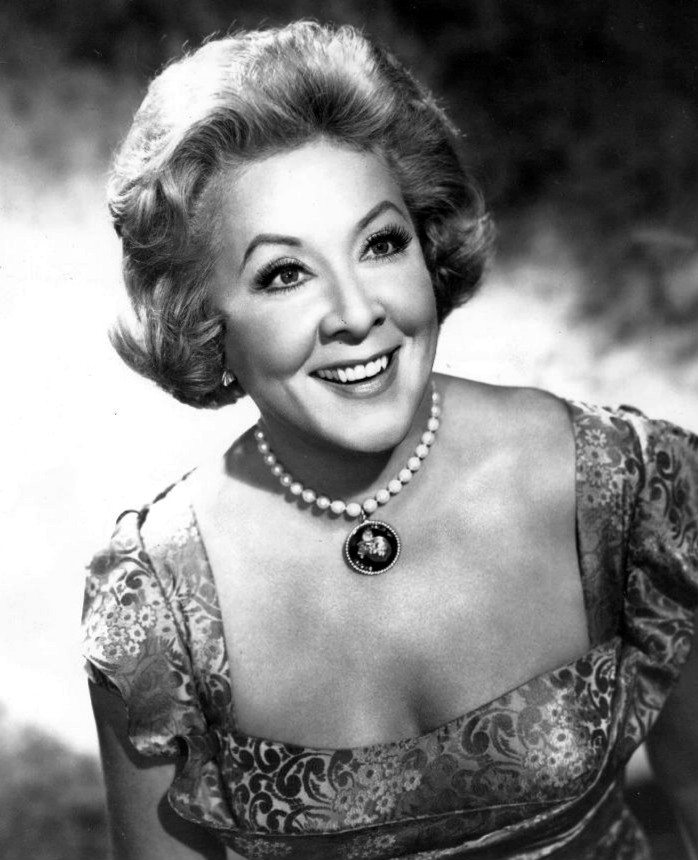
A Kansas Girl Who Ran to the Stage
Vivian Roberta Jones was born on July 26, 1909, in Cherryvale, Kansas, the second of six children born to Robert Andrew Jones and Euphemia Mae Jones, and she grew up in a strict, conservative household where the theater was not a career but a dream, and a dream that a girl from Cherryvale was not supposed to have. She left home as a teenager to study acting in Albuquerque, New Mexico, and she worked her way east, through stock companies and touring productions, until she reached Broadway, where she appeared in nine productions, including Anything Goes, in which she understudied Ethel Merman, the greatest musical comedy star of the era, and learned, from watching her, how to command a stage without ever raising her voice. She was, by the late 1940s, a veteran Broadway actress with a reputation for reliability and a voice that could fill a theater, and she had no reason to think television would ever want her.
Vance personal life in those years was as restless as her career. She married four times, and her early marriages, to Joseph Shearer and George Koch, ended in divorce, as did her third, to actor Philip Ober, which lasted from 1941 to 1959. She suffered a nervous breakdown in 1945, a fact she did not hide in later years, and she rebuilt her career after it, returning to the stage and to the work she loved, with a resilience that would serve her again, decades later, when her health failed. She was 42, divorced three times, and a Broadway veteran with no television credits, when a group of people in La Jolla, California, changed her life forever.
Ethel Mertz, 1951 to 1957
In 1951 Vance was appearing in the play The Voice of the Turtle at the La Jolla Playhouse in California, and in the audience, on the night that mattered, were director Marc Daniels, writer and producer Jess Oppenheimer, and actor and bandleader Desi Arnaz, who, with his wife Lucille Ball, was about to create the most successful program in the history of television. Arnaz and Ball first choice for the role of Ethel Mertz, the landlady of the apartment building where Lucy and Ricky Ricardo lived, had been Bea Benaderet, but Benaderet was unavailable, and the group was so impressed by Vance that they hired her on the spot, a decision that Ball, who had initially resisted casting a woman she thought was too glamorous for the part, came to accept, and then to celebrate. I Love Lucy premiered in October 1951, and Vance played Ethel Mertz for 179 episodes, until the show ended in 1957, and she became, in the process, one of the most beloved characters in American television.
Ethel Mertz was the landlady of a New York City apartment on East 68th Street, which she owned with her husband Fred, played by William Frawley, who was 22 years her senior, and she was the practical, sensible, endlessly patient neighbor who balanced Lucy zany schemes with common sense, and who, when the scheme failed, as it always did, was there to pick up the pieces. Vance won the first Emmy Award ever given for Outstanding Supporting Actress for the role, in the first year the category existed, and she was nominated three more times, and she did it by playing a woman who was, in every way, her opposite: Ethel was dowdy, Vance was glamorous; Ethel was patient, Vance was fiery; Ethel was a landlady, Vance was a Broadway star. The chemistry with Ball was immediate and total, and the two women, who were friends off camera as well as on, became one of the great comic partnerships in television history.
The Lucy Years After Lucy
After I Love Lucy ended in 1957, Vance stayed with Ball, appearing in The Lucy-Desi Comedy Hour, the hour-long specials that continued the Ricardos story until 1960, and then, from 1962 to 1968, playing Vivian Bagley on The Lucy Show, a new character, a divorced mother of two, who was, in effect, Ethel Mertz with a different name and a different husband, and who gave Vance six more years of steady work alongside the woman who had made her famous. She left The Lucy Show in 1968, after six seasons, and her television work after that was sporadic, guest spots and specials, because she had done what she had come to do, and because her health was beginning to fail, and because she had, by then, earned the right to be choosy.
Her relationship with William Frawley, who played her on-screen husband Fred Mertz, was famously strained off camera, and the two of them, who were so convincing as a married couple on screen, disliked each other in real life, a fact that both of them acknowledged and that neither of them let affect the work. Frawley was 22 years older than Vance, he was gruff and difficult, she was glamorous and proud, and they made it work for six years, which is a testament to both of them as professionals. Vance never spoke ill of Frawley publicly after his death in 1966, and she never pretended they had been friends, and the honesty of that, like the honesty of her performance, is part of why she is remembered so fondly.
Breakdown, Divorce and a New Start
Vance married for the fourth and final time in 1961, to John Richard Dodds, a successful publisher, and the marriage lasted until her death eighteen years later, the longest and happiest of her personal life. The couple lived in Stamford, Connecticut, on Old Long Ridge Road, until 1974, when they moved to California, settling first in the Los Angeles area and then in Belvedere, a small town in Marin County, where Vance would spend her last days. She had no children, and Dodds became, in her later years, her caretaker as well as her husband, a role he accepted without complaint, and a role that the obituaries, when they came, made sure to mention.
She had, by then, put the worst of her personal life behind her: the nervous breakdown of 1945, the three divorces, the years of struggling to be taken seriously as an actress when the world wanted her to be a wife. She was, in her fifties and sixties, a contented woman, living with a man she loved, in a town she liked, with a career behind her that nobody could take away, and she was, by every account, at peace with the shape of her life. She could not stand being called Ethel in public, a fact her friends found endearing, because it proved that she knew exactly who she was, and who she was not, and that the character, beloved as she was, was a job, not an identity.
Cancer, a Stroke and the Last Show
In 1973 Vance was diagnosed with breast cancer, and she underwent a six-hour operation to remove the disease, and for a time it seemed that she had beaten it. She believed she was cancer-free, and in 1977 she reunited with Lucille Ball for their last television appearance together, in the special Lucy Calls the President, a reunion that delighted fans who had grown up with the two women and who had not seen them together in years. Not long after, Vance received more devastating news: the cancer had returned, and it had spread to her bones, and the disease that she had thought she had beaten was going to kill her. Later in 1977 she suffered a stroke that left her partially paralyzed, and her health declined steadily through 1978 and into 1979.
She retired from acting, and she spent her final months at home in Belvedere, with Dodds, and with the knowledge that the end was coming, and she faced it, by every account, with the same practicality she had brought to Ethel Mertz, without self-pity and without drama. She was 70, she had been famous for almost thirty years, and she had done the work that mattered to her, and the disease took her, in the end, the way it takes so many people: slowly, and then all at once, and without regard for who she had been.
Death at 70 and the Age That Was Misprinted
Vivian Vance died on August 17, 1979, at her home in Belvedere, California, of metastatic breast cancer, at 70, and the obituaries that followed got almost everything right except, in one famous case, her age. The Los Angeles Times, in its obituary published on August 18, 1979, printed that she was 66, a figure that has been repeated in some secondary sources ever since, but her birth on July 26, 1909, and her death on August 17, 1979, make her 70, and EN Wikipedia, TV Insider and every major reference work print 70, and this article follows 70. She was cremated, and her ashes were scattered at sea, and her Emmy Award, the first ever given for Outstanding Supporting Actress, was donated to the Albuquerque Little Theater, the place where her career had, in a sense, begun.
She was survived by her husband, John Dodds, who lived on in Belvedere, and by a legacy that has only grown with time: Ethel Mertz remains one of the most beloved characters in the history of television, a woman who balanced humor with humanity, who was funny without being a joke, and who proved that a supporting player could be the heart of a show. In 2012 Vance was posthumously inducted into the Television Academy Hall of Fame, thirty-three years after her death, a recognition that came late and that she would have, by every account, accepted with the same practical grace she brought to everything else.
What Happened to Vivian Vance, in the End
So what happened to Vivian Vance? She became Ethel Mertz, she won the first Emmy for Outstanding Supporting Actress, she stayed with Lucille Ball for seventeen years, through two shows and a dozen specials, and then she went home to Connecticut, and then to California, and she lived quietly with John Dodds, and she got cancer, and she had a stroke, and she died at home in Belvedere on August 17, 1979, at 70, of metastatic breast cancer, and she was cremated, and her ashes were scattered at sea, and her Emmy went to a little theater in Albuquerque, where a girl from Cherryvale, Kansas, had once dreamed of being an actress.
What remains is Ethel, still practical, still patient, still picking up the pieces after Lucy schemes, still funny in reruns that have now run for more than seventy years, and the fact, which no rerun can show, that the woman who played her was a glamorous Broadway veteran who understudied Ethel Merman, who survived a nervous breakdown and three divorces, who married a publisher and lived happily for eighteen years, and who, when the cancer came, faced it without self-pity and without drama. Vance was the first winner of her Emmy category, and she was, in every sense, a first: the first great supporting actress of television, and the proof that the sidekick could be the star.
Frequently asked questions
What happened to Vivian Vance?
Vivian Vance died on August 17, 1979, at her home in Belvedere, California, at 70, of metastatic breast cancer. She had played Ethel Mertz on I Love Lucy and Vivian Bagley on The Lucy Show, and she was survived by her husband John Dodds.
How old was Vivian Vance when she died?
Seventy. She was born July 26, 1909, in Cherryvale, Kansas. The Los Angeles Times obituary printed 66, but her birth and death dates make her 70, and every major reference work prints 70.
What did Vivian Vance die of?
Metastatic breast cancer, which had spread to her bones. She was first diagnosed with breast cancer in 1973, underwent a six-hour operation, and the disease returned in 1977. She also suffered a stroke in 1977.
Who did Vivian Vance play on I Love Lucy?
Ethel Mertz, the landlady of the apartment building where Lucy and Ricky Ricardo lived, and Lucy best friend. She played the role for 179 episodes from 1951 to 1957.
Did Vivian Vance win an Emmy?
Yes. She won the first Emmy Award ever given for Outstanding Supporting Actress, for playing Ethel Mertz, and she was nominated three more times for the role.
Was Vivian Vance married?
Four times. Her fourth husband was publisher John Dodds, whom she married in 1961 and who survived her. Her third husband was actor Philip Ober, from 1941 to 1959. She had no children.
Did Vivian Vance get along with William Frawley?
No, not off camera. Frawley played her on-screen husband Fred Mertz, and the two disliked each other in real life, although they worked together professionally for six years. Frawley was 22 years older than Vance.
What was Vivian Vance last appearance with Lucille Ball?
The television special Lucy Calls the President in 1977, two years before her death. She had suffered a stroke later that year.
Sources
- EN WikipediaBirth, Ethel Mertz role, first Supporting Actress Emmy, marriages, death
- Immortal MarilynBroadway career, La Jolla discovery, marriages, cancer, stroke, death at 70
- AncientFaces (quotes LA Times obituary)LA Times obituary printing age 66, breast and bone cancer, 179 episodes