What Happened to Vera Miles?
Miss Kansas, 1948
Vera June Ralston was born on August 23, 1930, in Boise City, Oklahoma, and raised in Kansas, where her family life was shaped by the plains towns she grew up in and the schools she attended in Pratt and Wichita. She was a striking young woman with a composed, patrician presence, and in 1948 that presence won her the title of Miss Kansas. Beauty pageants in that era were a genuine route into Hollywood for young women from outside California, and for Miles the title did what it was supposed to do: it put her in front of casting directors, it gave her a reason to travel west, and it started a screen career that would last for the next forty-five years.
Her film debut came in a minor role in When Willie Comes Marching Home in 1950, and the early 1950s were spent accumulating the small parts that taught a young actress her trade. She was not an overnight sensation, and she did not arrive in Hollywood with a studio machine already built around her. She arrived as a former pageant winner with poise and a work ethic, and she earned larger roles gradually, one film at a time, until two of the greatest directors in American cinema both decided they wanted her.
Two Masters: Ford and Hitchcock
John Ford cast Miles as Laurie Jorgensen in The Searchers in 1956, the great Western in which John Wayne's Ethan Edwards spends years hunting for his kidnapped niece. Laurie is the film's emotional anchor at home, the young woman who waits, hopes and finally has to accept what the search has cost everyone, and Miles played her with a steadiness that made the film's ending land. Ford used her again in The Man Who Shot Liberty Valance in 1962, as Hallie Stoddard, the woman at the center of the film's famous contest between John Wayne's rancher and James Stewart's lawyer. To be cast by Ford twice was a mark of serious standing in Hollywood.
Alfred Hitchcock, meanwhile, signed Miles to a five-year personal contract in 1957, the first actress he signed in that way, with the press told she would succeed Grace Kelly, who had left films for Monaco. Hitchcock had spotted her on a 1954 episode of Medic and cast her in The Wrong Man in 1956, and he had a showcase in mind for her: the lead in Vertigo, a film shaped around the actress who would play Madeleine and Judy. It was the role that was supposed to make her a star, and it is the great what-if of her career.
The Vertigo That Got Away
Miles became pregnant with her third child just as Vertigo was preparing to shoot, and the role passed to Kim Novak. Hitchcock's famous complaint, repeated to Francois Truffaut, was that she had become pregnant just before the part that was going to turn her into a star, and that after that he could not get the rhythm going with her again. Miles herself told the story with less drama and no visible wound, saying that Hitchcock wanted to make her into a superstar and that she simply was not interested in the life that came with it. Both versions can be true at once: a director's plan was wrecked by timing, and an actress declined to reshape her life around his plan.
The loss cost her the prestige vehicle that resets an actress's value, and much of the 1960s went to Disney family pictures and television guest spots instead of starring roles. But the story that Miles merely lost Vertigo flatters Hitchcock more than it describes her. She kept working, she kept choosing family alongside work, and when Hitchcock needed her again, she was there. The refusal to become a second Grace Kelly was not the end of her career. It was the shape of it.
Lila Crane in Psycho
Three years after Vertigo, Hitchcock gave Miles the role for which she is remembered above all others: Lila Crane in Psycho in 1960. Lila is the sister who refuses to accept the official story about her missing sister Marion, who drives to the Bates Motel with Sam Loomis, and who walks up to the house on the hill because nobody else will. Once Janet Leigh's Marion is gone from the film, it is Lila, impatient and practical and unafraid of a locked door, who drives the story down to the fruit cellar and to its famous revelation. It is a performance of nerve rather than glamour, and it has held up for more than six decades.
Since the death of Pat Hitchcock, the director's daughter, Miles has been the last surviving member of that cast, a distinction that has grown more poignant with every passing year. Jessica Biel portrayed her in Hitchcock in 2012, the film about the making of Psycho, which fixed Miles in the public mind as the Hitchcock blonde who got away. The label is catchy and it is also incomplete, because Lila Crane was not a consolation prize. She was one of the great roles in American suspense cinema, and Miles played her exactly right.
Disney Films and Television
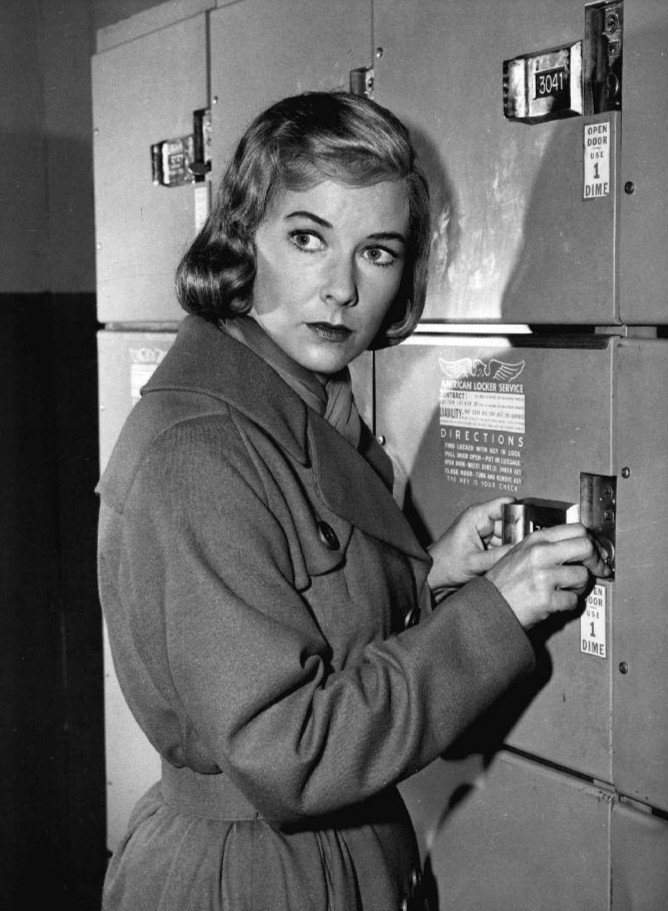
The middle of Miles's career was a working actress's career, and it was a long one. She made the Disney family pictures A Tiger Walks in 1964, Those Calloways in 1965 and Follow Me, Boys! in 1966, the last with Fred MacMurray and a young Kurt Russell, and she added Hellfighters in 1968 and Sergeant Ryker in 1968 to a filmography that already spanned Westerns, thrillers and comedies. On television she was everywhere the medium needed a reliable, intelligent presence, including a memorable appearance on The Twilight Zone as Millicent Barnes in the episode Mirror Image, the very role captured in her hero portrait.
She did not chase stardom in these years, and she did not need to. She was a working mother who had described herself exactly that way, an actress who wanted to keep her private life out of public discussion and who took roles that let her balance work with raising four children. That choice, unremarkable now, was a deliberate position in an era when studios expected their actresses to live in public. Miles declined, politely and completely, and kept working anyway.
Psycho II and the Long Farewell
In 1983, more than twenty years after Psycho, Miles returned as Lila, now Lila Loomis, in Psycho II, alongside Anthony Perkins as Norman Bates. She and Perkins were the only stars of the original film to come back, and the sequel treated Lila's grief and suspicion with a seriousness that surprised critics. It was a rare thing in Hollywood: a sequel that remembered its characters as people rather than as brand names, and Miles's presence gave it its continuity. She followed it with three episodes of Murder, She Wrote, broadcast in 1985, 1990 and 1991, the last of them, Thursday's Child, her final television role.
Her final film role was Dr. Ruth Goldin in the psychological thriller Separate Lives in 1995, with James Belushi and Linda Hamilton. After it, she retired from the industry, and the retirement stuck. There were no farewell tours, no reality appearances, no memoirs of score-settling. She simply stopped, after forty-five years, and went home to the private life she had protected throughout her career.
Four Marriages and Four Children
Miles married four times. Her first husband was Bob Miles, and she later married Gordon Scott, her co-star from Tarzan's Hidden Jungle, and then actor Keith Larsen, whom she divorced in 1971. Her fourth marriage, to filmmaker Robert Jones, lasted from 1973 to 1975. She is the mother of four children: Debra Miles, Kelley Miles, Michael Scott and Erik Larsen. The marriages and the children belong to the private side of her life, the side she guarded, and the public record keeps them brief out of the same respect she asked for while she was working.
That privacy is part of why the recent reporting about her matters. She did not spend her retirement courting attention, and when she announced in 2025 that she would no longer honour autograph requests, she did it with regret and with reasons anyone can understand: her age and her failing eyesight. It was a small, dignified announcement from a woman who had spent a lifetime deciding what the public was entitled to, and the answer, increasingly, is very little.
Where Vera Miles Is Now
So where is Vera Miles now? She is 96, retired, and living a secluded life in Palm Desert, California, where she avoids public appearances. She turned 96 on August 23, 2026, and the coverage of that birthday treated her as what she is: a living link to Hitchcock and Ford, to Psycho and The Searchers, and to a Hollywood that no longer exists. A low-tier page on the internet claims she died in 2022. That claim is false, and it is worth saying so plainly, because false death reports are the one indignity that follows even the most private of stars.
What she leaves behind, while she is still here to be remembered properly, is a body of work that runs from Miss Kansas to the fruit cellar of the Bates house, from John Ford's Monument Valley to a Disney family picture, from a lost Vertigo to a Psycho sequel made twenty-three years later. She was the actress Hitchcock planned a career around and the actress who decided what she would not become. At 96, in Palm Desert, she has earned the quiet that now surrounds her.
Frequently asked questions
What happened to Vera Miles?
Vera Miles is alive at 96 and retired in Palm Desert, California. Her final role was Dr. Ruth Goldin in Separate Lives (1995), and in 2025 she stopped accepting autograph requests, citing age and failing eyesight.
Is Vera Miles still alive?
Yes. Born August 23, 1930, she turned 96 in August 2026 and is the last surviving cast member of Psycho (1960). Reports that she died in 2022 are false.
Why did Vera Miles lose Vertigo?
She became pregnant with her third child as Vertigo was preparing to shoot, and the lead role went to Kim Novak. Hitchcock had signed her to a five-year contract in 1957 intending her to succeed Grace Kelly.
Who did Vera Miles play in Psycho?
She played Lila Crane, the sister of Marion Crane, who investigates her sister's disappearance at the Bates Motel. She reprised the role as Lila Loomis in Psycho II (1983).
What was Vera Miles's final role?
Her final television role was a 1991 episode of Murder, She Wrote, and her final film role was Dr. Ruth Goldin in Separate Lives (1995), after which she retired.
Was Vera Miles in The Searchers?
Yes. She played Laurie Jorgensen in John Ford's The Searchers (1956), and Hallie Stoddard in Ford's The Man Who Shot Liberty Valance (1962).
How many times was Vera Miles married?
Four times: Bob Miles, Gordon Scott, Keith Larsen (divorced 1971) and Robert Jones (1973-1975). She has four children.
Why did Vera Miles stop signing autographs?
In 2025 she announced she would no longer honour autograph requests, citing both her age and failing eyesight.
Sources
- EN WikipediaBiography, roles, marriages, retirement after Separate Lives
- Martin Cid MagazineBirth-year correction to 1930, Vertigo story, last surviving Psycho cast member
- TheListAlive at 95/96 in July 2026, Psycho II return, retirement 1995, Palm Desert privacy