What Happened to Tommy Rettig?
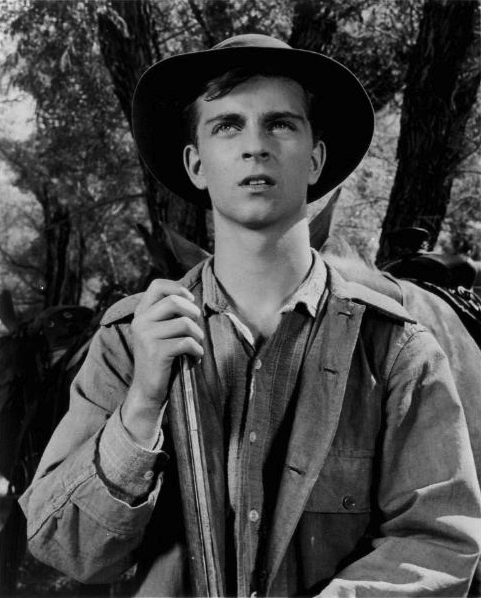
Chosen From 500 Boys
Thomas Noel Rettig was born on December 10, 1941, in Jackson Heights, in the Queens borough of New York City, the only child of Elias Rettig, a Lockheed aircraft-parts inspector, and his wife Rosemary Nibali. He began acting at the age of six, touring with star Mary Martin in the musical Annie Get Your Gun, in which he played Little Jake. It was an early start even by child-actor standards, and it gave him a stage education before he ever faced a camera.
The role that made him famous came through an open contest of a kind Hollywood no longer runs. He was selected from among 500 boys auditioning to play Jeff Miller, the first dog owner on the first version of the CBS television series Lassie, which premiered on September 12, 1954. The show was an immediate success, and Rettig, at twelve, became the boy America associated with the world's most famous collie. His run lasted from 1954 to 1957, listed as 116 episodes in his filmography, and the reruns, retitled Jeff's Collie, kept him on television long after he had left the show.
The Films Around Lassie
Rettig was not only a television child. His feature films included So Big (1953), the Dr. Seuss fantasy The 5,000 Fingers of Dr. T. (1953), in which he played the daydreaming son of a single mother, River of No Return (1954) with Marilyn Monroe and Robert Mitchum, and The Last Wagon (1956) with Richard Widmark. The 5,000 Fingers of Dr. T. is now a cult film, strange, musical, and unlike anything else a child actor of the era made, and it remains the movie for which many film buffs remember him best.
There is a neat piece of cause and effect in his casting. Work with a dog in The 5,000 Fingers of Dr. T. led the film's trainer, Rudd Weatherwax, to urge the Lassie audition. Weatherwax knew dogs, and he knew what a boy needed to look like beside one. Rettig had both the look and the experience, and the audition that followed made him a star. It is one of those Hollywood stories that sounds too tidy to be true, but the sequence is documented in his biographies, and it explains how a Queens stage child became television's first Lassie boy.
Wanting a Normal Teenage Life
Rettig did not stay. He longed for a normal teenage life, and he got out of his contract after four seasons, leaving the series in 1957. The decision is easy to admire and hard to overstate: at fifteen, he walked away from the most famous dog on television and the security that went with it. The show replaced his family with a new one, bringing in Jon Provost as Timmy Martin, and Rettig's Jeff Miller became a rerun memory while Rettig himself tried to be an ordinary teenager.
The ordinary life did not arrive quickly. He reportedly received no residual payments despite the show's syndication as Jeff's Collie, a common complaint among early television actors whose contracts predated residuals. He took guest roles where he could find them, including Sugarfoot in 1958, Wagon Train in January 1961 as Billy in the episode Weight of Command, Peter Gunn, and Death Valley Days in 1962. He co-starred with another former child actor, Tony Dow, in the mid-1960s television teen soap Never Too Young (1965-1966, 14 episodes), and co-wrote its title song with the group The TR-4, though he did not sing with the group. None of it restored his childhood fame, and none of it was meant to.
Marriage and Adult Troubles
Rettig married Darlene Portwood in 1959, and the marriage ended in 1977. This article states the marriage by years only, because the surrounding details have been sensationalized elsewhere and add nothing to understanding his life. What matters for the story is what came next: a period of adult difficulty that, for a time, looked like the familiar former-child-star slide. In 1972 he was convicted for growing marijuana on his farm, and in 1976 he was charged with cocaine possession, a charge of which he was exonerated.
The drug episode is often told as the whole story of his adult years, and that is a mistake. It was a chapter, not the book. After it, Rettig did something unusual for a former child actor: he stopped trying to be famous and started learning something entirely new. He became a motivational speaker, and through computer mailing lists, the early internet's discussion forums, he entered the world of personal computing at the moment it was being invented by hobbyists and small companies. The boy who had talked to a collie on television was about to talk to machines.
The dBASE Years
Rettig became an early employee of Ashton-Tate, the company behind dBASE, the database program that ran a huge share of early personal-computer business software. He was one of the designers of dBASE III, and he wrote the essential reference book on it, the book programmers kept beside their keyboards. He built the first add-on library for Clipper, pioneered the public-domain tools that made other developers' work easier, and specialized in sequence in dBASE, Clipper, FoxBASE and FoxPro. He founded Tom Rettig Associates in 1985, wrote articles for Data Based Advisor, appeared on FoxPro Advisor satellite television conferences, and spoke at developer events including the FoxPro DevCons.
His books tell the story of that career in titles alone: Advanced Programmer's Guide featuring dBase II (1985), Expert Advisor: dBase III Plus (1988), Tom Rettig's Clipper Encyclopedia (1989), and Tom Rettig's FoxPro Handbook (1990). These were not celebrity memoirs. They were working tools, dense, technical, and widely used, and they made Rettig a respected name in a field where nobody cared that he had once been on Lassie. He had achieved the rarest thing for a former child star: a second reputation, earned entirely on its own terms. As an adult, he preferred to be called Tom.
One Last Visit to Jeff Miller
Rettig moved to Marina del Rey in the late 1980s, and in the 1990s he made one return to the role that had made him famous. He appeared as the grown-up Professor Jeff Miller in The New Lassie episode The Computer Study, which he co-wrote and which guest-starred Jon Provost, the man who had succeeded him as Lassie's boy more than thirty years earlier. The episode is a fitting coda: the child star turned computer expert, playing a professor, in a story about computers, alongside his successor.
The airdate carries a small dispute worth noting. Wikipedia dates the episode March 7, 1992, while some secondary sources date the appearance October 25, 1991. This article uses the Wikipedia airdate. Either way, the appearance was a single guest return, not a comeback, and Rettig did not pursue further acting work afterward. His life by then was in software, in Marina del Rey, and in the community of programmers who knew him as Tom Rettig, author and consultant, rather than Tommy Rettig, child star.
His Death and the Boat LaSea
On February 15, 1996, Rettig died of a heart attack, or heart failure as his obituaries variously put it, at his home in Marina del Rey. He was 54. One fan site gives February 16 as the death day; the LA Times obituary, the Washington Post obituary of February 17, 1996, and Wikipedia all give February 15, and this article uses that date. Attendees at his memorial service in Marina del Rey included Roger Clinton Jr., the half-brother of then-President Bill Clinton.
His farewell was pure Lassie. His ashes were scattered at sea three miles off Marina del Rey from the boat LaSea, with a Lassie descendant present to say goodbye, in a combined ceremony with the ashes of his friend Rusty Hamer. It was an ending that joined his two lives: the boy who had walked beside a collie on a television farm, and the man who had built a career out of code, sent off together on the Pacific, with a dog present. Tommy Rettig had wanted a normal life, and in the end he got an extraordinary one, twice over, in two fields that had almost nothing in common except him.
A Programmer's Second Fame
Rettig's second career deserves a closer look, because it was not a hobby or a footnote. Ashton-Tate in the early 1980s was one of the most important software companies in the world, and dBASE was the database program that ran countless small businesses before spreadsheets and modern databases took over. To be one of the designers of dBASE III, and the author of its essential reference book, was to be a genuine authority in a fast-growing field, and Rettig's books were reviewed, cited, and kept on desks by working programmers who had no idea their author had once been on Lassie.
The consulting and writing life suited him in ways acting never had. He wrote articles for Data Based Advisor, appeared on FoxPro Advisor satellite television conferences, and spoke at developer events including the FoxPro DevCons, where his audiences were professionals who judged him on what he knew. He founded Tom Rettig Associates in 1985 and built a practice around the tools he had helped create, moving in sequence from dBASE to Clipper to FoxBASE to FoxPro as the industry evolved. It was, by any measure, a full career, and it lasted longer than his acting career had. The boy who had wanted a normal life found it, improbably, in the least normal new industry of his time.
Frequently asked questions
What happened to Tommy Rettig?
Tommy Rettig died on February 15, 1996, in Marina del Rey, California, at age 54, of heart failure. After leaving Lassie in 1957, he became a computer software pioneer who helped design dBASE III.
What was Tommy Rettig famous for?
He played Jeff Miller, the first boy owner on the CBS series Lassie, from 1954 to 1957, after being chosen from 500 boys auditioning.
Why did Tommy Rettig leave Lassie?
He longed for a normal teenage life and got out of his contract after four seasons. He reportedly received no residual payments despite the show's syndication.
What did Tommy Rettig do after acting?
He became an early Ashton-Tate employee, one of the designers of dBASE III, wrote the essential reference book on it, built the first add-on library for Clipper, and authored programming books including Tom Rettig's FoxPro Handbook (1990).
Did Tommy Rettig return to Lassie?
Yes, once. He played the grown-up Professor Jeff Miller in The New Lassie episode The Computer Study, which he co-wrote and which guest-starred Jon Provost.
What happened to Tommy Rettig's ashes?
His ashes were scattered at sea three miles off Marina del Rey from the boat LaSea, with a Lassie descendant present, in a combined ceremony with friend Rusty Hamer's ashes.
Was Tommy Rettig in trouble with drugs?
In 1972 he was convicted for growing marijuana on his farm, and in 1976 he was charged with cocaine possession, a charge of which he was exonerated.
What movies was Tommy Rettig in?
His films included So Big (1953), The 5,000 Fingers of Dr. T. (1953), River of No Return (1954) with Marilyn Monroe and Robert Mitchum, and The Last Wagon (1956).
Sources
- EN WikipediaBiography, Lassie, films, software career, death
- TV InsiderBirth and death dates, Lassie peak, later career
- Memorable TVLassie run, cast, series history