What Happened to Tom Mix, Western Star?
A Pennsylvania Boy Who Wanted to Be a Cowboy
Thomas Hezikiah Mix was born on January 6, 1880, in Mix Run, Pennsylvania, a hamlet about 42 miles north of State College, the son of Edwin Elias Mix and Elizabeth Heistand, and he grew up in nearby DuBois, where his father worked as a stablemaster for a wealthy lumber merchant and taught the boy to ride and to love horses. The Mix household ran on stable schedules and lumber money, and the boy learned the horse before he learned much else, practicing roping and riding on a local farm owned by the lumber businessman John DuBois, and developing the easy, showy horsemanship that would later make him famous. He was not a cowboy by birth, and he never pretended to be one in the way the later publicity claimed, but he was a horseman from childhood, and the horsemanship was real, and it was the foundation of everything that followed.
With the outbreak of the Spanish-American War in 1898, Mix enlisted in the Army under the name Thomas E. Mix, but his unit never went overseas, and the soldiering ended in embarrassment, because after an extended furlough he married Grace I. Allin, a Virginia schoolteacher, in July 1902, and simply never returned to duty. He was listed as AWOL in November 1902, and later officially listed as a deserter, although he was never court-martialed, and the marriage to Allin was annulled after a year. Hollywood publicists later dressed the episode up, claiming he had ridden in President Theodore Roosevelt's inaugural parade in 1905 with a group of 50 horsemen led by Seth Bullock, which was true, and then implying he had been a Rough Rider who had taken San Juan Hill, which was not, and the gap between the two claims says a good deal about how Mix's life would be sold. After the marriage failed he drifted west, working at the 101 Ranch of the Miller brothers in the Indian Territory of Oklahoma, where he met Will Rogers and honed his roping and riding, and where the Wild West show circuit found him.
Five Marriages and Two Daughters
Mix was married five times, and the five marriages map the five phases of his restless life, because the first, to Grace Allin in 1902, was the young soldier's marriage, annulled after a year, and the second, to Kitty Jewel Perrine in 1905, barely lasted a year either, and the third, to Olive Stokes in January 1909, was the Wild West show marriage, lived on the rodeo circuit and on her family's ranch near Dewey, Oklahoma, where the town made him night marshal and where, decades later, the Tom Mix Museum would stand. Olive gave birth to their daughter Ruth on July 13, 1912, and the couple toured together, Mix as a trick rider and expert shot, winning the National Rodeo Championship for riding and roping at Prescott, Arizona, in 1909, and at Canon City, Colorado, in 1910, but the marriage ended in divorce in 1917, when the movies had made him a star and a glamorous film actress had caught his eye.
The fourth marriage, to Victoria Forde in 1918, was the Hollywood marriage, and it lasted fourteen years, through the peak of his fame, and produced a daughter, Thomasina, known as Tommie, born in 1922, and it ended in divorce in 1932, when the silent era was over and Mix's stardom was fading. The fifth marriage, to Mabel Hubbell Ward in 1932, was the marriage that lasted until his death, and Mabel was with him through the circus years and the radio years, and she survived him. He had two daughters in all, Ruth and Thomasina, and the daughters were the family, and the family was scattered by the divorces, as Hollywood families usually were, and Mix himself was, by every account, a charming, restless, serial marrier, a man who fell in love fast and moved on faster, and who was, in the end, happiest on a horse, alone, in front of a camera.
Selig, Fox and 291 Films
Mix began his film career as a supporting cast member with the Selig Polyscope Company, and his first shoot, in 1910 at the company's Edendale studio in Los Angeles, was a documentary-style short called Ranch Life in the Great Southwest, in which he showed his skills as a cattle wrangler, and the film was a success, and Mix became an early motion picture star. He performed in more than 100 films for Selig, many of them shot in Las Vegas, New Mexico, and while with Selig he co-starred in several films with Victoria Forde, and they fell in love, and when Selig ran into severe financial difficulties, Mix and Forde both signed with Fox Film Corporation, which had leased the Edendale studio, and the Fox years were the years of his greatest fame, because Fox built him into the biggest cowboy star in the world, a flamboyant, athletic leading man in a big white hat, doing his own stunts and getting frequently injured doing them.
The numbers are the measure of the career, because Mix appeared in 291 films between 1909 and 1935, all but nine of them silent, although some sources put the total as high as 336, and the higher figure is the one the old publicity used, and this article follows Wikipedia's 291 while noting the larger claim. His intelligent and handsome horse Tony became a celebrity in his own right, almost as famous as his rider, and the two of them were, together, the most recognizable cowboy act in America. Mix was, at his peak, the highest-paid actor in Hollywood, and the money was real, and the fame was real, and the fame was the kind that filled theaters in small towns across the country, where the Tom Mix western was the event of the week, and where the children wore Tom Mix hats and carried Tom Mix lunch boxes, and where the cowboy on the screen was, for a generation, Tom Mix.
Hollywood's First Western Megastar
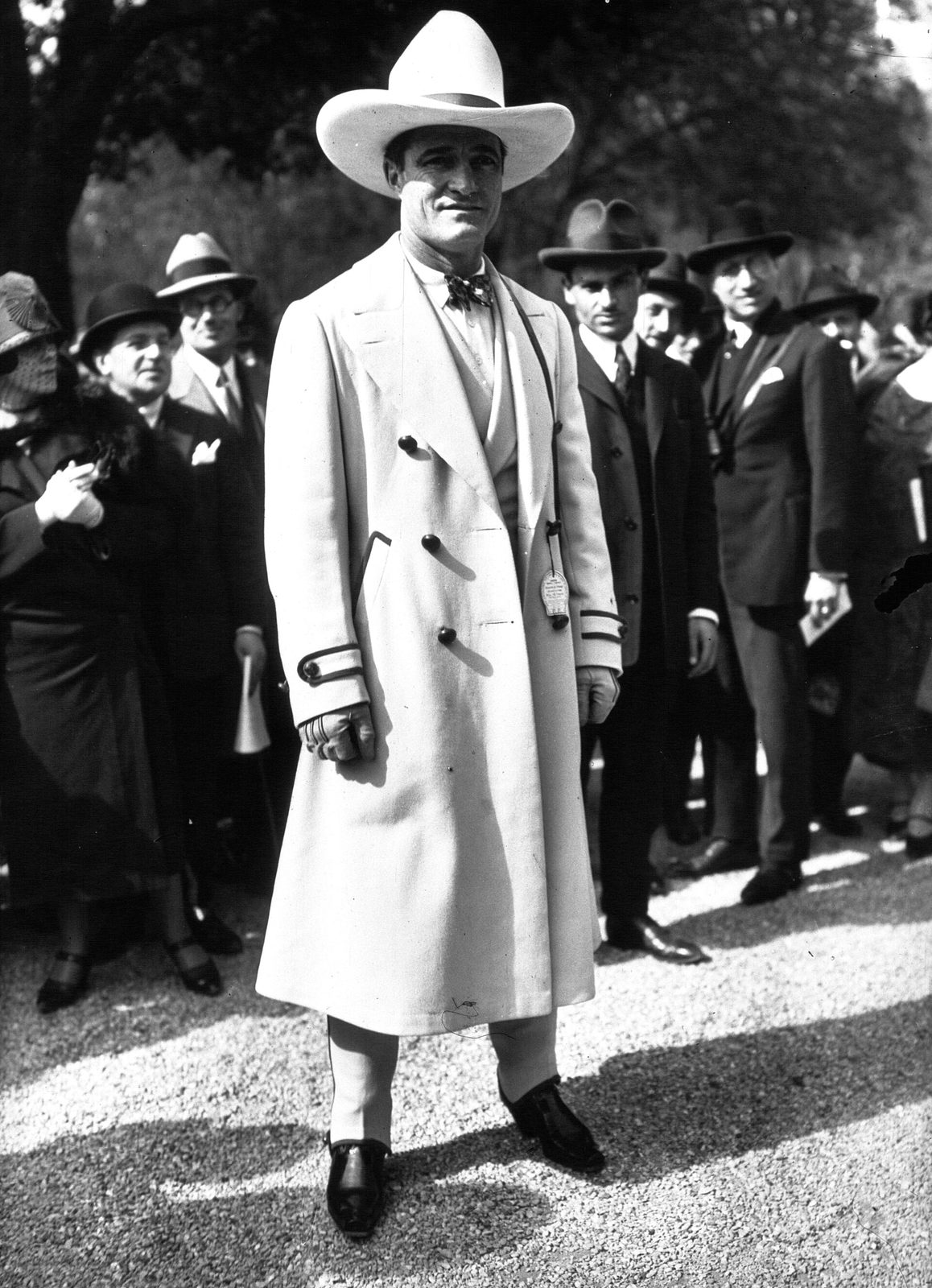
Mix was Hollywood's first western megastar, and the claim is not publicity, because before him the western had been a minor genre of one-reel shorts, and after him it was a pillar of the industry, and the change was, in large part, his doing. He helped define the genre as it emerged in the early days of the cinema, giving the movie cowboy his look, his horse, his hat, his code, and his audience, and every cowboy actor who followed him, from Buck Jones to John Wayne, worked in a genre that Mix had made bankable. He was jaunty and flamboyant where the later cowboys were stoic, and his films were cheerful and fast and full of tricks, and the tricks were his own, because he did his own riding and roping and shooting, and the audiences knew it, and the knowing was part of the pleasure.
The radio years extended the fame, because in 1933 the Ralston-Purina company obtained his permission to produce a Tom Mix radio series called Tom Mix Ralston Straight Shooters, and the show was popular through most of the 1930s and into the early 1950s, with a year's gap during the war, and it kept his name alive for a generation of children who had never seen his films. He was, by then, a brand as much as an actor, and the brand outlived the films, and the films themselves, most of them silent and most of them lost, are gone now, and what remains is the image, the white hat and the horse, and the name, and the name is still the shorthand for the first cowboy star, the one who showed Hollywood what a western could be.
The Circus Years
The talkies ended Mix's film career, as they ended so many silent careers, because he made only nine sound films, and the last of them, in 1935, closed the book on a screen career that had run for twenty-five years. He did not retire, because retirement was not in his nature, and instead he went back to the live circuit, joining the Sam B. Dill Circus in 1935 and becoming its full owner in 1937, and the circus was the old life, the rodeo and the Wild West show, and it suited him, because it was the life he had known before the movies, and it asked for the same skills, the riding and the roping and the shooting, and it gave him an audience every night. He toured with the circus and he ran it, and the running was hard work, and the work was honest, and it kept him in the public eye, although the eye was smaller now, and the fame was the kind that lived in county fairgrounds rather than in movie palaces.
He was sixty when he died, and he was still working, still traveling, still the cowboy, and the circus years were the coda to the film years, and the coda was fitting, because the circus was where the cowboy had come from, and the circus was where the cowboy went back to, and the going back was not a fall, exactly, but a return, and the return was the story of a man who had been the biggest star in the world and had become, again, a working performer, and who did the work without complaint, because the work was the life, and the life was the riding, and the riding was the thing he had always done best.
The Crash on the Road to Florence
On the afternoon of October 12, 1940, Mix was driving his 1937 Cord 812 Phaeton near Florence, Arizona, between Tucson and Phoenix, on Arizona State Route 79, having visited Pima County Sheriff Ed Nichols in Tucson and stopped at the Oracle Junction Inn, a popular gambling and drinking establishment, where he had called and spoken with his agent. He came upon construction barriers at a bridge previously washed away by a flash flood, and a work crew watched as he was unable to brake in time, and the car swerved twice and then rolled into a gully, pinning his body beneath it. A large polished aluminum suitcase, containing a large sum of money, traveler's checks and jewels, which he had placed on the package shelf behind him, flew forward and struck Mix in the back of the head, shattering his skull and breaking his neck, and the 60-year-old actor was killed almost instantly.
The Cord itself was part of the legend, because it was a bright yellow roadster, one of the great cars of automotive history, capable of well over 100 miles an hour, with medallions on the hood given to Mix by the King of Denmark, a dashboard holster for a revolver, and an oversize accelerator pedal to accommodate a cowboy boot, and the car was as flamboyant as its driver, and the driver liked taking it to the limit. The spot where he died, on the road between Tucson and Phoenix, is now known as Tom Mix Wash, and a stone monument marks it, and the monument is the kind of tribute that a cowboy star could understand, a marker on a desert road, where the man in the white hat died in a yellow car, at sixty, in the afternoon, on his way home.
What Happened to Tom Mix, in the End
So what happened to Tom Mix? He was born Thomas Hezikiah Mix in Mix Run, Pennsylvania, in 1880, the son of a stablemaster, and he enlisted in the Army in 1898, and he married Grace Allin in 1902 and never returned to duty, and he rode in Roosevelt's inaugural parade in 1905, and he worked the 101 Ranch and the Wild West show circuit with Will Rogers, and he won national rodeo championships in 1909 and 1910, and he married Olive Stokes and had a daughter, Ruth, and he made his first film for Selig in 1910, and he made more than a hundred films for Selig, and he married Victoria Forde and signed with Fox, and he made 291 films in all, and he rode the horse Tony, and he became Hollywood's first western megastar, and he married Mabel Hubbell Ward, and he made nine talkies, and he bought a circus, and he hosted a radio show, and he drove a yellow Cord too fast on a desert road, and he died in 1940, at sixty, of a broken neck, and he is buried in Forest Lawn Memorial Park in Glendale, California.
He is remembered in Dewey, Oklahoma, where the Tom Mix Museum stands on the ranch country where he was once night marshal, and he is remembered on the Hollywood Walk of Fame, and he is remembered every time a western plays and the cowboy in the white hat rides in, because the white hat was his, and the horse was his, and the genre was, in large part, his, and he is, still, the first cowboy star, the one who showed Hollywood what a western could be, and who died, in the end, on a desert road in Arizona, in a yellow car, with a suitcase full of money and jewels behind him, and who is, in the end, the man who defined the cowboy for the movies, and who never, in the end, stopped being one.
Frequently asked questions
What happened to Tom Mix?
Tom Mix died at 60 in a car crash on a desert road in Arizona. His car rolled into a dry wash and a heavy suitcase struck him in the back of the head, breaking his neck. He was killed almost instantly.
How many films did Tom Mix make?
He appeared in 291 films, nearly all of them silent westerns, with only nine talkies among them. Some older sources give a higher total, but the widely cited figure is 291.
Who was Tom Mix's horse?
His celebrated horse was Tony, a handsome and intelligent animal who became a celebrity in his own right and appeared with Mix in many of his films.
Was Tom Mix a real cowboy?
He was a genuine horseman and trick rider who won national rodeo championships for riding and roping, worked the 101 Ranch and toured Wild West shows. He was not born a cowboy, but his riding and roping skills were real.
How many times was Tom Mix married?
Five times. His wives were Grace Allin, Kitty Jewel Perrine, Olive Stokes, Victoria Forde and Mabel Hubbell Ward, who was his wife when he died.
Did Tom Mix have children?
Yes, two daughters: Ruth, from his marriage to Olive Stokes, and Thomasina, known as Tommie, from his marriage to Victoria Forde.
What is Tom Mix Wash?
It is the name given to the dry wash near Florence, Arizona, where Mix's car rolled over in the crash that killed him. A stone monument marks the spot.
Where is the Tom Mix Museum?
In Dewey, Oklahoma, on the ranch country where Mix once served as night marshal and spent winters with his third wife, Olive Stokes.
Sources
- EN WikipediaBirth January 6 1880, five marriages, 291 films, Tony the horse, Cord crash October 12 1940
- Internet Archive336-film claim, Selig career, radio series 1933 to early 1950s, crash details
- Ponca City MonthlyMix Run birth, Army AWOL, Olive Stokes marriage, rodeo championships, Dewey museum