What Happened to Tippi Hedren?
From Minnesota Model to Hitchcock Discovery
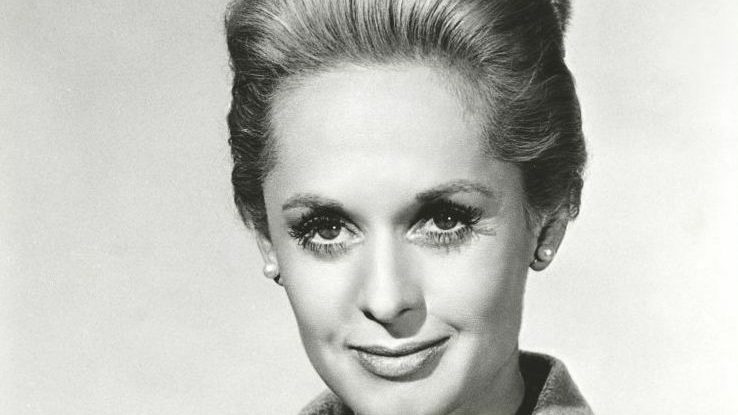
Nathalie Kay Hedren was born on January 19, 1930, in New Ulm, Minnesota. She began modeling at 20, signed with the Eileen Ford Agency, and quickly became a regular in magazines like Glamour, McCall's, and Life, appearing on covers and in advertisements that made her face familiar across America. She had no acting training and no particular ambition to act. What she had was a look: cool, blonde, elegant, and slightly remote, the exact look Alfred Hitchcock had spent a career searching for.
Hitchcock discovered her in a 1961 television commercial for Sego, a diet drink, and invited her to audition. She was given a golden pin shaped like three birds and signed to a seven-year contract. It was the kind of discovery story Hollywood loves to tell, and it was also, as Hedren later made clear, the beginning of a professional relationship that would become deeply troubled. But in 1963, none of that was public. What was public was The Birds, and the young woman at its center.
The Birds, Marnie, and Two Years That Changed Cinema
The Birds (1963) made Hedren a star overnight. She played Melanie Daniels, the San Francisco socialite who travels to Bodega Bay and finds herself under attack by thousands of birds, in a film that remains one of the most unsettling horror movies ever made. She won the Golden Globe for New Star of the Year, and she became, instantly, a household name. The following year she starred in Marnie (1964), playing a compulsive thief with a traumatic past, a darker and more difficult role that demonstrated a range the public had not expected from a model turned actress.
The two films, made back to back, secured her place in cinema history, and they also ended her collaboration with Hitchcock. Hedren later spoke publicly about Hitchcock's treatment of her, including behavior she described as abusive, and about refusing to work with him further. Her daughter Melanie Griffith later said her mother became an example of what to never let happen in her own life, and her granddaughter Dakota Johnson has said she was taught self-respect and grace and strength by her grandmother's example. It is a legacy that goes beyond the films themselves: Hedren spoke, decades before it was common, about what a powerful director had done, and she paid a professional price for it.
After Hitchcock: Eighty Credits and a Second Career
Hedren's career after Hitchcock was long and varied, even if it never again reached the heights of 1963 and 1964. She appeared in more than 80 film and television productions, including A Countess from Hong Kong (1967), Charlie Chaplin's final film, in which she played a supporting role, and, decades later, Citizen Ruth (1996) and I Heart Huckabees (2004), in which she played older, sharper, funnier women than the ingenues of her youth. Her years active on screen stretched from 1950 to 2018, a span of nearly seven decades, and her last credited role, according to Hello magazine, was in The Ghost and the Whale (2017).
She was also, throughout those years, a working actress in the unglamorous sense: guest spots, supporting roles, independent films, and the occasional return to the spotlight when a Hitchcock retrospective or a film festival called. She received a star on the Hollywood Walk of Fame in 2003, in a ceremony attended by three generations of her family, and she won the Jules Verne Award for her contributions to film and to animal welfare. The acting career, in the end, was only half the story.
Roar: The Film That Took Over Her Life
In the 1970s, Hedren and her then-husband, producer Noel Marshall, began work on a film about lions, called Roar. It took more than a decade to bring to the screen, and its production was famously dangerous: the cast and crew worked alongside untrained lions, tigers, and other big cats, and many people were injured, including Hedren herself. The film was finally released in 1981, to little commercial success, but it changed Hedren's life in a way no box-office hit could have.
The animals from Roar needed a home, and Hedren gave them one. In 1983 she founded the Roar Foundation, which supports the Shambala Preserve, an 80-acre sanctuary in Acton, California, where lions, tigers, and other big cats live out their lives in safety. The preserve became her life's work, and she devoted decades to it, fundraising, advocating, and caring for animals that could never return to the wild. It was, in many ways, a more consequential achievement than any film: a place that exists because one actress refused to abandon the animals her movie had used.
The Nail Salons, and an Unexpected Legacy
Hedren's other great legacy has nothing to do with film or with animals, and it is one of the most surprising stories in American cultural history. In the 1970s, through relief work with Vietnamese refugees in Sacramento, California, she helped a group of Vietnamese women learn nail care, bringing in her own manicurist to teach them. Those women went on to build businesses, and the Vietnamese-American nail salon industry, now worth billions of dollars and employing tens of thousands of people, traces its origins directly to Hedren's intervention.
The story became the subject of the documentary short Happy Hands, which screened at Sonoma in 2014, and it is a reminder of how wide Hedren's influence has been. She did not set out to create an industry. She saw women who needed work, she knew something about beauty, and she made a connection. It is the same instinct that drove the Shambala Preserve: see a need, use what you have, and follow through for decades. Few film stars can claim a legacy that includes both lions and livelihoods.
Family, and the Quiet Final Years
Hedren's family is itself a Hollywood story. Her daughter, Melanie Griffith, born during her marriage to actor Peter Griffith (1952-1960), became a successful actress in her own right, in films including Joy Ride, Paradise, and Mulholland Falls. Griffith's daughter, Dakota Johnson, born during Griffith's marriage to Don Johnson, has continued the legacy in films including the Fifty Shades series, Black Mass, and Bad Times at the El Royale. The three generations have appeared together publicly many times, including at Hedren's Walk of Fame ceremony in 2003, at a film screening in Los Angeles in 2008, and at the Elle Women in Hollywood Awards in 2015.
In recent years, Hedren has kept a low profile. In February 2024, her representatives told Spanish journalist Gustavo Egusquiza, who had requested an interview, that she has dementia, cannot remember her career, and cannot be interviewed. The news was reported by the Daily Mail and others, and it reframed her absence from public life: not a retirement chosen for privacy, but a condition that made public life impossible. Her family has handled the situation privately, sharing only occasional glimpses, including a video posted by Griffith in January 2025, in which Hedren blew out candles on a mint green cake for her 95th birthday, with Griffith writing that her mother was happy, healthy, and feisty.
Ninety-Six, and Still With Family
On January 19, 2026, Hedren turned 96, and her family gathered at Griffith's Los Angeles home to celebrate. Photographers captured her arriving with assistance and later leaving, with her grandson Alexander Bauer, Griffith's son with actor Steven Bauer, guiding her down a set of stairs. She wore a floral blazer over a purple blouse and black pants, and later changed into a patterned sweater. It was a private family occasion, not a professional appearance, and it was the first time she had been seen in about a year.
The photographs, shared widely, prompted an outpouring of affection from classic film fans, and they also prompted reflection on what Hedren represents: a woman who survived Hitchcock, who survived Hollywood, who saved lions and launched an industry, and who is now, in her tenth decade, cared for by the family she built. The birthday was not a comeback, and it should not be mistaken for one. It was a family celebrating a mother and a grandmother, and a public catching one more glimpse of a woman it has never quite forgotten.
Why Tippi Hedren's Story Still Matters
Tippi Hedren's story matters because it refuses to fit into a single narrative. She was a Hitchcock blonde, and she was also the woman who spoke out about Hitchcock. She was a movie star, and she was also a lion keeper. She was a model, and she was also, improbably, the godmother of an entire industry. And she is now a 96-year-old woman with dementia, cared for by her daughter, whose own career Hedren's example shaped.
What happened to Tippi Hedren, then, is everything and nothing like what people expect. She did not vanish. She worked for nearly seventy years, she built a sanctuary that still stands, she changed thousands of lives she never met, and she raised a family that is still making films. The birds, in the end, did not get her. She outlived them all, and she did it on her own terms, which is the most Hitchcockian twist of all: the woman in danger turned out to be the one in control.
A Star on the Sidewalk, and a Family That Remembers
Hedren received her star on the Hollywood Walk of Fame in 2003, in a ceremony attended by three generations of her family, and the photograph from that day, grandmother, daughter, and granddaughter together, has become one of the defining images of her later life. It captured something unusual: a Hollywood dynasty in which each generation of women learned from the one before, not just about acting, but about survival. Griffith has said her mother became an example of what to never let happen in her own life, and Johnson has said she was taught self-respect and grace and strength by her grandmother’s example. That transmission of wisdom, from mother to daughter to granddaughter, may be Hedren’s most important legacy, more lasting than any film.
Frequently asked questions
What happened to Tippi Hedren?
Tippi Hedren is 96 and living privately with family care. She starred in Hitchcock's The Birds (1963) and Marnie (1964), founded the Shambala Preserve for big cats in 1983, and her representatives said in 2024 that she has dementia and cannot be interviewed.
Is Tippi Hedren still alive?
Yes. She turned 96 on January 19, 2026, and celebrated with family at her daughter Melanie Griffith's Los Angeles home.
Does Tippi Hedren have dementia?
Her representatives told journalist Gustavo Egusquiza in February 2024 that she has dementia, cannot remember her career, and cannot be interviewed. No further medical detail has been given by her family.
What was Tippi Hedren famous for?
She was famous as Alfred Hitchcock's discovery, starring in The Birds (1963), for which she won the Golden Globe for New Star of the Year, and Marnie (1964). She went on to more than 80 film and television credits.
What is the Shambala Preserve?
The Shambala Preserve is an 80-acre sanctuary in Acton, California, for lions, tigers, and other big cats, supported by the Roar Foundation, which Hedren founded in 1983 after making the film Roar (1981).
How is Tippi Hedren related to Dakota Johnson?
Tippi Hedren is Dakota Johnson's grandmother. Hedren's daughter is actress Melanie Griffith, and Griffith's daughter with actor Don Johnson is Dakota Johnson.
Did Tippi Hedren help create the Vietnamese nail salon industry?
Yes. Through 1970s relief work with Vietnamese refugees in Sacramento, she helped Vietnamese women learn nail care, and those women went on to build the Vietnamese-American nail salon industry.
What was Tippi Hedren's last movie?
Her last credited role, according to Hello magazine, was in The Ghost and the Whale (2017). Her screen career spanned from 1950 to 2018.
Sources
- EN WikipediaBiography, The Birds, Marnie, Roar, Shambala, family
- Hello Magazine96th birthday, family legacy, Hitchcock account
- EntertainmentNow96th birthday gathering, 2024 dementia disclosure, 95th birthday video