What Happened to Tim Conway, Comic Legend?
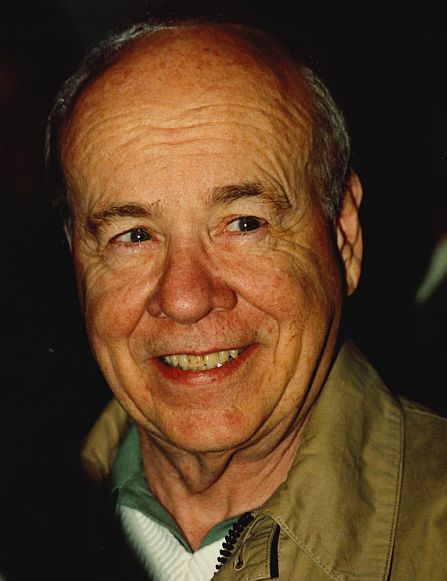
Thomas Daniel Conway of Willoughby, Ohio
Thomas Daniel Conway was born on December 15, 1933, in Willoughby, Ohio, a small city east of Cleveland, and he grew up, by his own account, as a funny kid who did not know, for a long time, that funny could be a job. He attended Bowling Green State University, served in the United States Army from 1956 to 1958, and worked in radio in Cleveland, where he met a young comedian named Ernie Anderson, who would become his lifelong friend and collaborator, and where he began to develop the characters and the timing that would make him famous. Conway's comedy was not loud or aggressive. It was slow, deadpan, and built on the gap between what a character thought he was doing and what he was actually doing, a style that required patience from the audience and that rewarded it, every time, with a laugh that seemed to come from nowhere and everywhere at once.
Conway came to Hollywood in the early 1960s, and his first great break was The Steve Allen Show, where he appeared from 1961 onward, playing sketches and learning, from Allen, the art of live television comedy. He was, by the accounts of those who worked with him, a quick study, a man who could improvise, who could stay in character while everyone around him fell apart, and who understood, instinctively, that the funniest thing a comic can do is not to laugh at his own joke. He was hired, in 1962, for a new sitcom about a Navy crew in the Pacific during World War II, a show that would make him a star and that would, in its way, define the first half of his career.
Ensign Parker on McHale's Navy, 1962 to 1966
McHale's Navy premiered in 1962, and Conway played Ensign Charles Parker, the naive, earnest, accident-prone second-in-command to Ernest Borgnine's Lieutenant Commander Quinton McHale, a crew of misfits stationed on a Pacific island during World War II who spent as much time scheming as fighting. The show ran from 1962 to 1966, and Conway's Parker, opposite Borgnine's McHale and Joe Flynn's blustering Captain Binghamton, became one of the great sitcom second bananas: a man who meant well, who tried hard, and who failed, hilariously, at almost everything he attempted. Conway played Parker with a wide-eyed sincerity that made the character lovable rather than merely foolish, and he became, in the process, a television star, a comic actor whose face and voice were familiar to millions of viewers.
McHale's Navy also gave Conway his first sustained experience of ensemble comedy, working with Borgnine, a serious film actor who loved comedy, and Flynn, a master of the slow burn, and learning how to play off other performers rather than merely performing at them. The show ended in 1966, and Conway, who had spent four years as Parker, looked for his next role, not knowing that it would be, in a way, the role of his life, and that it would come not as a series regular but as a guest, on a variety show hosted by a woman named Carol Burnett, who had seen him on McHale's Navy and who wanted him, desperately, on her show.
The Carol Burnett Show and Harvey Korman
Conway began appearing as a guest on The Carol Burnett Show in 1967, and he became a regular in 1975, remaining through the show's end in 1978, and in those years he created some of the most beloved characters in variety-show history. He played Mr. Tudball, the mumbling, shuffling businessman whose secretary, Mrs. Wiggins, played by Burnett, could never understand a word he said, and he played the Oldest Man, a doddering, shuffling figure who moved at a pace that defied physics and who, in one famous sketch, took an entire sketch to cross a room. He played, above all, himself: a comic who could make his fellow performers break character, who could reduce Harvey Korman, one of the great straight men in comedy, to helpless laughter, while Conway himself remained, perfectly, in character, a feat that became legend among Burnett fans and that Korman himself described as both infuriating and delightful.
The Burnett years earned Conway four Emmy Awards tied to the show, for acting and for writing, and they made him, in the public mind, the funniest man on television, a title he held lightly and that he never seemed to take seriously. He was, by the accounts of Burnett and Korman, a generous performer, a man who made everyone around him funnier, and who understood that comedy is a team sport, even when one player is stealing every scene. The show ended in 1978, but Conway's association with Burnett continued for decades, in reunions, in specials, and in the affection of fans who still quote Mr. Tudball and the Oldest Man, and who still laugh, forty years later, at the memory of Korman trying, and failing, not to laugh.
Barnacle Boy, the Apple Dumpling Gang and Later Work
After Burnett, Conway worked steadily, in sitcoms, in films and in voice work, and he found, in his later years, a second audience among children who had never seen McHale's Navy or The Carol Burnett Show. He voiced Barnacle Boy, the retired superhero sidekick, on SpongeBob SquarePants, playing opposite Ernest Borgnine, his old McHale's Navy co-star, as Mermaid Man, a reunion that delighted fans of both shows and that introduced Conway to a generation that knew him only as a cartoon voice. He appeared in family films, including The Apple Dumpling Gang in 1975 opposite Don Knotts, his old friend and collaborator, a pairing that fans of both men loved, and he continued to appear on television, in guest roles and in specials, well into his seventies and eighties, always funny, always in character, always the man who could make a room laugh without raising his voice.
Conway's later Emmy Awards came for guest roles that showed his range had not diminished with age. He won a guest Emmy for Coach in 1996, playing a character who was, in the show's terms, a version of himself, and he won a guest Emmy for 30 Rock in 2008, playing Bucky Bright, a former television star, in an episode that paid tribute to the variety-show era Conway had helped define. He also won a Golden Globe, and he received, over his career, a total of six Emmy Awards, a tally that places him among the most honored comic actors in television history. He was, by the end of his career, not only a beloved performer but a respected one, a man whose peers recognized, with awards, what audiences had always known: that Tim Conway was one of the greats.
Six Children, a Second Marriage and a Family Fight
Conway married twice. His first marriage, to Mary Anne Dalton, produced six biological children, and ended in divorce. His second marriage, to Charlene Fusco, whom he married on May 18, 1984, lasted thirty-five years, until his death, and Charlene became, in his final years, his primary caregiver, a role that would become, in 2018 and 2019, the subject of a painful public dispute. Conway also had a stepdaughter through Charlene, and he was, by the accounts of his children, a devoted father, a man who loved his family and who, even as his health declined, remained, in their memories, the funny, gentle man they had always known. The family dispute that marked his final year did not erase that, but it did, for a time, overshadow it, and it deserves to be told plainly, because it was part of what happened to Tim Conway.
In 2018, Conway's daughter Kelly sought a conservatorship over her father, arguing that his wife Charlene was not providing adequate care, and Charlene opposed the petition, arguing that she was caring for him appropriately and that Kelly's intervention was unnecessary. The court, in March 2019, appointed Charlene as conservator, rejecting Kelly's petition, and the dispute, which had played out in public filings and in the press, ended, legally, in Charlene's favor. The family, by most accounts, remained divided, and the dispute added a layer of sadness to Conway's final months that his fans, who knew him only as a comic, found difficult to reconcile with the man they loved. This article does not take a side in the dispute, because the court did, and because the facts of Conway's care are, in the end, a private family matter that became public only through litigation.
Hydrocephalus, Shunt Surgery and the Final Year
Conway's final illness began with normal pressure hydrocephalus, a condition in which excess cerebrospinal fluid builds up in the brain's ventricles, causing difficulty walking, thinking and speaking, and which is treated, when possible, with a shunt, a tube that drains the excess fluid. Conway underwent shunt surgery in October 2018, and his family reported, afterward, that his voice had never returned, a devastating outcome for a man whose voice had been his instrument for sixty years. His representative said, at the time, that Conway had no signs of dementia or Alzheimer's disease, a statement that this article reports as the family's position, because other reports, in the press, described dementia, and the two accounts cannot both be complete. This article does not assert dementia as a fact, because the family's representative explicitly denied it, and because the medical facts, beyond the hydrocephalus diagnosis and the shunt surgery, have not been publicly confirmed in detail.
Conway died on the morning of May 14, 2019, at a Los Angeles-area care facility, at eighty-five, of complications from normal pressure hydrocephalus, with his family requesting, in lieu of flowers, donations to The Lou Ruvo Center for Brain Health at the Cleveland Clinic in Las Vegas, a center devoted to brain disorders including hydrocephalus and dementia. The tributes that followed came from Burnett, who called him a treasure, from Korman's family, from SpongeBob fans, and from a generation of comedians who had learned, from Conway, that the funniest thing you can do is to stay in character while the world falls apart around you. He was, by every account, one of the kindest men in comedy, and his death, at eighty-five, after a year in which he could no longer speak, felt, to his fans, like a particularly cruel joke, the kind Conway himself would never have told.
What Happened to Tim Conway, in the End
So what happened to Tim Conway? He became Ensign Parker, he became Mr. Tudball and the Oldest Man, he became Barnacle Boy, and he spent sixty years making people laugh by staying in character while everyone else fell apart, a discipline that made him, in the judgment of his peers, one of the great comic actors in American television. He won six Emmy Awards, he made Carol Burnett and Harvey Korman break, he voiced a superhero sidekick for a new generation, and he died on May 14, 2019, at eighty-five, of complications from normal pressure hydrocephalus, after shunt surgery that took his voice and a family dispute over his care that the court resolved in his wife's favor. He was survived by his wife Charlene, his six children and his stepdaughter, and by a body of work that still makes people laugh, in reruns, in cartoons and in memory.
What remains is the Oldest Man, still shuffling across a stage in reruns, still taking forever to cross a room, and Mr. Tudball, still mumbling to Mrs. Wiggins, and Barnacle Boy, still grumbling beside Mermaid Man, and the lesson Conway taught, without ever saying it, that comedy is not about being loud or fast or clever, but about being true to a character, even when the character is ridiculous, especially when the character is ridiculous, and about never, ever breaking, no matter how hard Harvey Korman is laughing.
Frequently asked questions
What happened to Tim Conway?
Tim Conway died on May 14, 2019, at a Los Angeles-area care facility at 85, of complications from normal pressure hydrocephalus. He had played Ensign Parker on McHale's Navy and was a star of The Carol Burnett Show.
Who did Tim Conway play on The Carol Burnett Show?
He was a guest from 1967 and a regular from 1975 to 1978, playing Mr. Tudball, the Oldest Man, and himself, famously making Harvey Korman break character while Conway stayed in character.
How many Emmys did Tim Conway win?
Six: four tied to The Carol Burnett Show (acting and writing), plus guest Emmys for Coach (1996) and 30 Rock (2008). He also won a Golden Globe.
Who did Tim Conway play on SpongeBob SquarePants?
Barnacle Boy, the retired superhero sidekick, opposite Ernest Borgnine as Mermaid Man, his old McHale's Navy co-star.
What was Tim Conway's cause of death?
Complications from normal pressure hydrocephalus, in which excess cerebrospinal fluid enlarges the brain's ventricles. He had shunt surgery in October 2018 and his voice never returned.
Did Tim Conway have dementia?
His representative said he had no signs of dementia or Alzheimer's, while other reports described dementia. This article does not assert dementia as fact, reporting the family's position.
Was Tim Conway married?
Twice: first to Mary Anne Dalton, with whom he had six children, and then to Charlene, married May 18, 1984, until his death, plus a stepdaughter.
What was the family dispute over Tim Conway's care?
In 2018 his daughter Kelly sought a conservatorship, arguing his wife Charlene was not providing adequate care. The court appointed Charlene as conservator in March 2019.
Sources
- ET OnlineDeath May 14, 2019, at 85, normal pressure hydrocephalus, six Emmys, McHale's Navy, Burnett Show
- TheWrapDeath, six Emmys, Burnett regular 1975-1978, Coach and 30 Rock guest Emmys, Barnacle Boy
- Case Western Reserve EncyclopediaBirth December 15, 1933, Willoughby, Ohio, McHale's Navy, Burnett Show, six Emmys