What Happened to Tab Hunter?
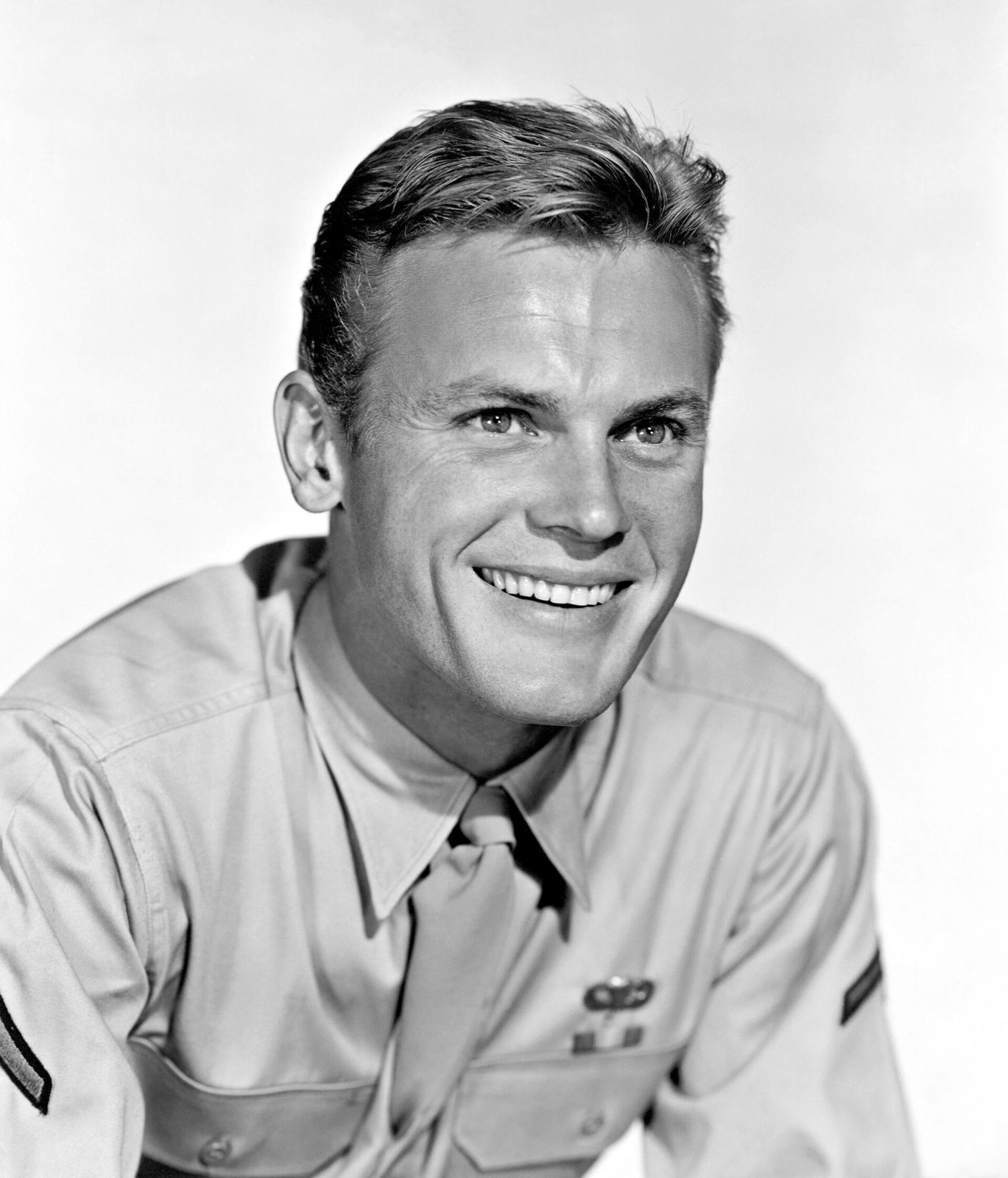
The Boy Who Became Tab Hunter
Arthur Andrew Kelm was born on July 11, 1931, in New York City, the second son of a mechanic and his German immigrant wife. His father left the family two years later, and the boy took his mother's name, Gelien. He grew up in San Francisco and Long Beach, California, and at 15 he joined the Coast Guard, lying about his age. While in New York he saw Broadway plays and became interested in acting, and back in California he caught the eye of talent agent Henry Willson, the man who had also named Rock Hudson and Rory Calhoun. Willson arranged a two-word role for him in a small western, The Lawless (1950), paid him 500 dollars, and gave him a new name. The legend, repeated in his obituaries, is that Willson asked about his hobbies, heard that he rode horses, and said: we will call you Tab Hunter.
Hunter had no dramatic training, but he had the look the studios wanted, and the fuss began two years later when he appeared bare-chested opposite Linda Darnell in the British-made Island of Desire (1952). Warner Bros., alert to the increasingly important youth market, signed him to a contract, and his handsome face and muscular build began appearing on magazine covers. He was, in the language of the time, a heartthrob before he was an actor, and the studio set about making him a star whether or not he knew how to act yet.
The 1950s Heartthrob
The roles came quickly. Battle Cry (1955), based on Leon Uris's novel of Marines in the Pacific, made him a genuine movie star, and The Girl He Left Behind (1956) and Damn Yankees (1958), in which he played the fan who sells his soul to help the Washington Senators, kept him at the top of the box office. Warner Bros. dubbed him The Sigh Guy, and in the press he was linked to famous stars like Natalie Wood and Debbie Reynolds. What the press did not print, and what the studio worked hard to hide, was that Hunter was gay, carrying on a long-term relationship with Psycho actor Anthony Perkins while being sold to teenage girls as the perfect boyfriend.
The pressure of that double life is the subject of his memoir, and it explains much of what followed. He believed, as he later wrote, that a person's happiness depends on being true to themselves, and that being true to himself, sexually, was impossible in 1953. The scandal sheets ran innuendo and smear articles, and in 1960 his boy-next-door reputation took a hit when he was charged with cruelty for allegedly beating his dog. He was acquitted, but the episode showed how fragile a manufactured image could be, and how little control the star himself had over it.
Young Love and the Pop Charts
While his film career was peaking, Hunter became a pop star almost by accident. His recording of Young Love topped the Billboard pop chart in 1957 and stayed there for weeks, selling more than two million copies and earning a gold disc. It was a soft, sincere ballad, perfectly matched to his image, and it made him one of the few performers of his generation to top both the box office and the charts. The success was real, but it was also another layer of the same image: the singing heartthrob, the boy next door with a guitar, the fantasy that millions of young fans bought into without ever knowing the man behind it.
The hits did not last, and neither did the studio system that had created him. As the 1950s ended, the big contracts dried up, the youth market moved on to rock and roll, and Hunter found himself a former teen idol in his late twenties, famous for an image he had never chosen. He kept working, in films and on stage and in dinner theaters, but the white-hot fame of the Battle Cry years was behind him, and he did not chase it. He had, as he later put it, his fling, and he was very fortunate, but that chapter was in his past.
The Television Years and Ranch Life
After the studio system faded, Hunter found steady work on the small screen and the stage. In 1960 he starred in his own television series, The Tab Hunter Show, which ran into 1961, and through the 1960s he kept working in television guest roles and stage productions, including dinner theatre, the circuit where former film stars played to loyal audiences night after night. It was a different kind of fame from the Battle Cry years: smaller rooms, longer runs, and an audience that already knew his face and his songs.
Away from the cameras, he built a life around horses, the passion that had given him his stage name in the first place. A longstanding horse owner, he lived for a time on a ranch in New Mexico, and later made his home in Montecito with Glaser. He did not chase the white-hot fame of his youth. He organized film projects, appeared in dinner theatres, and lived contentedly outside the spotlight, the same quiet life his memoir would later describe with such plain affection. The ranch years were not a retreat from the world so much as a choice of a smaller, steadier one.
The Secret Life Behind the Smile
For decades, Hunter's private life stayed private, by necessity and then by habit. He had grown up, as he told the Associated Press in 2005, full of denial, and he did not like suggestions or questioning about his sexuality. Writing his memoir was difficult for him precisely because he was a private person, and because the story it told, of a gay man turned into a heterosexual fantasy for mass consumption, was one Hollywood had spent fifty years trying not to tell. The book described the stresses of being a love object to millions of young women when he was, in reality, a gay man, and it described a relationship with Perkins that had been one of the great secrets of 1950s Hollywood.
The memoir changed how he was remembered. Instead of a footnote, a pretty face from a vanished studio era, he became a witness to that era, and a pioneer of self-acceptance, in the words of actor Zachary Quinto, who praised his vital and generous nature after his death. GLAAD mourned him, Harvey Fierstein called him a gay icon and a true gentleman, and younger audiences discovered him not as a poster but as a person. The smile in the photographs did not change. What changed was what people understood about the man wearing it.
Cult Films and a Second Act
Before the memoir, there had been a second act of a different kind. In the 1980s Hunter appeared in the cult films that introduced him to a new generation: John Waters's Polyester (1981), in which he played the dreamy Todd Tomorrow opposite Divine, and Lust in the Dust (1985), a western spoof with Divine and Lainie Kazan. He also appeared in Grease 2 (1982). These were not comebacks in the usual sense. They were winks, knowing performances by a man who understood camp because he had lived inside a manufactured image, and they earned him a devoted following among audiences who had never seen Battle Cry.
His last film role came in the horse-themed family film Dark Horse (1992). Hunter, a longstanding horse owner, wrote the original story and co-produced the film with Glaser, his life partner of more than three decades. After living on a ranch in New Mexico for a time, he took a home in Montecito with Glaser, and he did not dwell on his Hollywood career or regret losing it. He organized film projects, appeared in dinner theaters, and lived, by most accounts, contentedly outside the spotlight that had once defined him.
The Memoir That Told the Truth
Tab Hunter Confidential: The Making of a Movie Star, published in 2005, became a New York Times bestseller and the definitive account of his life. It told the story of the name, the magazines, the girlfriends invented for publicity, and the fear that a single honest sentence could end a career. It also told a happier story: of a man who survived the system, found a lasting partnership with Glaser, and lived long enough to see the world change around him. A documentary based on the book followed, and Hunter spent his final years answering questions from crowds at book signings, no longer hiding, no longer performing a role he had not chosen.
The book's success proved that audiences wanted the truth more than they had ever wanted the fantasy. Young Love still plays on oldies radio, Battle Cry still turns up on television, but the thing people quote now is Hunter's own line about happiness depending on being true to oneself. It is a strange legacy for a studio-manufactured heartthrob, and a better one than the magazines ever offered him.
His Death and Legacy
On July 8, 2018, three days before his 87th birthday, Hunter died at his home in Santa Barbara County, California. A post on his Facebook page announced it that night: Tab passed away tonight, three days shy of his 87th birthday, it read, asking fans to honor his memory with a prayer, as he would have liked that. Glaser told the Associated Press that Hunter died of a blood clot in his leg that caused cardiac arrest, and called the death sudden and unexpected. He was 86.
What he left behind is larger than any single film. There is the heartthrob of the 1950s, the singer of Young Love, the cult star of Polyester, and the memoirist who told the truth about all of it. He was, as Fierstein put it, a true gentleman, and as Quinto put it, a pioneer of self-acceptance who moved through the world with authenticity as his guide. For a man who spent his youth pretending to be someone else, that is the most fitting epitaph of all: in the end, he got to be himself, and the world finally got to know him.
Frequently asked questions
What happened to Tab Hunter?
Tab Hunter died on July 8, 2018, at age 86, at his home in Santa Barbara County, California. His spouse, Allan Glaser, told the Associated Press he died of a blood clot in his leg that caused cardiac arrest, and called the death sudden and unexpected.
What was Tab Hunter famous for?
He was a 1950s film heartthrob known for Battle Cry (1955) and Damn Yankees (1958), and a pop singer whose Young Love topped the Billboard chart in 1957. Later he became known for his candid 2005 memoir and for cult films like Polyester (1981).
What was Tab Hunter's real name?
His birth name was Arthur Andrew Kelm. He later took his mother's name, Gelien, before agent Henry Willson gave him the stage name Tab Hunter.
Was Tab Hunter gay?
Yes. Hunter was gay, and his 2005 memoir Tab Hunter Confidential described the strain of being marketed as a heterosexual heartthrob while carrying on a long-term relationship with actor Anthony Perkins.
What was Tab Hunter's last movie?
His last film role was Dark Horse (1992), a horse-themed family film whose original story he wrote and which he co-produced with his partner, Allan Glaser.
How did Tab Hunter get his name?
According to the story repeated in his obituaries, agent Henry Willson asked about his hobbies, heard that he rode horses, and said: we will call you Tab Hunter.
Did Tab Hunter win any awards for Young Love?
Young Love topped the Billboard pop chart in 1957 and sold more than two million copies, earning a gold disc.
Where did Tab Hunter live at the end of his life?
He lived in Montecito, in Santa Barbara County, California, with his partner Allan Glaser, after earlier living on a ranch in New Mexico.
Sources
- EN WikipediaBiography, films, Young Love, memoir, death
- Associated Press via Free LibraryDeath at 86, blood clot, Glaser statement, memoir
- Legacy (Associated Press obituary)Death, spouse statement, career summary