What Happened to Robert Reed, Mike Brady?
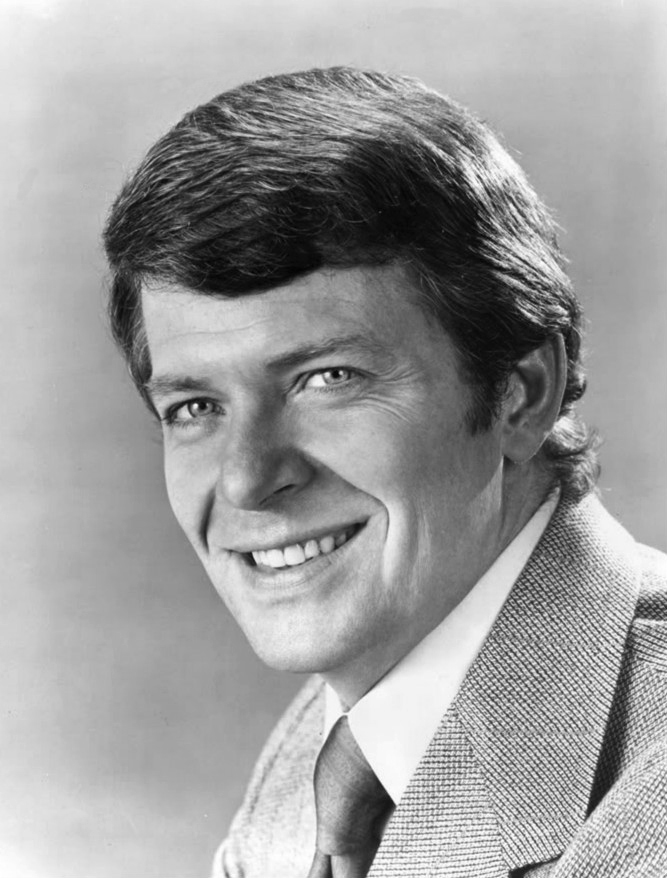
John Robert Rietz Jr., Shakespearean Actor
Robert Reed was born John Robert Rietz Jr. on October 19, 1932, and he became an actor the hard way: through training, not through luck. He studied at Northwestern University, where he appeared in more than fifty productions, and he went on to the Royal Academy of Dramatic Art in London, the most prestigious acting school in the English-speaking world, before returning to the United States to work on Broadway and in summer stock. He was, by temperament and by training, a serious actor, a man who loved Shakespeare and who believed that television, at its best, could be as serious as the stage. He changed his name to Robert Reed early in his career, and he made his television debut in the 1950s, working in anthology dramas and Westerns, building a reputation as a reliable, intelligent performer who could carry a scene without showboating.
Reed's first great television role arrived in 1961, when he was cast as Kenneth Preston on The Defenders, the CBS legal drama in which E. G. Marshall played Lawrence Preston, a defense attorney, and Reed played his son and law partner, a father-and-son team who defended clients in cases that tested the law's limits. The show ran from 1961 to 1965, won Emmy Awards for Outstanding Drama Series, and gave Reed his first sustained fame, as the earnest young lawyer who argued, with his father, for justice in a world that did not always want it. The Defenders was, in its way, the opposite of The Brady Bunch: serious, topical, morally complex, and it established Reed as a dramatic actor of real standing, a man who could hold his own opposite E. G. Marshall, one of the great actors of his generation.
The Defenders, 1961 to 1965
On The Defenders, Reed played Kenneth Preston with a quiet intensity that made the father-and-son dynamic the show's emotional center. Lawrence Preston was the experienced, sometimes cynical elder lawyer, and Kenneth was the idealistic younger man who believed the law could be just, and the tension between them, played out over four seasons, gave the show its moral weight. Reed was not the show's star, Marshall was, but he was its conscience, and he played the role with a seriousness that never wavered, even when the cases were sensational and the scripts were, by the standards of the era, unusually frank about abortion, capital punishment and civil rights. The show ended in 1965, and Reed, who had spent four years playing a lawyer, looked for his next role, not knowing that it would be, in every way, the opposite of Kenneth Preston.
After The Defenders, Reed worked in television and on stage, and he taught Shakespeare at UCLA, a passion that never left him and that he returned to throughout his life. He was, by the late 1960s, a respected actor with a classical background and a serious reputation, and he was, by his own account, not looking for a sitcom. When Sherwood Schwartz offered him the role of Mike Brady, the father on a new show about a blended family, Reed took it, in part because it was steady work and in part because he thought the show, about a widowed father and a divorced mother raising six children together, had a decent premise. He did not know, and could not have known, that Mike Brady would become the role he was remembered for, and that the serious actor from The Defenders would become, for millions of children, simply Dad.
Mike Brady, 1969 to 1974
The Brady Bunch premiered on ABC in 1969, and Reed played Mike Brady, an architect, a widower with three sons, who marries Carol Martin, a divorcee with three daughters, and who becomes, with Carol, the parent of a blended family of six children, a dog and a housekeeper named Alice. He played Mike for the show's entire run, from 1969 to 1974, and he played him as a warm, sensible, slightly exasperated father, the kind of dad who could solve any problem with a talk in the den and who never, ever raised his voice. The performance made Reed famous to a generation of children who had never seen The Defenders, and it made Mike Brady one of the great television fathers, a man who was, for millions of viewers, the ideal of what a father should be: patient, funny, wise and endlessly available.
Behind the scenes, Reed was less serene. He was a trained Shakespearean actor playing a sitcom father, and he took the scripts seriously, sometimes too seriously for a show that was, by design, light entertainment. He wrote long, detailed memos to Schwartz pointing out plot holes, scientific errors and logical impossibilities in the scripts, memos that Schwartz found maddening and that Reed found necessary, because he believed that even a sitcom should make sense. The most famous clash came over the fifth-season finale, in which Greg Brady uses a hair tonic that turns his hair orange, a story Reed thought was absurd and unscientific, and he refused to appear in the episode, a protest that became legend among Brady fans and that, in its way, captured the tension at the heart of Reed's career: a serious actor trapped, by success, in a role he respected but did not love.
Three Emmy Nominations and a Teacher's Life
While The Brady Bunch was running, and after it ended, Reed continued to do serious dramatic work, and the work earned him the recognition that Mike Brady never could. He was nominated for three Primetime Emmy Awards in total: two in 1976, one for a two-part guest role on Medical Center and one for his performance in the miniseries Rich Man, Poor Man, and one in 1977, for his role in the landmark miniseries Roots, in which he played a plantation owner. The nominations confirmed what The Defenders had already shown: Reed was a dramatic actor of the first rank, capable of work that had nothing to do with sitcom fathers, and he valued the nominations precisely because they recognized the actor he had trained to be, not only the father he had become famous for playing.
Reed also returned, throughout his life, to teaching, offering Shakespeare classes at UCLA and sharing, with students, the classical training that had shaped him. He was, by the accounts of those who knew him, a generous teacher, a man who loved the plays and who believed that acting was a craft that could be taught and learned, not only a gift. He reprised Mike Brady in reunion programs, including A Very Brady Christmas in 1988 and The Bradys in 1990, and he did so, by most accounts, with affection for his co-stars, even as he continued to grumble about the scripts. He had made his peace, more or less, with being Mike Brady, and he had found, in teaching and in serious guest roles, the other half of his professional life.
A Private Man and a Brief Marriage
Reed's personal life was, by design, private, and it remained private even after his death, when the facts that emerged surprised even his closest colleagues. He married briefly in the 1950s, a marriage that ended in divorce, and he had one daughter, Karen, who became the center of his personal life and who, at the end, was one of only two people allowed to visit him in hospital, along with his close friend, actress Anne Haney. Reed was, by the accounts of those who knew him, a gay man who lived much of his life in an era when a television star could not be openly gay, and he kept his private life separate from his public image as America's favorite father, a separation that cost him and that he maintained, with discipline, for decades. This article does not speculate about the details of his private life beyond what his family and colleagues have confirmed, because Reed himself chose privacy, and his choice deserves respect.
What is known, and what matters for understanding his final years, is that Reed was diagnosed with HIV in the spring of 1991, and that he kept the diagnosis private, telling only a small circle. He was diagnosed with colon lymphoma in November 1991, and he underwent treatment at Huntington Memorial Hospital in Pasadena, where he died on May 12, 1992, at fifty-nine. His death certificate, made public after his death, listed HIV-positive status as a significant condition contributing to his death, and it specified that he did not have AIDS at the time of his death, a distinction that matters medically and that his family asked the public to respect. How or when he contracted HIV remains unknown, and this article does not speculate about it, because the facts do not support speculation and because Reed's family has never offered an account.
Illness, Death and the Certificate
Reed's final months were, by every account, private and dignified. He was admitted to Huntington Memorial Hospital in Pasadena for treatment of colon lymphoma, and he allowed only his daughter Karen and Anne Haney to visit him, a restriction that surprised his Brady co-stars, who learned of his illness only after his death. Florence Henderson, who had played Carol Brady opposite Reed for five years, said she had not known he was ill, and she spoke, after his death, of her shock and her grief, and of the friendship she had shared with a man she had thought she knew well. The privacy was, in the end, characteristic: Reed had spent his life separating his public role from his private self, and he maintained that separation to the very end, even from the people who had played his family on television for five years.
Reed was buried at Memorial Park Cemetery in Skokie, Illinois, near Chicago, where he had grown up and where his family roots lay. His death, at fifty-nine, from a cancer diagnosed only six months earlier, shocked fans who had grown up with Mike Brady, and the revelation, after his death, that he had been HIV-positive added a layer of complexity to his legacy that his family handled with care, asking that the public remember him as an actor, a teacher and a father, not only as a statistic. The Brady Bunch cast, announcing his death, spoke of him with affection and with regret that they had not known how ill he was, a regret that says as much about Reed's privacy as it does about their love for him.
What Happened to Robert Reed, in the End
So what happened to Robert Reed? He became Kenneth Preston, he became Mike Brady, and he spent his life trying to be both: the serious actor and the sitcom father, the Shakespeare teacher and the dad in the den, the private man and the public ideal. He earned three Emmy nominations for dramatic work, he fought for scripts that made sense, he taught Shakespeare at UCLA, he raised a daughter, and he died on May 12, 1992, at fifty-nine, of colon lymphoma, with HIV-positive status listed as a contributing condition, having kept his illness private even from the people who had played his family. He was buried in Skokie, Illinois, near where he grew up, a serious actor who had become, by accident and by talent, one of television's great fathers.
What remains is Mike Brady, still patient in reruns, still solving problems in the den, and Kenneth Preston, still arguing for justice on The Defenders, and the memos to Sherwood Schwartz, still quoted by Brady fans as proof that Reed took even a sitcom seriously. Reed was, to the end, exactly what his career had made him: a man who believed that acting was a craft, that scripts should make sense, and that a father, on television or off, should be present, patient and kind, even when the world around him was not.
Frequently asked questions
What happened to Robert Reed?
Robert Reed died on May 12, 1992, at Huntington Memorial Hospital in Pasadena, California, at 59, of colon lymphoma diagnosed in November 1991. He had played Mike Brady on The Brady Bunch.
Who did Robert Reed play on The Brady Bunch?
Mike Brady, the architect and widowed father of three sons who marries Carol Martin and becomes father to six children, from 1969 to 1974.
Did Robert Reed have AIDS when he died?
No. His death certificate listed HIV-positive status as a significant condition contributing to his death, but specified that he did not have AIDS at death. He had been diagnosed with HIV in spring 1991.
What was Robert Reed's role before The Brady Bunch?
Kenneth Preston, the son and law partner of E. G. Marshall's Lawrence Preston, on The Defenders (1961-1965), a serious legal drama.
Why did Robert Reed refuse the Brady Bunch finale?
He objected to the fifth-season finale story, in which Greg uses a hair tonic that turns his hair orange, which Reed thought was absurd and unscientific. He refused to appear in the episode.
How many Emmy nominations did Robert Reed receive?
Three: two in 1976 (Medical Center and Rich Man, Poor Man) and one in 1977 (Roots).
Was Robert Reed married?
He married briefly in the 1950s and divorced. He had one daughter, Karen, who was one of only two people allowed to visit him in hospital at the end.
Where is Robert Reed buried?
At Memorial Park Cemetery in Skokie, Illinois.
Sources
- EN WikipediaBirth, Defenders role, Brady Bunch role, three Emmy nominations, death May 12, 1992
- SurvivorNetDeath May 12, 1992, colon lymphoma, Huntington Memorial Hospital, HIV-positive contributing condition
- ScreenRantMike Brady role, death at 59, colon lymphoma, script clashes with Sherwood Schwartz