What Happened to Richard Dawson, Family Feud?
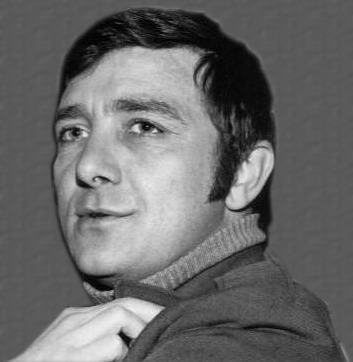
A Gosport Boy Who Ran Away to Sea
Colin Lionel Emm was born on November 20, 1932, in Gosport, Hampshire, England, the son of a father who drove a removal van and a mother who worked in a munitions factory, and he grew up in poverty, in the aftermath of World War II, evacuated from his home as a child, with his older brother, John, to escape the bombing of England's major port cities in the south. He attended school regularly for only two years, by his own account, and at 14 he ran away from home to join the British Merchant Navy, where he pursued a career in boxing, earning almost 5,000 dollars in shipboard matches, and where, in 1950 and 1951, he made several passages on the RMS Mauretania, from Southampton to Nassau, and Havana, and New York City.
After his discharge from the merchant service, he began pursuing a comedy career, using the stage name Dickie Dawson, and later changing his alias to Richard Dawson, which he eventually adopted as his legal name, and he became, in England, a stand-up comedian, appearing on the Benny Hill Showcase on BBC Television in 1954, at 21, and on BBC Radio, and on Juke Box Jury, and he was, by the late 1950s, a working comic, and a familiar face, and a man who had, in a few short years, gone from a removal van driver's son in Gosport to a comedian on the BBC, and who was, in 1961, ready to leave England, and to try America, where, in September of that year, he arrived, in Los Angeles, with a new name, and a new life, ahead of him.
Corporal Newkirk, 1965 to 1971
After his move to the United States, Dawson began hosting a late-night talk show, the Mike Stokey Show, on Los Angeles television station KCOP-TV, and he appeared on The Jack Benny Program, and on The Dick Van Dyke Show, and in 1965, he had a small role in the film King Rat, and then, in the same year, he was cast as Corporal Peter Newkirk on Hogan's Heroes, the CBS sitcom about Allied prisoners of war in a German camp, who spent their time scheming, and sabotaging, and outwitting their captors. Dawson played Newkirk, the Cockney con man, the forger, the thief, the schemer, for six seasons, from 1965 to 1971, in 168 episodes, and he became, over those years, one of the most beloved characters on the show, a man who was funny because he was clever, and clever because he was funny, and who was, in the end, the heart of the camp.
He was, by then, in his thirties, and he had been in America for four years, and he had, in Newkirk, a character that was funny, and warm, and entirely his own, and he played him with a Cockney accent that was real, because he was, after all, from Gosport, and with a timing that had been honed on the stand-up stages of England, and with a warmth that made the audience love him, even when he was stealing, and forging, and scheming. He also had a minor role in Munster, Go Home! in 1966, and he released, in 1967, a psychedelic single, with the songs His Children's Parade and Apples and Oranges, and he was, by the time Hogan's Heroes ended in 1971, a familiar face on American television, and a man who was about to become, in the next decade, a great deal more than that.
Match Game, 1973 to 1978
After Hogan's Heroes was cancelled, Dawson joined the cast of Rowan and Martin's Laugh-In in 1970, and in 1973, the game show pioneer Mark Goodson signed him to appear as a regular panelist on Match Game 73, alongside Brett Somers, and Charles Nelson Reilly, and the host, Gene Rayburn, and he proved, over the next five years, to be one of the funniest, and most popular, panelists in the history of the show. He occupied, most often, the bottom center seat, and he was the frequent choice of contestants to participate in the Head-to-Head Match portion of the Super-Match bonus round, so frequently, in fact, that the producers eventually changed the rules, so that the celebrity partner was randomly selected, because Dawson was being chosen too often, and the game was becoming too easy.
He appeared as a panelist in 1,279 episodes of Match Game, from 1973 to 1978, and he became, over those years, a fixture of daytime television, a man whose jokes, and whose timing, and whose warmth, made him a favorite of the contestants, and of the audience, and of the producers, who saw, in his popularity, the makings of a host, and who began, in 1975, to develop a spin-off game show, based on the Super-Match portion of Match Game, as a vehicle for Dawson, because his popularity among the contestants was so great, and because the audience loved him, and because, in the end, he was the man they wanted to watch, every day, at noon.
The Kissing Bandit of Family Feud
Family Feud debuted on July 12, 1976, on ABC's daytime schedule, with Dawson as its host, and it was, from the first episode, a breakout hit, eventually surpassing the ratings of Match Game itself in late 1977, and it made Dawson, over the next nine years, one of the most famous men on American television. He hosted the show for 3,287 episodes, from 1976 to 1985, and again from 1994 to 1995, and he won, in 1978, a Daytime Emmy Award for Best Game Show Host, for his work on the show, and he became known, to millions of viewers, as the Kissing Bandit, for his habit of kissing the female contestants, a practice that television executives repeatedly tried to get him to stop, and that he defended, by asking viewers to write in and vote on the matter, and receiving, in response, about 200,000 letters, the wide majority of which favored the kissing.
He left Match Game in 1978, due to a combination of the Star Wheel, which affected his being selected for the Head-to-Head Match, and burnout from appearing on both shows, and he devoted himself, from then on, to Family Feud, and to the contestants, and to the families, who came on the show to guess the most popular answers to survey questions, and who left, win or lose, with a kiss, and a memory, and a story to tell. He was, by every account, a host who loved his contestants, and who loved his show, and who was, in the end, the reason the show worked, because he was funny, and warm, and because he made the families feel, for a half-hour, like they were the most important people in the world.
Two Marriages and Three Children
Dawson was married twice, first to the actress Diana Dors, in 1959, a marriage that ended with a divorce granted in Los Angeles in April 1967, although some profiles give the year as 1966, a small disagreement that this article notes, and that produced two sons, Mark and Gary, and that ended with Dawson winning custody of both boys, a rare outcome in those days, and a testament, by all accounts, to the fact that he was, above all, a devoted father. He raised the boys, and he kept working, and he became, in 1984, a naturalized citizen of the United States, and he lived, from 1964 on, in Beverly Hills, California, where he remained, for the rest of his life, a familiar figure, and a beloved one.
He met his second wife, Gretchen Johnson, when she was a contestant on Family Feud in May 1981, and they married in 1991, and their daughter, Shannon, was born in 1990, a year before the wedding, and Dawson announced her birth, and showed her picture, during the inaugural episode of his second stint as host of Feud in 1994, and he was, by every account, a devoted father to all three of his children, and a devoted husband to Gretchen, who survived him, along with Mark, and Gary, and Shannon, and four grandchildren. He was, in his personal life, as in his professional one, a man who loved deeply, and who was loved deeply in return, and who kept, to the end, the family he had built, and the friends he had made, close to his heart.
The Running Man and the Final Years
In 1987 Dawson parodied his television persona in The Running Man, opposite Arnold Schwarzenegger, portraying the evil, egotistical game show host Damon Killian, a performance that received rave reviews, and that the film critic Roger Ebert described, in a line that has become famous, as a character who always seems three-quarters drunk, who chain-smokes his way through backstage planning sessions, and who pops up in front of the cameras as a cauldron of false jollity, and who is not really much different from most genuine game show hosts, which was, Ebert said, the film's private joke. It was Dawson's final film role, and it was, by every account, a perfect one, because he knew, better than anyone, what a game show host was, and what he could be, and he played it, with a relish that made the performance unforgettable.
He returned to Family Feud on September 12, 1994, hosting what became the last season of the show's second run, after the previous host, Ray Combs, was fired, and he did not kiss the female contestants during this second tenure, because of a promise he had made to his young daughter, to kiss only her mother, and the show's ratings never recovered, and the final episode aired on May 26, 1995, after which Dawson officially retired. He was a heavy smoker for most of his life, and he quit in 1994, at his daughter Shannon's request, and he was, in his final years, a private man, living in Beverly Hills, with his family, and his memories, until, about three weeks before his death, he was diagnosed with esophageal cancer, and he died, on June 2, 2012, at Ronald Reagan UCLA Medical Center, at 79, with his family at his side, and he was interred at Westwood Memorial Park in Los Angeles.
What Happened to Richard Dawson, in the End
So what happened to Richard Dawson? He became Corporal Newkirk, he became a Match Game panelist, he became the original host of Family Feud, he won a Daytime Emmy in 1978, he was the Kissing Bandit, he was Damon Killian in The Running Man, he was married twice, he had three children, he became an American citizen in 1984, he retired in 1995, and he died on June 2, 2012, at Ronald Reagan UCLA Medical Center in Los Angeles, at 79, of complications from esophageal cancer, diagnosed only about three weeks before his death, with his family at his side. He had been, for more than fifty years, a performer, from the Merchant Navy to the BBC to Hogan's Heroes to Match Game to Family Feud, and he had done it all, from Gosport to Beverly Hills, without ever losing the Cockney charm, and the comic timing, and the warmth that made him who he was.
What remains is Newkirk, still scheming, still funny, still Cockney, in reruns of Hogan's Heroes, and the Match Game panel, still laughing, still joking, still in the bottom center seat, and Family Feud, still asking the survey questions, still saying the answers, still, in the memory of everyone who watched it, hosted by the man who kissed the contestants, and who loved them, and who was loved, in return, by millions of viewers, who still remember him, and who still miss him, and who still, when they think of game shows, think of Richard Dawson.
Frequently asked questions
What happened to Richard Dawson?
Richard Dawson died on June 2, 2012, at Ronald Reagan UCLA Medical Center in Los Angeles, at 79, of complications from esophageal cancer. He had been diagnosed only about three weeks before his death. He was the original host of Family Feud and Cpl. Newkirk on Hogan's Heroes.
Who did Richard Dawson play on Hogan's Heroes?
Corporal Peter Newkirk, the Cockney con man and schemer among the Allied prisoners of war. He played the role from 1965 to 1971, in 168 episodes.
Why was Richard Dawson called the Kissing Bandit?
Because he kissed the female contestants on Family Feud. Executives tried to stop the practice, and Dawson asked viewers to vote on it; about 200,000 responses came in, and the wide majority favored the kissing. He stopped kissing contestants in his 1994-95 return, after promising his young daughter he would kiss only her mother.
How many episodes of Family Feud did Richard Dawson host?
3,287 episodes, across two stints: 1976 to 1985 and 1994 to 1995. He won the Daytime Emmy for Best Game Show Host in 1978.
How long was Richard Dawson on Match Game?
Five years, from 1973 to 1978, as a regular panelist in 1,279 episodes. He was chosen so often for the Head-to-Head Match that producers changed the rules to select the celebrity partner at random.
Who was Richard Dawson married to?
Twice: Diana Dors, from 1959 until their divorce in 1967, with two sons, Mark and Gary, of whom Dawson won custody; and Gretchen Johnson, from 1991 until his death, with a daughter, Shannon, born in 1990. He met Johnson when she was a Family Feud contestant in 1981.
What was Richard Dawson last film?
The Running Man, in 1987, in which he played the villainous game show host Damon Killian opposite Arnold Schwarzenegger. It was his final film role, and it earned him rave reviews.
What was Richard Dawson real name?
Colin Lionel Emm. He was born November 20, 1932, in Gosport, Hampshire, England, performed as Dickie Dawson, then adopted Richard Dawson as his legal name. He became a US citizen in 1984.
Sources
- EN WikipediaBirth, Newkirk role, Match Game, Family Feud, Emmy 1978, marriages, death
- Television AcademyDeath June 2, 2012, age 79, esophageal cancer, born Colin Lionel Emm
- Legacy (AP)AP obituary, death June 2, 2012, esophageal cancer, Ronald Reagan UCLA Medical Center