What Happened to Richard Burton, the Voice?
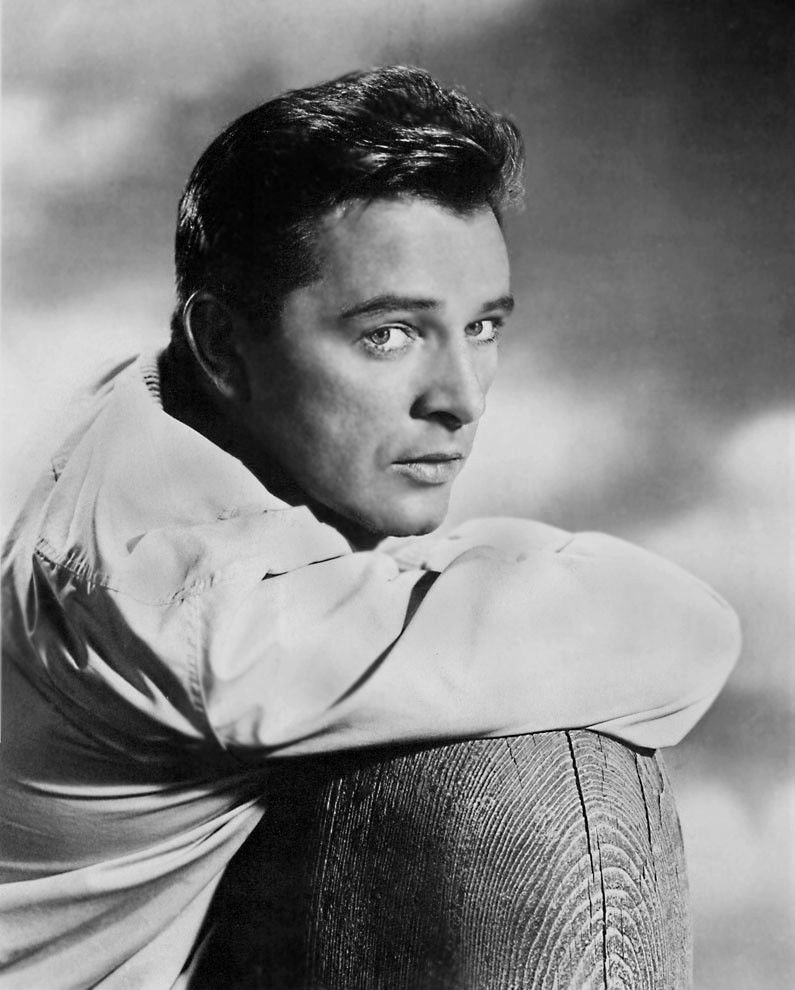
A Miner's Son from Pontrhydyfen
Richard Burton was born Richard Walter Jenkins Jr. on November 10, 1925, in Pontrhydyfen, a small mining village in the Afan Valley in South Wales, the twelfth of thirteen children of Richard Walter Jenkins Sr., a coal miner, and Edith Maude Jenkins, a barmaid at the Miners Arms, the village pub where she had met her husband, and he grew up speaking Welsh as his first language, surrounded by chapel hymns, rugby, and the oral traditions of a close working-class community, and he was, from the start, a boy with a voice, and a boy who could sing, and who won an eisteddfod prize as a boy soprano, and who showed, at Port Talbot Secondary School, which he entered after passing a scholarship exam in March 1937, the first member of his family to go to secondary school, an immense interest in reading poetry, and in English and Welsh literature, and a memory that was, in the end, extraordinary, and a gift for speaking verse aloud, that would, in the end, make him famous.
His mother died on October 31, 1927, six days after giving birth to Graham Jenkins, the family's thirteenth child, when Richard was not yet two years old, and he was taken in by his older sister Cecilia, known as Cis, and her husband Elfed, also a miner, and he lived with them in their three-bedroom terraced cottage at 73 Caradoc Street, Taibach, a district of Port Talbot, until he was seventeen, and his father was largely absent during his childhood, a heavy drinker who sometimes went off on drinking and gambling sprees for weeks, though his brother Ifor, nineteen years his senior, became an important influence, and the boy grew up, in effect, in his sister's house, and in the chapel, and on the rugby field, and he once said, afterwards, that he would rather have played for Wales at Cardiff Arms Park than Hamlet at the Old Vic, and he meant it, and he was, in the end, a Welshman first, and an actor second, and a man who never forgot where he came from.
Philip Burton and the Name
His life changed when he met Philip Burton, his schoolmaster at Port Talbot Secondary School, and a BBC radio producer, who recognised his natural gift for oratory, and who became his mentor, and who took him on as his protege, and who tutored him intensely, in school subjects, and in acting, and who worked on his diction, and made him read Shakespeare aloud, and reportedly sent him up the Welsh hills to shout verse until his voice could fill any space, and who gave him a part in a radio adaptation of his play for BBC Radio, Youth at the Helm, in 1942, and who, with the youth centre's founder, re-admitted him to school on October 5, 1942, after he had left, at the end of 1941, to work as a miner like Elfed, and who became, in the end, the man who made him, and the man whose name he took, because in 1943, Richard took Philip's surname, and became Richard Burton, and Philip became, in practice, his legal ward, though a formal adoption was not possible, because Philip was one year short of the minimum twenty years required by the age gap rules, and the two of them were, in the end, father and son, in everything but law.
He had joined the Port Talbot Squadron of the Air Training Corps as a cadet, where Philip was the squadron commander, and he had joined a youth drama group, where his passion for acting grew, and he had starred as Henry Higgins in a YMCA production of Pygmalion, and in 1943, at eighteen, he began a six-month term at Exeter College, Oxford, before serving as a navigator in the Royal Air Force between 1944 and 1947, and he was, by then, a young man who had been given a second chance, and who had taken it, and who had, in the end, become an actor, and who had, in the end, left the valleys behind, and who had, in the end, never left them, because the voice, and the poetry, and the chapel, and the rugby, stayed with him, for the rest of his life, and were, in the end, the things that made him, and the things that, in the end, he could not escape.
The Old Vic and the First Oscar Nominations
His film debut came in The Last Days of Dolwyn in 1949, and stardom followed with My Cousin Rachel in 1952, opposite Olivia de Havilland, for which he was nominated for his first Academy Award, for Best Supporting Actor, and with The Robe in 1953, in which he played a Roman tribune, and for which he was nominated for Best Actor, and he was, by then, a star, and a man who was, in the end, the most exciting young actor in Britain, and who was, in the end, compared to Laurence Olivier, for his mastery of classical verse, and who played, from 1953 to 1956, leading roles at London's Old Vic, including Hamlet, Henry V, Coriolanus and Caliban, and who played Hamlet, in 1953, opposite Claire Bloom as Ophelia, with whom he embarked on a turbulent affair, and who played Coriolanus, and who played, in the end, the great Shakespearean roles, as if he had been born to them, and as if he had, in the end, been waiting for them, all his life.
He made The Rains of Ranchipur in 1955, and Alexander the Great in 1956, in which he played the conqueror, and he was, by the end of the 1950s, a star, and a man who was, in the end, famous, and rich, and married, and unhappy, and who was, in the end, drinking too much, and working too hard, and living too fast, and who was, in the end, on his way to the part that would change his life, and to the woman who would change his life, and to the film that would, in the end, make him the most famous actor in the world, and the film was Cleopatra, in 1963, in which he played Mark Antony, opposite Elizabeth Taylor, and in which he met her, properly, for the first time, and in which the two of them began the most famous romance in Hollywood history, and the romance that would, in the end, define them both.
Cleopatra and Elizabeth Taylor
Cleopatra came in 1963, one of the most expensive films ever made at that point, in which Burton played Mark Antony, opposite Elizabeth Taylor as Cleopatra, and in which the two of them fell in love, on camera, and off it, and in which the scandal was, in the end, as famous as the film, because both of them were married to other people, and both of them left their marriages, and both of them married each other, on March 15, 1964, in Montreal, and the marriage was, in the end, the most famous marriage in the world, and the divorce, in 1974, was, in the end, the most famous divorce in the world, and the remarriage, on October 10, 1975, was, in the end, the most famous remarriage in the world, and the second divorce, in 1976, was, in the end, the end of it, and the two of them made eleven films together, including The V.I.P.s in 1963, The Sandpiper in 1965, Who's Afraid of Virginia Woolf? in 1966, and The Taming of the Shrew in 1967, and the films were, in the end, the record of a marriage, and of a love, and of a disaster, all at once.
Who's Afraid of Virginia Woolf? came in 1966, directed by Mike Nichols, in which Burton played George, a history professor, opposite Taylor as Martha, his wife, and the two of them fought, and drank, and destroyed each other, on screen, for two hours, and the performance earned them both Academy Award nominations, and it is, still, regarded as Burton's finest film performance, and as the film in which he was, in the end, at his best, and in which he was, in the end, playing himself, and playing Taylor, and playing, in the end, the truth about them, and the truth was, in the end, that they loved each other, and that they could not live together, and that they could not live apart, and that they knew it, and that they went on, anyway, because that was what they did, and because that was, in the end, all they knew how to do.
Seven Nominations and No Oscar
Burton was nominated seven times for an Academy Award, and never won, and the nominations were for My Cousin Rachel in 1952, for Best Supporting Actor, and for The Robe in 1953, and for Becket in 1964, in which he played Thomas Becket, opposite Peter O'Toole as Henry II, and for The Spy Who Came in from the Cold in 1965, in which he played Alec Leamas, a British spy, and for Who's Afraid of Virginia Woolf? in 1966, and for Anne of the Thousand Days in 1969, in which he played Henry VIII, and for Equus in 1977, in which he played Martin Dysart, a psychiatrist, and six of the seven were for Best Actor in a Leading Role, and he was, in the end, the most nominated actor never to win, and the man who came closest, again and again, and who never, in the end, held the statue, and who won, instead, a BAFTA, and a Golden Globe, and a Tony, and a CBE in 1970, and who was, in the end, honoured by everyone, except the Academy, and who said, of it, that he did not care, and who did, in the end, care, very much.
He created the role of King Arthur in Lerner and Loewe's musical Camelot in 1960, opposite Julie Andrews, and he played Hamlet on Broadway in 1964, in a production directed by John Gielgud, and staged as a rehearsal, in everyday clothes, and he won a Tony for it, and he returned to the stage in 1976, to perform in Equus as Martin Dysart, a role he repeated in the 1977 film adaptation, and he returned, in 1983, to the stage with Taylor, in Private Lives, their last pairing, and he was, in the end, a stage actor who had become a film star, and a film star who had never stopped being a stage actor, and a man whose voice was, in the end, his instrument, and his gift, and his curse, because it was the voice that made him, and the voice that, in the end, he ruined, with drink, and with smoke, and with age, and with the life he lived.
Wives, Children, and the Drinking
Burton was married five times, to four women. His first wife was Sybil Williams, whom he married in February 1949, and divorced in 1963, and with whom he had two daughters, Kate, born in 1957, and Jessica, born in 1959, and the marriage was, in the end, the one that lasted longest, before Taylor, and the one that ended, in the end, because of Taylor, and because of the fame, and because of the drink, and his second and third marriages were both to Elizabeth Taylor, from 1964 to 1974, and from 1975 to 1976, and his fourth wife was Suzy Hunt, known as Suzy Miller, whom he married in August 1976, and divorced in 1982, and his fifth wife was Sally Hay, whom he married in 1983, and who was still his wife when he died, in 1984, and he had four children in all, Kate and Jessica, and Liza Todd Burton, whom he adopted, and Maria Burton, whom he adopted, and he was, in the end, a man who could not stay married, and who could not stay sober, and who could not, in the end, stay alive, for long, because the drinking was killing him, and he knew it, and he kept drinking, anyway.
He drank, at his peak, three and four bottles a day, and he was diagnosed with cirrhosis of the liver in 1981, and with chronic kidney disease, and he had neck and spinal surgery in 1980, and he suffered from trigeminal neuralgia, a painful nerve condition, and he was, in the end, a man whose body was broken, and whose voice was broken, and whose life was broken, and who kept working, because that was what he did, and because that was all he knew how to do, and he made his final film, Nineteen Eighty-Four, in 1984, in which he played O'Brien, the interrogator, and the performance was, in the end, the last great performance of his life, and it was, in the end, the proof that he could still act, when he wanted to, and when he was well enough to do it, and he was, by then, fifty-eight years old, and dying, and he knew it, and he kept working, anyway.
What Happened to Richard Burton, in the End
So what happened to Richard Burton? He was born in Pontrhydyfen in 1925, the twelfth of thirteen children, his mother died in 1927, he was raised by his sister Cis in Port Talbot, he met Philip Burton, he took his name in 1943, he went to Oxford, he served in the RAF, he made his film debut in 1949, he was nominated for My Cousin Rachel in 1952, he played Hamlet at the Old Vic in 1953, he created King Arthur in Camelot in 1960, he met Elizabeth Taylor on Cleopatra in 1963, he married her in 1964, he made Who's Afraid of Virginia Woolf? in 1966, he divorced her in 1974, he remarried her in 1975, he divorced her again in 1976, he played Equus in 1976, he was diagnosed with cirrhosis in 1981, he married Sally Hay in 1983, he made Private Lives with Taylor in 1983, he made Nineteen Eighty-Four in 1984, and he died on August 5, 1984, at 58, of a cerebral haemorrhage, at his home in Celigny, Switzerland.
He was buried in the Old Cemetery in Celigny, in a red suit, with the poems of Dylan Thomas, and Elizabeth Taylor did not attend the funeral, and his final letter to her was kept by her bedside until her death in 2011, and he is, still, the man who played Hamlet, and King Arthur, and Mark Antony, and George, and Martin Dysart, and O'Brien, and who is, still, the man with the voice, and who is, still, the man who was nominated seven times, and who never won, and who is, still, the man who was, in the end, the greatest actor of his generation, and who was, in the end, a coal-miner's son from Pontrhydyfen, who became a king, and who died, in the end, at fifty-eight, in Switzerland, and who is, still, remembered, by everyone who heard him speak, and by everyone who, in the end, wished they could speak like him.
Frequently asked questions
What happened to Richard Burton?
Richard Burton died on August 5, 1984, at 58, of a cerebral haemorrhage, at his home in Celigny, Switzerland. He was buried in the Old Cemetery in Celigny, in a red suit, with the poems of Dylan Thomas.
How many Oscars was Richard Burton nominated for?
Seven, and he never won. The nominations were for My Cousin Rachel (1952), The Robe (1953), Becket (1964), The Spy Who Came in from the Cold (1965), Who's Afraid of Virginia Woolf? (1966), Anne of the Thousand Days (1969) and Equus (1977).
Was Richard Burton married to Elizabeth Taylor twice?
Yes. They married on March 15, 1964, divorced in 1974, remarried on October 10, 1975, and divorced again in 1976. They made eleven films together, including Cleopatra (1963) and Who's Afraid of Virginia Woolf? (1966).
What was Richard Burton's real name?
Richard Walter Jenkins Jr. He was born in Pontrhydyfen, Wales, on November 10, 1925, the twelfth of thirteen children of a coal miner. He took the surname Burton from his schoolmaster and mentor, Philip Burton, in 1943.
What was Richard Burton's last film?
Nineteen Eighty-Four (1984), in which he played O'Brien. His last stage pairing with Elizabeth Taylor was in Private Lives in 1983.
How many children did Richard Burton have?
Four: Kate (born 1957) and Jessica (born 1959), with his first wife Sybil Williams, and Liza Todd Burton and Maria Burton, both adopted.
Did Richard Burton win a Tony Award?
Yes, for Hamlet on Broadway in 1964, directed by John Gielgud. He also won a BAFTA and a Golden Globe, and was made a CBE in 1970.
What did Richard Burton die of?
A cerebral haemorrhage, on August 5, 1984, at his home in Celigny, Switzerland. He was 58. He had cirrhosis of the liver, chronic kidney disease, and had undergone neck and spinal surgery in 1980.
Sources
- EN WikipediaBirth, Philip Burton, Hamlet, Oscar nominations, Taylor, death
- BritannicaBirth, death, Camelot, Cleopatra, Virginia Woolf, Equus
- Historical Port TalbotChildhood, Philip Burton, Old Vic, Hamlet, Cleopatra