What Happened to Ralph Carter?
A Broadway Child Before He Was a Television Star
Ralph David Carter was born on May 30, 1961, in New York City, and he was on Broadway by the age of nine, in the musical The Me Nobody Knows. It was an extraordinary start, and it was not a fluke. He went on to appear in Tough to Get Help, Dude, and Via Galactica, learning the discipline of eight shows a week before he was old enough to drive. His breakout came as Travis Younger in Raisin, the Broadway musical based on Lorraine Hansberry's drama A Raisin in the Sun, in which he played the young son of a Black family fighting for dignity on Chicago's South Side.
The performance earned him the 1973 Drama Desk Award for Most Promising Performer, the 1974 Theatre World Award, and a nomination for the 1974 Tony Award for Best Featured Actor in a Musical, making him one of the youngest performers ever recognized in that category. He was 12 years old, and he was already, by the standards of American theatre, a serious actor. Television producer Norman Lear noticed, and Lear did something unusual: he bought out the remainder of Carter's Broadway contract so he could cast him in a new sitcom. The early episodes of that sitcom carried a credit that told the whole story: Ralph Carter appears courtesy of the Broadway musical Raisin.
Michael Evans: The Militant Midget
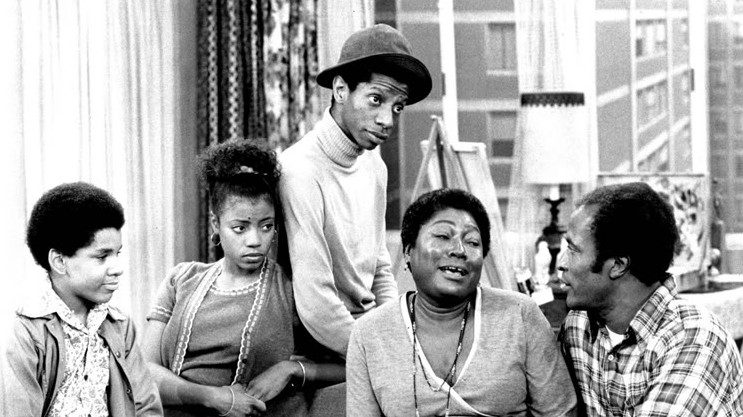
Good Times premiered on CBS in February 1974, as a spin-off from Maude, centered on Florida Evans, played by Esther Rolle, and her family in a Chicago housing project. Carter played Michael Evans, the youngest of the Evans children and the most politically minded, a bookish, outspoken boy who argued about civil rights at the dinner table and drove his father, James, played by John Amos, to distraction. James affectionately called him the militant midget, a nickname that stuck with the character and with Carter.
The show was a landmark: one of the first primetime series to center a Black working-class family and to deal seriously with the social issues facing that community. Carter appeared in all 133 episodes across six seasons, growing on screen from an outspoken boy of 12 into a young activist adult. He was, in the words of later critics, the character who helped change stereotypes on television, because Michael was not a punchline or a sidekick. He was intelligent, principled, and funny, and he was played by a child actor with Broadway training, which showed in every scene.
The Singer in the Sitcom
While Good Times was on the air, Carter also developed a music career. Mercury Records signed him at the height of the show's popularity, grooming him for teen-idol status, and in 1975 he released the album When You're Young and in Love. Two singles charted on the United States Dance chart: Extra, Extra (Read All About It), which peaked at number 12, and the title track, When You're Young and in Love, which reached number 10. He performed the title track on an episode of Good Times, with his character Michael singing the song on screen, and he performed it on Soul Train the same year.
He released a second album, Get It Right, but the music career, like the television career, had a natural endpoint. The teen-idol machinery of the 1970s was built for a moment, and Carter, who had started as a stage actor, was never entirely comfortable inside it. When Good Times wrapped in 1979, he was 18 years old, with a Tony nomination, a hit sitcom, and a recording career behind him. Most young performers in that position would have chased the next series. Carter chose a different path.
Leaving Series Television Behind
After Good Times, Carter left his television career behind and pursued music and theatre, resurfacing on television only sporadically, as a musical guest. He developed a nightclub act in the 1980s and built a solid reputation as a stage performer. His screen credits after 1979 are few: the television film Donny's House in 1987, and stage work that included Ain't Supposed to Die a Natural Death at the Classical Theatre of Harlem in the mid-2000s. He did not chase sitcoms, he did not chase reality television, and he did not try to become a former child star turned comeback story.
Instead he stayed connected to the world that had made him: New York theatre, and specifically the Black theatre community. Reports have connected him with the Billie Holiday Theatre and the New Federal Theatre, institutions that nurture Black playwrights and performers, and with Audelco, the organization that honors Black theatre in New York. It is a quieter kind of career than Good Times, and a more durable one: not fame, but work, in the community where he started, on the stages where he learned his craft.
Reunions, Talk Shows, and One Small Film Role
Carter has never hidden from Good Times, and he has never tried to profit from it cheaply either. In 2006 he reunited with the cast at the BET Awards and the TV Land Awards, and in 2009 he teamed with former co-star BernNadette Stanis to promote a Good Times television marathon, sharing behind-the-scenes stories between commercial breaks during fan-selected favorite episodes. He has appeared as a guest on talk shows, including Steve Harvey in 2012 and Sherri in 2022, always as himself, always warmly, always without any hint of bitterness about the career he left behind.
His most recent listed screen credit is a small one: Pastor Evans in CHAAW: Chapter 3, a 2023 film, according to TV Insider's credits listing. It is the kind of one-off appearance that says more about loyalty and friendship than about ambition, and it should not be mistaken for a comeback. Carter has had no series-regular work since Good Times, and he has not sought any. The reunions and the talk shows and the small film role are the public traces of a private life, not the other way around.
The Death Reports That Were Not True
Because Carter has lived quietly, the internet has, more than once, decided he must be dead. Obituary-style pages and low-quality biography sites have published death reports about him, complete with invented details, and those pages have been shared widely enough that many fans believe them. They are false. Carter is alive, and he was treated as a living person by reputable outlets as recently as September 2026, when SlashFilm discussed the Good Times cast and the false reports directly.
The false reports are worth debunking plainly, because they illustrate something about how former child stars are treated online: silence is read as absence, and absence is read as death. Carter's silence is not absence. It is a choice, made by a man who spent his childhood on Broadway and his adolescence on national television, and who decided, as an adult, that he would rather work in theatre and live in New York than spend his life auditioning for a fame he had already experienced. He has been married twice, to Lisa Parks from 1987 to 1992 and to River York since 1994, and he has children, whose details he has kept private, as is his right.
Why Ralph Carter's Story Still Matters
Ralph Carter's story matters because it challenges the usual narrative about child stars. The usual narrative ends in tragedy or in a desperate comeback. Carter's ends in neither. He was a prodigy who became a star, and then he became something rarer: a working theatre artist with a private life, a family, and a community. He did not need Good Times to define him, because he had already been defined, at nine years old, by Broadway, and he did not need fame to sustain him, because he had already learned, at twelve, what real work looked like.
What happened to Ralph Carter, then, is refreshingly simple. He grew up, he left television, he stayed in theatre, and he lived. The boy who played Michael Evans, the militant midget who argued for justice at the Evans dinner table, became a man who did not argue with the internet about whether he was alive. He just kept living, quietly, in New York, where it all began.
The Stage Was Always Home
It is worth pausing on Raisin, because it explains so much about Carter. The musical, based on Lorraine Hansberry’s A Raisin in the Sun, won the 1974 Tony Award for Best Musical, and Carter, at 12, was at its center, playing Travis Younger, the boy whose family’s fight for dignity drives the story. It was serious material, handled by a child with serious training, and it earned him the Drama Desk and Theatre World awards and a Tony nomination before he ever appeared on television. Good Times made him famous, but Raisin made him an actor, and the distinction matters: fame fades, but training stays.
His later connection to New York’s Black theatre community follows naturally from that beginning. The Billie Holiday Theatre and the New Federal Theatre are institutions that nurture Black playwrights and performers, and Audelco, the organization that honors Black theatre in New York, represents the same tradition Carter grew up in. He did not return to Broadway as a star, and he did not need to. He returned to the community that had raised him, as a colleague and an elder, and that is a different kind of success, quieter than a sitcom, and arguably more lasting. The boy from Raisin became a man of the theatre, and the theatre, unlike television, never asked him to be anything but himself.
Frequently asked questions
What happened to Ralph Carter?
Ralph Carter is alive and living a quiet life centered on New York theatre. He played Michael Evans on Good Times from 1974 to 1979, then left series television and pursued music and stage work, appearing only occasionally in reunions, talk shows, and one small 2023 film role.
Is Ralph Carter dead?
No. False online death reports and obituary-style pages about him are untrue. He was treated as a living person by reputable outlets as recently as September 2026.
What was Ralph Carter famous for?
He was famous as Michael Evans, the youngest Evans child, on the CBS sitcom Good Times (1974-1979), appearing in all 133 episodes. Before that he was a Broadway child star in Raisin, earning a Tony nomination at age 12.
What awards did Ralph Carter win?
He won the 1973 Drama Desk Award for Most Promising Performer and the 1974 Theatre World Award for Raisin, and he was nominated for the 1974 Tony Award for Best Featured Actor in a Musical.
Did Ralph Carter have a music career?
Yes. He released the album When You're Young and in Love (1975) on Mercury Records, with two singles reaching the United States Dance chart, and a second album, Get It Right. He performed the title track on Good Times and on Soul Train.
What has Ralph Carter done since Good Times?
He pursued a nightclub act and stage work, including Ain't Supposed to Die a Natural Death at the Classical Theatre of Harlem, stayed connected to New York's Black theatre community, and appeared at Good Times reunions in 2006 and 2009, on talk shows, and in the small film role of Pastor Evans in CHAAW: Chapter 3 (2023).
Who is Ralph Carter married to?
He was married to Lisa Parks from 1987 to 1992 and has been married to River York since 1994. He has children, whose details he keeps private.
How old is Ralph Carter now?
He was born May 30, 1961, which makes him 65 in 2026.
Sources
- EN WikipediaBiography, Broadway, Good Times, Lear contract buyout
- TV Insider133 episodes, albums, reunions, CHAAW 2023, Sherri 2022
- CelebzLivingRaisin awards, Good Times 133 episodes, singles chart positions