What Happened to Peter Sellers, Clouseau?
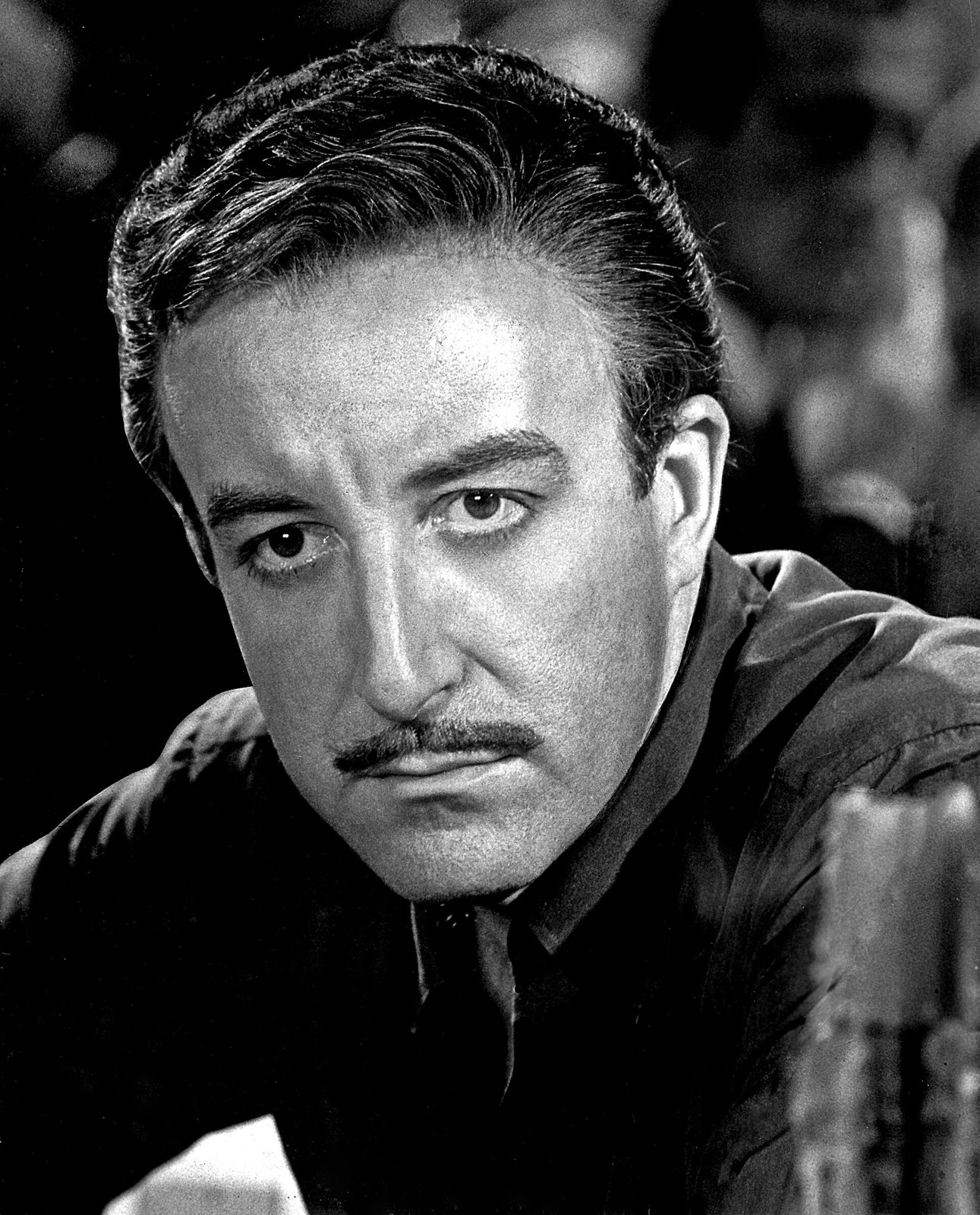
A Variety Childhood in Southsea
Peter Sellers was born Richard Henry Sellers on September 8, 1925, in Southsea, a suburb of Portsmouth, the son of Yorkshire-born William Sellers and Agnes Doreen Sellers, known as Peg, both of them variety entertainers. Peg was in the Ray Sisters troupe, and Bill Sellers played in a quartet, and the family toured constantly, and the boy was carried on stage at two weeks old at the Kings Theatre in Southsea, where the crowd sang For He's a Jolly Good Fellow and the infant cried. His parents called him Peter after his elder brother, who had been stillborn, and he had no other siblings, and he grew up, in effect, as an only child in a touring family, close to his mother in a way his friend Spike Milligan later thought unhealthy for a grown man, and dominated by her in a way his agent remembered without resentment, because Sellers never seemed to object.
In 1935 the family moved to Muswell Hill in North London, and Sellers went to St Aloysius' College in Highgate, a Roman Catholic school, where he was a top student and excelled at drawing, and where he began to develop the gift for mimicry that would define him, imitating radio personalities for his schoolfriend Bryan Connon, who fed him lines while Sellers did the voices. With the outbreak of war the school was evacuated to Cambridgeshire, but his mother would not let him go, so his formal education ended at fourteen. Early in 1940 the family moved to Ilfracombe in Devon, where his uncle managed the Victoria Palace Theatre, and Sellers got his first job there at fifteen, as a caretaker, rising to box office clerk, usher, assistant stage manager and lighting operator, and learning, backstage, how actors worked, while he practised the drums on the band's kit and dreamed, for a while, of being a jazz drummer instead.
The RAF, the Drums, and the Goon Show
Sellers toured with dance bands, including those of Oscar Rabin and Henry Hall, and joined the Entertainments National Service Association, which put on shows for British forces and factory workers, and in September 1943 he joined the Royal Air Force, where poor eyesight kept him from becoming a pilot and left him with dull ground duties, until he auditioned for Squadron Leader Ralph Reader's RAF Gang Show and toured Britain, India, Ceylon and Burma, developing his gift for impersonating officers and his timing as a comic. After the war he was demobilised in 1946, and work was sporadic, and he was sacked after one performance in Peterborough before the singer Dorothy Squires got him reinstated, and he wrote to the BBC in 1948 and made his television debut that March in New To You, and his radio debut in ShowTime, and he was soon a regular on BBC radio shows.
One evening in 1949 Sellers and Michael Bentine went to see Harry Secombe at the Hackney Empire, and Bentine introduced Sellers to Spike Milligan, and the four met at Grafton's pub near Victoria Station and began the partnership that became The Goon Show. They made a trial tape in February 1951, the BBC accepted it, and the show ran until 1960, with Sellers playing a gallery of voices, including Major Bloodnok, Henry Crun, Bluebottle and Hercules Grytpype-Thynne, alongside Milligan, Secombe and Bentine. The Goons changed British comedy, and Sellers's first film work followed, dubbing a voice in The Black Rose in 1950, and then The Ladykillers in 1955, in which he played Harry Robinson, and The Mouse That Roared in 1959, in which he played three roles, and I'm All Right Jack in 1959, for which he won the BAFTA for Best Actor, and by the end of the decade he was no longer a radio comic trying films, but a film star.
Clouseau and the Pink Panther
In 1962 Stanley Kubrick cast Sellers as Clare Quilty in Lolita, and the next year Blake Edwards cast him as Chief Inspector Clouseau in The Pink Panther, the bumbling French detective chasing a jewel thief, and the film made Clouseau one of the most famous comic characters in the world. Sellers returned to the role in A Shot in the Dark in 1964, and then in The Return of the Pink Panther in 1975, The Pink Panther Strikes Again in 1976, Revenge of the Pink Panther in 1978, and, after his death, in Trail of the Pink Panther in 1982, assembled from outtakes, a decision that was widely criticised. He played the part with a French accent that slid, a moustache, a raincoat and a total conviction that he was brilliant, and the joke was always that everyone else could see what Clouseau could not, and Sellers played it straight, which was why it worked, and why audiences loved him for it for fifteen years.
Between the Panther films he made What's New Pussycat? in 1965, Casino Royale in 1967, The Party in 1968, in which he played the Indian actor Hrundi V. Bakshi, and The Magic Christian in 1969, and he worked constantly, even as his health and his behaviour grew erratic, and even as directors found him difficult, and co-stars found him impossible, because the range was extraordinary, and because nobody else could do what he did. He was nominated for three Academy Awards in his career, twice for Best Actor, and he won the Golden Globe for Being There in 1980, and Turner Classic Movies calls him one of the most accomplished comic actors of the late twentieth century, and the Boulting brothers, who directed him, called him the greatest comic genius Britain had produced since Charles Chaplin.
He made After the Fox in 1966, in which he played Aldo Vanucci, an Italian film director who pretends to be a famous director to steal gold, and the film was a flop, and it was, in the end, the first of a series of flops, and the first sign that the magic was fading, and that the man who had been the greatest comic genius in Britain was, in the end, losing his way, and he made The Bobo in 1967, and Casino Royale in 1967, and The Party in 1968, and The Magic Christian in 1969, and the films were, in the end, a mixture of hits and misses, and the hits were, in the end, fewer than the misses, and the man who had been the greatest comic genius in Britain was, in the end, a man who was struggling, and who was, in the end, a man who needed a hit, and who was, in the end, a man who would not get one, until Being There, in 1979, and he was appointed a Commander of the Order of the British Empire in 1966, for his services to entertainment, and the honour was, in the end, the one he had waited for, and the one he had earned, and it was, in the end, the last honour he received, in life, because the Golden Globe for Being There came in 1980, the year he died, and he was, in the end, a man who had been honoured, and who had, in the end, earned it.
Dr. Strangelove and Three Faces at Once
His most celebrated performance came in Dr. Strangelove in 1964, in which Kubrick cast him in three roles: Group Captain Lionel Mandrake, the sane English officer trying to stop a mad general; President Merkin Muffley, the reasonable American president on the phone to the Soviet premier; and Dr. Strangelove himself, the wheelchair-bound ex-Nazi scientist whose arm keeps rising in a salute he cannot control. The three men never meet, and Sellers made them three different people, with three voices, three walks and three ways of thinking, and the film earned him his first Academy Award nomination for Best Actor, and it remains the performance that other comic actors measure themselves against, because it proved that Sellers was not just a funny voice, but an actor of real range, who could be sane and mad in the same film and make both of them believable.
He had been meant to play a fourth role, Major Kong, the bomber pilot, but he sprained his ankle and could not work in the cramped cockpit set, and Slim Pickens took the part, and Sellers's regret at losing it stayed with him. The film was made in the same year as his near-fatal heart attack, and the two facts sit together in his story: the greatest performance of his life, and the first proof that his heart would kill him. He recovered, and he kept working, and he kept taking roles that asked him to be several people at once, because that was what he was best at, and because, as he said himself, he had no identity outside the roles he played, and the roles were the only place he felt safe.
Four Marriages and Three Children
Sellers was married four times. His first wife was Anne Howe, an Australian actress he began dating in 1949 and married in London on September 15, 1951; their son Michael was born on April 2, 1954, and their daughter Sarah on October 16, 1957, and the marriage ended in divorce in 1963. His second wife was the Swedish actress Britt Ekland, whom he married in 1964; their daughter Victoria was born during the marriage, which ended in divorce in 1968. His third wife was Miranda Quarry, married in 1970 and divorced in 1974. His fourth wife was the actress Lynne Frederick, whom he married in 1977 and who was still his wife when he died in 1980. He had three children, all from his first two marriages, and his family life was, by every account, as unstable as his screen work was brilliant, and his behaviour towards his family worsened after 1962, according to his son Michael, and the marriages, for the most part, did not last.
He was, by his own account and by the account of everyone who knew him, an enigmatic figure, who struggled with depression and insecurities, whose behaviour was erratic and compulsive, and who clashed with directors and co-stars, especially in the mid-1970s, when his physical and mental health, together with his alcohol and drug problems, were at their worst. He claimed to have no identity outside the roles he played, and he meant it, and the people who loved him found him impossible to live with, and the people who worked with him found him impossible to work with, and yet they kept coming back, because when the camera ran, there was nobody better, and because the man who could not be himself could be anyone else.
Heart Attacks and the Long Decline
On the evening of April 5, 1964, shortly after marrying Britt Ekland, Sellers suffered a near-fatal heart attack after inhaling amyl nitrites, and he was reported to have had eight heart attacks in a few hours, and to have been clinically dead for two and a half minutes before he was revived. The reports differ on the details, and this article states the event as reported, not as certain, but the fact of the attack is not in doubt, and neither is its effect: he had to leave Billy Wilder's Kiss Me, Stupid and was replaced by Ray Walston, and he never fully recovered, because he refused to take traditional heart medication and consulted psychic healers instead. He lived with heart disease for the rest of his life, and on March 20, 1977, he barely survived another major heart attack and had a pacemaker surgically implanted, which caused him further discomfort, and his health, together with his drinking and drug use, grew worse through the late 1970s.
And yet his last great performance came at the end of it. In Being There, in 1979, he played Chance, a simple-minded gardener who has never left his employer's house and who is mistaken for a wise man by Washington, and the performance won him the Golden Globe for Best Actor and his second Academy Award nomination for Best Actor, and it is now regarded as his finest work, a quiet, still performance from a man who had spent his career being loud. His last film was The Fiendish Plot of Dr. Fu Manchu in 1980, a flop, and he had plans to play Clouseau once more in Romance of the Pink Panther, opposite Pamela Stephenson, but he died before filming could begin, and the film was never made.
What Happened to Peter Sellers, in the End
So what happened to Peter Sellers? He was born in Southsea in 1925, the son of variety entertainers, he was carried on stage at two weeks old, he learned the drums and toured with dance bands, he served in the RAF Gang Show, he became famous on The Goon Show, he played Harry in The Ladykillers, he won a BAFTA for I'm All Right Jack, he played Clouseau in The Pink Panther, he played three men in Dr. Strangelove, he nearly died of a heart attack in 1964, he was married four times, he had three children, he had a pacemaker fitted in 1977, he played Chance in Being There and won the Golden Globe, he made The Fiendish Plot of Dr. Fu Manchu, and he died on July 24, 1980, at 54, of a heart attack, in London, hours before a reunion dinner with Spike Milligan and Harry Secombe that had been scheduled for the evening of July 25.
He had arrived in London from Geneva on July 21, checked into the Dorchester Hotel, and visited Golders Green Crematorium to see where his parents' ashes lay, and on July 22 he collapsed from a massive heart attack in his hotel room and fell into a coma, and he was taken to Middlesex Hospital, where he died just after midnight on July 24. A private funeral was held at Golders Green Crematorium on July 26, and a memorial service was held at St Martin-in-the-Fields on September 8, 1980, which would have been his 55th birthday, and his ashes were interred at Golders Green, and after his widow Lynne Frederick died in 1994, her ashes were interred with his. His only son, Michael, died of a heart attack on July 24, 2006, at 52, twenty-six years to the day after his father, and what remains is Clouseau, still bumbling, still certain, still chasing the Pink Panther, and Chance, still watching television, still being mistaken for wise, and the example of a man who could be anyone except himself.
Frequently asked questions
What happened to Peter Sellers?
Peter Sellers died on July 24, 1980, at 54, of a heart attack, in London. He collapsed in his room at the Dorchester Hotel on July 22 and died just after midnight on July 24 at Middlesex Hospital. He was cremated and his ashes were interred at Golders Green Crematorium.
What was Peter Sellers most famous for?
Chief Inspector Clouseau in The Pink Panther series, beginning in 1963, and his three roles in Dr. Strangelove (1964). He first became famous on the BBC radio comedy The Goon Show (1951-1960) and earned an Oscar nomination for Being There (1979).
How many times was Peter Sellers married?
Four times: Anne Howe (1951-1963), Britt Ekland (1964-1968), Miranda Quarry (1970-1974), and Lynne Frederick (1977 until his death in 1980).
How many children did Peter Sellers have?
Three: Michael (born 1954) and Sarah (born 1957) with his first wife Anne Howe, and Victoria with his second wife Britt Ekland.
Did Peter Sellers have a heart attack before he died?
Yes. In April 1964 he suffered a near-fatal heart attack, reported as eight heart attacks in a few hours, possibly triggered by amyl nitrite. He had another major heart attack in March 1977 and had a pacemaker fitted. He never fully recovered from the 1964 attack.
What was Peter Sellers last film?
The Fiendish Plot of Dr. Fu Manchu (1980), a flop completed just a few months before his death. His final performance, assembled from outtakes, appeared posthumously in Trail of the Pink Panther (1982).
What was The Goon Show?
A BBC radio comedy series (1951-1960) starring Sellers, Spike Milligan, Harry Secombe and Michael Bentine. Sellers played many voices, including Major Bloodnok, Bluebottle and Henry Crun, and the show changed British comedy.
Did Peter Sellers win an Oscar?
No, though he was nominated three times: twice for Best Actor, for Dr. Strangelove (1964) and Being There (1979), and once for a live-action short film. He won a BAFTA for I'm All Right Jack and a Golden Globe for Being There.
Sources
- EN WikipediaBirth, Goon Show, Clouseau, Dr. Strangelove, marriages, heart attacks, death
- BritannicaBirth, death, Clouseau, Dr. Strangelove, Being There, heart attacks
- IMDbDeath, 1964 heart attack, pacemaker, reunion dinner, last film