What Happened to Perry Como, Mr. Relaxation?
A Barber from Canonsburg Finds His Voice
Perry Como was born Pierino Ronald Como on May 18, 1912, in Canonsburg, Pennsylvania, the son of Italian immigrants, and he grew up in a coal town where singing was something people did at home and in church, not something they did for a living, and he learned a trade instead, and the trade he learned was barbering, and he cut hair in Canonsburg, and he sang while he worked, and the singing was good enough that people noticed, and the noticing led, in time, to a job with the Ted Weems orchestra, and the orchestra led him out of Pennsylvania and into the world of big band music, and the big band world led him, in 1943, to RCA Victor, and RCA Victor kept him for forty-four years, from 1943 until 1987, which is one of the longest associations between a singer and a record label in the history of popular music, and the length of it says something about Como, because labels do not keep singers for forty-four years unless the records keep selling, and the records kept selling, and the selling never stopped, not in the 1940s, not in the 1950s, not even in the 1960s, when the whole business changed around him.
He was not a singer who chased the fashion of the moment, and that was the secret of him, because his voice was a mellow baritone, and his manner was relaxed, and his cardigan sweaters became a trademark, and the trademark was honest, because he really was that relaxed, and audiences trusted it, and the trust lasted for more than six decades, and the six decades ran from 1932 to 1997, and the years in between hold some of the most familiar records of the twentieth century, and the records include Till the End of Time and Prisoner of Love from the 1940s, and Surrender and Catch a Falling Star from the 1950s, and It is Impossible from 1970, and the last of those proved that he could still reach the charts when he was nearly sixty, and the proof mattered, because by then most of his contemporaries had faded, and Como had not, and the not fading was the point, because his voice did not depend on youth, and his manner did not depend on novelty, and the two together made him durable in a business that eats singers alive.
RCA Victor and the Relaxed Baritone
The RCA Victor years are the spine of Como's career, and they began in 1943, when he signed with the label, and they ran without a break until 1987, and in that time he recorded exclusively for RCA, and the exclusivity was unusual, because singers moved between labels all the time, and Como did not, and the reason he did not was that the arrangement worked, for him and for the label, and the working showed in the numbers, because he sold more than a hundred million records, according to Britannica, and the hundred million is the measure of a career that never had a flop period, and never had a comeback, because he never went away, and the never going away was the achievement, because the music business of the 1950s and 1960s destroyed singers who could not adapt, and Como adapted by not adapting, by singing the same way, in the same relaxed baritone, whatever the fashion was, and the fashion, in the end, came back to him, because the songs he sang were the kind that last, and the lasting is the reason people still know them.
Catch a Falling Star, released in 1958, became the first record ever certified gold by the Recording Industry Association of America, and the gold disc was a new idea then, and Como was the first to earn one, and the first matters, because it marks the moment when the record business began to measure success in gold, and Como was the measuring stick, and the measuring stick was a gentle ballad, sung without strain, and the gentleness was the point, because Como never shouted, and never strained, and never showed off, and the not showing off was the style, and the style was called Mr. Relaxation, and the name stuck, and the sticking was right, because he was the most relaxed man on television, and the relaxation was real, and the realness was why audiences believed him, and the believing lasted for decades, and the decades are the record, and the record is his.
Fifteen Years of Weekly Television
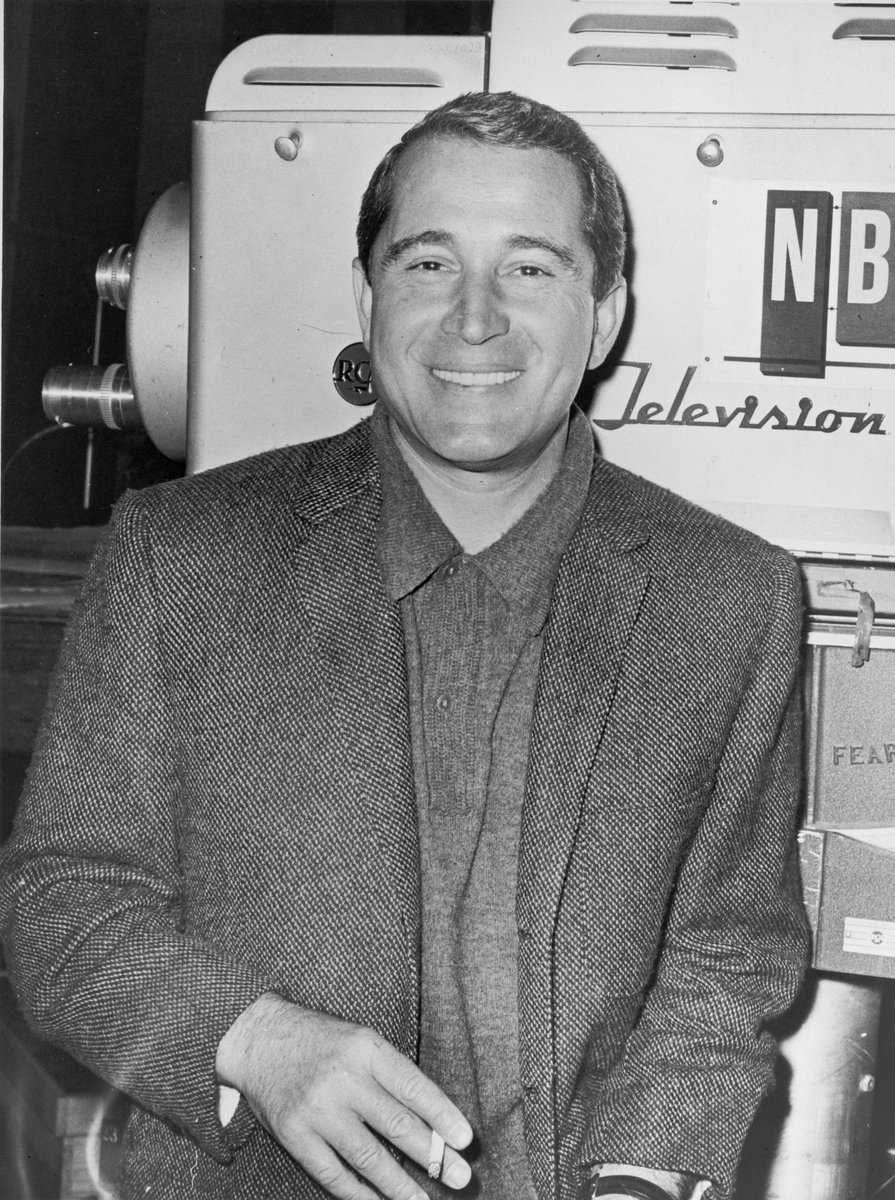
Como pioneered the weekly musical variety television show, and he hosted weekly television variety shows for fifteen years, from 1948 to 1963, and the fifteen years are the heart of his television career, and the heart of it was The Perry Como Show, which began as a fifteen-minute variety show on CBS in 1950, and moved to NBC in 1955, where it became a one-hour weekly variety show, and the hour ran from 1955 to 1959, and the show was, in those years, one of the most popular programs on American television, and the popularity was not an accident, because Como was made for television, and television was made for him, because the camera loved his ease, and his ease loved the camera, and the two together made an hour of music feel like a visit, and the visit was the point, because people invited him into their living rooms every week, and the invitation was renewed for fifteen years, and the renewal is the measure of him.
In 1959 he signed a twenty-five million dollar deal with Kraft Foods and moved to Wednesday nights, hosting Perry Como's Kraft Music Hall weekly for the next four years, and the deal made him the highest-paid performer in the history of television to that date, earning a mention in the Guinness Book of World Records, and the money was not the point, because the point was the show, and the show ran weekly until 1963, and then continued as monthly specials until 1967, alternating with Kraft Suspense Theatre, The Andy Williams Show and finally The Road West, and the monthly specials kept him on television after the weekly grind ended, and the ending of the weekly grind was a relief, because fifteen years of weekly television is a long time, and the long time had earned him five Emmy Awards, in 1954, 1955, 1956 and 1959 among them, and the Emmys were the recognition, and the recognition was deserved, because he had invented the form, and the form is still with us, and the with us is his legacy.
The Christmas Specials
The Christmas specials are the part of Como's television career that people remember most fondly, and they ran annually through 1986, and the annual rhythm made them a staple of the holiday season, and the staple was not an accident, because Como's voice suited Christmas, and Christmas suited Como, and the two together made an hour of carols feel like a family evening, and the family evening was the point, because his specials were gentle, and warm, and unhurried, and the unhurried was the style, and the style was his, and the specials were broadcast throughout the world, and the world watched, and the watching lasted for decades, and the decades are the reason the specials became a tradition, and the tradition was his, and the his was the gift, because he gave people Christmas, every year, in the same voice, and the same voice was the comfort, and the comfort was the point.
The final Christmas special was recorded in Ireland in 1994, when Como was eighty-two, and the Ireland filming was a fitting end, because his family came from Italy, and his music belonged to the whole world, and the world included Ireland, and the including was right, and the rightness was the point, because Como had spent his life singing to everyone, and the everyone included the Irish, and the Irish special was the last, and the last was a good one, and the good one closed a run that had begun in the 1940s, and the run had lasted for half a century, and the half a century is the record, and the record is his, and the his is the story, and the story is a long one, and a gentle one, and a true one, and the true one is the point of this article, and the point is that Perry Como was Christmas, for millions of people, for decades, and the decades are gone, and the voice remains.
Roselle and Sixty-Five Years of Marriage
Como married Roselle Belline on July 31, 1933, and the marriage lasted sixty-five years, until her death in 1998, and the sixty-five years are one of the longest marriages in the history of show business, and the length of it says something about Como, because the entertainment business destroys marriages, and his survived, and the surviving was not an accident, because he was, by all accounts, a faithful husband, and a devoted father, and a man who went home, and the going home was the point, because he never lived the life of a star, and the not living it was the choice, and the choice was hers as much as his, because Roselle was his partner, and his anchor, and his life, and the life they built together was an ordinary one, lived in public only when the cameras were on, and the ordinary was the achievement, because ordinary is hard, in show business, and the hard is the reason the sixty-five years matter, and the mattering is the point.
They had three children, Ronnie, Terri and David, and the children grew up with a famous father who was, at home, simply their father, and the simply was the point, because Como did not bring the stage home with him, and the not bringing it was the gift, and the gift was the family, and the family was the centre of his life, and the centre held, for sixty-five years, and the holding was the triumph, and the triumph was quiet, and the quiet was the style, and the style was his, and the his was the man, and the man was Perry Como, and the Perry Como was the singer, and the husband, and the father, and the three were the same man, and the same man is the story, and the story is a happy one, and a long one, and a true one, and the true one is the point, because he lived it, and the living it was the life, and the life was good.
The Final Years
Como's final years were quiet, and the quiet was a choice, because he had earned it, and the earning was the career, and the career had run from 1932 to 1997, and the sixty-five years of performing were enough, and the enough was the point, because he retired from performing in 1997, and the retirement was gentle, and the gentle was the style, and the style was his, and the his was the man, and the man went home to Florida, and the Florida was Jupiter Inlet Colony, and the Colony was where he lived, and the living was quiet, and the quiet was the reward, and the reward was the peace, and the peace was the end of a long career, and the long career was the life, and the life was good, and the good was the point, and the point is that he did not chase the spotlight at the end, and the not chasing it was the dignity, and the dignity was his.
He was treated for bladder cancer in 1993, and he recovered, and the recovering was the first sign that his health was failing, and the failing continued, and he was reported to have suffered from symptoms of Alzheimer's disease in his final years, and the reporting was careful, because the family did not discuss it in detail, and the not discussing it was their right, and the right was respected, and the respecting is the point, because his children disagreed over his 1999 living will, and the disagreement became a matter for the courts in the year before his death, and the courts were the sad coda, and the coda was not his fault, and the not his fault is the point, because he had lived a gentle life, and the gentle life ended in a family argument, and the argument was the shame, and the shame was theirs, not his, and the his was the voice, and the voice was the gift, and the gift remains.
What Happened to Perry Como, in the End
So what happened to Perry Como? He was born Pierino Ronald Como in Canonsburg, Pennsylvania, in 1912, he cut hair for a living, and he sang while he worked, and he joined the Ted Weems orchestra, and he signed with RCA Victor in 1943, and he recorded exclusively for the label for forty-four years, until 1987, and he sold more than a hundred million records, and he had hits with Till the End of Time, and Prisoner of Love, and Catch a Falling Star, which was the first gold record, and he hosted weekly television for fifteen years, from 1948 to 1963, and he hosted The Perry Como Show from 1955 to 1959, and Perry Como's Kraft Music Hall from 1959, weekly until 1963, and monthly until 1967, and he won five Emmy Awards, and a Grammy Award in 1959, and he made Christmas specials annually through 1986, with the last filmed in Ireland in 1994, and he married Roselle Belline in 1933, and she died in 1998, after sixty-five years, and he had three children, Ronnie, Terri and David, and he died on May 12, 2001, at eighty-eight, in his sleep, at home in Jupiter Inlet Colony, Florida, six days short of his eighty-ninth birthday.
He was buried at Riverside Memorial Park in Tequesta, Florida, beside his wife Roselle, and he received the Grammy Lifetime Achievement Award posthumously in 2002, and he had three stars on the Hollywood Walk of Fame, and he received the Kennedy Center Honor in 1987, and he was inducted into the Long Island Music Hall of Fame in 2006, and he is, still, Mr. Relaxation, and the man in the cardigan, and the voice that never hurried, and the singer of Till the End of Time, and of Catch a Falling Star, and of the Christmas specials, and the husband of Roselle, and the father of three, and the barber from Canonsburg, and the man who sold a hundred million records, and who died, in the end, at eighty-eight, in his sleep, at home, in Florida, and who is, in the end, remembered every time someone puts on a cardigan, and every time Christmas comes, and every time the television, in the end, goes quiet.
Frequently asked questions
What happened to Perry Como?
Perry Como died on May 12, 2001, at 88, in his sleep at his home in Jupiter Inlet Colony, Florida, six days short of his 89th birthday. He was reported to have suffered from symptoms of Alzheimer's disease in his final years.
When and where was Perry Como born?
May 18, 1912, in Canonsburg, Pennsylvania, as Pierino Ronald Como. Some sources give his birth year as 1913, but the standard record, followed by Wikipedia and Britannica, is 1912.
How long did Perry Como record for RCA Victor?
Forty-four years, from 1943 until 1987, and he recorded exclusively for the label throughout that time, one of the longest singer-label associations in popular music.
What was Perry Como's first gold record?
Catch a Falling Star, released in 1958, became the first record ever certified gold by the Recording Industry Association of America.
How long was Perry Como on weekly television?
Fifteen years, from 1948 to 1963. The Perry Como Show ran on NBC from 1955 to 1959, and Perry Como's Kraft Music Hall ran weekly from 1959 to 1963, then as monthly specials until 1967.
Who was Perry Como married to?
Roselle Belline, from July 31, 1933, until her death in 1998, a marriage of 65 years. They had three children: Ronnie, Terri and David.
What were Perry Como's Christmas specials?
His Christmas television specials ran annually through 1986 and became a staple of the holiday season. The final one was filmed in Ireland in 1994.
What honors did Perry Como receive?
Five Emmy Awards, a Grammy Award in 1959, a posthumous Grammy Lifetime Achievement Award in 2002, three stars on the Hollywood Walk of Fame, the Kennedy Center Honor in 1987, and induction into the Long Island Music Hall of Fame in 2006.
Sources
- EN WikipediaBirth May 18 1912, RCA Victor 1943-1987, weekly television 1948-1963, Kraft Music Hall 1959-1967, death May 12 2001
- BritannicaBirth, 100 million records, weekly television 1948-1963, Emmys 1954-1959, Christmas specials through 1986, final filmed in Ireland 1994
- PeoplePillBirth May 18 1912, death May 12 2001, Kraft Music Hall 1959-1967, Grammy Lifetime Achievement 2002