What Happened to Penny Marshall?
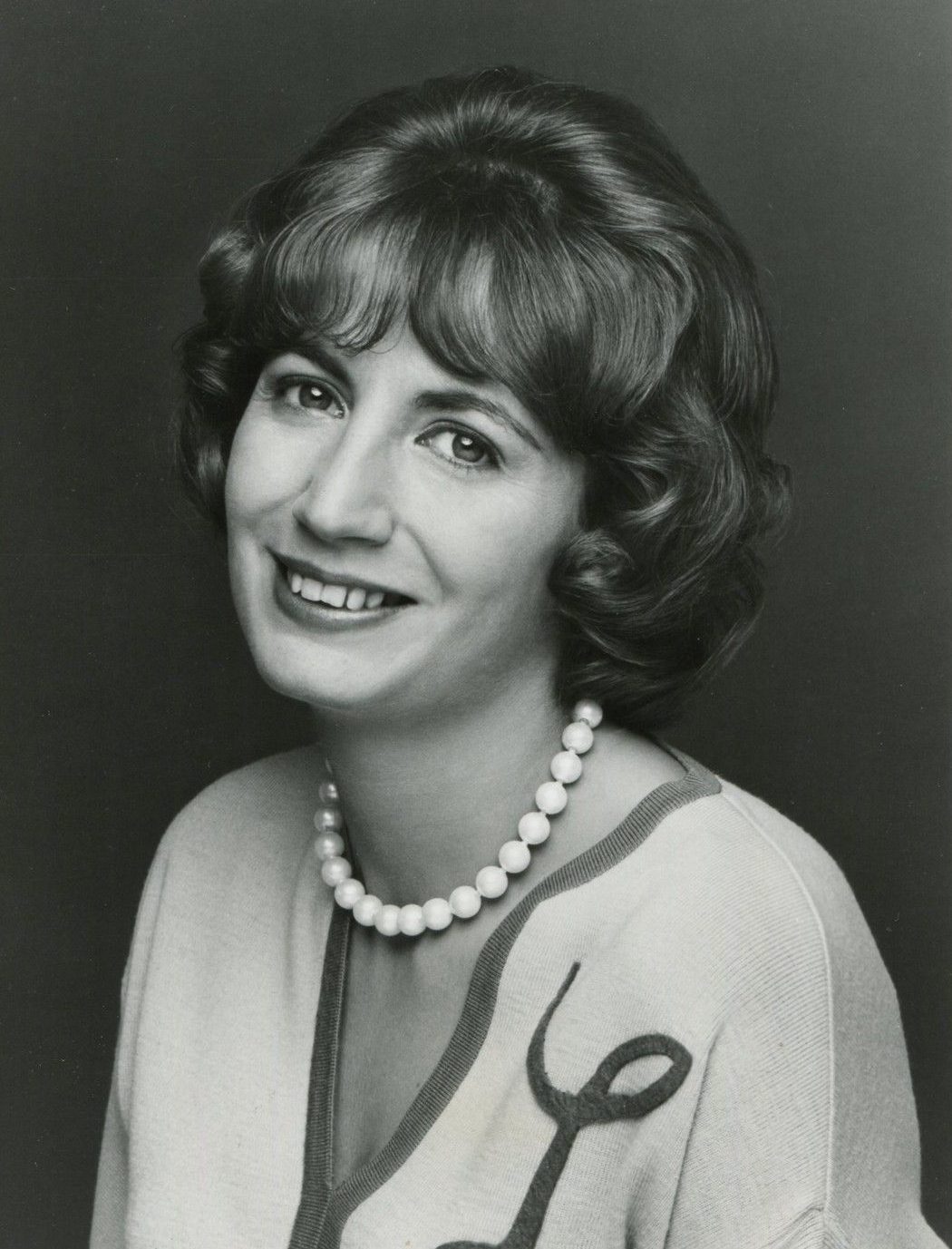
A Bronx Girl Named for Carole Lombard
Carole Penny Marshall was born on October 15, 1943, in the Bronx, New York City, and she was named for the actress Carole Lombard, a piece of Hollywood glamour in a working-class Bronx household. Her mother was a tap-dance teacher and her father directed industrial films, and the family business, in a sense, was show business, practiced at a modest scale. Her older brother Garry became a television writer and producer, and her sister Ronny became a producer as well, and Penny grew up in a house where entertainment was not a fantasy but a trade, something people did for a living. She was funny, observant and self-deprecating from an early age, qualities that would define both her acting and her directing, and she carried a Bronx accent and a Bronx attitude into every room she entered.
Marshall came to Hollywood as a young woman and worked her way into television through small parts and commercials, including a memorable series of commercials for a beauty product that gave her early visibility. She appeared on The Odd Couple, the sitcom her brother Garry produced, playing Oscar Madison's secretary Myrna, and the role gave her a foothold in the industry her brother was helping to build. She was not, at first, a star. She was a working actress with famous relatives and a gift for comedy that was still looking for its proper vehicle, and the vehicle, when it arrived, would be a Milwaukee brewery.
Laverne DeFazio, 1976 to 1983
Marshall and Cindy Williams were introduced as Laverne DeFazio and Shirley Feeney in a 1975 episode of Happy Days, titled A Date with Fonzie, which aired on November 11, 1975, and the guest appearance was so popular that Garry Marshall spun the pair off into their own series. Laverne & Shirley debuted on January 27, 1976, and Marshall played Laverne, the brash, boy-crazy, milk-and-Pepsi-drinking half of the duo, opposite Williams's straitlaced Shirley, two roommates working on the assembly line at Shotz Brewery in 1950s and 1960s Milwaukee. The show became one of the biggest hits on American television, at one point the number-one rated show in the country, and Marshall earned three Golden Globe nominations for Best Actress in a Television Series Musical or Comedy for the role.
Laverne was a creation Marshall inhabited completely: the L sewn on her sweaters, the nasal voice, the physical comedy, the warmth underneath the toughness. She played the role for the show's entire run, from 1976 to 1983, staying after Williams left during season eight and carrying the final season largely on her own. The show made her a star, and it also made her, in the eyes of the industry, a sitcom actress, a label she would spend the next decade dismantling. When Laverne & Shirley ended, Marshall did not look for another sitcom. She looked for a camera to stand behind.
Jumpin' Jack Flash and Big
Marshall's directing career began with Jumpin' Jack Flash in 1986, a Whoopi Goldberg comedy that proved she could handle a feature film, and then, in 1988, she directed Big, a fantasy comedy starring Tom Hanks as a boy who wishes himself into adulthood. Big was a phenomenon, a warm, funny, beautifully performed film that became the first film directed by a woman to gross more than 100 million dollars at the box office, a barrier that had stood since the beginning of the studio era. The achievement was not a footnote. It changed the conversation about who could direct a hit, and it made Marshall, overnight, one of the most sought-after directors in Hollywood, not as a novelty but as a proven commercial filmmaker.
She followed Big with Awakenings in 1990, a drama starring Robert De Niro and Robin Williams about patients emerging from decades of catatonia, which earned Academy Award nominations including Best Picture, and then with A League of Their Own in 1992, a beloved comedy-drama about the All-American Girls Professional Baseball League, starring Geena Davis, Madonna, Lori Petty and Tom Hanks. The three films together form one of the strongest directing runs of their era, and they share Marshall's signature qualities: warmth without sentimentality, comedy grounded in character, and a belief that ordinary people, given a chance, are more interesting than heroes.
Later Films and the Rodman Documentary
After A League of Their Own, Marshall directed Riding in Cars with Boys in 2001, a Drew Barrymore drama based on Beverly Donofrio's memoir, and she produced films and television, including work on the series United States of Tara. Her later directing career was quieter than her late-1980s peak, partly by choice and partly because the industry's appetite for the mid-budget, character-driven comedies she excelled at was shrinking. She remained a respected figure in Hollywood, a director other directors admired, and she took on projects that interested her rather than chasing the next hit. Her final film work included the Dennis Rodman documentary, a portrait of the basketball star that was released in 2019, after her death, a last credit for a filmmaker who had never quite stopped working.
She also remained visible as a personality, appearing in documentaries and retrospectives about the shows and films she had made, and lending her voice and presence to tributes for her brother Garry, who died in July 2016 at 81. The Marshall siblings had built a comedy empire together, Garry behind the desk and Penny in front of the camera and then behind it, and his death was a blow to her. She spoke about him with love and with the same self-deprecating humor she brought to everything, the kid sister who had ended up directing Tom Hanks.
Rob Reiner, Tracy and Family
Marshall married director and actor Rob Reiner in 1971, and the marriage lasted until their divorce in 1981. Reiner, who had played Meathead on All in the Family, went on to direct This Is Spinal Tap, When Harry Met Sally and A Few Good Men, and the two of them formed, for a decade, one of Hollywood's most talented young couples, two Bronx-bred comedy minds who understood the business from the inside. Marshall had a daughter, Tracy Reiner, who became an actress herself, and she had three grandchildren, who survived her along with her sister Ronny. Her family life, like her career, was lived largely in public but on her own terms, and she spoke about her daughter and grandchildren with evident pride.
The Reiner marriage ended, as many Hollywood marriages do, without destroying the friendship underneath it. Reiner was among those who paid tribute to Marshall after her death, and the respect between them was genuine. Marshall never remarried, and she lived her later years in the Hollywood Hills, close to the industry she had conquered twice, surrounded by family, friends and the memorabilia of a career that had taken her from the Bronx to the top of the box office.
Illness, Remission and Reconciliation
In 2009, Marshall was diagnosed with lung cancer, which later spread to her brain, a devastating diagnosis that she met with characteristic bluntness and humor. She underwent treatment, and in 2013 she announced that the cancer was in remission, a reprieve that gave her five more years of work and life. She spoke about the illness sparingly, preferring to talk about her films and her family, but the reprieve mattered: it allowed her to see her memoir My Mother Was Nuts published in 2012, to reconcile fully with Cindy Williams, and to enjoy a late period of recognition as a pioneer for women directors, an honor she accepted with the same self-deprecation she had always practiced.
The reconciliation with Williams was, for both women, one of the most meaningful chapters of their later lives. After years of distance following Williams's departure from Laverne & Shirley in 1982, the two found their way back to each other in the 2000s, appearing together on Sam & Cat in 2013 and speaking warmly of each other in interviews. Marshall told the Associated Press that any show you work on for eight years, you are going to argue at some point, a typically plainspoken summary of a complicated friendship. When Marshall died, Williams was among the first to mourn her, and the symmetry of their lives, both dead at 75, both defined by a Milwaukee brewery, was not lost on anyone.
Death and Legacy
Marshall died on December 17, 2018, at her Hollywood Hills home, of complications from diabetes, at 75. Her publicist Michelle Bega announced the death, and the tributes came from across the industry: from Tom Hanks, from Geena Davis, from Rob Reiner, from Robert De Niro, from Rosie O'Donnell, and from the countless women directors who had followed the path Big opened. She was buried at Forest Lawn Memorial Park, and the bottom of her headstone carries an L, carved in honor of Laverne, the character who had started everything.
What Marshall leaves behind is two legacies, and either one alone would be enough. As an actress she created one of television's great comic characters, a woman whose sweater, voice and laugh are still instantly recognizable. As a director she broke a barrier that had stood for a century, proving that a woman could direct a 100-million-dollar hit and then proving it again with films that are still loved. She was the Bronx girl named for Carole Lombard who became, against long odds, one of the most successful filmmakers of her generation, and she did it, as she did everything, with humor, with warmth, and without ever pretending it had been easy.
Frequently asked questions
What happened to Penny Marshall?
Penny Marshall died on December 17, 2018, at her Hollywood Hills home at 75, of complications from diabetes. She had played Laverne on Laverne & Shirley and directed Big, Awakenings and A League of Their Own.
What was Penny Marshall's biggest film as a director?
Big (1988), starring Tom Hanks, was the first film directed by a woman to gross more than 100 million dollars. She followed it with Awakenings and A League of Their Own (1992).
Was Penny Marshall married to Rob Reiner?
Yes, from 1971 to 1981. She had a daughter, Tracy Reiner, and three grandchildren.
Did Penny Marshall have cancer?
She was diagnosed with lung cancer in 2009, which spread to her brain, and announced in 2013 that the cancer was in remission. She later died of complications from diabetes.
Did Penny Marshall reconcile with Cindy Williams?
Yes. After years of distance following Williams's 1982 departure from Laverne & Shirley, they reconciled in the 2000s and appeared together on Sam & Cat in 2013.
What was Penny Marshall's memoir called?
My Mother Was Nuts, published in 2012.
How many Golden Globe nominations did Penny Marshall receive for Laverne & Shirley?
Three, for Best Actress in a Television Series Musical or Comedy.
What was Penny Marshall's last film work?
Her final film work included the Dennis Rodman documentary, released in 2019 after her death.
Sources
- EN WikipediaBirth, Laverne role, directing career, marriages, illness, death
- Entertainment TonightDeath December 17, 2018, Hollywood Hills home, complications from diabetes
- NPRAP obituary: Big, A League of Their Own, Laverne & Shirley, diabetes cause