What Happened to Patty Duke?
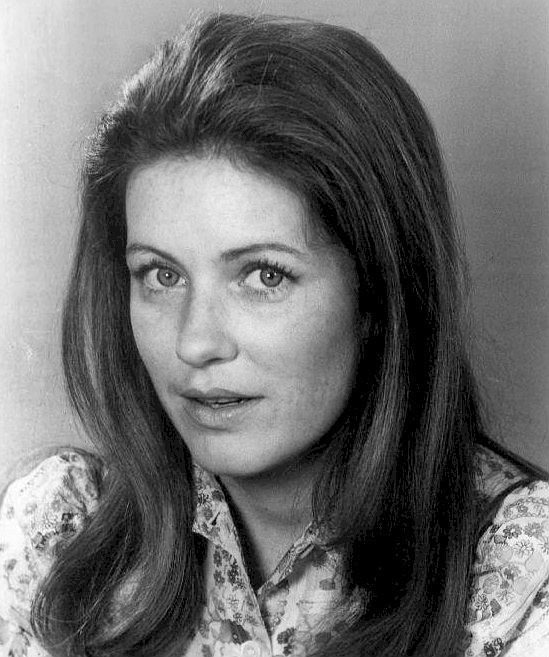
Anna Marie Duke from Queens
Anna Marie Duke was born on December 14, 1946, in Elmhurst, Queens, New York City, the youngest of three children of Frances Margaret McMahon, a cashier, and John Patrick Duke, a handyman and cab driver. Her childhood was difficult: her father struggled with alcoholism, her mother suffered from clinical depression, and at the age of eight her parents gave her over to a pair of talent managers, John and Ethel Ross, who took her to live with them in Manhattan, renamed her Patty because, they said, Anna Marie was not a star's name, and controlled every aspect of her life. She later described the Rosses as manipulative and abusive, and she said they stole much of her earnings and introduced her to alcohol at a young age.
The Rosses did, however, make her a star. Duke began acting as a child in television commercials and on soap operas including The Brighter Day, and at the age of twelve she won the part that changed her life. After winning an open audition against more than two hundred other girls, she was cast as Helen Keller in the Broadway production of The Miracle Worker, the story of the blind and deaf girl taught to communicate by Anne Sullivan, played by Anne Bancroft. The play ran from 1959 to 1961, and Duke played Helen for the entire run, a performance of extraordinary physical and emotional discipline for a child.
The Oscar at Sixteen
In 1962, Duke recreated the role in the film version of The Miracle Worker, opposite Bancroft, and her performance won the Academy Award for Best Supporting Actress. She was sixteen years old, and at the time she was the youngest person ever to win an Oscar in a competitive category. The award made her famous, and it made her, in the eyes of the public, the girl who had played Helen Keller, a label that was both an honor and a burden. She accepted the statuette with a speech so brief it became famous in itself, thanking the Academy and sitting down, and she went back to work the next morning.
What followed was the second act of her child stardom. In 1963, at seventeen, she was given her own television series, The Patty Duke Show, created by Sidney Sheldon, in which she played dual roles as identical cousins Patty Lane, the spirited American teenager, and Cathy Lane, the proper Scottish cousin, who had been separated and reunited. The show ran for three seasons, from 1963 to 1966, and it was a hit, but it was also a strain: Duke played two characters in nearly every episode, with split-screen effects that required her to act against herself, and she later said the schedule and the pressure contributed to the mental health crisis that would come later.
Valley of the Dolls and the Crisis Years
After The Patty Duke Show, Duke tried to break away from her child-star image with adult roles, most famously as Neely O'Hara, the alcoholic singer, in Valley of the Dolls in 1967, the film of Jacqueline Susann's bestseller. The film was a commercial hit and a critical disaster, and Duke's performance was singled out for ridicule, winning her a Golden Raspberry nomination years later when the awards were created. She was, by her own later account, in the grip of undiagnosed bipolar disorder during the filming, and she has said she was drinking heavily and behaving erratically. The role that was supposed to make her an adult star became, instead, a symbol of a career in crisis.
The crisis years were severe. She married director Harry Falk in 1965, a marriage that ended in divorce, and in 1970 she married Michael Tell, a rock promoter, in a Las Vegas ceremony that lasted thirteen days before it was annulled. She became pregnant during a brief relationship with Desi Arnaz Jr, and she gave birth to her son Sean in February 1971. She married actor John Astin in 1972, who adopted Sean, and the couple had a second son, Mackenzie, in 1973. The marriage to Astin, her third, lasted until 1985, and it was during those years that her illness became impossible to ignore.
The Diagnosis and Call Me Anna
In 1982, Duke was diagnosed with bipolar disorder, then called manic depression, after years of episodes that had damaged her career, her marriages and her health. The diagnosis was, for her, a revelation: there was a name for what had been happening to her, and there was treatment for it. She began taking lithium, and she stabilized. In 1987 she published her autobiography, Call Me Anna, in which she described the Rosses, the illness, the alcohol and the fame with a candor that was, at the time, extraordinary for a public figure. The book became a bestseller, and it made her one of the first celebrities to speak openly about mental illness.
The advocacy that followed changed her public identity. She became a spokesperson for the National Institute of Mental Health and for the National Alliance for the Mentally Ill, she lobbied Congress for mental health funding, and she spoke to audiences across the country about her illness, her treatment and her recovery. She told interviewers that she had lost years to the disorder, and that she wanted other people to know that help existed. For many Americans, Patty Duke became, after 1987, not the child star or the Oscar winner but the woman who had made it acceptable to say the words bipolar disorder out loud.
SAG President, 1985 to 1988
In 1985, Duke was elected president of the Screen Actors Guild, the union representing film and television performers, becoming only the second woman to hold the office, after Kathleen Nolan. She served two terms, from 1985 to 1988, during a turbulent period for the union, and she worked to protect actors' residuals and health benefits. The presidency was a remarkable achievement for a performer whose career had been, in the industry's eyes, a cautionary tale, and it confirmed her standing among her peers. She was no longer the child star. She was a leader, and her colleagues treated her as one.
Her acting career continued alongside the advocacy and the union work. She won three Emmy Awards: for the television movie My Sweet Charlie in 1970, for the miniseries Captains and the Kings in 1977, and for playing Anne Sullivan, the teacher she had once played opposite, in a 1979 television remake of The Miracle Worker. She won a Golden Globe for Me, Natalie in 1969, and she appeared in dozens of television movies and guest spots, including a memorable run on the soap opera The Bold and the Beautiful. She was, in her later years, a working actress with a reputation for professionalism and warmth.
Idaho and the Final Years
In 1986, Duke married Michael Pearce, a drill sergeant she had met during the filming of a television movie, and the couple settled in Coeur d'Alene, Idaho, where they lived for the last twenty-five years of her life. She adopted Pearce's son Kevin, and the family became part of the community, far from Hollywood. Duke embraced Idaho: she was a regular at local events, she supported the local theater, and she lived, by every account, a happy and stable life there. The woman who had been taken from her parents at eight and controlled by managers for a decade had finally, in her forties, found a home she chose herself.
Her final television appearance came in 2015, when she played twin grandmothers on the Disney Channel series Liv and Maddie, a return to the dual-role trick that had made her famous fifty years earlier, and a fitting bookend to a career that had begun with a child playing two people at once. She was, by then, in her late sixties, and she was still working, still funny, and still beloved by the audiences who had grown up with her.
Where Patty Duke Is Now
Patty Duke is not alive. She died on March 29, 2016, in Coeur d'Alene, Idaho, at the age of 69, of sepsis from a ruptured intestine, according to her agent Mitchell Stubbs, who announced the death to the Associated Press. A family statement quoted in press coverage said she died at 1:20 a.m. Pacific time at Kootenai Health, and that her husband Michael Pearce and her sons Sean and Mackenzie were with her. She was buried in Idaho, the state she had chosen, and the tributes that followed came from every part of her life: from the Academy, from SAG, from mental health advocates, and from the fans who had watched her since she was twelve years old on Broadway.
What she leaves behind is a life that refused to be a tragedy. She was exploited as a child, she was ill for years without knowing why, she was ridiculed for a film she made while sick, and she came back from all of it to lead a union, to write a book that helped strangers, and to live, for twenty-five years, in a town in Idaho where she was simply Patty, a neighbor and a wife and a mother. The Oscar at sixteen was the beginning of her fame. The advocacy, the presidency and the Idaho years were the rest of her life, and they were, by her own account, the better part.
Frequently asked questions
What happened to Patty Duke?
Patty Duke died March 29, 2016, at age 69, in Coeur d'Alene, Idaho, of sepsis from a ruptured intestine. She had lived in Idaho for the last 25 years of her life with her husband Michael Pearce.
How old was Patty Duke when she won the Oscar?
16. She won Best Supporting Actress for The Miracle Worker (1962), playing Helen Keller, and was then the youngest competitive Oscar winner.
What was The Patty Duke Show?
A sitcom (1963-1966) created by Sidney Sheldon in which Duke played dual roles as identical cousins Patty Lane and Cathy Lane.
Was Patty Duke bipolar?
Yes. She was diagnosed with bipolar disorder in 1982, began lithium treatment, and wrote about it in her 1987 autobiography Call Me Anna, becoming a public mental health advocate.
Was Patty Duke president of SAG?
Yes, from 1985 to 1988, the second woman to lead the Screen Actors Guild, after Kathleen Nolan.
Who was Patty Duke married to?
Four times: Harry Falk, Michael Tell (annulled in 1970), John Astin (1972-1985), and Michael Pearce from 1986 until her death. Her sons are Sean Astin, Mackenzie Astin and Kevin Pearce.
What was Patty Duke's last role?
Twin grandmothers on the Disney Channel series Liv and Maddie in 2015, a dual role echoing The Patty Duke Show.
Where did Patty Duke live at the end of her life?
Coeur d'Alene, Idaho, where she and Michael Pearce settled in the late 1980s and lived for about 25 years.
Sources
- EN WikipediaBirth, Oscar at 16, Patty Duke Show, bipolar diagnosis, SAG presidency, death 2016
- KNKX / NPRDeath March 29, 2016, age 69, sepsis from ruptured intestine, Idaho home
- Best Classic BandsFamily statement, 1:20 a.m. death, Kootenai Health, Idaho years, SAG presidency