What Happened to Nancy Kulp, Miss Jane?
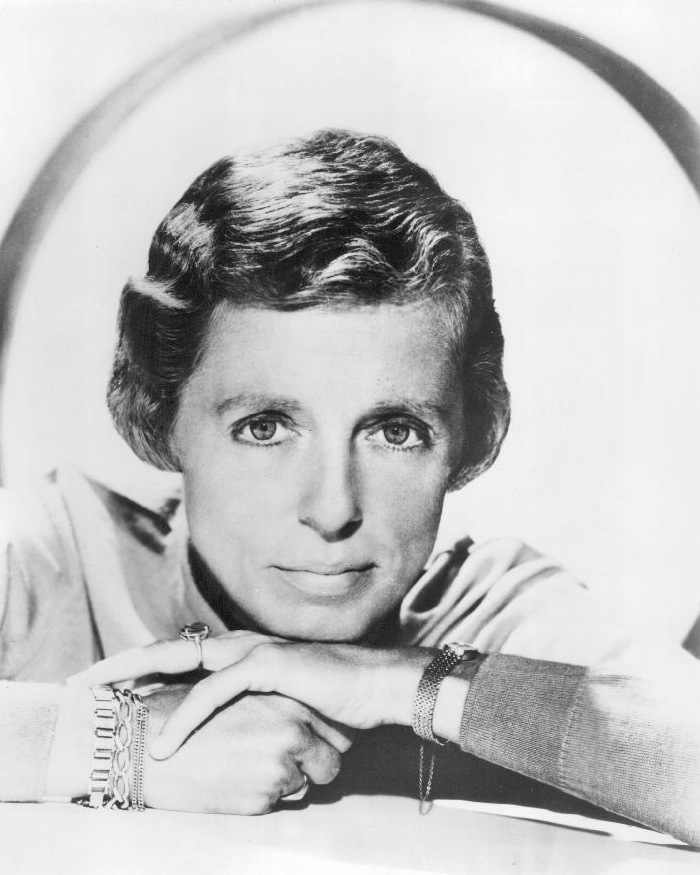
Harrisburg Only Child
Nancy Jane Kulp was born on August 28, 1921, in Harrisburg, Pennsylvania, the only child of Robert Tilden Kulp, a salesman who traveled a great deal, and Marjorie Kulp, a schoolteacher who rose to become a principal, and she grew up in a household where education mattered and where a girl was expected to be smart, which she was, and to use it, which she did. She graduated from Florida State College for Women in 1943 with a degree in journalism, earned a master degree at the University of Miami, and worked in publicity before she ever thought of acting, a background that made her, when she finally did become an actress, one of the most literate people on any set she ever worked on. She moved to Hollywood in 1951, at 30, a late start for an actress, and she began collecting the small roles that would, in time, add up to a career.
Kulp early work was in films and on television, in the kind of supporting parts that character actresses build careers on, and she was, from the beginning, a precise, intelligent performer, a woman who could play a secretary, a teacher, a neighbor, and make each of them distinct, and who never confused being a supporting player with being unimportant. She was tall, plain, funny in a dry, understated way, and she looked like exactly what she was: a smart woman from Pennsylvania who had come to Hollywood to work, and who intended to work for as long as anyone would hire her.
Pamela Livingstone and the Breakout
Kulp first steady television role came on The Bob Cummings Show, where she played Pamela Livingstone, the bird-watching, poetry-loving neighbor, from 1955 to 1959, a character who was, in retrospect, a rehearsal for the role that would define her: a smart, competent, confident woman who was, in the language of the time, a spinster, and who was funny precisely because she was smarter than everyone around her. The show was a hit, and Kulp was a regular, and she learned, in those four years, how to hold a scene in a sitcom, how to deliver a line so that the audience laughed and the character kept her dignity, and how to be the funniest person on screen without ever raising her voice.
She worked steadily after The Bob Cummings Show ended, in guest spots and supporting roles, and she was, by 1962, a familiar face to television audiences, a woman they recognized even if they could not name her, which is the definition of a successful character actress. She had been married once, to Charles Dacus, from 1951 to 1961, a marriage that ended in divorce, and she had no children, and she was, at 41, about to be offered the role that would make her famous, and that would, in the end, be carved on her headstone.
Miss Jane Hathaway, 1962 to 1971
In 1962 Kulp landed her breakout role, as Jane Hathaway, the love-starved, bird-watching, perennial spinster, on the CBS television series The Beverly Hillbillies, playing the smart, competent, confident bank secretary to Milburn Drysdale, the banker who managed the Clampett family fortune, and she stayed with the show for all nine seasons, from 1962 to 1971, the only cast member besides the Clampetts themselves to appear in every season. Miss Jane was a marvel of comic writing and comic acting: a woman who was smarter than everyone around her, who loved birds and hated the golden goose, who pined for a husband and never found one, and who was, in Kulp hands, funny without ever being pathetic, and dignified without ever being dull. She was nominated for a Primetime Emmy Award in 1967, for Outstanding Supporting Actress in a Comedy, and she did not win, but the nomination was the proof, and the nine seasons were the reward.
The Beverly Hillbillies was, for much of its run, the most popular show on television, and Miss Jane became one of the most recognizable characters in America, a woman whose name, in the show, was a joke, and whose character, in Kulp hands, was a quiet rebellion: a single woman, in her forties, who worked, who was good at her job, and who did not need a husband to be complete, even if the show insisted she wanted one. Kulp played her with total commitment and not a trace of condescension, and audiences loved her for it, and they loved her for nine years, and when the show ended in 1971, she was 50, and she had a choice to make about what came next.
Sanford, the SAG Board and a Farm in Pennsylvania
After The Beverly Hillbillies ended, Kulp worked infrequently, in guest spots, including a recurring role as May Hopkins on Sanford and Son, and she served on the board of the Screen Actors Guild, a role that suited her intelligence and her interest in the business side of the profession, and she spent more and more time away from Hollywood, returning to Pennsylvania, where she settled on a farm in Port Royal, near her hometown, and where she began working with the Democratic state committee on a variety of projects, over a period of years, because she had always been interested in politics, and because she had, by then, decided that acting was not the only thing she wanted to do with her life.
She was, by the early 1980s, a woman of two lives: the actress, who had played Miss Jane for nine seasons, and the Pennsylvanian, who had come home, who taught and volunteered and worked for the party, and who was, by every account, as happy on the farm as she had ever been on a set. She had been, for most of her life, a private person, and the farm suited her, and the work suited her, and when the opportunity came to run for office herself, she took it, because she believed, as she had always believed, that a smart woman should use what she had, and that the time had come to try.
The 1984 Campaign
In 1984 Kulp ran for the United States House of Representatives, as the Democratic nominee from Pennsylvania 9th congressional district, after working with the Democratic state committee in her home state for years, and she ran unopposed for the nomination, which meant the party believed in her, and then she faced the Republican incumbent, Bud Shuster, who had held the seat for twelve years, in a Republican district, in a year in which Ronald Reagan won a landslide re-election, and she was, by every measure, the underdog. She campaigned on environmental conservation, education funding and senior citizens rights, and she was, by every account, a serious, substantive candidate, who knew the issues and who believed in them, and who lost, in the end, because the district was not ready for her, and because her own co-star campaigned against her.
The strangest episode of the campaign came when Buddy Ebsen, who had played Jed Clampett on The Beverly Hillbillies, a Californian who had never lived in Pennsylvania, called the Shuster campaign and volunteered to record a radio advertisement in which he called Kulp too liberal and endorsed Shuster, a betrayal that Kulp, who had worked with Ebsen for nine years, found baffling and hurtful, and that the press found irresistible. Shuster won with 117,203 votes, or 66.4 percent, to Kulp 59,449, or 33.6 percent, and Kulp never ran for office again. After her defeat she spent a year at Juniata College in Huntingdon, Pennsylvania, teaching film and drama, and then she returned to California, where she served on the SAG board and was active in the guild, and where she would spend her final years.
Cancer and the Headstone
Kulp was diagnosed with cancer in 1990, a cigarette smoker who had, by then, been ill for some time, and she received chemotherapy, and by 1991 the cancer had spread, and she died on February 3, 1991, at a friend home in Palm Desert, California, at 69. Most sources say only that she died of cancer, but WikiTree identifies the disease as laryngeal cancer, and this article notes that identification as reported by WikiTree, while stating, in the body, only what the majority of sources confirm: that she was diagnosed in 1990, that she received chemotherapy, and that the cancer spread and killed her. One fandom wiki prints her death place as Palm Springs, but EN Wikipedia and TimeNote both print Palm Desert, and this article follows Palm Desert. She is interred at Westminster Presbyterian Cemetery in Mifflintown, Pennsylvania, and her headstone, by her own arrangement, reads simply Miss Jane Hathaway.
Late in life Kulp acknowledged that she was a lesbian, telling an interviewer, in a conversation about the gay Massachusetts Congressman Barney Frank, that if she were outed she would not deny it, a statement that, in the context of 1990, was an act of quiet courage, and that has, since her death, become part of her story. She had been married once, to Charles Dacus, from 1951 to 1961, and she had no children, and she died, in the end, as she had lived for most of her life: privately, intelligently, and on her own terms, with a headstone that said, in four words, everything that mattered about who she had been.
What Happened to Nancy Kulp, in the End
So what happened to Nancy Kulp? She became Pamela Livingstone, she became Miss Jane Hathaway, she became a candidate for Congress, she became a teacher at Juniata College, and she died on February 3, 1991, at a friend home in Palm Desert, California, at 69, of cancer, and she was buried in Mifflintown, Pennsylvania, under a headstone that reads Miss Jane Hathaway, because she knew, better than anyone, that the character was the thing people would remember, and that the character was worth remembering. She was 69, she had been an actress for forty years, a candidate for one year, and a teacher for one year, and she had done all of it with the same intelligence and the same dignity, and she had never once apologized for being smart, or single, or herself.
What remains is Miss Jane, still bird-watching in reruns, still pining for a husband she never found, still smarter than everyone in the room, and the campaign of 1984, still remembered as the year a sitcom actress ran for Congress and lost to a man her own co-star had endorsed, and the headstone in Mifflintown, which says, in four words, what a thousand obituaries could not: that Nancy Kulp was Miss Jane Hathaway, and that Miss Jane Hathaway was, in the end, the best thing she ever did, and the thing she was proudest of, and the thing she wanted to be remembered by.
Frequently asked questions
What happened to Nancy Kulp?
Nancy Kulp died on February 3, 1991, at a friend home in Palm Desert, California, at 69, of cancer. She had played Miss Jane Hathaway on The Beverly Hillbillies for all nine seasons, and she had run for Congress in 1984.
Who did Nancy Kulp play on The Beverly Hillbillies?
Miss Jane Hathaway, the bird-watching bank secretary to Milburn Drysdale, from 1962 to 1971. She appeared in all nine seasons and was nominated for an Emmy in 1967.
Did Nancy Kulp run for Congress?
Yes. In 1984 she ran as the Democratic nominee for the US House of Representatives in Pennsylvania 9th District, against incumbent Republican Bud Shuster. She lost, with 59,449 votes (33.6 percent) to Shuster 117,203 (66.4 percent).
Why did Buddy Ebsen campaign against Nancy Kulp?
Ebsen, who played Jed Clampett on The Beverly Hillbillies, recorded a radio ad for Shuster calling Kulp too liberal. He was a Californian who had never lived in Pennsylvania, and Kulp found the move baffling and hurtful.
What did Nancy Kulp die of?
Cancer, diagnosed in 1990. She received chemotherapy, and by 1991 the cancer had spread. WikiTree identifies it as laryngeal cancer, while most sources say only cancer.
Where is Nancy Kulp buried?
At Westminster Presbyterian Cemetery in Mifflintown, Pennsylvania. Her headstone, by her own arrangement, reads simply Miss Jane Hathaway.
Was Nancy Kulp married?
Once, to Charles Dacus, from 1951 to 1961. She had no children. Late in life she acknowledged that she was a lesbian, telling an interviewer that if she were outed she would not deny it.
How old was Nancy Kulp when she died?
Sixty-nine. She was born August 28, 1921, in Harrisburg, Pennsylvania, and died February 3, 1991, in Palm Desert, California.
Sources
- EN WikipediaBirth, Miss Jane role, Emmy nomination, Congress run, votes, death
- TV InsiderBirth August 28, 1921, death February 3, 1991, age 69, cancer, Congress run
- WikiTreeLaryngeal cancer identification, death at friend home in Palm Desert, burial