What Happened to Mickey Rooney, Andy Hardy Star?
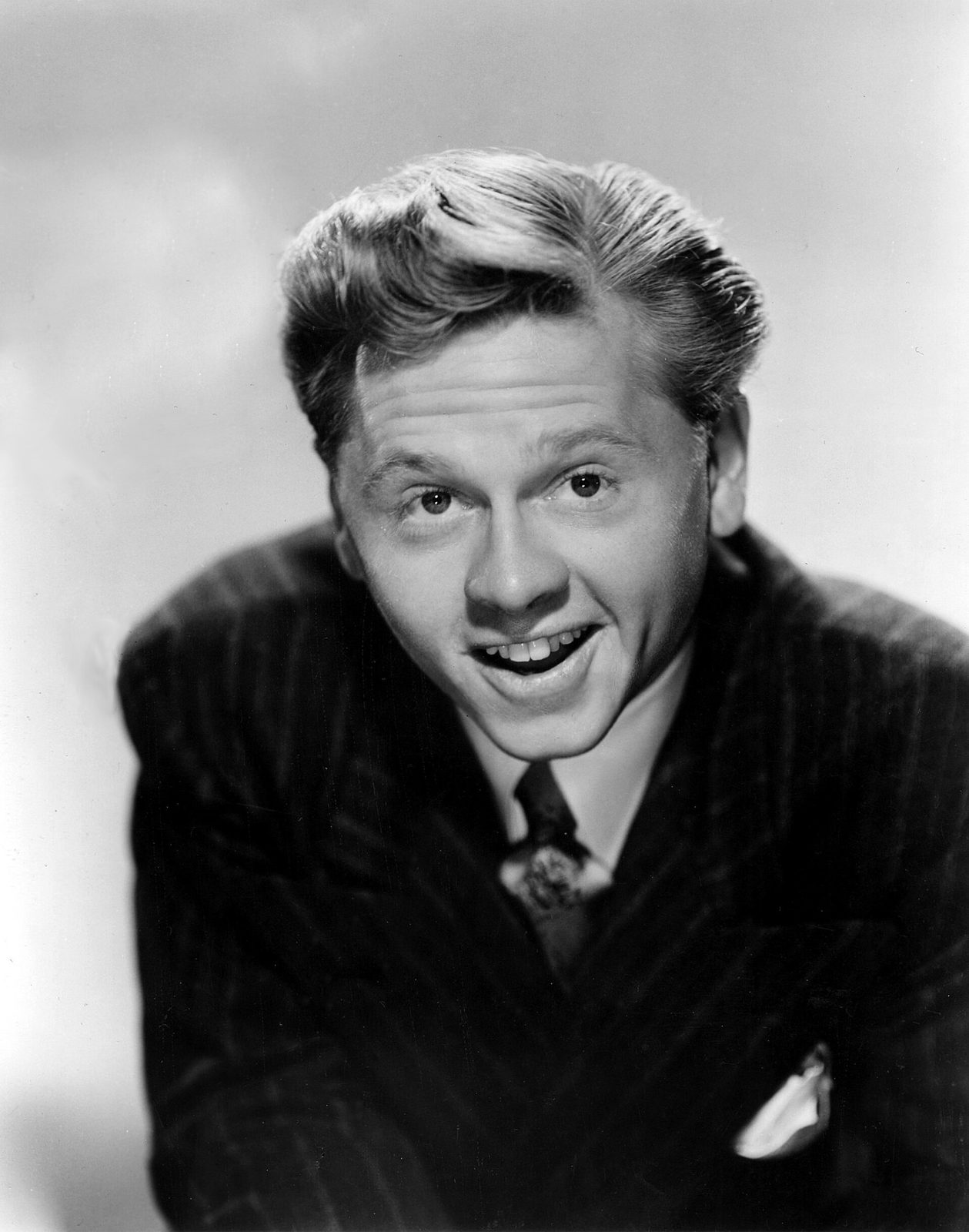
A Toddler on the Vaudeville Stage
Mickey Rooney was born Ninnian Joseph Yule Jr. on September 23, 1920, in Brooklyn, New York, the only child of vaudevillians Joe Yule and Nellie Carter, and he later said he began performing at 17 months old as part of his parents' act, wearing a specially tailored tuxedo. His parents separated when he was four, and he moved to Hollywood with his mother in 1925. He made his first film appearance at six, in the 1926 short Not to be Trusted, and at seven he won the title role in a series of Mickey McGuire short films, playing the character in 78 of them between 1927 and 1936. The stage name came out of a lawsuit: his father had briefly made him Mickey McGuire legally to beat a copyright claim from the owners of the Toonerville Trolley comic strip, and the settlement forced the boy to stop using the name on and off screen. His mother suggested Mickey Looney, and he changed it to Rooney so it would not infringe on the Looney Tunes cartoons.
At 14 he played Puck in the stage and film versions of A Midsummer Night's Dream, a performance one critic called one of the cinema's most arresting pieces of magic, and he moved to MGM, where he befriended Judy Garland and began the run of musicals that made them both stars. He had already worked alongside Clark Gable, Douglas Fairbanks Jr., John Wayne and Jean Harlow in bit parts, and by his mid-teens he was no longer a child actor looking for a break. He was a working star with a studio behind him, a famous name, and a character waiting to be written that would define him for the rest of his life.
Andy Hardy and the Biggest Star in America
In 1937 Rooney was cast as Andy Hardy in A Family Affair, a film MGM had planned as a B-movie, and the picture was such an unexpected success that it produced 13 more Andy Hardy films between 1937 and 1946, plus a final one in 1958, for 16 in all. His Andy was a typical anxious, hyperactive, girl-crazy teenager, and the films gave audiences a comforting portrait of small-town America that suited the times. His breakthrough as a dramatic actor came in Boys Town in 1938, opposite Spencer Tracy as Father Flanagan, and Rooney and Deanna Durbin were given a special Juvenile Academy Award in 1939 for bringing the spirit of youth to the screen. At 19 he was nominated for the Academy Award for Best Actor for Babes in Arms, becoming the second-youngest Best Actor nominee and the first teenager ever nominated in the category, and he was nominated again for The Human Comedy in 1943.
He was the biggest box-office draw in America in 1939, 1940 and 1941, and he made 43 films between the ages of 15 and 25, including nine pictures in 1938 alone. He appeared on the cover of Time magazine in 1940, and his co-stars in those years included Elizabeth Taylor in National Velvet, and his admirers included Laurence Olivier, who once called him the greatest actor of them all, and the director Clarence Brown, who said Rooney was the closest thing to a genius he had ever worked with. The fame was total, and it was also a trap, because the boy who played Andy Hardy was growing up in public, and Hollywood had no plan for what he would become next.
The War and the Long Slide Down
Rooney was drafted into the Army during World War II and served nearly two years, from 1944 to 1946, entertaining more than two million troops on stage and radio and earning a Bronze Star for performing in combat zones. When he came home in 1945, the industry that had made him a star had no place for him: he was too old for juvenile roles and, at 5 feet 3 inches, too short for most adult leading roles. He said it himself, years later: in 1938 he had starred in eight pictures, and in 1948 and 1949 together he starred in only three. The decline was steep, and it was public, and the boy who had been the symbol of American youth was now a grown man taking whatever work he could get.
He kept working through the lean years in low-budget pictures, several of them later regarded as films noir, and he rebuilt his reputation one supporting role at a time. The Bold and the Brave in 1956 brought him an Academy Award nomination for Best Supporting Actor, and Requiem for a Heavyweight in 1962, It's a Mad, Mad, Mad, Mad World in 1963 and Pete's Dragon in 1977 kept him in front of audiences. He also played Baby Face Nelson in 1957, a manic performance one critic called the destructive response of the runt against a pig society. The comeback was slow, and it was real, and it proved what the film historian Jeanine Basinger later wrote about him: that while his career reached the heights and plunged to the depths, Rooney kept on working and growing, the mark of a professional.
The Comebacks: The Black Stallion, Bill and Broadway
The second act of Rooney's career peaked in the late 1970s and early 1980s. His supporting role in The Black Stallion in 1979 brought him a second Academy Award nomination for Best Supporting Actor, and in the early 1980s he returned to Broadway in Sugar Babies, a role that earned him nominations for the Tony Award and the Drama Desk Award for Best Actor in a Musical. His greatest late-career triumph was the title role in the television movie Bill, for which he won both a Golden Globe and an Emmy in 1982, and in the same year he was given the Academy Honorary Award. He had gone from child star to has-been to respected character actor, and the respect was earned, because he had done it without ever leaving the business, and without ever stopping.
He made hundreds of television appearances across the decades, in dramas, variety programs and talk shows, and his film career ran for 88 years, from 1926 to 2014, continuing until shortly before his death. At the end he was filming a role in Night at the Museum: Secret of the Tomb, and the film was released after he died. He was one of the last surviving stars of the silent-film era, and his career had lasted so long that it bridged the silent shorts of the 1920s and the digital blockbusters of the 2010s, a span no other major American movie star has matched.
Eight Marriages and a Family That Never Settled
Rooney was married eight times, and six of the unions ended in divorce, a record that made him the butt of comedians' jokes in the 1960s and 1970s. In 1942 he married his first wife, the actress Ava Gardner, who was then still an obscure 20-year-old starlet, and they divorced the following year, partly because of his alleged infidelity. While stationed in the military in Alabama in 1944 he met and married Betty Jane Phillips, who later became a singer under the name B. J. Baker, and they had two sons before divorcing after the war. His marriage to the actress Martha Vickers in 1949 produced one son and ended in divorce in 1951, and he married the actress Elaine Devry in 1952 and divorced her in 1958.
In 1958 he married the model and actress Barbara Ann Thomason, and they had four children before she was murdered in 1966 by the stuntman Milos Milos, who had been her lover and who then shot himself. Rooney then married Barbara's best friend, Marge Lane, though that marriage lasted only 100 days. He was married to Carolyn Hockett from 1969 to 1975, and they had two children. In 1978 he married his eighth and final wife, Jan Chamberlin, and their marriage lasted until his death, a total of 36 years, longer than his seven previous unions combined, although they separated in June 2012. He had nine children, two stepchildren and 19 grandchildren, and the family, like the career, was large, crowded and never quite at peace.
Bankruptcy, Betrayal and the Senate
The money went as fast as the fame. Despite earning millions during his career, Rooney had to file for bankruptcy in 1962 because his finances had been mismanaged, and the financial trouble never really left him. He also lived with bipolar disorder, attempted suicide two or three times over the years, with the resulting hospitalizations reported at the time as nervous breakdowns, and was addicted to sleeping pills, an addiction he overcame in 2000, when he was in his late seventies. In the late 1970s he became a born-again Christian. In February 1997 he was arrested on suspicion of beating his wife, Jan, but the charges were dropped for lack of evidence.
In his later years he entrusted his finances to his stepson, Christopher Aber, who, according to the accounts published after Rooney's death, funneled Rooney's earnings to pay for his own lavish lifestyle. On February 16, 2011, Rooney was granted a temporary restraining order against Aber and Aber's wife, and on March 2, 2011, he appeared before a special Senate committee that was considering legislation to curb elder abuse, testifying about the abuse he said he had suffered at the hands of family members. Later that year all of his finances were permanently handed over to a conservator, who called him completely competent, and the restraining order was replaced by a confidential settlement, with Aber and Jan Rooney denying all the allegations. In May 2013 he sold the home he had lived in for many years and split the proceeds with his wife. Vanity Fair, writing at his death, called him the original Hollywood train wreck, and the phrase stuck because it was, by then, impossible to deny.
What Happened to Mickey Rooney, in the End
So what happened to Mickey Rooney? He was born Ninnian Joseph Yule Jr. in Brooklyn in 1920, the only child of vaudevillians, and he was performing before he could properly talk. He became Mickey McGuire in 78 short films, then Puck, then Andy Hardy in 16 films, then the biggest box-office draw in America for three straight years, then a soldier who entertained two million troops and came home with a Bronze Star, then a has-been who could not get a leading role, then a character actor with two more Oscar nominations, then an Emmy and Golden Globe winner for Bill, then a Broadway star in Sugar Babies, then a bankrupt, then a born-again Christian, then a man who told the United States Senate that his own family had mistreated him, and then, at 93, a man still reporting to a film set.
He died of natural causes, including complications from diabetes, on April 6, 2014, at his home in the Studio City area of Los Angeles, according to Wikipedia, although the Associated Press obituary placed his death at his home in North Hollywood. He was 93. A group of family members and friends, including the actor Mickey Rourke, held a memorial service on April 18, and a private funeral was held at Hollywood Forever Cemetery, where he was interred, on April 19. His eight surviving children said they had been barred from seeing him during his final years. He left behind more than 300 films, four Academy Award nominations, a special Juvenile Award, an honorary Oscar, an Emmy and a Golden Globe, and a reputation that Laurence Olivier, Marlon Brando and the actress Margaret O'Brien all described in the same way: there was nothing he could not do, and he was, as Brando put it, the best actor in films.
Frequently asked questions
What happened to Mickey Rooney?
Mickey Rooney died of natural causes, including complications from diabetes, at his home in the Los Angeles area. He was still working on a film role in his final months, and his career had spanned nearly nine decades.
Why was Mickey Rooney so famous?
He became the biggest box-office draw in America as a teenager, playing Andy Hardy in a long-running series of films about small-town American life. He also starred in Boys Town, National Velvet and a string of hit musicals with Judy Garland.
Did Mickey Rooney serve in the military?
Yes, he served in the Army during the Second World War, entertaining troops on stage and radio, and he was awarded a Bronze Star for performing in combat zones.
How many times was Mickey Rooney married?
Eight times. His first wife was Ava Gardner, and his longest marriage was his eighth, to Jan Chamberlin, which lasted until his death even though they had separated.
What was Mickey Rooney's last film?
He was filming a role in the third Night at the Museum film when he died, and it was released after his death. His final decades were filled with character roles, television work and stage appearances.
Did Mickey Rooney win an Oscar?
He never won a competitive Oscar, but he received a special Juvenile Award as a young actor, an honorary Oscar later in life, and four acting nominations across his career.
Why did Mickey Rooney testify before the Senate?
In his final years he said family members had mistreated him and taken control of his finances, and he testified before a Senate committee about elder abuse. A court later placed his finances under a conservator.
Where is Mickey Rooney buried?
He is buried at Hollywood Forever Cemetery in Los Angeles, where a private funeral was held after a public memorial service.
Sources
- EN WikipediaBorn Ninnian Joseph Yule Jr. September 23 1920 Brooklyn, died April 6 2014 age 93 natural causes diabetes complications Studio City, 300 films, Andy Hardy 16 films, top box office 1939-1941, Boys Town, Babes in Arms, Human Comedy, Bronze Star, Bill Emmy and Golden Globe 1982, honorary Oscar 1982, eight marriages, bankruptcy 1962, Senate testimony 2011
- Legacy.comAP obituary: died Sunday age 93 surrounded by family at his North Hollywood home, coroner said natural death, eight surviving children, 19 grandchildren
- PlaybillBorn Ninian Joseph Yule Jr. September 23 1920 Brooklyn, died April 6 age 93, career nearly as long as his life, Broadway veteran, biggest child star of Hollywood golden age