What Happened to McLean Stevenson of MASH?
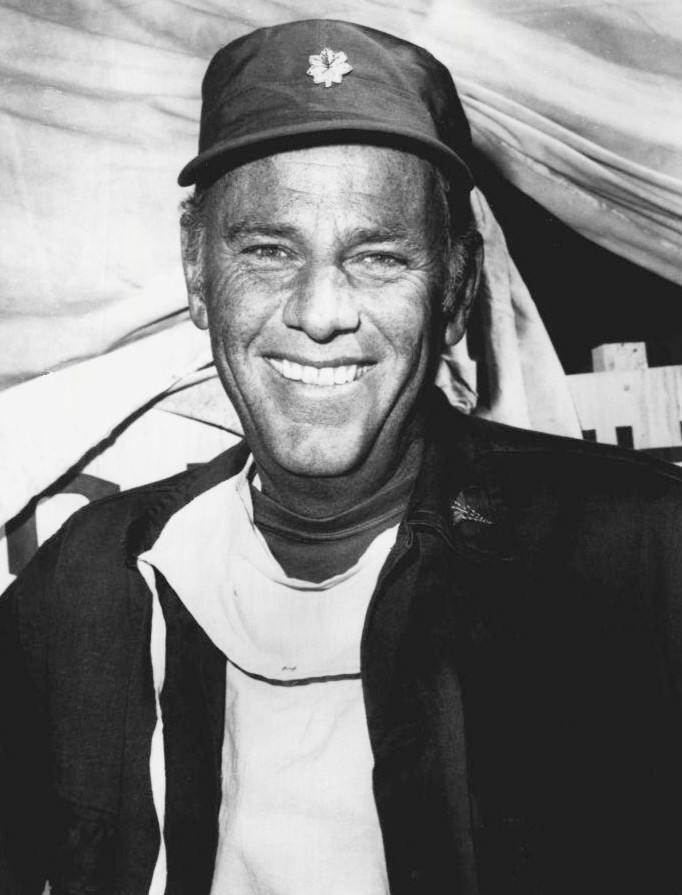
A Normal, Illinois, Boy From a Famous Family
Edgar McLean Stevenson Jr. was born on November 14, 1927, in Normal, Illinois, the son of a local cardiologist, and he grew up in the long shadow of a famous relative: he was a distant cousin of Adlai Stevenson II, the Illinois governor and two-time Democratic nominee for president, a connection that gave the family a certain standing in Illinois and gave young McLean a front-row view of public life. He did not start in show business until he was 31, a late start by any measure, and he came to acting after years working in radio and around the edges of the entertainment business, learning the trade from the ground up instead of arriving in Hollywood as a young leading man. Some secondary profiles print his birth year as 1929, which would make him 66 at his death, but EN Wikipedia, IMDb and TV Insider all print November 14, 1927, and this article follows 1927, which makes him 68 when he died.
Stevenson first real break in television came on The Doris Day Show, where he played Michael Nicholson, the magazine editor who employed Doris Day character, from 1969 to 1971, a steady supporting role on a popular sitcom that put him in front of casting directors and proved he could hold his own in a comedy ensemble. He was affable, funny in a dry, understated way, and he looked like exactly what he was: a comfortable, middle-aged Midwesterner who had found his calling late and intended to enjoy it. When the call came for a new CBS series about Army surgeons in Korea, he auditioned for the lead role of Hawkeye Pierce, and the producers, who had other plans for Hawkeye, persuaded him to take a different part instead: the commanding officer, a man who would rather be fishing than fighting.
Henry Blake, 1972 to 1975
M*A*S*H premiered on CBS in September 1972, and Stevenson played Lt. Col. Henry Blake, the bumbling, good-hearted commanding officer of the 4077th Mobile Army Surgical Hospital, a man who preferred his fishing rod to his paperwork and who ran his unit with a shrug and a smile. Blake was the shows moral center in its early years, a decent man surrounded by chaos, and Stevenson played him with a warmth that made audiences love him: he was the boss who never really wanted to be the boss, and the joke was that the camp ran better when he stopped trying. The show became a hit, and in 1974 Stevenson won the Golden Globe for Best Supporting Actor in a television series, the first major award of his career, and the proof that he had arrived.
But Stevenson wanted more than a supporting role, and in 1975, after three seasons, he left the show to pursue a series of his own, a decision that would define the rest of his career. The producers, who had been warned by the fan reaction to come, gave Henry Blake the most famous exit in sitcom history: in the season three finale, Abyssinia, Henry, Blake was sent home, and in the final scene Radar walked into the operating room and announced, in a flat, stunned voice, that Blake plane had been shot down over the Sea of Japan and there were no survivors. The audience reaction was so strong, with countless letters of protest arriving at CBS, that the shows writers and producers agreed that in future, if an actor wished to leave, they would never again give the character a tragic send-off.
The Shows That Did Not Take
Stevenson next twenty years were a lesson in how hard it is to leave a hit show. The McLean Stevenson Show premiered in 1976 and lasted one season. In the Beginning, a sitcom about a priest, came and went in 1978. Hello, Larry, in which he played a radio talk-show host, ran from 1979 to 1980 and is remembered today mostly as a punchline. He worked steadily in the places former stars work, as a panelist on Match Game, in guest spots, in commercials, and he kept his sense of humor about the whole thing, but the starring roles did not come back, and the public would not let Henry Blake go. He later said, with unusual candor, that the biggest mistake he made was thinking everybody loved McLean Stevenson, when it was Henry Blake that people loved, and that when he left to do his own show, nobody gave a damn.
The word McLeaning entered the language because of him, a term for an actor leaving a successful show to chase a solo career, with his character killed off as the price of the exit, and Stevenson became the cautionary tale that every sitcom actor was warned about. It was not entirely fair: he was a talented comic actor who had made a reasonable bet, that a Golden Globe winner could carry his own series, and the bet simply did not pay off. He never stopped working, and he never stopped being liked, but he never again had a role that matched Henry Blake, and he knew it, and he said so, which is more grace than most actors manage in the same position.
Ginny and a Daughter
Stevenson married Ginny Fosdick in 1980, and the marriage lasted until his death sixteen years later, the longest and happiest of his personal life. The couple had a daughter, and Stevenson settled into a quieter life in Los Angeles, working when the work came, appearing at M*A*S*H reunions and fan events, and enjoying the affection of audiences who still remembered Henry Blake with fondness. He had been married before, but it was Ginny who was with him at the end, and who survived him, along with their daughter. Friends described him as warm, funny and unpretentious, a man who had made his peace with the shape of his career and who did not spend his later years bitter about the shows that had failed.
He remained, to the end, a beloved figure to M*A*S*H fans, and he kept in touch with his former castmates, who remembered him as the easygoing center of the early seasons, the man who had set the tone for the ensemble before the show became the darker, more dramatic series it would be in its later years. Alan Alda, who had played Hawkeye opposite him, and the rest of the cast spoke of him with affection, and when Stevenson health failed in early 1996, the news traveled quickly through the community of actors and fans who had loved Henry Blake, and who were about to lose the man who had played him.
Match Game and the Working Years
After his solo shows failed, Stevenson worked steadily in the places former stars work, and he worked there without complaint. He was a regular panelist on Match Game, the daytime game show where quick-witted actors went to be funny for a living, and he was good at it, dry and affable and quick with a line, and he made guest appearances on the popular shows of the era, in commercials, and in the occasional film, keeping his name in front of audiences even when the starring roles did not come. He was, by every account, a professional who arrived on time, knew his lines, and made the day easier for everyone around him, which is why directors kept hiring him, and why audiences kept liking him, even when the material was not worthy of him.
He also remained a part of the M*A*S*H family, appearing at reunions and fan events, and keeping in touch with his former castmates, who remembered him as the easygoing center of the early seasons, the man who had set the tone for the ensemble before the show became the darker, more dramatic series it would be in its later years. He never resented the show, and he never resented Henry Blake, and he understood, better than most actors in his position, that a character who makes people laugh for decades is not a burden but a gift, even when the gift comes with a price. The word McLeaning, which entered the language because of him, was, in the end, a backhanded tribute: it meant that what he had done mattered enough to be named.
A Heart Attack in the Recovery Room
In February 1996 Stevenson underwent surgery for bladder cancer at the Encino-Tarzana Regional Medical Center in Los Angeles, and the operation itself was reported to have gone well. He was recovering in the hospital on February 15, 1996, when he suffered a sudden, fatal heart attack, and the medical staff could not bring him back. He was 68. He was cremated, and his ashes were interred at Forest Lawn Memorial Park in the Hollywood Hills, in Los Angeles. The news was a shock to fans who had not known he was ill, and the obituaries that followed all began with the same fact, because it was the fact that defined him: he had been Henry Blake, and Henry Blake had died on television twenty-one years earlier, and now the actor had died too, in a hospital bed, of a heart that gave out while he was recovering from something else entirely.
The coincidence that followed made the story stranger still. Roger Bowen, the actor who had played Henry Blake in the 1970 film M*A*S*H, the same character Stevenson had played on television, died of a heart attack the very next day, February 16, 1996, twenty-four hours after Stevenson. Two actors, one role, the same cause of death, a day apart, and the obituaries ran side by side, as if the character himself had claimed them both. Stevenson was the first cast member of the television series to leave, and the first to die, and the show that had made him famous went on without him for another seven years, until 1983, and then in reruns forever.
What Happened to McLean Stevenson, in the End
So what happened to McLean Stevenson? He became Henry Blake, he left Henry Blake at the top of his fame, and he spent the next twenty years learning that audiences had loved the character more than the actor, a hard lesson that he bore with humor and without bitterness. He starred in three shows of his own, none of which lasted, he sat on game-show panels, he made guest appearances, he married Ginny Fosdick and raised a daughter, and he died on February 15, 1996, in a Los Angeles hospital, of a heart attack while recovering from bladder cancer surgery, at 68. His character had died in 1975, shot down over the Sea of Japan, and the actor outlived him by twenty-one years, which is longer than most television characters get, and longer than most actors get to live with a ghost.
What remains is Henry Blake, still fishing in reruns, still shrugging at the paperwork, still the decent man in the middle of the chaos, and the word McLeaning, still used whenever an actor leaves a hit show for a solo career, and the memory of a warm, funny Midwesterner who started acting at 31, won a Golden Globe at 46, and left the biggest show on television because he believed he could do more. He could not, as it turned out, do more than Henry Blake, but very few actors ever do more than the role that makes them immortal, and Stevenson, to his credit, knew it, and said so, and kept working anyway.
Frequently asked questions
What happened to McLean Stevenson?
McLean Stevenson died on February 15, 1996, in Los Angeles at 68, of a heart attack while recovering from bladder cancer surgery at the Encino-Tarzana Regional Medical Center. He had played Lt. Col. Henry Blake on M*A*S*H from 1972 to 1975.
Why did McLean Stevenson leave M*A*S*H?
He left after the third season in 1975 to star in his own series, believing he could carry a show himself. His solo shows, including The McLean Stevenson Show and Hello, Larry, all failed, and he later admitted the public had loved Henry Blake more than they loved him.
How did Henry Blake die on M*A*S*H?
In the season three finale, Abyssinia, Henry, Blake was sent home, and Radar announced that his plane had been shot down over the Sea of Japan, with no survivors. The fan backlash was so strong that the producers vowed never to kill off a departing character again.
How old was McLean Stevenson when he died?
Sixty-eight. He was born November 14, 1927, in Normal, Illinois. Some secondary profiles print 1929, which would make him 66, but EN Wikipedia, IMDb and TV Insider all print 1927.
Who played Henry Blake in the M*A*S*H movie?
Roger Bowen played Henry Blake in the 1970 film M*A*S*H. He died of a heart attack on February 16, 1996, the day after Stevenson died of a heart attack.
Was McLean Stevenson related to Adlai Stevenson?
Yes, distantly. He was a distant cousin of Adlai Stevenson II, the Illinois governor and two-time Democratic presidential nominee. His father was a cardiologist in Normal, Illinois.
Did McLean Stevenson win any awards for M*A*S*H?
Yes. He won the Golden Globe for Best Supporting Actor in a television series in 1974 for playing Henry Blake.
Who was McLean Stevenson married to?
He married Ginny Fosdick in 1980, and they remained married until his death in 1996. They had one daughter.
Sources
- EN WikipediaBirth, Henry Blake role, Golden Globe, death, Roger Bowen
- TV InsiderBirth November 14, 1927, death February 15, 1996, age 68
- IMDbBorn November 14, 1927, died February 15, 1996 of a heart attack, Ginny Fosdick marriage