What Happened to MC Hammer?
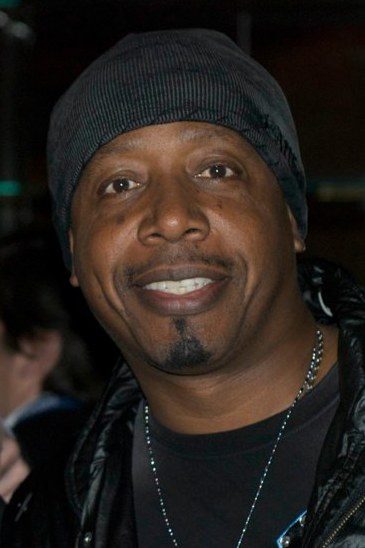
From The Coliseum Parking Lot To The Navy
Stanley Kirk Burrell was born on March 30, 1962, in Oakland, California, and grew up poor with his mother, a secretary, and eight siblings in a small apartment in East Oakland, where six children were crammed into a three-bedroom housing project apartment. His father was a professional poker player and casino manager as well as a warehouse supervisor. In the Oakland Coliseum parking lot the young Burrell would sell stray baseballs and dance accompanied by a beatboxer, and Oakland Athletics owner Charlie Finley saw the 11-year-old doing splits and hired him as a clubhouse assistant and bat boy for his energy and flair.
Burrell served as a bat boy with the Athletics from 1973 to 1980, and in later interviews he clarified the details: his brother Louis Burrell Jr., who later became his business manager, was actually the bat boy, while his own job was to take calls and do play-by-plays for the absentee owner Finley during every summer game, acting as Finley's eyes and ears in the clubhouse. Reggie Jackson took credit for nicknaming him Hammer because he looked like Hank Aaron, whose nickname was the Hammer, and other players dubbed him Little Hammer. Team writer Ron Bergman recalled another nickname, Pipeline, because Burrell was an informant for Finley in the clubhouse. Finley even gave him a hat reading Executive Vice President, telling him he was running the joint.
Burrell acquired the MC for being a master of ceremonies, which he used when performing at clubs while on the road with the Athletics and later in the military. He played second base in high school and dreamed of being a professional baseball player, but did not make the final cut at a San Francisco Giants tryout. After graduating from McClymonds High School in Oakland in 1980 and taking undergraduate classes in communications, he joined the United States Navy, serving with Patrol Squadron 47 (VP-47) at NAS Moffett Field in Mountain View, California, as a petty officer third class aviation storekeeper, until his honorable discharge after three years, from 1981 to 1984. The Navy gave him discipline. Oakland gave him hustle. Music would give him the stage.
Feel My Power And The Road To Diamond
Before fame, Burrell formed a Christian rap group with singer and musician Jon Gibson known as the Holy Ghost Boys, performing songs including Word and Son of the King at venues such as the Beverly Theatre in Beverly Hills. In the mid-1980s, after a record deal went sour, he borrowed $20,000 each from former Oakland Athletics players Mike Davis and Dwayne Murphy to start an independent record label business. As CEO of Bust It Productions he kept the company going by selling records from his basement and his car, marketing himself relentlessly, and coupling tireless street promotion with a stage show built on seven-day-a-week rehearsals with a growing troupe of dancers, musicians and backup vocalists.
Now billing himself as MC Hammer, he recorded his debut album Feel My Power in 1986, originally released on his independent label Bustin' Records via Oaktown Records and produced by Felton Pilate of Con Funk Shun. It sold over 60,000 copies and was distributed by City Hall Records, gaining popularity in San Francisco Bay Area dance clubs. A performance in an Oakland club impressed a record executive who did not know who Hammer was but knew he was somebody, and Hammer agreed to a multi-album contract with Capitol Records with a $1,750,000 advance, which Capitol quickly recouped.
Capitol re-issued his first record in revised form as Let's Get It Started in 1988, which sold over two million copies, with singles including Pump It Up, Turn This Mutha Out, Let's Get It Started and They Put Me in the Mix. Hammer was close friends with Arsenio Hall and was first invited to perform U Can't Touch This before its release on The Arsenio Hall Show in 1989. He also formed the rap group Oaktown's 3.5.7, whose single Yeah! Yeah! Yeah! reached No. 9. The stage was set for the biggest year of his life.
Please Hammer Dont Hurt Em: The Peak
Hammer's third album, Please Hammer Don't Hurt 'Em, was released on February 12, 1990, produced, recorded and mixed by Felton Pilate and James Earley on a modified tour bus while Hammer was on tour in 1989. Its signature single, U Can't Touch This, sampled Rick James' Super Freak and, despite heavy airplay and a No. 27 chart debut, stopped at No. 8 on the Billboard Hot 100. The album itself, however, was a No. 1 success for 21 weeks, primarily on the strength of that single, and became the first hip-hop album to achieve diamond status, meaning sales of ten million copies in the United States alone, a figure widely reported for the album. Hammer became one of the most prominent media celebrities of the early 1990s, with a Mattel action figure, merchandise, and a Saturday-morning cartoon, Hammerman, in 1991.
The Hammer look became a cultural shorthand: the baggy, tapered Hammer pants, the flashy dance movements, the extravagant choreography, the leopard-print bodysuits and the high-energy stage show with dozens of dancers. BET later ranked Hammer as the No. 7 Best Dancer of All Time, and Vibe magazine's Best Rapper Ever Tournament placed him 17th in its first round. He followed the peak with Too Legit to Quit (1991), featuring the hit 2 Legit 2 Quit and the single Pray, but the landscape of hip-hop was changing, gangsta rap was rising, and Hammer was increasingly labeled a sellout by purists who saw him as more dancer than rapper. His attempt to appeal to that harder sound with The Funky Headhunter (1994) did not restore his commercial dominance, and commercial overexposure took its toll.
At his peak Hammer employed a troupe of over 200 people, lived in a $30 million mansion in Fremont, California, owned 17 luxury cars, and spent on a scale that matched his fame. The spending, combined with declining record sales, led to a highly publicized bankruptcy beginning in 1996, with debts reported at around $13 million. It is one of the most cited cautionary tales in music business history, and Hammer has never hidden from it. He has talked about it, learned from it, and built the rest of his life in its shadow, which is more than most cautionary tales get.
Ministry: The Second Calling
Hammer became an ordained preacher during the late 1990s and hosted MC Hammer and Friends, a Christian ministry program on TBN, the Trinity Broadcasting Network. The ministry turn was not a publicity pivot. His earliest musical work, with Jon Gibson's Holy Ghost Boys, had been Christian rap, and faith had been part of his story since before fame. In interviews since, he has described family as his real wealth, saying you have wealth when you have a family, and that family is all he needs, and he has spoken about praying for his wife and children, listening to them, and taking them with him on his travels.
He married Stephanie Burrell in 1985, before fame, and they have five children together. In a 2022 profile of his daily routine at 60, he said his wife could tell anyone that after 25 years his mood never changes whatever stuff is being thrown at him, crediting a childhood in adverse circumstances, growing up with his mother and eight siblings in a cramped house in a rough part of California, with toughening him and teaching him to keep his cool no matter what. He has also spoken about fighting depression with that same steadiness, and about the routine of speaking, appearances, watching his tech investments, staying fit, and keeping his family close.
Ministry also gave him a new stage. He was a dance judge on Dance Fever in 2003, executive producer and star of his own reality show Hammertime, which aired on A&E during the summer of 2009, and a frequent presence at churches, community events and sports activities, including the annual Taco Bell All-Star Legends and Celebrity Softball Game, wearing an Athletics cap to represent Oakland. He continues to perform concerts at music venues, appear in television advertisements, and participate in social media and ministry and outreach functions. The preacher and the performer, for Hammer, were never separate people.
Silicon Valley: The Tech Entrepreneur
Hammer's third act, and the one that surprises people most, is technology. Throughout his career he managed his own recording business as a record label CEO, creating and producing his own acts including Oaktown's 3.5.7, Special Generation, Ho Frat Hoo! and others, and he carried that entrepreneurial instinct into Silicon Valley. He co-created the dance website DanceJam.com, which aimed to be the go-to destination for dance videos and community, combining his music and entertainment background with the emerging online community market.
He also became an early investor and adviser around social and content platforms, including the content-aggregation platform Flipboard, and backed the search startup Wiredoo, designed to deliver deeper, relationship-based search results, although that project was eventually shelved. He recognized early the impact of Twitter on personal branding and audience engagement, and he has spoken at tech conferences about innovation, digital culture and entrepreneurship. His Innovate in the Hood talks, including a free event at Detroit's Cass Technical High School, were aimed at young people, arguing that high-potential tech startups belong in every neighborhood, not just Silicon Valley, and that the internet age rewards anyone willing to learn the game.
That tech work is not a footnote. It is how Hammer rebuilt a professional identity after bankruptcy: not as a nostalgia act, but as a bridge between entertainment and technology, a person who had sold ten million albums and could talk to founders about audience, brand and scale from experience. He has been interviewed locally and nationally about that work, and he remains active in community and sports activities in the Bay Area. The rapper who once sold records from the trunk of his car ended up advising startups about distribution, which is a kind of poetry, whether he intended it or not.
Later Years And A Reported Lawsuit
Hammer has continued to release music after 2010, including seven more albums in total since his peak period, alongside singles and collaborations with artists including Psy, Tupac Shakur, Teddy Riley, Deion Sanders, Big Daddy Kane and BeBe and CeCe Winans, and he signed with Suge Knight's Death Row Records in 1995 during his mid-1990s period. His most recent large-scale tour was in 2019, and since then he has kept a lower public profile, focused on ministry work, business ventures and occasional performances, with his niece, rapper Saweetie, citing him as a creative influence in recent coverage.
One recent legal matter should be reported carefully, because it is a filing, not a concluded judgment, and this article does not present it as more than that. In July 2025 JPMorgan Chase Bank filed a breach of contract and property possession case in San Joaquin County Superior Court against Hammer, legally Stanley Kirk Burrell, and his business entity U Cant Touch This LLC, alleging default on a $114,376.90 financing agreement for a 2023 Land Rover Defender, executed March 18, 2023, with monthly payments of $2,433.97 beginning May 2, 2023, for 60 months. The bank alleged payments ceased in May 2024, with only three subsequent payments of $2,500 each in June and July 2025, leaving a balance of $76,732.79, and sought repossession of the vehicle and recovery of the balance plus costs. No outcome of that case was verified at the time of writing, and readers should not treat a filed complaint as a finding against Hammer.
That filing, whatever its outcome, does not change the larger arc. Hammer's story after 1996 is not a story of uninterrupted triumph. It is a story of a man who lost a fortune in public, kept his family, found a second calling in ministry, built a third career in tech, and kept showing up. The 2025 filing is a reminder that financial life after bankruptcy is rarely simple, and that public figures live their money troubles in public in a way most people do not.
Where He Stands In 2026
As of October 2026, MC Hammer, 64, is a rapper, songwriter, record producer, dancer, entrepreneur, minister and public speaker, still based in the Bay Area, still married to Stephanie, still a father of five, and still active on social media, at conferences, and in ministry and outreach work. He is not topping the charts, and he does not pretend to be. He is doing something harder and rarer: living a public life after a public collapse, with his family intact, his faith visible, and his curiosity about technology undimmed.
His legacy is secure in ways that have nothing to do with current chart positions. He was the first hip-hop artist to go diamond, he brought hip-hop choreography and showmanship to a mainstream pop audience on a scale no one had before, and he proved, for better and worse, that a rapper could be a global pop star, a cartoon character, an action figure, and a household name. BET's ranking of him as the seventh best dancer of all time is a fitting epitaph for the performer, even if it understates the entrepreneur and the minister.
What happened to MC Hammer, then, is not a disappearance or a punchline. It is a second and third act, built from the same energy that made an 11-year-old bat boy dance in a parking lot: hustle, faith, family, and a willingness to try the next thing. He went from the Coliseum to the Navy to the top of the world to bankruptcy to the pulpit to Silicon Valley, and he is still standing. You cannot touch this, the song says. The man, it turns out, is harder to knock down than the fortune was.
Frequently asked questions
What happened to MC Hammer?
MC Hammer (born Stanley Kirk Burrell, March 30, 1962) rose from Oakland bat boy and Navy sailor to global rap stardom with Please Hammer Dont Hurt Em (1990), the first diamond-selling hip-hop album, powered by U Cant Touch This. He filed for bankruptcy in 1996 after lavish spending. He then became an ordained minister, hosted a Christian ministry program on TBN, co-created DanceJam.com, advised and invested in tech startups, starred in Hammertime (2009), and remains active as a speaker, ministry figure and occasional performer.
Is MC Hammer still alive?
Yes. As of October 2026 MC Hammer is 64, living in the Bay Area, married to Stephanie Burrell since 1985, with five children. He remains active on social media, at conferences, and in ministry and outreach work, and performs occasionally. Reports of his death are hoaxes; he is alive and active.
What is MC Hammer doing now?
He works as a minister, motivational speaker, tech investor and adviser, and occasional performer. His recent public profile centers on ministry and outreach, Silicon Valley conference speaking, community and sports activities in Oakland, and social media. His most recent large-scale tour was in 2019, and he has kept a lower profile since, with occasional performances.
Why did MC Hammer go bankrupt?
He filed for bankruptcy in 1996 after a period of lavish spending that matched his fame, including a large Fremont mansion, 17 luxury cars, and an entourage and troupe of over 200 people, combined with declining record sales as hip-hop tastes changed. Debts were reported at around $13 million at the time. He has discussed the collapse openly since.
What was MC Hammers first hit?
His breakthrough came with Lets Get It Started (1988), a multi-platinum Capitol Records release, after his independent debut Feel My Power (1986). His global breakthrough was U Cant Touch This (1990), from Please Hammer Dont Hurt Em, which sampled Rick James Super Freak and helped the album become the first diamond-selling hip-hop album.
What is DanceJam.com?
DanceJam.com was a dance website co-created by MC Hammer that aimed to be the go-to online destination for dance videos and community. It combined his music and dance background with the emerging online community market of the late 2000s, and it is part of his second career as a tech entrepreneur alongside investments and advisory work around platforms including Flipboard.
Is MC Hammer a minister?
Yes. He became an ordained preacher in the late 1990s and hosted MC Hammer and Friends, a Christian ministry program on TBN. Ministry and outreach work remains a central part of his public life, alongside speaking, tech work and occasional performances.
How old is MC Hammer?
He was born Stanley Kirk Burrell on March 30, 1962, in Oakland, California, making him 64 as of October 2026. Before music he was an Oakland Athletics bat boy (1973-1980) and served three years in the United States Navy (1981-1984).
Sources
- EN WikipediaCareer, Navy service, ministry, tech ventures
- MN2STech talks and DanceJam.com background
- Hot972025 reported loan filing (outcome unverified)