What Happened to Max Baer Jr, Jethro?
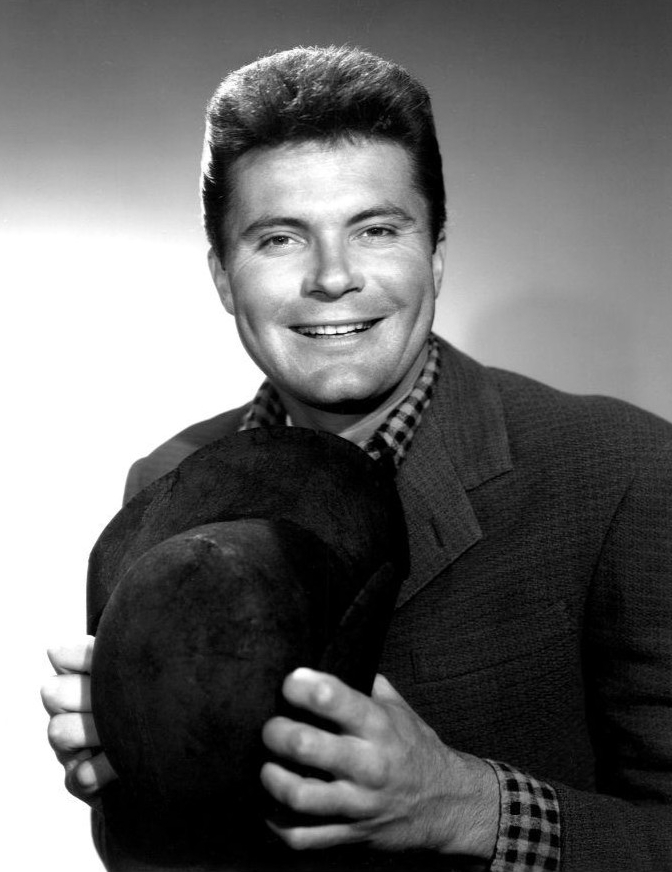
The Boxer's Son from Oakland
Maximilian Adelbert Baer Jr was born on December 4, 1937, in Oakland, California, the son of Max Baer, the heavyweight boxing champion of the world in 1934 and 1935, and Mary Ellen Sullivan. His father was one of the most famous athletes in America, a showman in and out of the ring, and young Max grew up in Sacramento, where he attended Christian Brothers High School, earned letters in four sports and twice won the junior title at the Sacramento Open golf tournament. He served as a medical technician in the United States Air Force, then earned a bachelor's degree in business administration from Santa Clara University, with a minor in philosophy. Nothing about that resume suggested a television star.
He came to acting almost by accident. After graduation he rode his motorcycle to Los Angeles, wandered onto the Warner Bros lot, and was spotted because he resembled James Garner, which led to a contract and small parts on Maverick, Surfside 6, Hawaiian Eye, Cheyenne and 77 Sunset Strip from 1960 onward. He was tall, handsome and funny, and he could do a country drawl he had learned by listening to recordings of Andy Griffith and Jonathan Winters. In 1962, he drove a roommate to an audition for a new CBS sitcom, tried out himself while he was there, and walked away with the role that would define his life.
Jethro Bodine, 1962 to 1971
The Beverly Hillbillies premiered on September 26, 1962, and it became a phenomenon, the story of the Clampett family, poor Ozark mountaineers who strike oil and move to a Beverly Hills mansion. Baer played Jethro Bodine, the son of Jed Clampett's cousin Pearl, a big, good-natured young man whose schooling had stopped at the sixth grade and whose proudest skill was arithmetic: five goes into five one time, five goes into ten two times. He played Jethro in 272 of the show's 274 episodes across nine seasons, and he also played Jethro's twin sister Jethrine, whose voice was dubbed by Linda Kaye Henning. The show ran until 1971, and at its peak it was the most watched program in America.
Jethro made Baer famous and then made him unemployable. Casting directors saw the overalls and the drawl and could not see anything else, and by the time the show was canceled, he later said, he could not get a serious acting gig to save his life. He guest-starred here and there, on Love, American Style and in the Western A Time for Killing, but the phone had essentially stopped ringing. He was 33, rich from nine seasons of a hit show, and finished as an actor, at least in the eyes of the industry that had made him.
Macon County Line, 1974
Baer's answer to typecasting was to stop asking for permission. He wrote a screenplay, reportedly handwritten on the back of a Beverly Hillbillies script, for a low-budget drive-in drama called Macon County Line, and in 1974 he produced it and starred in it as Deputy Reed Morgan. Made for under $200,000, the film reportedly earned upwards of $30 million at the box office, becoming the highest-grossing movie per dollar invested of its time, a record that stood until The Blair Witch Project in 1999. It was a gritty, violent, small-town story, as far from the Clampett mansion as a film could get, and it proved Baer could do more than play Jethro. He just had to do it himself.
The success gave him a second career behind the camera. He wrote, produced and directed The Wild McCullochs in 1975, then acquired the rights to Bobbie Gentry's hit song and produced and directed Ode to Billy Joe in 1976, starring Robby Benson and Glynnis O'Connor, which grossed $27 million from a $1.1 million budget. He directed Hometown U.S.A. in 1979, and when ABC tried to block a film based on Madonna's Like a Virgin, he sued and won a judgment of more than $2 million. The businessman with the philosophy minor had turned out to be a formidable operator.
The 1981 Reunion He Refused
In 1981, CBS made Return of the Beverly Hillbillies, a reunion television movie, and Baer declined to appear. Jethro was recast with Ray Young, and Baer's absence was conspicuous: the actor who had defined the character would not come back to play him as a nostalgia act. The refusal fit the pattern of his post-Hillbillies life. He had spent a decade proving he was more than Jethro, and he was not going to spend an evening pretending otherwise for a reunion check. He had also, by then, essentially retired from the movie and television business, moving to Lake Tahoe, Nevada, where he would live for the rest of his life.
His last acting credits were a pair of Murder, She Wrote episodes in 1989 and 1991, and a 2005 interview appearance on Biography about his old friend Buddy Ebsen. He remained close to Ebsen until the older actor's death from pneumonia on July 6, 2003, and he and Donna Douglas visited Ebsen in the hospital just before he died. When Douglas died on January 1, 2015, Baer became the last surviving regular cast member of The Beverly Hillbillies, a distinction he has carried quietly ever since.
Jethro's Casino: The Thirty-Year Quest
Baer's longest project began in the 1980s, when he noticed tourists paying to tour the Ponderosa Ranch, the Bonanza filming location in Nevada, and decided the same idea could work for the Hillbillies. In 1991 he obtained the sublicensing rights, including food and beverage rights, to The Beverly Hillbillies from CBS, and he set out to build Jethro's Beverly Hillbillies Mansion and Casino, complete with Granny's shotgun wedding chapel, Jethro's All-You-Kin-Et Buffet and a 200-foot mock oil derrick. His business partner estimated the cost of the rights and development at $1 million, and in 1999 sixty-five Beverly Hillbillies slot machines were built and placed in ten casinos.
The casino itself never got built. A Reno attempt failed for lack of financing, a Carson City plan to redevelop a former Walmart ran into building code conflicts and neighboring developers, and a 2007 plan for a Douglas County site, with a 40,000-square-foot gambling area, 800 slot machines and a 240-room hotel, was suspended by July 2012 amid litigation with the developer and the county. In 2014 Baer sued CBS, claiming a secret deal with a barbecue chain was interfering with his rights. The casino became his white whale: the role he had hated became the brand he owned, and the brand became a project that consumed decades without ever opening its doors.
The Last Man Standing
Baer has spent his later years largely out of the spotlight, living at Lake Tahoe and making only occasional public appearances. His last widely noted appearance was at the Chiller Theatre Expo in April 2016, where fans lined up for the man who had been Jethro. He does not give many interviews, and he does not court attention. The casino plans appear dormant, the slot machines are a footnote, and the man who once fought his own fame has settled into the quiet he said he wanted when he left Hollywood in 1979.
What remains is a record that looks stranger the longer you look at it: a boxer's son who became a sitcom icon, a sitcom icon who became an independent film mogul, and a film mogul who spent thirty years trying to build a casino out of a joke about a hillbilly. He turned 88 in December 2025, and he is still the last man standing from the Clampett family, the only one left who can remember what it was like when the whole country was watching.
Where Max Baer Jr Is Now
So where is Max Baer Jr now? He is 88, living at Lake Tahoe, Nevada, retired from the entertainment business for more than four decades, and the last surviving regular of The Beverly Hillbillies. He is not building a casino, he is not acting, and he is not touring the convention circuit. He is, by every available account, living quietly, the way he has since he walked away from Hollywood in 1979.
What he leaves behind, while he is still here to be remembered properly, is a career that refused to follow the script. Jethro was supposed to be the end of him. Instead it was the beginning of a second life as a producer, a director and a businessman who understood, better than the studios did, that the character he played was worth more than the roles they would offer him. He bought the joke, he owned it, and he never let it own him again.
The casino story also says something useful about how Baer saw himself. He never sued to stop people from laughing at Jethro, and he never tried to erase the character. Instead he bought the rights, built the slot machines, and spent decades trying to turn a joke about a hillbilly into a building with his name on it. The project failed, but the instinct behind it was sound: the man who had been typecast understood, better than the studios that typecast him, that the character was an asset, and that assets belong to the people who own them. He kept that lesson, and he kept the rights, long after the casino plans faded.
Frequently asked questions
What happened to Max Baer Jr?
Max Baer Jr is 88 and living at Lake Tahoe, Nevada. After The Beverly Hillbillies ended in 1971, typecasting ended his acting career, so he produced Macon County Line (1974), directed several films, and spent decades pursuing a Hillbillies-themed casino that was never built.
Is Max Baer Jr still alive?
Yes. Born December 4, 1937, he turned 88 in December 2025 and is the last surviving regular cast member of The Beverly Hillbillies.
Why did Max Baer Jr stop acting?
Typecasting as Jethro Bodine made it nearly impossible to get other roles after 1971, so he moved behind the camera as a writer, producer and director, and retired from the business in 1979.
What was Macon County Line?
A 1974 low-budget drama Baer wrote, produced and starred in as Deputy Reed Morgan. Made for under $200,000, it reportedly earned upwards of $30 million, then the highest-grossing movie per dollar invested.
Did Max Baer Jr build his casino?
No. He obtained the Hillbillies sublicensing rights from CBS in 1991 and pursued a themed casino for decades, with slot machines placed in casinos in 1999, but the casino itself was never built and plans were suspended by 2012.
Was Max Baer Jr in the 1981 Beverly Hillbillies reunion?
No. He declined to appear in Return of the Beverly Hillbillies (1981), and Jethro was recast with Ray Young.
Who was Max Baer Jr's father?
Max Baer, the heavyweight boxing champion of the world in 1934 and 1935. Baer Jr was born in Oakland, California, and grew up in Sacramento.
What was Max Baer Jr's last role?
His last acting credits were two Murder, She Wrote episodes in 1989 and 1991. His last widely noted public appearance was the Chiller Theatre Expo in April 2016.
Sources
- EN WikipediaBirth, Jethro role, Macon County Line, casino rights and litigation
- Northern Nevada Business WeeklyRetirement to Lake Tahoe, 1991 rights, slot machines, 274 episodes
- FilmInkTypecasting, Macon County Line, Ode to Billy Joe, directing career