What Happened to Marlon Brando, Legend?
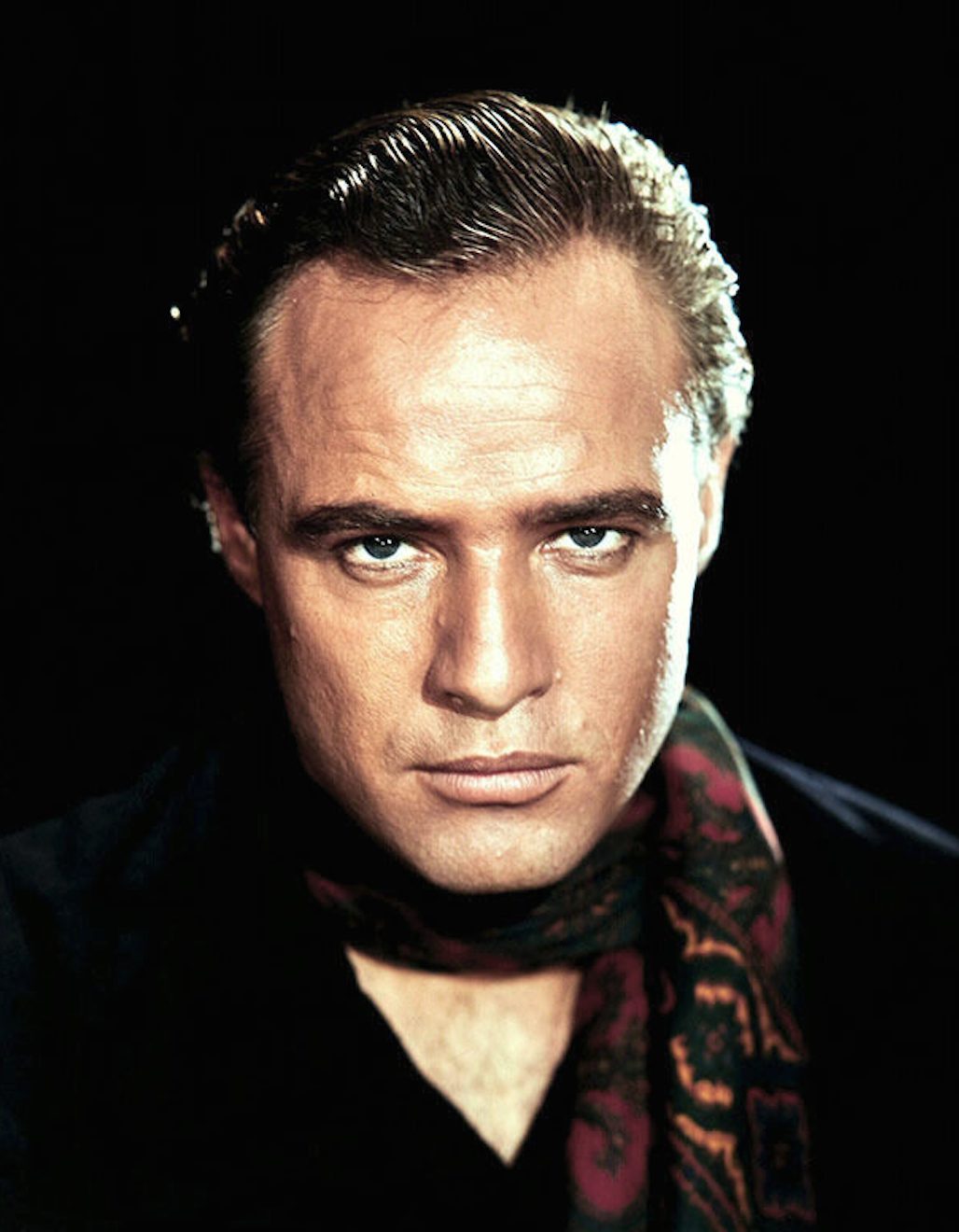
An Omaha Boy with a Wild Streak
Marlon Brando Jr. was born on April 3, 1924, in Omaha, Nebraska, the only son of Marlon Brando Sr., a traveling salesman, and Dorothy Pennebaker Brando, an actress who coached a local drama group, and the family was of French, English and Irish stock, the original family name Brandeau, and the boy was restless from the start, a poor student who was expelled from military school and who drifted to New York, where he fell into acting almost by accident, because a friend suggested it, and because the Actors Studio was there, and because Stella Adler was there, and Adler taught him the Stanislavski system, and the system taught him to act from the inside out, and the inside-out acting changed the movies forever.
He made his Broadway debut in I Remember Mama in 1944, and he won Theater World Awards for his performances in Candida and Truckline Cafe, and he was, by the late forties, the most talked-about young actor in New York, a mumbling, brooding, physical presence who did not act like anyone who had come before him, and who made the old style of acting look, overnight, like a museum piece. The theater was his school, and the school was Adler and the Actors Studio, and the lesson was the Method, and the Method was the idea that an actor should live the part rather than indicate it, and Brando lived his parts, and the living of them was the revolution.
Stanley Kowalski and the Method
In 1947 Brando returned to Broadway as Stanley Kowalski in Tennessee Williams's A Streetcar Named Desire, and the performance was a sensation, because Stanley was brutal and sensual and alive in a way no stage character had ever been, and Brando's Stanley, in a torn T-shirt, shouting for Stella, became the defining image of postwar American theater, and the image followed him to Hollywood, where he reprised the role in the 1951 film adaptation directed by Elia Kazan, and was nominated for the Academy Award for Best Actor, the first of many nominations, and the first proof that the Method could work on screen as well as on stage.
He made his film debut playing a wounded GI in The Men in 1950, and the debut was the proof that he was not merely a stage actor, and the proof kept coming, because he was nominated for the Oscar for Streetcar, and for Viva Zapata! in 1952, and for Julius Caesar in 1953, and he starred in The Wild One in 1953, playing a motorcycle gang leader in a leather jacket, and the Wild One made him a rebel icon, and the rebel icon was the image that stuck, and the sticking was the problem, because the image was smaller than the actor, and the actor knew it, and spent the rest of his career fighting it.
On the Waterfront and the First Oscar
In 1954 Brando played Terry Malloy, the ex-boxer turned dockworker, in On the Waterfront, directed by Elia Kazan, and the performance won him his first Academy Award for Best Actor, and the film's most famous scene, in which Terry tells his brother that he coulda been a contender, became one of the most quoted scenes in the history of the movies, and the quoting never stopped, because the scene was the Method at its purest, a man talking about his life as if it were happening to him for the first time, and the audience believing every word of it. He was, by then, acclaimed as the greatest actor of his generation, and the acclaim was unanimous, because no one else could do what he did, and everyone knew it.
The years after Waterfront were a mix of hits and misses, because he starred in Guys and Dolls in 1955, and was nominated again for Sayonara in 1957, and starred in The Young Lions in 1958, and in Mutiny on the Bounty in 1962, a troubled production on which he met Tarita Teriipaia, the Tahitian actress who became his third wife, and the Bounty was a commercial disappointment, and the disappointments piled up through the sixties, and by the early seventies the studios had written him off, and the writing off was the setup for the greatest comeback in the history of Hollywood, because Francis Ford Coppola had not written him off, and Coppola had a part for him.
The Godfather and the Refused Oscar
In 1972 Brando played Don Vito Corleone in The Godfather, and the performance won him his second Academy Award for Best Actor, and the Don, jowly and raspy-voiced, stroking a cat while he plotted violence, became one of the screen's most unforgettable characters, and the film became an overwhelming critical and commercial success, and Brando was, once again, the most famous actor in the world. He refused the Oscar, and he sent a woman who called herself Sacheen Littlefeather to the ceremony to read a statement protesting Hollywood's treatment of Native Americans, and the refusal was the most famous act of rebellion in the history of the Academy Awards, and it is still argued about today, and the arguing is the proof that it mattered, because it forced Hollywood to listen, for one night, to a voice it had ignored for a century.
The Godfather revived his career, and the revival lasted for a decade, because he starred in Last Tango in Paris in 1973, and was nominated for the Oscar again, and in Superman in 1978, in a brief, highly paid cameo as Jor-El, and in Apocalypse Now in 1979, playing the mad Colonel Kurtz, and the Kurtz performance, filmed in the jungle with Brando overweight and improvising, became as legendary as the film itself, and the legend was the man, because Brando had become, by then, as famous for his behavior off the screen as for his work on it, and the behavior was the price of the genius, or the genius was the price of the behavior, and no one could say which.
Apocalypse Now, Superman and the Later Years
The last two decades of his life were marked by controversy, and by a retreat from the world, because he bought a refuge on the Tahitian island of Tetiaroa, and he lived there, and in Beverly Hills, in increasing seclusion, and he grew enormously heavy, and he took roles for the money, in The Freshman in 1990, in which he parodied the Godfather, and in The Island of Dr. Moreau in 1996, a famously troubled production, and in The Score in 2001, his final film, playing opposite Robert De Niro in a heist picture, and the final film was the proof that, even at the end, even heavy and reclusive, he could still command a screen, and the commanding was the talent, and the talent never left him, even when everything else did.
He was, by then, a troubled private man, and his troubled private life received significant public attention, including struggles with mood disorders and legal issues, and the attention was the price of the fame, and the fame was the thing he had never wanted, and the not wanting was the tragedy, because he was the greatest actor of his generation, and the greatest actor of his generation wanted, more than anything, to be left alone, and the world would not leave him alone, and the not leaving alone was the story of his last twenty years, and the story ended, as it had to, in a hospital, in Los Angeles, in the summer of 2004.
Three Marriages and Family Tragedy
Brando was married three times, to the Welsh actress Anna Kashfi in 1957, to the Mexican actress Movita Castaneda in 1960, and to the Tahitian actress Tarita Teriipaia in 1962, and all three marriages ended in divorce, and he acknowledged eleven children in his will, although some accounts give a lower count, and the children were the center of his private life, and the private life turned tragic in May 1990, when his first son, Christian, shot and killed Dag Drollet, the Tahitian lover of Christian's half sister Cheyenne, at the family's hilltop home above Beverly Hills, and Christian was convicted of voluntary manslaughter and sentenced to ten years in prison, and the conviction was the beginning of the end for the family, because the tragedy was compounded in 1995, when Cheyenne, said to still be depressed over Drollet's death, committed suicide at twenty-five.
The family tragedy was the darkest chapter of Brando's life, and it played out in the criminal courts and in the press, and it haunted him for the rest of his days, and it is the chapter that every obituary had to include, and that no obituary could make sense of, because it was senseless, and the senselessness was the point, because a son in prison and a daughter dead by her own hand are not the kind of things that happen to other people, and they happened to the greatest actor alive, and the happening of them proved that genius is no protection against grief, and that grief, in the end, is the only universal.
What Happened to Marlon Brando, in the End
So what happened to Marlon Brando? He was born Marlon Brando Jr. in Omaha, Nebraska, in 1924, and he studied with Stella Adler, and he made his Broadway debut in I Remember Mama in 1944, and he played Stanley Kowalski on Broadway in 1947, and he made his film debut in The Men in 1950, and he was nominated for the Oscar for Streetcar, and for Viva Zapata!, and for Julius Caesar, and he played Terry Malloy in On the Waterfront and won his first Oscar, and he married Anna Kashfi, and Movita, and Tarita, and he played Don Vito Corleone in The Godfather and won his second Oscar, and he refused it, and he sent Sacheen Littlefeather to the ceremony, and he played Kurtz in Apocalypse Now, and he bought an island in Tahiti, and his son Christian was convicted of manslaughter, and his daughter Cheyenne took her own life, and he made his last film, The Score, in 2001, and he died on July 1, 2004, at 80, of lung failure at the UCLA Medical Center in Los Angeles.
He had suffered for years from pulmonary fibrosis, a lung disease, and his attorney, David J. Seeley, said funeral arrangements would be private, and they were, and the director of The Godfather, Francis Ford Coppola, said that Brando would hate the idea of people chiming in with comments about his death, and that all he would say was that it made him sad, and the sadness was shared, because Brando had influenced the best actors of the generation that followed, among them Al Pacino, Robert De Niro and Jack Nicholson, and the influence was the legacy, and the legacy was the Method, and the Method was the idea that acting should be lived rather than indicated, and the idea changed the movies, and the movies never went back, and Brando is, still, the actor against whom all other actors are measured, and who died, in the end, at eighty, of lung failure, in Los Angeles, having revolutionized his art and paid, in grief, the full price of his fame.
Frequently asked questions
What happened to Marlon Brando?
Marlon Brando died of lung failure at the UCLA Medical Center in Los Angeles, after years of suffering from pulmonary fibrosis. His attorney said funeral arrangements would be private.
Why did Marlon Brando refuse his Oscar?
He refused the Best Actor Oscar for The Godfather and sent Sacheen Littlefeather to the ceremony to read a statement protesting Hollywood's treatment of Native Americans.
How many Academy Awards did Marlon Brando win?
Two, for his performances as Terry Malloy in On the Waterfront and as Don Vito Corleone in The Godfather. He was nominated several more times across his career.
What was Marlon Brando's most famous role?
He is best remembered as Don Vito Corleone in The Godfather and as Terry Malloy in On the Waterfront, with Stanley Kowalski in A Streetcar Named Desire close behind.
Was Marlon Brando a Method actor?
Yes, he studied with Stella Adler and brought the Stanislavski system and Method acting to mainstream audiences, changing screen acting for the generation that followed him.
How many children did Marlon Brando have?
He acknowledged eleven children in his will, though some accounts give a lower count. His children came from his three marriages and later relationships.
What happened to Marlon Brando's son Christian?
Christian Brando shot and killed Dag Drollet, the boyfriend of his half sister Cheyenne, and was convicted of voluntary manslaughter and sentenced to ten years in prison.
What was Marlon Brando's last film?
His final film was The Score, a heist picture in which he played opposite Robert De Niro. He also appeared in The Island of Dr. Moreau in his later years.
Sources
- EN WikipediaBorn April 3 1924 Omaha, died July 1 2004 Los Angeles age 80, two Academy Awards, two Golden Globes, three BAFTAs, Streetcar Broadway 1947, The Men 1950, On the Waterfront, The Godfather, The Score 2001 final film
- Legacy.comAP obituary: died age 80, undisclosed Los Angeles hospital, cause withheld, two-time Academy Award winner, refused 1973 Oscar, sent Sacheen Littlefeather, Christian conviction 1990, Cheyenne suicide 1995
- Encyclopedia.comBorn April 3 1924 Omaha, died of lung failure July 1 2004, pulmonary fibrosis, three marriages, The Score 2001 last film, survivors including Christian, Miko, Rebecca, Teihotu