What Happened to Marlene Dietrich, the Icon?
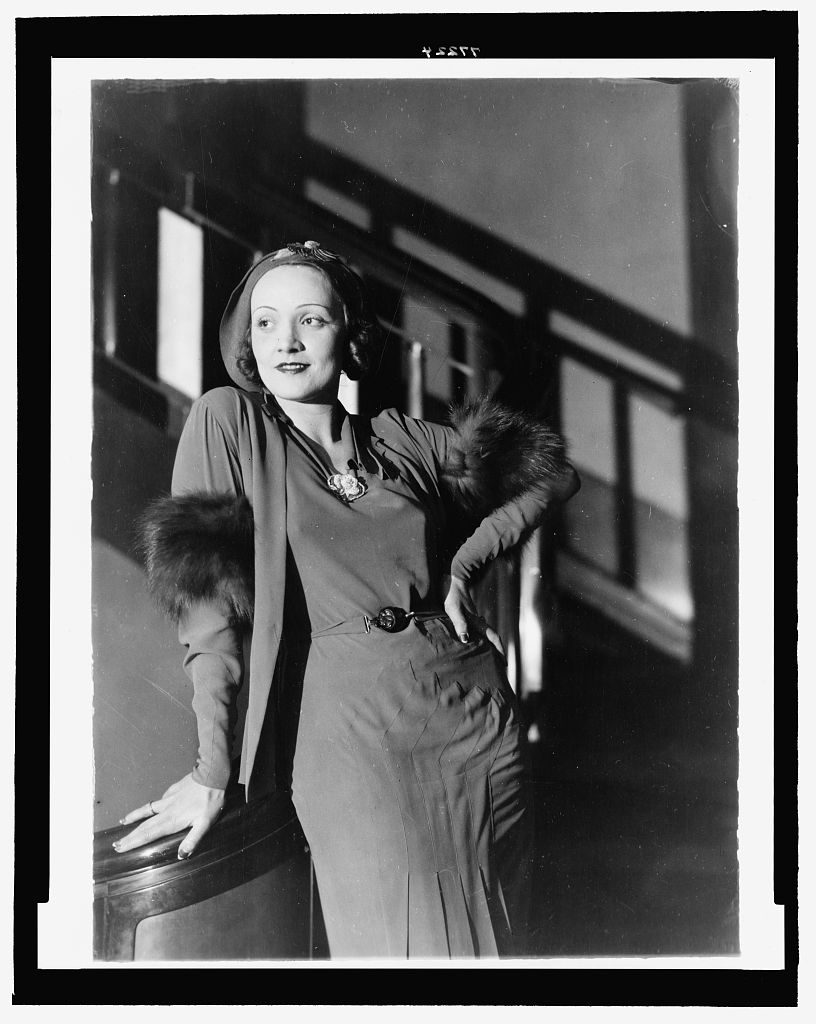
A Berlin Girl in the Cabarets
Marlene Dietrich was born Marie Magdalene Dietrich on December 27, 1901, at Leberstrasse 65, in the neighbourhood of Rote Insel in Schoneberg, now a district of Berlin, the daughter of Louis Erich Otto Dietrich, a police officer, and Wilhelmine Elisabeth Josephine Felsing, and she grew up, in the end, as a girl who loved music, and who played the violin, and who wanted, in the end, to be a musician, and who became, in the end, an actress, because the stage was where the work was, and she performed, in the 1920s, in the cabarets and the silent films of Berlin, and she learned, in the end, the art of the smoky voice, and the long legs, and the top hat, and the tuxedo, and she made her film debut in a small part in The Little Napoleon in 1923, and she married Rudolf Sieber, an assistant director, in 1923, and their daughter, Maria Riva, was born on December 13, 1924, and the marriage lasted, in the end, until Sieber's death in 1976, although the two of them lived together for only five years, and lived apart, in the end, for more than fifty, and the marriage was, in the end, a marriage in name only, and a marriage that neither of them wanted to end, and a marriage that tells you everything about Dietrich, because she was, in the end, loyal to the people she loved, even when she did not live with them, and even when she loved others, and she loved, in the end, many others, and she never hid it, and she never apologised for it.
Her breakthrough came in 1929, when Josef von Sternberg cast her as Lola Lola, the cabaret singer, in The Blue Angel, one of Germany's first talking films, and the performance brought her international acclaim, and a contract with Paramount Pictures, and she went to Hollywood in 1930, and she became, in the end, the most famous German actress in the world, and the first German actress to become successful in Hollywood, and she made six films with von Sternberg, among them Morocco in 1930, for which she received her only Academy Award nomination, and Dishonored in 1931, and Shanghai Express and Blonde Venus, both in 1932, and The Scarlet Empress in 1934, and The Devil Is a Woman in 1935, and the films were, in the end, dreams, and visions, and fantasies, and Dietrich was, in the end, the dream at the centre of them, and the world fell in love with her, and the world has, in the end, never fallen out of love with her, because there has never been another woman like her, on screen, or off it.
The Blue Angel and the Sternberg Years
The Blue Angel made Dietrich a star overnight, and the film is, still, one of the most famous films ever made, and the image of Dietrich, in a top hat, sitting on a barrel, singing Falling in Love Again, is, still, one of the most famous images in the history of the movies, and the song became, in the end, her signature, and she sang it, in the end, for the rest of her life, in every language, and in every country, and the films she made with von Sternberg in the 1930s were, in the end, the peak of her film career, and they were, in the end, unlike anything else in Hollywood, because von Sternberg lit her like a goddess, and dressed her like a goddess, and filmed her like a goddess, and she was, in the end, a goddess, and the public worshipped her, and the studios worshipped her, and the men worshipped her, and the women worshipped her, and she was, in the end, the most glamorous woman in the world, and she knew it, and she worked at it, and she bound herself, eventually from head to toe, so that she could present a svelte figure during her public appearances, and the binding wreaked havoc with her circulation, and it contributed, in the end, to the accidents that ended her performing career, and she paid, in the end, a high price for her beauty, and she paid it, in the end, willingly, because beauty was, in the end, her business, and her art, and her life.
She went on to make Desire in 1936, and Destry Rides Again in 1939, in which she played a saloon girl, and the film was a hit, and it proved that she could be funny, and earthy, and American, and not just a goddess, and she made Stage Fright in 1950, for Alfred Hitchcock, and Touch of Evil in 1958, for Orson Welles, in an unpaid cameo as a gypsy fortune teller, and Judgment at Nuremberg in 1961, for Stanley Kramer, in which she played a German military widow, and the film was, in the end, her most important film of the 1960s, and her only important film role of the decade, and she was, by then, sixty years old, and she was, in the end, still Dietrich, and still beautiful, and still magnetic, and the camera still loved her, and the audience still loved her, and the films were, in the end, only a small part of her life, because the stage, and the cabaret, and the concert hall, were, in the end, where she lived, and where she worked, and where she was, in the end, happiest, and most herself.
Defying Hitler and the War Years
When the Nazis came to power, Dietrich refused to work in Germany, and Hitler personally asked her to return, and to star in propaganda films, and she refused, and her films were banned in Germany, and she renounced Nazism, and she was branded a traitor in Germany, and she was spat upon by Nazi supporters during her visit to Berlin in 1960, and she was, in the end, hated in the country of her birth, for the rest of her life, and she did not care, or she cared, and she did it anyway, because she believed that Hitler was, as she said in one wartime interview, an idiot, and that Germany was not worth a native country anymore, and she became a United States citizen in 1939, although Britannica gives 1937, and this article follows Wikipedia, and notes the variant, and she said, afterwards, that America took her into its bosom when she no longer had a native country worthy of the name, but that in her heart she was German, German in her soul, and the sentence is, in the end, the whole of her, because she was, in the end, both, and neither, and a woman without a country, and a woman who chose her conscience over her homeland, and who paid for it, and who never regretted it.
During the Second World War she was a high-profile frontline entertainer, and she made more than 500 personal appearances before Allied troops, from 1943 to 1946, and she sang for them, and she talked to them, and she was, in the end, in danger with them, and she was, in the end, one of the most famous women in the world, risking her life for soldiers she did not know, and she housed German and French exiles, and she provided financial support, and she advocated their American citizenship, and she was, in the end, a humanitarian, and a hero, and the French government officially labelled her a war hero, and guaranteed her free rent for life, and the United States gave her the Medal of Freedom in 1947, and she was, in the end, the first woman, and the first German, to receive the Israeli Medallion of Valor, in 1965, and the honours are, in the end, the proof that she was more than a movie star, and that she was, in the end, a woman who did the right thing, when it was hard, and when it cost her, and when no one would have blamed her for doing nothing.
The Cabaret Star and the Last Stage
After the war Dietrich became, in the end, a cabaret star, and she toured the world, from the 1950s to the 1970s, singing in nightclubs and concert halls, and she was, in the end, more famous as a singer than she had ever been as an actress, and she gave her last stage performance in 1974, and she was, by then, seventy-three years old, and she was, in the end, still Dietrich, and still magnetic, and still beautiful, and the audiences still came, and the audiences still cheered, and the audiences still wanted more, and she gave them, in the end, everything she had, and she had, in the end, very little left, because the binding, and the drinking, and the age, and the accidents, had taken their toll, and on September 29, 1975, during a performance in Sydney, Australia, she fell from the stage and broke her thigh, and the fall ended her performing career, and the following year, on June 24, 1976, her husband, Rudolf Sieber, died of cancer, and the two events, together, ended her public life, and she withdrew, in the end, to her apartment in Paris, and she never performed again, and she never, in the end, really came out again.
Her final film appearance was a cameo in Just a Gigolo in 1978, starring David Bowie, in which she sang the title song, and her final on-camera work was, in the end, a whisper of what she had been, and she lent her voice to a documentary about her life, Marlene, in 1984, created by her friend Maximilian Schell, and she refused to appear on camera, and the film won several European film prizes, and it received an Academy Award nomination for Best Documentary in 1984, and her autobiography, Take Just My Life, was published in 1979, and she recorded spoken introductions to songs for a nostalgia album in 1988, and she was, in the end, still working, and still thinking, and still Dietrich, even when she would not leave her apartment, and even when she would not let anyone see her, and even when she was, in the end, only a voice on the telephone, and a letter in the post, and a memory in the minds of the people who loved her.
Rudolf Sieber, Maria Riva, and One Marriage
Dietrich was married once, to Rudolf Sieber, whom she married in 1923, although some sources give 1924, and this article follows current Wikipedia, and notes the variant, and Sieber was an assistant director, and the two of them lived together for only five years, and they remained legally married until his death in 1976, and the marriage was, in the end, a marriage of loyalty, and not of love, or not only of love, because Dietrich loved many people, and she loved them openly, and she was, in the end, bisexual, and she did not hide it, and she did not apologise for it, and Sieber understood, and Sieber stayed, and Dietrich stayed, and the two of them were, in the end, married for fifty-three years, and they lived apart for most of them, and they were, in the end, faithful to each other in the only way that mattered to them, which was that they never left, and they never divorced, and they never, in the end, stopped caring, and when Sieber died of cancer, on June 24, 1976, Dietrich lost, in the end, the one person who had been there since the beginning, and she never, in the end, got over it, and she never, in the end, married again.
Their daughter, Maria Riva, was born on December 13, 1924, and she became, in the end, an actress, and a writer, and the keeper of her mother's memory, and she had her first child in 1948, and Dietrich became, in the end, a grandmother, and the family was, in the end, small, and close, and complicated, and Maria was, in the end, the person who knew Dietrich best, and who loved her most, and who was, in the end, with her, in spirit if not in person, in the long years of her retirement, when Dietrich would not see anyone, and would not let anyone in, and would only talk on the telephone, and write letters, and Maria was, in the end, the daughter who stayed, and the daughter who understood, and the daughter who, in the end, wrote the book, and told the story, and kept the memory alive, and who is, still, the reason we know what happened to Marlene Dietrich, in the end, and how she lived, and how she died, and what she thought, and what she felt, and who she was.
The Recluse of Avenue Montaigne
Dietrich spent the final years of her life as a recluse in her apartment at 12 Avenue Montaigne in Paris, and she was, in the end, an alcoholic, and dependent on painkillers, and she withdrew, and she spent the final 11 years of her life mostly bedridden, allowing only a select few, including family and employees, to enter the apartment, and she maintained contact with family and friends through letters and telephone calls, and she was, in the end, mentally active until the end, and she was, in the end, still Dietrich, and still sharp, and still funny, and still angry, and still herself, even when she would not be seen, and even when she would not be photographed, and even when she would not, in the end, leave her bed, and the apartment became, in the end, her world, and the world became, in the end, a place she had left, and the films became, in the end, a memory, and the songs became, in the end, a memory, and the men became, in the end, a memory, and the only thing that remained was, in the end, the voice on the telephone, and the letters, and the legend, and the legend was, in the end, enough, because the legend was, in the end, Marlene Dietrich, and Marlene Dietrich was, in the end, enough.
She died on May 6, 1992, of renal failure, at her flat in Paris, at the age of 90, and her funeral ceremony was conducted at La Madeleine in Paris, a Roman Catholic church, on May 14, 1992, and it was attended by approximately 1,500 mourners in the church itself, including several ambassadors from Germany, Russia, the United States, the United Kingdom, and other countries, with thousands more outside, and her body was flown to Berlin on May 16, in accordance with her will, and her coffin was draped in an American flag, and she was interred at the Stadtischer Friedhof III, in Berlin-Schoneberg, next to the grave of her mother, Josefine von Losch, and near the house where she was born, and the city of Berlin, which had once called her a traitor, apologised, on her 100th birthday, on December 27, 2001, for the hostility she had faced, and on May 16, 2002, she was posthumously made an honorary citizen of Berlin, and the apology came, in the end, too late, and it came, in the end, anyway, and it was, in the end, the right thing, and it was, in the end, the last thing, and it closed, in the end, the circle, from Berlin, to Hollywood, to Paris, and back to Berlin, and back to her mother, and back to where she began.
What Happened to Marlene Dietrich, in the End
So what happened to Marlene Dietrich? She was born in Berlin in 1901, she performed in the cabarets in the 1920s, she married Rudolf Sieber in 1923, her daughter Maria was born in 1924, she made The Blue Angel in 1930, she went to Hollywood in 1930, she made Morocco in 1930, she refused the Nazis, she became a United States citizen in 1939, she made more than 500 frontline appearances from 1943 to 1946, she received the Medal of Freedom in 1947, she became a cabaret star in the 1950s, she made Judgment at Nuremberg in 1961, she gave her last stage performance in 1974, she fell from a stage in Sydney in 1975, her husband died in 1976, she became a recluse in Paris, and she died on May 6, 1992, at 90, of renal failure, in Paris, France.
She was buried in Berlin, next to her mother, and she is, still, the Blue Angel, and the woman in the top hat, and the voice that sang Falling in Love Again, and the star who defied Hitler, and the singer who sang for the soldiers, and the recluse of Avenue Montaigne, and who is, still, ranked by the American Film Institute, in 1999, as the ninth-greatest female star of classic Hollywood cinema, and who is, still, remembered, by everyone who loves the movies, as the most glamorous woman who ever lived, and the bravest, and the most complicated, and who was, in the end, ninety years old, and who had lived, in the end, a life that spanned nearly seven decades on stage and screen, and who had, in the end, changed the movies, and the world, and who is, still, Marlene Dietrich, and who will be, in the end, for as long as there are movies, and for as long as there are women who refuse to obey.
Frequently asked questions
What happened to Marlene Dietrich?
Marlene Dietrich died on May 6, 1992, at 90, of renal failure, in her apartment at 12 Avenue Montaigne in Paris. She had spent her final years as a recluse, mostly bedridden. She was buried in Berlin, next to her mother.
What was Marlene Dietrich most famous for?
Her performance as Lola Lola in The Blue Angel (1930), her six films with Josef von Sternberg, including Morocco (1930) and Shanghai Express (1932), and her wartime work entertaining Allied troops. The American Film Institute ranked her the ninth-greatest female star of classic Hollywood.
Did Marlene Dietrich refuse to work for the Nazis?
Yes. She refused Hitler's personal requests to return to Germany and star in propaganda films, her films were banned there, and she was branded a traitor. She renounced her German citizenship and became a United States citizen in 1939.
How did Marlene Dietrich help in the Second World War?
She made more than 500 personal appearances before Allied troops from 1943 to 1946, singing and talking to soldiers at the front. She also housed German and French exiles and advocated their American citizenship. She received the Medal of Freedom in 1947.
Was Marlene Dietrich married?
Once, to Rudolf Sieber, whom she married in 1923. They lived together for only five years but remained legally married until his death from cancer in 1976. Their daughter Maria Riva was born on December 13, 1924.
What was Marlene Dietrich's last film?
Her final on-camera film appearance was a cameo in Just a Gigolo (1978), starring David Bowie, in which she sang the title song. She gave her last stage performance in 1974 and fell from a stage in Sydney in 1975, breaking her thigh.
Why did Marlene Dietrich become a recluse?
After her fall in Sydney in 1975 and her husband's death in 1976, she withdrew to her Paris apartment. Dependent on alcohol and painkillers, she spent her final 11 years mostly bedridden, seeing only family and employees, and communicating by letter and telephone.
When did Marlene Dietrich become a United States citizen?
In 1939, according to Wikipedia. Britannica gives 1937. This article uses 1939 and notes the variant. She said America took her in when she no longer had a native country worthy of the name.
Sources
- EN WikipediaBirth, Blue Angel, Sternberg, war work, citizenship, death
- TCMCareer, fall in Sydney, reclusion, death
- BritannicaBirth, death, Blue Angel, war work, citizenship