What Happened to Leif Garrett?
A Child Actor Before He Was a Singer
Leif Garrett was born Leif Per Nervik on November 8, 1961, in Hollywood, California, the son of actors Carolyn Stellar and Rik Nervik. He was acting from the age of five, appearing in Bob and Carol and Ted and Alice (1969) and Walking Tall (1973), and working steadily in television, including a recurring role on Family as Kristy McNichol's boyfriend and guest spots on Wonder Woman, Gunsmoke, and CHiPs. He was a professional before he was a teenager, and he was good at it: natural, photogenic, and comfortable in front of a camera.
He was also, by his own later account, not in control of his career. His mother managed him, the studios cast him, and the decisions were made by adults who saw a beautiful child and a marketable face. When the record industry came calling, it was not because Garrett had dreamed of being a pop star. It was because he looked like one, and in the late 1970s, that was enough.
The Teen Idol Machine
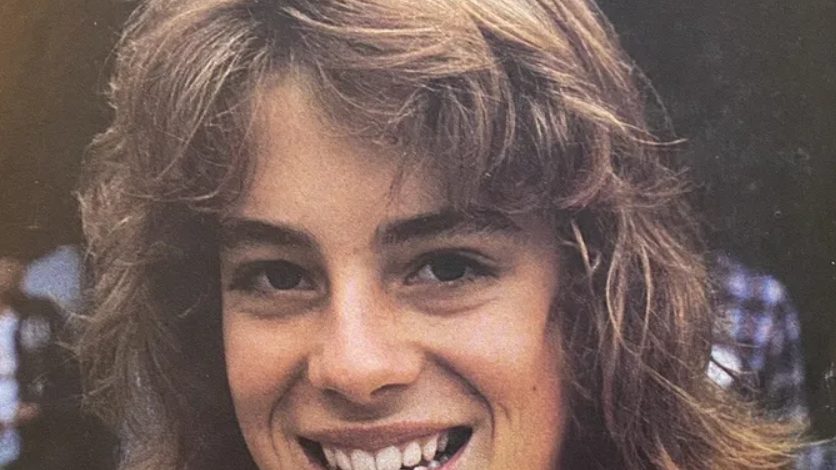
In 1977, at 16, Garrett signed a recording contract with Atlantic Records and released a self-titled debut album. He quickly hit the charts with remakes of Surfin' USA, which reached number 20, and Runaround Sue, which reached number 13. Teen magazines like Teen Beat and Tiger Beat could not feature him enough, pull-out posters of Garrett covered young fans' bedrooms, and he received, at his peak, more than ten thousand fan letters a week. Two more albums followed, Feel the Need in 1978 and Can't Explain in 1980, before he switched labels, leaving Atlantic for Scotti Brothers.
The biggest hit was I Was Made for Dancin', from Feel the Need, which reached number 10 on the Billboard Hot 100, number 4 in the United Kingdom, and number 2 in Australia. It was a perfect teen-idol single: bright, danceable, and utterly impersonal. Garrett later said he felt his teen-idol music career was largely a lie, in the sense that producers used prominent background singers on some songs, and that when he asked for singing lessons, the label refused. He was allowed to sing live in later concerts, but by then, as he put it, he was getting heavily into drugs. The machine had made him famous, and it had also made him feel like a fraud.
The Night of November 3, 1979
On November 3, 1979, five days before his 18th birthday, Garrett was driving under the influence when he crashed, with his friend Roland Winkler in the passenger seat. Winkler was seriously injured and left in a wheelchair for the rest of his life. Garrett lost his license for a year and was placed on probation. The courts later ruled that Winkler, knowing Garrett was under the influence and still getting in the car, had contributed to his own injuries, but Garrett was still largely at fault, and a jury ordered him to pay 15,000 dollars in punitive damages, while his insurers bore most of the financial loss.
The crash is the hinge of Garrett's life, and everything after it bends around it. He has never minimized it, and he has never hidden from it. In later interviews he has spoken about the guilt directly, and about the way the accident, combined with the pressures of fame, sent him into a spiral he could not control. Winkler, for his part, proved more forgiving than anyone had a right to expect: when the two reunited for VH1's Behind the Music, Winkler said Garrett's actions immediately after the crash had actually saved his life, and that he carried no ill will toward him. It was a moment of grace in a story that had very little of it.
The Long Slide
Garrett tried to keep working after the crash, recording the song I Am a Rebel in 1981 and returning to acting, including a role in The Outsiders (1983), but it was never the same. The teen-idol audience had moved on, the adult roles did not come, and the drugs, which had been present since his teens, took over. He was arrested in 1997, in 1999, and again in 2005 and 2006, when he was sentenced on May 11, 2006, to 90 days in jail plus three years of probation after failing court-ordered rehabilitation. On February 1, 2010, he was arrested again for heroin possession, pleaded no contest on October 18, 2010, and entered court-ordered rehabilitation.
He estimated in 2010 that he had spent more than a million dollars on drugs since he was 16. The figure is staggering, and it explains, in the coldest terms, what fame had cost him: not just a career, but a fortune, a reputation, and years of his life. He also lost relationships along the way, including a failed engagement to actress Nicollette Sheridan while filming in New Zealand, and the death in 1999 of actress Elaine Bilstad, a partner he had hoped to build a life with. The obituaries of his career were written many times in those years, and each time they seemed final.
The Music He Made Anyway
Garrett never stopped making music entirely, even when almost no one was listening. He established his own record label, Tongue and Groove Records, and formed a band, Godspeed, releasing a three-song EP. He released the album F8 in 2003 and Three Sides of... in 2007, the latter of which reportedly sold fewer than three hundred copies. The numbers are almost comically small for a man who once received ten thousand fan letters a week, but they are also, in their way, honest: this was music made without a machine behind it, by a man who finally had control of what he recorded, even if almost nobody bought it.
His last film acting credits date from the same period: Dickie Roberts: Former Child Star (2003), in which he appeared as himself, and Popstar (2005). He also appeared on reality television in the 2000s, and he has given interviews in which he speaks frankly about the industry that made him and the addiction that nearly destroyed him. He retains a large fan base in Japan and South Korea, where his hits are still remembered, and he was the first Western pop star to perform in Korea in 1980. It is a strange, scattered legacy: a few hits, a few films, and a cautionary tale that the industry still has not learned.
Where He Is Now
Garrett has kept a low profile in recent years. He has released no new album since Three Sides of... in 2007, and he has taken no series-regular or major acting work. His public appearances are occasional: a concert here, a convention there, a television interview in which he talks, with unusual candor, about what fame did to him. He does not present himself as cured or redeemed in any simple sense. He presents himself as someone who survived, which, given the scale of what he went through, is no small thing.
He has also, in recent interviews, reclaimed a small piece of the story: the singing. He has said he can sing, that he always could, and that the tragedy of his teen-idol years was not that he lacked talent but that the industry did not trust it. It is a modest claim, and a believable one. The voice on I Was Made for Dancin' may have been sweetened, but the face on the posters was real, and so was the boy behind it, who grew up, crashed, fell, and kept going.
Why Leif Garrett's Story Still Matters
Leif Garrett's story matters because it is the teen-idol story without the happy ending edited in. Other child stars of his era recovered, reinvented themselves, or at least found steady work. Garrett's fame was bigger, his fall was harder, and his recovery has been quieter and less complete. He is not a nostalgia act so much as a warning: about what happens when a child becomes a product, when the adults around him profit from his image and ignore his welfare, and when a single terrible night becomes the defining fact of a life.
What happened to Leif Garrett, then, is not a mystery. He was a child actor who became a teen idol, a teen idol who crashed a car and lost a friend's legs and his own career, and an adult who spent decades in addiction and in courtrooms and in rehab, and who finally, quietly, stopped chasing fame altogether. The posters are still on some walls, in some bedrooms, in Japan and South Korea and in America. The boy in them is 64 now, and he is still here, which is more than many people expected, and more than he once expected himself.
The Label Fight, and the Voice He Wanted Back
One of the least understood parts of Garrett’s story is his fight with his own record labels. After leaving Atlantic for Scotti Brothers, he accused the label of controlling his career with a tight rein and allowing him no creative freedom, a complaint that will sound familiar to anyone who has followed the music industry. He did not like the songs he was forced to record, and he was glad when he completed his five-album deal. It is a reminder that the teen-idol machine was not just a matter of posters and fan mail: it was a set of contracts, written by adults, that bound a teenager to material he did not choose, in a voice that was not entirely his own.
His later, smaller-scale music was an attempt to undo that. On his own label, Tongue and Groove Records, and with his band Godspeed, he finally recorded what he wanted, even if almost nobody bought it. The contrast with his teen-idol years could not be starker: ten thousand fan letters a week, and then fewer than three hundred copies of an album. But Garrett has never presented the later work as a tragedy. It was, for the first time, his, and that mattered more to him than the charts ever had. He also played Bob Sheldon in The Outsiders (1983), a reminder that he had always been an actor first, and that the singing career, for all its fame, was something the industry had imposed on him rather than something he had sought.
Frequently asked questions
What happened to Leif Garrett?
Leif Garrett has kept a low profile for years, with no new album since 2007 and no major acting work. His fame as a 1970s teen idol ended after a 1979 car crash and years of drug addiction and legal trouble, though he later reconciled with the friend injured in the crash.
What was Leif Garrett's biggest hit?
His biggest hit was I Was Made for Dancin' (1978), which reached number 10 on the Billboard Hot 100, number 4 in the United Kingdom, and number 2 in Australia. He also had hits with Surfin' USA and Runaround Sue.
What happened in Leif Garrett's 1979 car crash?
On November 3, 1979, Garrett crashed while driving under the influence, five days before his 18th birthday. His passenger, Roland Winkler, was seriously injured and left in a wheelchair for life. Garrett lost his license for a year, was put on probation, and paid 15,000 dollars in punitive damages.
Did Roland Winkler forgive Leif Garrett?
Yes. When they reunited for VH1's Behind the Music, Winkler said Garrett's actions immediately after the crash had saved his life, and that he carried no ill will toward him.
Was Leif Garrett arrested for drugs?
Yes, several times: in 1997, 1999, 2005-2006, when he was sentenced to 90 days in jail plus probation, and in 2010 for heroin possession, after which he pleaded no contest and entered court-ordered rehabilitation.
Is Leif Garrett still making music?
He has released no new album since Three Sides of... in 2007. His later work included his own label, Tongue and Groove Records, and the band Godspeed, but his recent public appearances are occasional concerts and interviews.
What movies was Leif Garrett in?
As a child he appeared in Bob and Carol and Ted and Alice (1969) and Walking Tall (1973). Later credits include The Outsiders (1983), Dickie Roberts: Former Child Star (2003, as himself), and Popstar (2005).
How old is Leif Garrett now?
He was born November 8, 1961, which makes him 64 in 2026.
Sources
- EN WikipediaBiography, hits, crash, arrests, later albums
- AllMusicAtlantic signing, debut album, label switch, crash aftermath
- HistoryExposeCrash consequences, Winkler reunion, Godspeed