What Happened to Joan Crawford, MGM Queen?
A Texas Dancer Bound for Broadway
Joan Crawford was born Lucille Fay LeSueur on March 23, in San Antonio, Texas, the youngest child of Thomas E. LeSueur, a construction worker, and Anna Bell Johnson, and the year of her birth is not known for certain, and it has been variously identified as 1904, 1905, 1906, and 1908, and most modern biographers cite 1904, and she herself claimed 1908, which is the date on her tombstone, and her daughter Christina, in Mommie Dearest in 1978, says she was born in 1904, and the 1910 census gave her age in April 1910 as five years old, which points to 1904 or 1905, and this article uses 1904, and states the dispute honestly, because the truth is, in the end, that a woman who reinvented herself as completely as Crawford did was never going to have a fixed birthday, and the record is, in the end, a mess, and the best that can be said is that she was born on March 23, in San Antonio, and that she was, by the most likely account, seventy-three when she died, although her death was reported at the time as sixty-nine, and the confusion is, in the end, part of the legend, and part of the woman, and part of the reason she is, still, fascinating, nearly fifty years after her death.
She began her career as a dancer in travelling theatrical companies, before debuting as a chorus girl on Broadway, and she was, from the very start, a worker, and a striver, and a woman who understood that talent was not enough, and that determination was everything, and she signed a motion picture contract with Metro-Goldwyn-Mayer in 1925, and her career spanned six decades and multiple studios, and she made her first films as a chorus girl, and as a flapper, and she became, in the end, one of the most glamorous stars of the 1930s and 1940s, and her entire filmography spans a 45-year period from 1925 to 1970, and it includes more than 70 films, from silent pictures to talkies, and she was, in the end, best known for her portrayals of ruthless women, and for her physical strength, and her emotional pliability, and for a face that could be, in the end, both beautiful and terrifying, and a will that could be, in the end, both inspiring and frightening, and the two together made her, in the end, Joan Crawford, and no one else has ever been quite like her.
Our Dancing Daughters and the Flapper Years
Her breakthrough came with Our Dancing Daughters in 1928, in which she played a chorus girl, and the film made her a star, and she became, in the end, the symbol of the Jazz Age flapper, the vivacious, free-spirited, all-American girl, and she made Pretty Ladies in 1926, and she made, in the 1930s, the films that made her the queen of MGM, among them Grand Hotel in 1932, and The Women in 1939, and she was, by then, one of the biggest stars in Hollywood, and one of the best paid, and she was, in the end, a woman who had come from nothing, and who had made herself into everything, and who had done it, in the end, by working harder than anyone else, and by wanting it more than anyone else, and by refusing, in the end, to be beaten, by anyone, or anything, and the determination that made her a star was, in the end, the same determination that made her a difficult woman, and a difficult mother, and a difficult wife, and a difficult colleague, and the two cannot be separated, and they should not be, because they are, in the end, the same thing, and the same woman, and the same story.
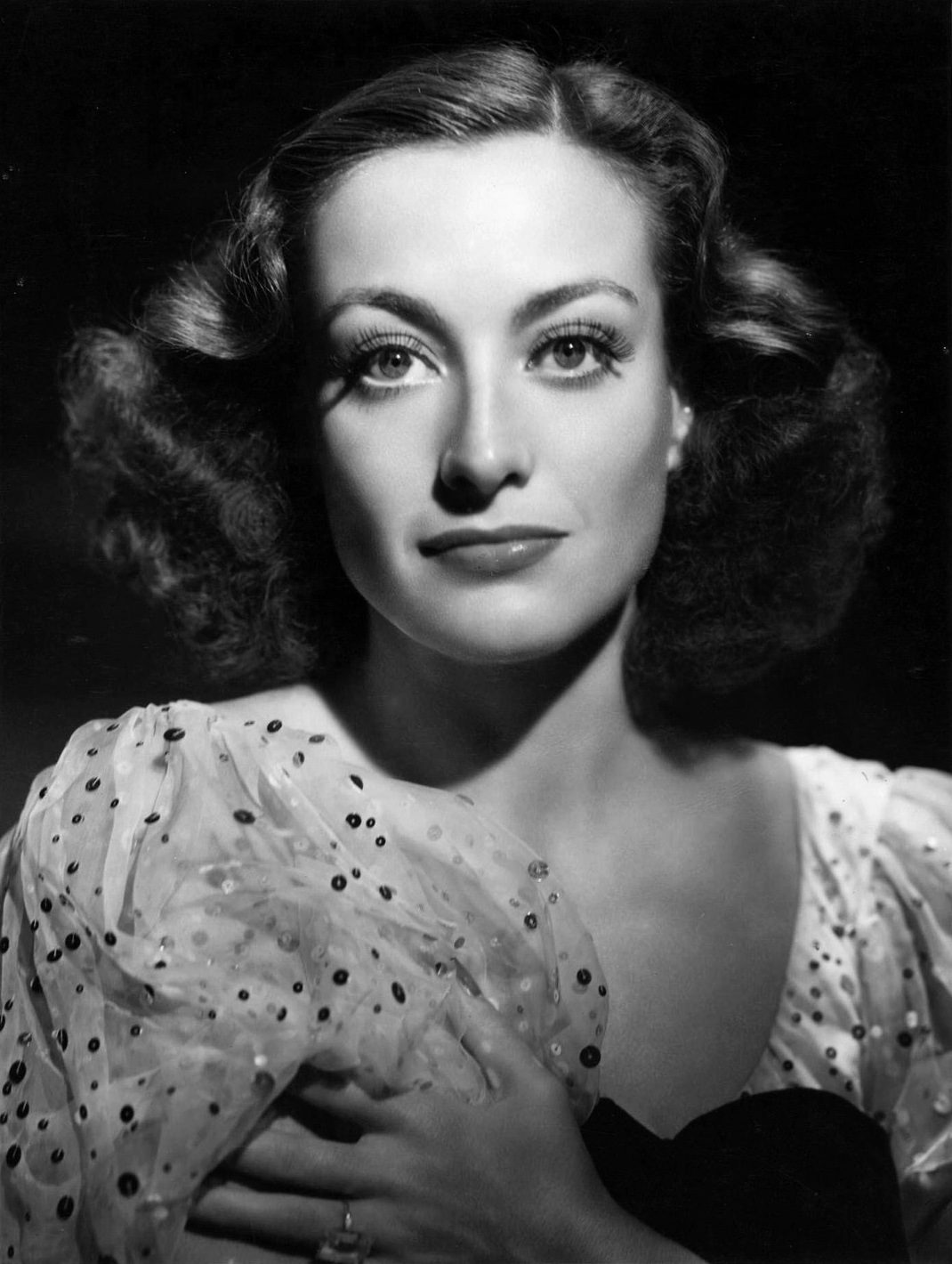
She was, in the 1930s, the most glamorous star in Hollywood, and she was photographed by George Hurrell, the great portrait photographer, and the 1936 portrait by Hurrell is, still, one of the most famous portraits ever taken of a movie star, and it shows her, in the end, as she wanted to be seen, beautiful, and strong, and untouchable, and the portrait is, in the end, a lie, and a truth, because she was beautiful, and she was strong, and she was, in the end, touchable, and breakable, and human, and the films of the 1930s show both sides of her, the glamour, and the grit, and the woman who could play a shopgirl, and a socialite, and a murderess, and a mother, and make them all believable, and make them all, in the end, Joan Crawford, and the decade was, in the end, hers, and she owned it, and she knew it, and she enjoyed it, and she worked, in the end, as if it would last forever, and it did not, because nothing in Hollywood lasts forever, and because the war was coming, and the world was changing, and Crawford was changing with it, and the change would, in the end, make her greater than she had ever been.
Mildred Pierce and the Oscar
In 1945, with the 1920s long behind her, Crawford displayed her great acting versatility in Mildred Pierce, a serious dramatic film with none of the wild overtones of her earlier movie roles, in which she played a hard-working, divorced, protective mother, who builds a restaurant empire, and loses her daughter to a rich, ungrateful man, and the performance won her the Academy Award for Best Actress, her first and only Oscar, and it was, in the end, the greatest performance of her life, and the performance that proved she was not just a glamour girl, but an actress of real depth, and a woman who could play, in the end, a mother, and a worker, and a victim, and a survivor, all at once, and the Oscar was, in the end, widely popular, and it revived her career, and it made her, in the end, a dramatic star, and she followed it with Possessed in 1947, for which she was nominated for an Oscar, and Sudden Fear in 1952, for which she was nominated again, and she was, by then, in her forties, and she was, in the end, better than she had ever been, and she knew it, and Hollywood knew it, and the public knew it, and the second act of her career was, in the end, greater than the first, and it lasted, in the end, for twenty-five years.
She went on to star, in 1962, alongside her long-time rival Bette Davis, in the horror film Whatever Happened to Baby Jane?, which returned her to critical acclaim and box-office success, and many believed she would receive another Oscar nomination, although she did not, and the film is, still, famous, and the feud between the two women is, still, famous, and the truth is, in the end, that they needed each other, and they hated each other, and they made, in the end, a great film together, and Crawford was, by then, in her late fifties, or her late sixties, depending on which birth year you believe, and she was, in the end, still working, and still fighting, and still Crawford, and she made her last theatrical film, Trog, a British horror movie, in 1970, and it was, in the end, a bad film, and Bette Davis commented that if she had found herself starring in Trog, she would commit suicide, and Crawford, who had survived everything, survived that too, and she retired from the screen, and she made one more television appearance, and three more made-for-TV movies, ending her screen career in 1975, and she was, in the end, done, and she was, in the end, seventy, or seventy-three, or seventy-one, and she was, in the end, tired.
Four Husbands and the Pepsi Years
Crawford was married four times. Her first husband was Douglas Fairbanks Jr., the actor, whom she married in 1929, and divorced in 1933, and her second husband was Franchot Tone, the actor, whom she married in 1935, and divorced in 1939, and her third husband was Phillip Terry, the actor, whom she married in 1942, and divorced in 1946, and her fourth husband was Alfred N. Steele, the Pepsi-Cola board chairman, whom she married in 1955, and who died in 1959, of a heart attack, and Crawford was elected to the Pepsi board of directors two days after his fatal heart attack, and she later became a publicity executive, and she remained associated with the firm for the rest of her life, and she travelled the world for Pepsi, and she opened bottling plants, and she made personal appearances for the corporation, and she was, in the end, as devoted to Pepsi as she had been to MGM, and the company was, in the end, her last studio, and her last family, and her last home, and she served it, in the end, as faithfully as she had served the movies, and the movies had, in the end, left her, and Pepsi had not, and she knew it, and she was grateful, and she worked, in the end, until she could not work anymore.
She suffered several miscarriages, and she eventually adopted children, and she adopted five children, one of whom was reclaimed by his birth mother, and four remained in her care, Christina, Christopher, Cathy, and Cindy, and the relationships with her two eldest children, Christina and Christopher, were acrimonious, and the terms of her will suggested the depth of the animosity that had developed between her and her children, because the twins, Cynthia and Cathy, each received $77,500, although one source gives $77,000, and Christina and Christopher were cut off without a cent, and the will was, in the end, her last word on the subject, and her last act of revenge, or of justice, depending on who you ask, and a year after her death Christina published Mommie Dearest, a scathing autobiography of growing up as an abused child, and the book was turned into a Hollywood movie in 1981, with Faye Dunaway as Crawford, and the book and the film became, in the end, part of the pop culture that enveloped her career, and they made her name, in the end, a byword for a bad mother, and they made her, in the end, more famous dead than she had been alive, and they made her, in the end, a monster, and a camp icon, and a joke, and a tragedy, all at once.
Reclusion, Illness, and the Last Days
After a public appearance in 1974, after which unflattering photographs were published, Crawford withdrew from public life, and she became more and more reclusive, hiding away in her Upper East Side apartment until her death, and she turned to vodka more and more, and she became increasingly ill, and from about 1972 to 1975 she suffered dental issues that required surgery and round-the-clock nursing care, and in 1974, while mixing alcohol with antibiotics, she passed out and hit her face, and she was, in the end, a woman who had been the most photographed woman in the world, and who could not bear to be photographed anymore, and who hid, in the end, from the cameras that had made her, and from the public that had loved her, and from the world that had, in the end, moved on without her, and she was, in the end, alone, in her apartment, with her dog, a Shih Tzu named Princess Lotus Blossom, and with her memories, and with her vodka, and with her pain, and with her pride, and the pride was, in the end, what killed her, or what kept her alive, or both, and no one will ever know, because she told no one, and she wrote nothing down, and she died, in the end, as she had lived, alone, and on her own terms.
She was eventually diagnosed with pancreatic cancer, but she refused treatment on the grounds of being a Christian Scientist, and she had been a Christian Scientist for several decades, although not always in strict practice, and in the summer of 1975 she dismissed her regular physician and personal friend, Dr. Nicholas Pace, in favour of prayer as a means of healing, and it is highly likely, according to Dr. Pace, that she did receive a medical diagnosis of cancer, and that she knew the prognosis, and that she elected to spend the remainder of her life focusing on her spirituality, in the comfort of her own home, and on May 8, 1977, she decided she was too ill to continue caring for her dog, and she gave Princess Lotus Blossom away, and two days later, on May 10, 1977, she died of a heart attack in her apartment, and her death certificate listed the official cause as cardiac arrest, and there was no suspicion of suicide, despite rumours in the press, and her first husband, Douglas Fairbanks Jr., insisted that she would never have done such a thing, and he knew her, and he was right, and she was cremated, according to her wishes, and her urn was placed next to her late husband Alfred Steele's at Ferncliff Cemetery in Hartsdale, New York.
Mommie Dearest and the Legacy
A year after Crawford's death, Christina published Mommie Dearest, and the book alleged that Crawford was physically and emotionally abusive to her and her brother Christopher, and the book became a bestseller, and the film, with Faye Dunaway, became a cult classic, and the wire hangers, and the no more wire hangers, became, in the end, a joke, and a catchphrase, and a Halloween costume, and the truth of the book is, in the end, disputed, and it will always be disputed, because Christina says one thing, and Cathy and Cindy say another, and the servants say a third, and Crawford is dead, and cannot answer, and the book is, in the end, one daughter's truth, and not necessarily the truth, and the film is, in the end, a caricature, and not necessarily the woman, and the woman was, in the end, complicated, and difficult, and loving, and cruel, and generous, and selfish, and all of the things that people are, and the book flattened her into a monster, and the film flattened her further, and the public, which loves a monster, believed it, and the public, which loves a victim, believed Christina, and both are, in the end, partly right, and partly wrong, and the truth is, in the end, lost, and will stay lost, and the only thing that remains is, in the end, the films, and the Oscar, and the star on the Walk of Fame, and the name, and the name is, in the end, Joan Crawford, and it means, in the end, whatever you want it to mean.
She was voted, in 1999, the tenth-greatest female star in the history of American cinema by the American Film Institute, and the ranking is, in the end, the official verdict, and it places her among the greatest, and it places her, in the end, where she belongs, with the women who defined Hollywood, and who defined what a movie star could be, and who defined, in the end, what a woman could be, in a business run by men, and she did it, in the end, by being tougher than the men, and by working harder than the men, and by wanting it more than the men, and by refusing, in the end, to quit, and she did not quit, and she worked, in the end, for fifty years, from 1925 to 1975, and she made more than 70 films, and she won an Oscar, and she was nominated three times, and she was, in the end, Joan Crawford, and she is, still, Joan Crawford, and she will be, in the end, for as long as there are movies, and for as long as there are daughters who write books about their mothers, and for as long as there are mothers who are, in the end, impossible to love, and impossible not to love, all at once.
What Happened to Joan Crawford, in the End
So what happened to Joan Crawford? She was born Lucille Fay LeSueur in San Antonio, Texas, on March 23, most likely in 1904, she became a dancer, she debuted as a chorus girl on Broadway, she signed with MGM in 1925, she made Our Dancing Daughters in 1928, she made Grand Hotel in 1932, she married Douglas Fairbanks Jr. in 1929, she married Franchot Tone in 1935, she married Phillip Terry in 1942, she won the Oscar for Mildred Pierce in 1945, she married Alfred Steele in 1955, Steele died in 1959, she joined the Pepsi board, she made Whatever Happened to Baby Jane? in 1962, she made her last film, Trog, in 1970, she withdrew from public life in 1974, she gave away her dog on May 8, 1977, and she died on May 10, 1977, of a heart attack, in her apartment in New York City.
She was cremated, and her urn was placed next to Alfred Steele's at Ferncliff Cemetery in Hartsdale, New York, and a year after her death Christina published Mommie Dearest, and the book became a bestseller, and the film became a cult classic, and she is, still, the tenth-greatest female star of classic Hollywood cinema, according to the American Film Institute, and the winner of an Oscar for Mildred Pierce, and the queen of MGM, and the woman who made more than 70 films, and who is, still, remembered, by everyone who loves the movies, as one of the greatest, and one of the most controversial, and one of the most complicated women who ever lived in Hollywood, and who was, in the end, Joan Crawford, and who is, still, Joan Crawford, and who will be, in the end, for as long as there are movies, and for as long as there are women who refuse to be forgotten, and who refuse to be forgiven, and who refuse, in the end, to be anything but themselves.
Frequently asked questions
What happened to Joan Crawford?
Joan Crawford died on May 10, 1977, of a heart attack, in her apartment in Lenox Hill, New York City. Her death certificate listed cardiac arrest. She was cremated and her urn was placed next to her late husband Alfred Steele's at Ferncliff Cemetery in Hartsdale, New York.
When was Joan Crawford born?
Her birth year is disputed. Most modern biographers cite March 23, 1904, in San Antonio, Texas, but 1905, 1906 and 1908 are also given, and she herself claimed 1908, the date on her tombstone. Her death was reported at the time as age 69; on the 1904 date she was 73.
What was Joan Crawford most famous for?
Being the queen of MGM in the 1930s and 1940s, and winning the Academy Award for Mildred Pierce (1945). The American Film Institute ranked her the tenth-greatest female star of classic Hollywood cinema. Her famous films include Grand Hotel (1932), The Women (1939) and Whatever Happened to Baby Jane? (1962).
Was Joan Crawford married four times?
Yes. Douglas Fairbanks Jr. (1929-1933), Franchot Tone (1935-1939), Phillip Terry (1942-1946) and Alfred Steele (1955 until his death in 1959). She adopted four children who remained in her care: Christina, Christopher, Cathy and Cindy.
What happened to Joan Crawford's children?
She adopted five children, one of whom was reclaimed by his birth mother. Christina and Christopher were cut out of her will, while the twins Cathy and Cynthia each received $77,500. A year after her death Christina published the memoir Mommie Dearest (1978).
What was Joan Crawford's last film?
Trog (1970), a British horror movie. She made one more television appearance and three made-for-TV movies after that, ending her screen career in 1975. She withdrew from public life after an unflattering public appearance in 1974.
Did Joan Crawford die of cancer?
She was reported to have been diagnosed with pancreatic cancer and refused treatment as a Christian Scientist, but her death certificate listed cardiac arrest, and she died of a heart attack on May 10, 1977. No autopsy confirmed the cancer diagnosis.
What did Joan Crawford do for Pepsi-Cola?
After her husband Alfred Steele, the Pepsi-Cola chairman, died in 1959, she was elected to the Pepsi board of directors two days later and became a publicity executive. She travelled the world for the firm and remained associated with it for the rest of her life.
Sources
- EN WikipediaBirth dispute, MGM, Mildred Pierce, marriages, children, death
- Texas State Historical AssociationBirth, MGM, Mildred Pierce, Pepsi, death, will
- Missouri EncyclopediaBirth, career, Mildred Pierce, Pepsi, death