What Happened to Jimmy Hoffa?
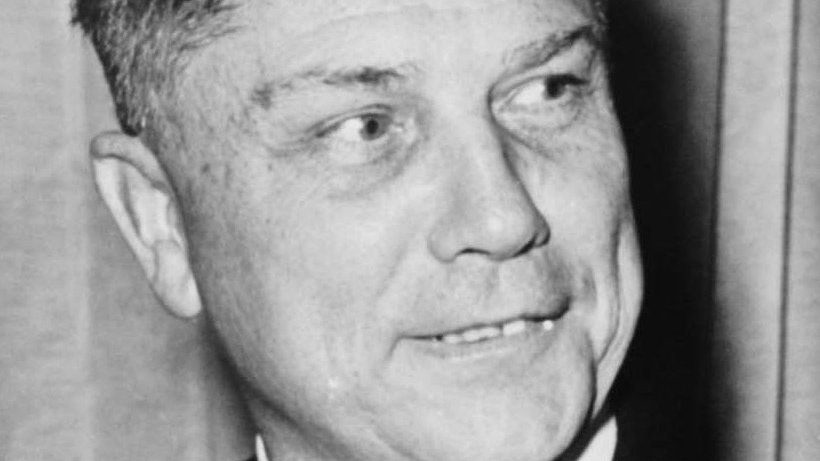
The Man: America's Most Powerful Union Boss
James Riddle Hoffa - born February 14, 1913, in Brazil, Indiana - was the most powerful labor leader in American history. As General President of the International Brotherhood of Teamsters from 1957 to 1971, he built the union into the largest in the United States, with more than 2.3 million members at its peak. His crowning achievement was the National Master Freight Agreement of 1964, the first national contract covering teamsters' rates - a deal that standardized wages for truckers across the country and cemented his legend among working people.
Hoffa was a union activist from an early age, becoming an important regional figure with the Teamsters by his mid-20s and national vice-president by 1952. He was a brilliant, ruthless organizer who understood power - both the legitimate kind and the other kind. From his earliest Teamsters years, Hoffa cultivated ties to organized crime figures who controlled trucking, labor rackets and pension funds. Those mob connections helped him build his empire - and, investigators believe, ultimately killed him.
By the 1960s, Hoffa was a national figure: friend and foe of presidents, target of Attorney General Robert F. Kennedy's relentless investigations, and a symbol of labor's muscle. Kennedy's "Get Hoffa" squad pursued him for years, and in 1964 Hoffa was convicted in two separate trials of jury tampering, attempted bribery, conspiracy, and mail and wire fraud. In 1967 he entered federal prison to serve a 13-year sentence.
The Fall: Prison and the Nixon Deal
Hoffa ran the Teamsters from his prison cell for four years, refusing to resign. But in mid-1971, he cut a deal: as part of a commutation agreement with President Richard Nixon, Hoffa resigned as Teamsters president and was released later that year - with a stunning condition attached. The commutation barred him from union activity until 1980, effectively exiling the 58-year-old from the empire he built.
Hoffa chafed immediately. He believed Nixon's restriction was engineered by his successor, Frank Fitzsimmons, and mob figures who had grown comfortable with the compliant new leadership. By 1975, Hoffa was openly campaigning to retake the Teamsters presidency, suing to overturn the Nixon restriction and holding rallies where he denounced the mob's grip on the union. It was, in retrospect, a death sentence he wrote himself.
His memoir, published in 1975, and his public attacks on organized crime figures made him powerful enemies. The Mafia had no interest in a Hoffa restoration: he knew where the bodies were buried - figuratively and, investigators suspect, literally - and his return threatened billions in pension-fund loans and rackets. In the summer of 1975, the decision was made to silence him permanently.
The Disappearance: July 30, 1975
On July 30, 1975, Hoffa told his family he was driving to a 2 p.m. meeting at the Machus Red Fox restaurant in Bloomfield Township, Michigan - a Detroit suburb - with two men: Anthony "Tony Jack" Giacalone, a Detroit mob figure, and Anthony "Tony Pro" Provenzano, a New Jersey Teamsters leader with Genovese crime family ties. Hoffa hoped to broker peace and secure support for his comeback.
He never came home. His car was found in the restaurant parking lot the next day. Giacalone and Provenzano both denied any meeting - each claimed to be elsewhere that afternoon, alibis investigators never fully credited. Hoffa's wife Josephine reported him missing, and one of the largest manhunts in FBI history began.
Theories multiplied instantly: he was shot and his body buried under Giants Stadium (a claim later debunked); he was cremated; he was buried under a New Jersey landfill; he was ground up and disposed of. The FBI's working theory - that he was lured to a meeting, murdered by mob hitmen, and his body destroyed - has never produced a body, a conviction, or closure. On July 30, 1982, exactly seven years after he vanished, Hoffa was declared legally dead.
The Searches: 50 Years of Dead Ends
The hunt for Hoffa's remains has spanned half a century and become a dark American ritual. In 2013, the FBI excavated a field in Oakland Township, Michigan, based on a tip from a former mob associate - nothing. In 2022, agents searched beneath the Pulaski Skyway in Jersey City, New Jersey, at a former landfill - again, nothing. Tips have pointed to farms, freeway overpasses, lakes and mob social clubs; each has ended in disappointment.
In 2021, the FBI released previously sealed files, and deathbed confessions from aging mobsters periodically reignite the story - including claims by hitman Frank Sheeran, popularized in the book "I Heard You Paint Houses" and Martin Scorsese's film "The Irishman" (2019), that he shot Hoffa in a Detroit house. Investigators remain skeptical of Sheeran's account, and no physical evidence has ever confirmed any version of events.
The case remains officially open - "one of the most notorious unsolved mysteries in FBI history," as the Bureau puts it. More than 50 years after July 30, 1975, the question "where is Jimmy Hoffa?" is still shorthand for the perfect crime.
The Family Left Behind
Hoffa married Josephine Poszywak in 1936, and they remained together until his disappearance - 39 years. Their children, James P. Hoffa and Barbara Hoffa Crancer, grew up in the shadow of their father's legend and vanishing. James P. Hoffa followed his father into the Teamsters, serving as the union's General President from 1999 to 2022 - a 23-year tenure that made the Hoffa name synonymous with the union across two generations.
Josephine Hoffa died in 1980, five years after her husband vanished, never learning his fate. Barbara became a judge in St. Louis. The family has lived with the mystery for half a century - the most famous missing-person case in American labor history, unsolved in their lifetimes.
Legacy: The Ghost of American Labor
Hoffa's legacy is paradoxical: a corrupt leader with mob ties who also delivered the greatest material gains American truckers ever won. The National Master Freight Agreement, the pension funds, the 2.3 million members - his achievements for working people were real, even as his methods were criminal.
In popular culture, Hoffa is immortal: Danny DeVito's "Hoffa" (1992), Scorsese's "The Irishman" (2019) with Al Pacino as Hoffa, countless documentaries and books. His name is slang for disappearance itself. And the mystery endures because it sits at the intersection of America's obsessions - the mob, unions, power, and the question of what really happened on July 30, 1975, in a restaurant parking lot in Bloomfield Township, Michigan. Fifty years on, Jimmy Hoffa is still missing - and still fascinating.
The Irishman and Pop Culture
Hoffa's story has fueled decades of popular culture. Danny DeVito directed and starred as Hoffa in Hoffa (1992), with Jack Nicholson in the title role - a sympathetic portrait of the labor leader. Martin Scorsese's The Irishman (2019) offered a darker version: Al Pacino's Hoffa as a doomed kingpin, with Robert De Niro's Frank Sheeran claiming to have pulled the trigger - a claim investigators doubt but audiences devoured.
The 2019 film reignited public fascination, coming as FBI files were being unsealed and new searches launched. Documentaries, podcasts and books continue to mine the mystery - each generation discovering the story anew. Hoffa's name has entered the language: "going Hoffa" as slang for disappearing, his fate as shorthand for the perfect crime.
What endures is the paradox: a man powerful enough to command millions, erased so completely that 50 years of searching found nothing. Hollywood keeps retelling it because the ending never comes.
The FBI's Open Case
The Hoffa case remains officially open - "one of the most notorious unsolved mysteries in FBI history." The Bureau's Detroit field office still fields tips; the 2021 release of sealed files and the 2022 Jersey City excavation show the case isn't cold, just unsolved.
Investigators' working theory has barely changed in 50 years: Hoffa was lured to the Machus Red Fox meeting, driven to a nearby location, murdered, and his body destroyed - likely within hours. The mob's discipline held: no one talked, no body surfaced, no charges stuck. Anthony Giacalone died in 2001, Anthony Provenzano in 1988 - both denying involvement to the end.
Modern forensic hopes - DNA, ground-penetrating radar - have produced nothing. The case endures as law enforcement's great white whale: the disappearance that humbled the FBI.
Frequently asked questions
What happened to Jimmy Hoffa?
Jimmy Hoffa disappeared on July 30, 1975, from the parking lot of the Machus Red Fox restaurant in Bloomfield Township, Michigan. He was declared legally dead on July 30, 1982. His fate remains unsolved more than 50 years later.
Who was Jimmy Hoffa?
James Riddle Hoffa (1913-1975) was the General President of the Teamsters union from 1957 to 1971, building it to 2.3 million members. He had ties to organized crime and served prison time for jury tampering and fraud.
Was Jimmy Hoffa in the Mafia?
He was alleged to have deep ties to organized crime throughout his Teamsters career. The FBI believes mob figures ordered his murder when he tried to retake the union presidency in 1975.
Was Jimmy Hoffa's body ever found?
No. Despite FBI excavations in 2013 (Michigan) and 2022 (New Jersey) and countless tips, his remains have never been recovered.
Who killed Jimmy Hoffa?
No one has ever been charged. The FBI's working theory is that mob hitmen lured him to a meeting on July 30, 1975, murdered him and destroyed his body. Anthony Giacalone and Anthony Provenzano - the men he went to meet - denied involvement.
Did Jimmy Hoffa go to prison?
Yes. He was convicted in 1964 of jury tampering, bribery, conspiracy and fraud, imprisoned in 1967 on a 13-year sentence, and released in 1971 after President Nixon commuted his sentence.
What is Jimmy Hoffa's legacy?
He delivered historic gains for truckers including the 1964 National Master Freight Agreement, while his mob ties and unsolved 1975 disappearance made him an American legend. His son James P. Hoffa led the Teamsters from 1999 to 2022.
Sources
- Jimmy Hoffa - WikipediaWikipedia
- FBI - Jimmy Hoffa case fileFederal Bureau of Investigation
- National Archives - Hoffa recordsNational Archives