What Happened to Jean Harlow, Blonde Bombshell?
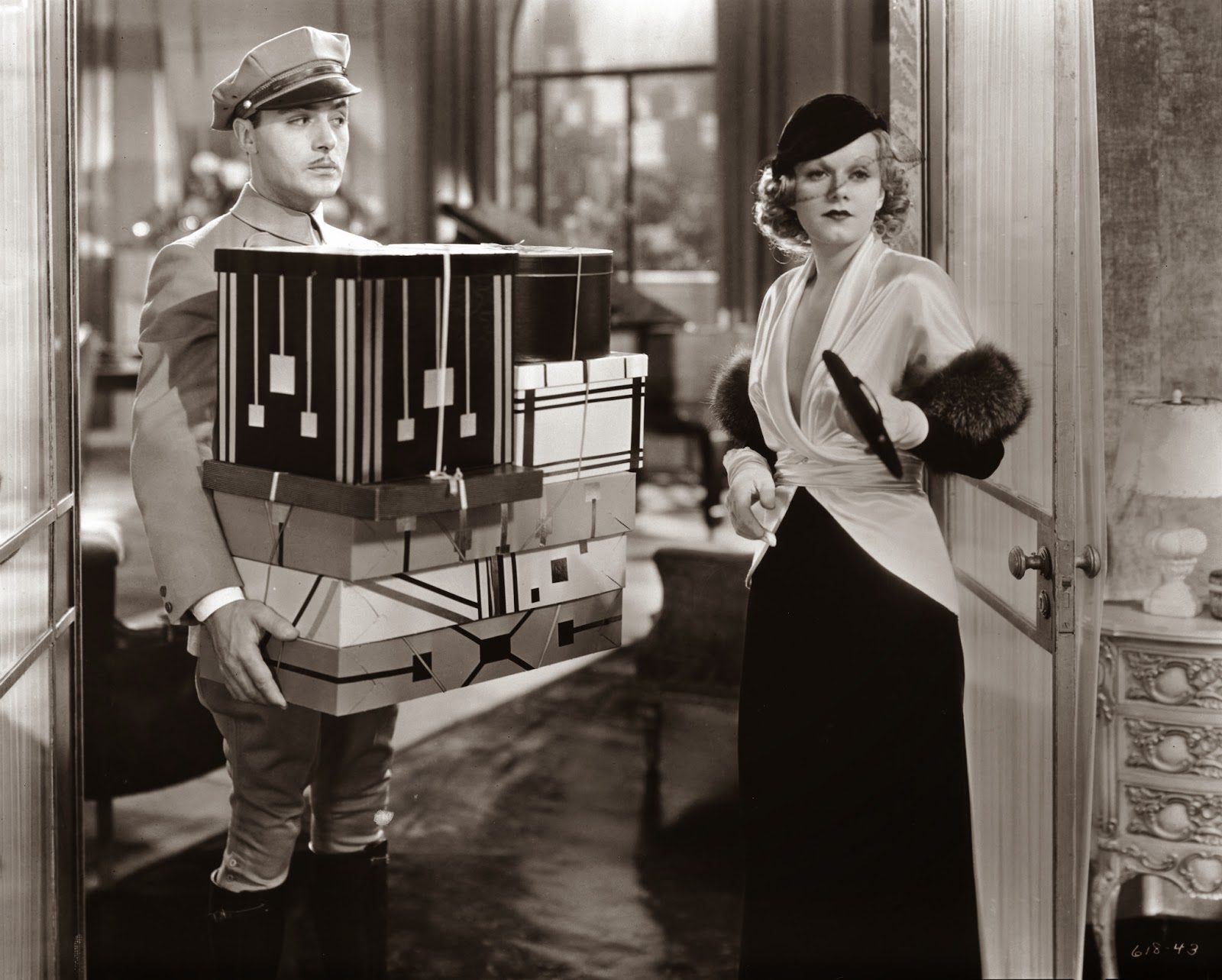
Baby from Kansas City
Jean Harlow was born Harlean Harlow Carpenter on March 3, 1911, in Kansas City, Missouri, the daughter of a dentist, Mont Clair Carpenter, and Jean Poe Carpenter, the daughter of a wealthy real estate broker. Her family called her Baby, a nickname that endured for the rest of her life, and she did not learn her real name was Harlean until she was five, when the staff at her finishing school used it. Her parents divorced in 1922, with her mother given sole custody, and in 1923 her mother took her to Hollywood in hopes of becoming an actress herself, only to be told she was too old to begin a film career. Harlow was enrolled at the Hollywood School for Girls, where she met Douglas Fairbanks Jr. and Joel McCrea, but she dropped out at 14, and the family moved back to Kansas City.
At a summer camp in Michigan she contracted scarlet fever, an illness that would matter enormously a decade later, and she later suffered meningitis as well, both of which permanently weakened her health. She attended the Ferry Hall School in Illinois, where she met Charles McGrew III, an heir to a large fortune, and they married in 1928 and moved to a home in Beverly Hills, where Harlow lived as a wealthy socialite. The marriage did not survive her decision to act: they separated in June 1929 and divorced the same year, and by then Harlow had already been noticed by the film industry, in the most accidental way possible, while driving a friend to an appointment at Fox Studios.
Spotted at Fox and Signed by Hughes
While living in Los Angeles, Harlow drove her friend Rosalie Roy to Fox Studios for an appointment, and while she waited she was noticed by Fox executives, who gave her letters of introduction to Central Casting. On a bet from Roy that she did not have the nerve to audition, and pressed by her mother, she went, signing in under her mother's maiden name, Jean Harlow, and the name stuck. Her first film was Honor Bound in 1928, as an unbilled extra, and in December 1928 she signed a five-year contract with Hal Roach Studios, appearing in small roles in Laurel and Hardy shorts and getting her first speaking part in the Clara Bow film The Saturday Night Kid. In March 1929 Roach tore up her contract after she told him the work was breaking up her marriage.
Late in 1929 she was spotted by the actor Ben Lyon for Howard Hughes' Hell's Angels, which was being reshot with sound and needed an actress to replace Greta Nissen, whose Norwegian accent was wrong for the part. Harlow signed a five-year contract with Hughes in October 1929, and Hell's Angels premiered at Grauman's Chinese Theatre on May 27, 1930, becoming the highest-grossing film of that year and making Harlow an international star overnight. The critics were less kind: The New Yorker called her performance plain awful, while Variety conceded that it did not matter what degree of talent she possessed, because nobody ever starved possessing what she had got. The audience disagreed with the critics, and the audience won.
The Platinum Blonde
After Hell's Angels, Hughes loaned Harlow out to other studios, and in 1931 she appeared in a string of films, including The Secret Six, her first on-screen pairing with Clark Gable, The Public Enemy with James Cagney, Iron Man with Lew Ayres and Goldie with Spencer Tracy. Columbia Pictures cast her in a Frank Capra film with Loretta Young that was renamed Platinum Blonde to capitalize on the publicity around her hair, and the nickname stuck for the rest of her life. The platinum color was reportedly achieved with a weekly application of ammonia, bleach and soap flakes, a process that weakened and damaged her naturally ash-blonde hair, and Hughes organized Platinum Blonde clubs across the country, offering a prize to any beautician who could match her shade. No one could, and the prize went unclaimed, but the publicity worked, and the hair became the most famous in America.
Her second film for Columbia, Three Wise Girls in 1932, gave her top billing for the first time, and she briefly dated the gangster Abner Zwillman, who bought her a jeweled bracelet and a red Cadillac and made a large cash loan to the studio head Harry Cohn to obtain a two-picture deal for her at Columbia. The relationship ended when he reportedly referred to her in derogatory terms in front of other crime figures. She was, by then, one of the most talked-about young women in Hollywood, and the talk was not all kind, because the critics still doubted her acting, even as the audiences kept buying tickets.
MGM Stardom and Paul Bern
In 1932 the MGM executive Paul Bern, who had become romantically involved with Harlow, arranged for the studio to buy her contract from Hughes, and MGM cast her in a string of hits built on her comic talent: Red-Headed Woman in 1932, her first MGM film, in which she wore a red wig and finally won recognition as an actress, Red Dust in 1932, Dinner at Eight in 1933, Bombshell in 1933, Reckless in 1935 and Suzy in 1936. Her popularity rivaled and then surpassed that of MGM's top leading ladies, Joan Crawford, Greta Garbo and Norma Shearer, and in 1999 the American Film Institute ranked her number 22 on its list of the greatest female screen legends. She had arrived, and she had done it in five years.
Her private life was marked by grief. She married Paul Bern in 1932, and two months later, during the making of Red Dust, he was found dead at their home, and Harlow was briefly suspected of killing him before his death was officially ruled a suicide by self-inflicted gunshot. Louis B. Mayer feared the publicity and considered replacing her in the film, offering the role to Tallulah Bankhead, who was appalled by the offer and refused. After Bern's death Harlow had an affair with the boxer Max Baer, which resulted in a pregnancy that led her to get an abortion to avoid further scandal, and the studio defused the situation by arranging a marriage between Harlow and the cinematographer Harold Rosson, who was a friend and agreed with the plan. They quietly divorced within a year. She then began a relationship with the actor William Powell, her co-star in Reckless and Libeled Lady, and they were engaged to marry when she fell ill for the last time.
The Illness Nobody Recognized
In January 1937 Harlow traveled to Washington with Robert Taylor for fundraising events for the organization later known as the March of Dimes, a trip that was physically taxing, and she contracted influenza. She had also campaigned for Franklin D. Roosevelt in the 1936 presidential election, and she was, by every account, a woman who worked hard and rested little. Filming for her final film, Saratoga, co-starring Clark Gable, was scheduled to begin in March 1937, but production was delayed when she developed sepsis after a multiple extraction of her wisdom teeth and had to be hospitalized. She recovered, shooting began on April 22, and she appeared on the cover of Life magazine on May 3.
On May 20, while filming Saratoga, she began to complain of illness: fatigue, nausea, fluid retention and abdominal pain. The studio doctor believed she was suffering from cholecystitis and influenza, and did not know she had been ill during the previous year with a severe sunburn and influenza. Her friend and co-star Una Merkel noticed her weight gain, gray pallor and fatigue. On May 29, while filming a scene in which her character had a fever, Harlow was clearly sicker than her character, and she leaned against Gable between takes and said, I feel terrible, get me back to my dressing room. She asked for William Powell to be telephoned, and he left his own movie set to escort her home. On June 2 it was announced she was again suffering from influenza, and the doctor called to her home diagnosed an inflamed gallbladder. Her mother told MGM she was feeling better on June 3, and her co-workers expected her back on set by Monday, June 7. When Gable visited her, he later said she was severely bloated and that he smelled urine on her breath when he kissed her, both signs of kidney failure. A second doctor, Leland Chapman, recognized that she was not suffering from an inflamed gallbladder but was in the final stages of kidney failure. On June 6 she told Powell she could not see him clearly and could not tell how many fingers he was holding up.
The Last Night, the Funeral and the Rumors
That evening, June 6, Harlow was taken to Good Samaritan Hospital in Los Angeles, where she slipped into a coma. The next day, at 11:37 in the morning, she died in the hospital, at 26. In the doctor's press releases the cause of death was given as cerebral edema, a complication of kidney failure, and hospital records mention uremia. Her death certificate lists the cause as acute respiratory infection, acute nephritis and uremia. She had suffered from scarlet fever when she was 15, and some have speculated that she suffered a poststreptococcal glomerulonephritis following the incident, which may have caused high blood pressure and ultimately kidney failure. Her grayish complexion, recurring illnesses and severe sunburn were all signs of the disease, and the toxins had also affected her brain and central nervous system.
For years, rumors circulated about her death. Some claimed that her mother had refused to call a doctor because she was a Christian Scientist, or that Harlow had declined hospital treatment or surgery. The record does not support either claim: from the onset of her illness she had been attended by a doctor while resting at home, two nurses visited her house, and equipment was brought from a nearby hospital. The plain truth, as the research service EBSCO puts it, is that there was simply no treatment available in 1937 that could have saved her. Her funeral was held on June 9, 1937, in the Wee Kirk o' the Heather chapel in Forest Lawn Memorial Park in Glendale, and she was interred in the park's Great Mausoleum in a private room of multicolored marble that William Powell had bought. She was laid to rest in the pink negligee she had worn in Saratoga, holding a white gardenia and a note Powell had written: Goodnight, my dearest darling. Her crypt reads, Our Baby. One MGM writer said later that the day Baby died, there was not one sound in the commissary for three hours, and her frequent co-star Spencer Tracy wrote in his diary, Jean Harlow died. Grand girl.
What Happened to Jean Harlow, in the End
So what happened to Jean Harlow? She was born Harlean Carpenter in Kansas City in 1911, the daughter of a dentist and a wealthy broker's daughter, and she was called Baby by her family for her whole life. She married at 17, divorced, was spotted by accident at Fox Studios, signed by Howard Hughes, and became a star in Hell's Angels in 1930. She survived the critics, the loan-outs and the platinum hair, and MGM made her one of the biggest stars in the world. She buried one husband who killed himself, married and divorced another in a studio arrangement, and was engaged to William Powell when she fell ill. She collapsed on the set of Saratoga in late May 1937, was misdiagnosed twice, and died of kidney failure on June 7, 1937, at 26, in a hospital, with her mother and Powell at her side.
MGM had planned to replace her in Saratoga with Jean Arthur or Virginia Bruce, but because of public objections the film was finished using three doubles, one for close-ups, one for long shots and one for dubbing her lines, and the doubles were only needed for about four minutes of footage. The film was released on July 23, 1937, less than two months after her death, and it became the highest-grossing film of the year and the highest-grossing film of her career. She was given a star on the Hollywood Walk of Fame, her handprints and footprints were set in cement at Grauman's Chinese Theatre, and the American Film Institute ranked her among the greatest female screen legends. Marilyn Monroe, who idolized her as a child, planned to star in a biopic about her but died before filming began, and Harlow has since been portrayed on screen by several actresses, including Gwen Stefani in the Howard Hughes biopic The Aviator. She was in the film industry for only nine years, and her image has endured in the public eye ever since.
Frequently asked questions
What happened to Jean Harlow?
Jean Harlow died of kidney failure while filming her final movie. She collapsed on set, was taken to a Los Angeles hospital, and died there after slipping into a coma.
What caused Jean Harlow's death?
Kidney failure, listed on her death certificate as acute nephritis with uremia. A childhood bout of scarlet fever is believed to have damaged her kidneys over the years that followed.
Was Jean Harlow married when she died?
No. She had been married three times, and at the time of her death she was engaged to actor William Powell, her co-star in several films.
What was Jean Harlow's last film?
Saratoga, co-starring Clark Gable. She collapsed during filming, and the studio finished the movie with stand-ins and released it after her death.
Did Jean Harlow's mother refuse to call a doctor?
No, that rumor is not supported by the record. A doctor attended her from the start of her final illness, nurses visited her home, and she died in a hospital. At the time, no treatment existed that could have saved her.
Why was Jean Harlow called the Blonde Bombshell?
Her platinum-blonde hair became her trademark after a publicity campaign built around it, and the nickname stuck for the rest of her short career.
What was Jean Harlow's most famous film?
Hell's Angels made her a star, and her run of MGM hits with Clark Gable, including Red Dust and Dinner at Eight, made her one of the biggest stars of the early sound era.
Who played Jean Harlow after her death?
Two films about her life were released decades later, and she has been portrayed on screen by several actresses, including Gwen Stefani in a film about Howard Hughes.
Sources
- EN WikipediaBorn Harlean Harlow Carpenter March 3 1911 Kansas City, died June 7 1937 age 26 kidney failure Good Samaritan, Hell's Angels 1930, MGM 1932, Red Dust, Saratoga completed with doubles, released July 23 1937, AFI 22, Powell bought crypt Our Baby
- EBSCO Research StartersAcute nephritis kidney failure, scarlet fever in teens, ill health March 1937, dead within days at 26, rumors addressed, no treatment in 1937 could have saved her, Forest Lawn crypt Our Baby
- HISTORYDied June 7 1937 uremic poisoning age 26, NYT obituary poor health a year, scarlet fever and meningitis as teenager, Powell at bedside, Saratoga released posthumously with stand-in