What Happened to Gordon Jump, Mr. Carlson?
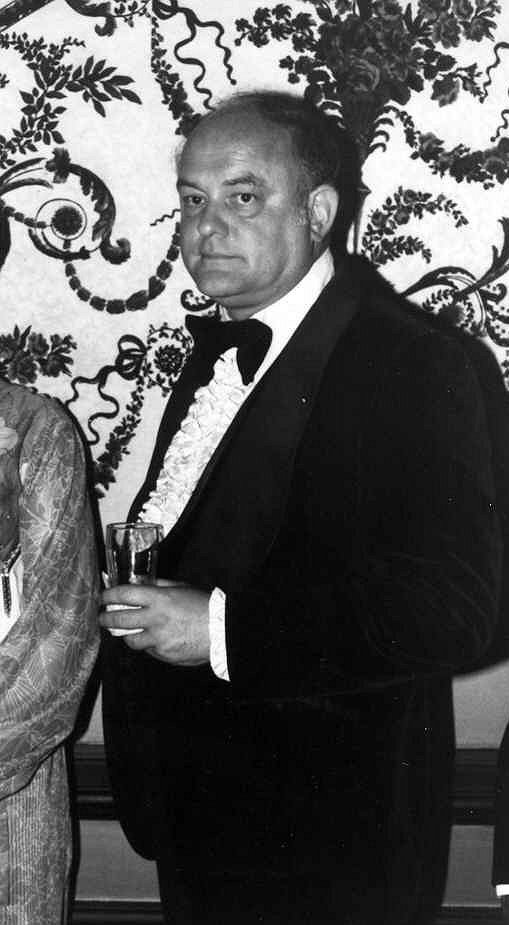
A Dayton Boy Who Found the Stage
Alexander Gordon Jump was born on April 1, 1932, in Dayton, Ohio, and he grew up in a family that did not have much to do with show business, and he found it anyway, through school plays, and through community theater, and through the kind of determination that takes a boy from Dayton to a career in Hollywood, and he graduated from Otterbein College in Westerville, Ohio, in 1955, and he went to work, in the theater, and in radio, and in the small parts that every actor starts with, and he was, by the 1970s, a working character actor, with a round face, and a gentle manner, and a reputation for being exactly what he was: reliable, and funny, and impossible to cast badly, because whatever the part was, he would find the truth in it, and then make it funny.
He was, by 1977, 45 years old, and he had been acting for more than twenty years, and he had never once been a star, and he was about to get two roles, in two years, that would make him one, and that would, in the end, define him, for better and for worse, because he would never again be as famous as he was about to become, and he would never again be as anonymous as he had been, and he would, in the end, be grateful for both, because the fame had come late, and because he had earned it, and because he knew, better than anyone, how lucky he was to have it at all.
Soap and the Chief
In 1977 Jump joined the cast of Soap, the ABC sitcom that was, at the time, one of the most controversial comedies on television, a show that parodied the soap opera, and that pushed every boundary it could find, and he played Chief Tinkler, the incompetent chief of police, a man who was, in the show's terms, the law, and in the audience's terms, one of the funniest characters on television. He played the Chief for two seasons, from 1977 to 1978, and he played him with a befuddled, well-meaning comic timing that made every line land, and that showed, once more, what he could do, and then, in 1978, he got the call that would change his life, for a new show, about a radio station in Cincinnati, and a boss who did not know what he was doing, and he was, by then, 46 years old, and he was about to become Arthur Carlson.
Soap was, in many ways, the perfect preparation for WKRP, because it taught Jump how to be funny in an ensemble, and how to be the straight man, and how to be the boss who was, in the end, the butt of the joke, and he brought all of that to Carlson, and he made it, in the end, into one of the great comic performances in television history. He was, by then, a veteran, and he knew, better than anyone, how to make a scene work, and how to make his fellow actors look good, and how to be, in the end, the man who held the whole enterprise together, even when the character he was playing could not hold anything together at all.
Arthur Carlson, 1978 to 1982
WKRP in Cincinnati premiered on CBS in 1978, and Jump played Arthur Big Guy Carlson, the bumbling, good-hearted general manager of the radio station, a man whose main qualification for the job was being the son of the station owner, and who ran his unit with a shrug, and a smile, and a complete inability to understand what was going on around him. Carlson was the show's moral center, in its early years, a decent man surrounded by chaos, and Jump played him with a warmth that made audiences love him, and with a comic timing that made every line land, and he was, in the end, one of the most beloved bosses in television history, a man who was, as one profile put it, the sweet-natured station manager who was the very symbol of a group that could not quite get things together. He played Carlson for four seasons, from 1978 to 1982, in 88 episodes, and he played him in the revival, The New WKRP in Cincinnati, from 1991 to 1993, and he was, in the end, Carlson, and Carlson was him.
The show's most famous line belonged to Carlson, and it came in the episode about the Thanksgiving turkey drop, when the station, in a promotional stunt, dropped live turkeys from a helicopter, and the turkeys, who could not fly, fell to the ground, and Carlson, reporting on the disaster, said, As God as my witness, I thought turkeys could fly, a line that has become one of the most quoted in television history, and that Jump delivered with a straight face, and a complete sincerity, that made it, in the end, perfect. He also played Mr. Horton in a two-part episode of Diff'rent Strokes in 1983, a bicycle-shop owner who attempts to molest Arnold and his friend Dudley, a dramatic turn that was, at the time, one of the most talked-about episodes in sitcom history, and that showed, once more, what Jump could do, even when the material was dark, and difficult, and far from funny.
The Lonely Maytag Repairman
In 1989 Jump took over the role of the Maytag repairman, Ol' Lonely, the idle, lonely serviceman who never got a service call, because the appliances he was supposed to fix were so dependable they never broke down, succeeding Jesse White, who had created the role in 1967, and who had played it for twenty-two years, and who had died in 1997 at 79. Jump played the repairman for fourteen years, from 1989 until July 2003, in more than 77 commercials and print ads, and in store openings, and in trade shows, and he became, in the end, as famous for the blue uniform as he was for Carlson, and as beloved, because Ol' Lonely was, in his way, Carlson again, a decent man, waiting for a call that never came, and doing it with a shrug, and a smile, and a complete sincerity that made audiences love him, and that made Maytag, in the end, one of the most successful advertising campaigns in American history.
He retired from the role in July 2003, hanging up his trademark blue repairman uniform after fourteen years, and handing the part to Hardy Rawls, a veteran character actor, and he did it, by every account, because his health was failing, and because he knew, better than anyone, that the time had come, and because he wanted to go out on his own terms, and he did, and two months later, on September 22, 2003, he was dead, of pulmonary fibrosis, at 71, and the obituaries that followed all began with the same two facts, because they were the facts that defined him: he had been Arthur Carlson, and he had been the lonely Maytag repairman, and he had been, in the end, one of the most beloved men in American television.
Two Marriages and a Family in Dispute
Jump was married twice. His first marriage, to Anna Inge, lasted from 1963 to 1992, and his second, to Betty McKeiver, began in 1993, and lasted until his death ten years later, and the two marriages, taken together, were the private life of a man who kept his private life private, and who did not seek the spotlight off camera any more than he had sought it on. His stepson, Chris McKeever, was the one who announced his death to Reuters, and who said, simply, that Jump had died at his home south of Los Angeles, of pulmonary fibrosis, and who was, by every account, close to him, and fond of him, and proud of him, and who mourned him, as a son mourns a father, and as a family mourns a man who had been, in the end, the center of it.
Sources disagree on how many children Jump had, and this article states the disagreement plainly: some profiles list three named children, Cindy, Kiva and Maggie-Jo, and an LDS magazine obituary, published four days after his death, says he was survived by his wife Betty, four daughters and a son, and the two accounts cannot both be right, and this article does not choose between them, because the record is genuinely unclear, and because Jump deserves an honest account, not a smoothed-over one. What is not in dispute is that he was married twice, and that he was, by every account, a devoted husband, and a devoted father, and a man who kept his family close, and who died, in the end, at home, with his family around him, and with his legacy secure.
The Last Film and the Last Months
Jump's last film role was in Changing of the Guard, a movie that was released in 2004, after his death, a posthumous credit that says, better than any obituary, how long he had worked, and how much he had loved it, and how he had, in the end, worked until he could not work anymore. He also appeared, in his final years, as Ed Malone on Growing Pains, and in the final season of Seinfeld, in guest spots that showed, once more, what he could do, even when the roles were small, and the time was short, and the health was failing, and he was, by every account, a professional to the end, who arrived on time, knew his lines, and made the day easier for everyone around him, which is why directors kept hiring him, and why audiences kept liking him, even when the material was not worthy of him.
He died on September 22, 2003, of pulmonary fibrosis, leading to respiratory failure, at 71, and most obituaries say he died at his home near Los Angeles, or south of Los Angeles, while one magazine reported that he died in a California hospice, and this article notes the difference, because the record is, on this point, genuinely unclear, and because Jump deserves an accurate account. He was buried at El Toro Memorial Park in Lake Forest, California, and the tributes came from every corner of the business, from the casts of the shows he had anchored, and from Maytag, whose chairman said that it had been natural for Jump to project the character, and who mourned him, as a colleague, and as a friend, and as a man who had, in the end, been Ol' Lonely for fourteen years, and Arthur Carlson for four, and himself for seventy-one.
What Happened to Gordon Jump, in the End
So what happened to Gordon Jump? He became Chief Tinkler, he became Arthur Carlson, he became the lonely Maytag repairman, he played Mr. Horton in the most talked-about episode of Diff'rent Strokes, he was married twice, he retired from Maytag in July 2003, and he died on September 22, 2003, at his home near Los Angeles, at 71, of pulmonary fibrosis, leading to respiratory failure, two months after hanging up the blue uniform, and he was buried at El Toro Memorial Park in Lake Forest, California, and he was, in the end, exactly what he had always been: a decent man, and a funny man, and a professional, and loved.
What remains is Arthur Carlson, still running WKRP in reruns, still shrugging at the paperwork, still saying, as God as my witness, I thought turkeys could fly, and Ol' Lonely, still waiting for a service call that never comes, still in the blue uniform, still lonely, still beloved, and the example of a Dayton boy who graduated from Otterbein College in 1955, who became, at 46, the most beloved boss on television, and who never once forgot where he came from, or who he was playing for, or what the work was for, and who died, in the end, as he had lived: at home, with his family, and without drama.
Frequently asked questions
What happened to Gordon Jump?
Gordon Jump died on September 22, 2003, at his home near Los Angeles, California, at 71, of pulmonary fibrosis leading to respiratory failure. He had played Arthur Carlson on WKRP in Cincinnati and the lonely Maytag repairman in commercials for fourteen years.
Who did Gordon Jump play on WKRP in Cincinnati?
Arthur Big Guy Carlson, the bumbling, good-hearted general manager of the radio station, from 1978 to 1982, in 88 episodes. He reprised the role in The New WKRP in Cincinnati from 1991 to 1993.
What was Gordon Jump famous line on WKRP?
As God as my witness, I thought turkeys could fly, said by Carlson after the station Thanksgiving turkey drop, when live turkeys dropped from a helicopter fell to the ground. It is one of the most quoted lines in television history.
How long was Gordon Jump the Maytag repairman?
Fourteen years, from 1989 until his retirement in July 2003. He succeeded Jesse White, who created the role in 1967, and made more than 77 commercials and print ads as Ol' Lonely.
Was Gordon Jump on Diff'rent Strokes?
Yes. He played Mr. Horton in a two-part episode in 1983, a bicycle-shop owner who attempts to molest Arnold and his friend Dudley. It was one of the most talked-about episodes in sitcom history.
Who was Gordon Jump married to?
Twice: to Anna Inge from 1963 to 1992, and to Betty McKeiver from 1993 until his death in 2003. Sources disagree on how many children he had: some list three named children, while one magazine obituary says four daughters and a son.
Where did Gordon Jump die?
Most obituaries say he died at his home near Los Angeles, California, on September 22, 2003. One magazine reported that he died in a California hospice. He was buried at El Toro Memorial Park in Lake Forest, California.
How old was Gordon Jump when he died?
Seventy-one. He was born April 1, 1932, in Dayton, Ohio, and died September 22, 2003, of pulmonary fibrosis leading to respiratory failure.
Sources
- EN WikipediaBirth, Carlson role, Soap, Diff'rent Strokes, Maytag, death
- Backstage (Reuters)Death September 22, 2003, age 71, home south of Los Angeles, pulmonary fibrosis, 77 commercials
- PlaybillDeath September 22, 2003, age 71, Los Angeles area home, pulmonary fibrosis, WKRP 1978-1982