What Happened to Gene Wilder, Comic Star?
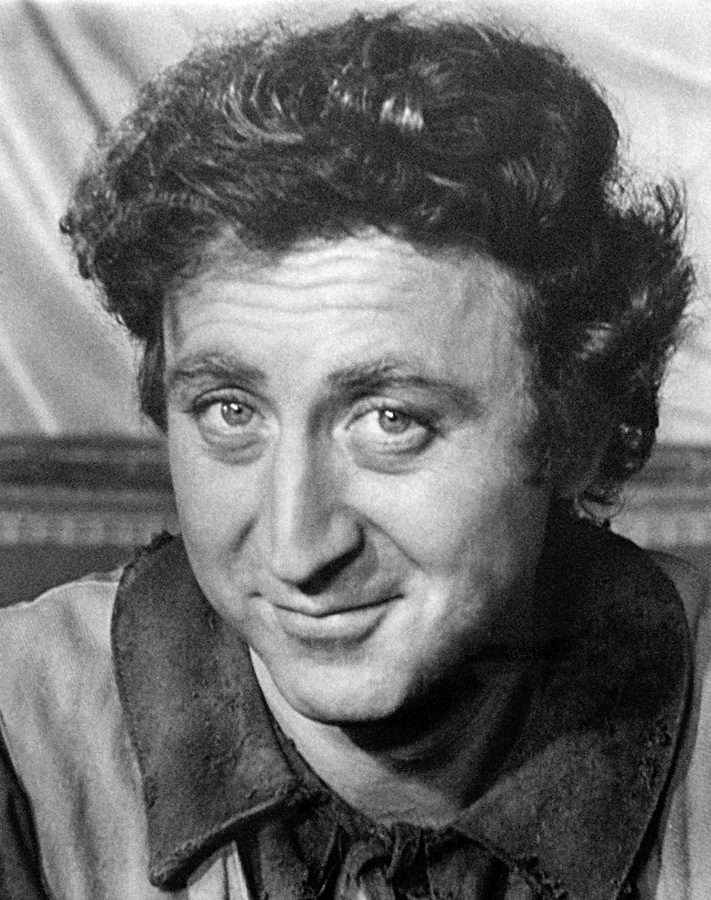
A Milwaukee Boy Who Made His Mother Laugh
Gene Wilder was born Jerome Silberman on June 11, 1933, in Milwaukee, Wisconsin, and he became determined to bring laughter to audiences after his mother had a heart attack and her doctor told the eight-year-old Wilder to avoid upsetting her, and to try to make her laugh instead, and the instruction became the mission of his life, because he spent the next seventy years making people laugh, and the making of them laugh was the keeping of a promise to a sick mother, and the promise was the foundation of everything. He later adopted his stage name because he could not imagine a marquee reading Jerome Silberman as Hamlet, and the name he chose, Gene Wilder, became one of the most loved names in American comedy, and the loving of it was the proof that the boy from Milwaukee had kept his promise.
He began studying acting as a young teen, and he made his way to the Actors Studio, where he studied with the legendary instructor Lee Strasberg, and he was drafted into the Army in 1956, where he worked in the medic corps, in the department of psychiatry and neurology at the Valley Forge hospital in Pennsylvania, and the Army years were the apprenticeship, and the apprenticeship was brief, and the stage was waiting, and he concentrated on stage acting for a number of years, and he found his way to the big screen through a 1963 production of Bertolt Brecht's Mother Courage, and the finding of the way was the beginning, and the beginning was slow, and the slowness was the proof that the stardom, when it came, was earned.
The Producers and the Brooks Partnership
His first major film role was as Leopold Bloom in the 1967 film The Producers, for which he was nominated for an Academy Award for Best Supporting Actor, and the film was the first in a series of collaborations with the writer and director Mel Brooks, and the collaborations were the heart of his career, because Brooks understood Wilder's talent, and Wilder understood Brooks's, and the understanding was mutual, and the mutuality produced Young Frankenstein in 1974, which Wilder co-wrote with Brooks, and for which the pair were nominated for the Academy Award for Best Adapted Screenplay, and the film became both a box-office hit and a classic, and Wilder himself, when asked by an audience at a screening which of his movies was his favorite, chose Young Frankenstein, and the choosing was the proof of what it meant to him.
He also starred in Blazing Saddles in 1974, playing the hard-drinking, pot-smoking gunman the Waco Kid, and Blazing Saddles and Young Frankenstein were, respectively, the top and fourth-highest grossing movies of 1974, and the two films in a single year made him, for a moment, the biggest comic star in America, and the moment lasted, because the films never stopped being funny, and the funniness was the proof that the Brooks partnership was one of the great partnerships in the history of American comedy, and that Wilder was, as Brooks said when he died, one of the truly great talents of his time, and that he had blessed every film they did with his magic, and with his friendship.
Willy Wonka and the Somersault
For many people, Wilder's defining film is Willy Wonka and the Chocolate Factory, in which he played the eccentric chocolatier with a sly, mysterious quality that lent the children's film a peculiar, menacing edge, and the performance is, still, the one that every generation of children discovers first, and that every generation of parents remembers best, and the remembering is the legacy, because the Wonka is the role that outlived all the others, and that will outlive them all, and the outliving is the proof of its power. He was interested in the role on one condition, which was that he could make his entrance his way, and he described to the director exactly the entrance that became an unforgettable moment in the movie, a limping, stumbling walk with a cane that suddenly turns into a somersault, and the entrance was written in, and Wilder was cast, and the casting was the making of a cult classic.
The movie was a bit of a flop upon its 1971 release, and only in the years that followed did it gain the vaunted status it holds today, thanks in large part to Wilder's unmatchable performance, and the performance was so beloved that when Tim Burton announced his 2005 remake starring Johnny Depp, many fans were up in arms, and Wilder himself considered the reboot an insult, and the insult was the proof of how deeply the original was loved, and the loving was the proof that Wilder had created something that belonged to the audience now, and that the audience would defend, and the defending was the highest compliment an actor can receive, because it means the work has become part of people's childhoods, and childhoods are sacred.
The Pryor Films and the Frisco Kid
Wilder also starred as Avram Belinski, a rabbi who befriends a bank robber played by a young Harrison Ford, in the 1979 western comedy The Frisco Kid, and he teamed up with Richard Pryor in a series of black-Jewish buddy movies, including Silver Streak in 1976, Stir Crazy in 1980, See No Evil, Hear No Evil in 1989 and Another You in 1991, and the Pryor partnership was the second great partnership of his career, and it worked for the same reason the Brooks partnership worked, because Wilder was the straight man, the nervous, decent, bewildered man, and Pryor was the chaos, and the chaos and the decency together were funny, and the funniness was the proof that Wilder could be the foil as well as the star, and that the foil was the harder job, and that he did it better than anyone.
He also starred in Woody Allen's Everything You Always Wanted to Know About Sex in 1972, and he directed and wrote several of his own films, including The Woman in Red in 1984, and he was, by the eighties, a director as well as an actor, and a writer as well as a performer, and the multiplicity was the proof of a talent that could not be contained in a single job, and the containment was never the point, because the point was the work, and the work was the comedy, and the comedy was the laughter, and the laughter was the promise to his mother, and the promise was kept, in every film, in every role, in every year of a career that ran for five decades.
Gilda Radner and Gilda's Club
His 1984 marriage to the comedian Gilda Radner turned the couple into latter-day Hollywood royalty, because separately both performers had been hugely popular, and together they were beloved, and they appeared together in three films, the last two of which he also directed, and the three films were Hanky Panky, The Woman in Red and Haunted Honeymoon, and the films were the record of a marriage that was, by every account, a happy one, and the happiness lasted five years, until Radner died of ovarian cancer in 1989, and the death devastated him, and the devastation became the second act of his life, because he went on to help found Gilda's Club, now known as the Cancer Support Community, an organization that provides social and emotional support for cancer patients and their families, and he helped found the Gilda Radner Ovarian Cancer Detection Center in Los Angeles, and the founding was the memorial, and the memorial was the love, and the love was the marriage, and the marriage was the five years, and the five years were the happiest of his life.
He was married four times in all, including to Radner, and he remarried in 1991, to Karen Boyer, a speech therapist, and the couple was together until Wilder's death, and the togetherness was the quiet coda to a loud life, and the coda was fitting, because the loud life had been the films and the fame, and the quiet life was the marriage and the writing, and the writing was the last act, and the last act was the books, and the books were the proof that the actor had always been a writer too, and that the writing had been waiting, all along, for the acting to end.
The Quiet Years and the Writing Life
Wilder co-wrote the screenplay for Young Frankenstein with Mel Brooks, and later in life he turned to writing full time, producing three novels and a collection of short stories, and his memoir, Kiss Me Like a Stranger: My Search for Love and Art, published in 2005, was the candid account of a life in comedy and a marriage to Gilda Radner, and the memoir was the proof that the funny man had a serious side, and that the serious side was the one that had made the funny man funny, because the funniness came from the pain, and the pain was the mother with the heart attack, and the wife with the cancer, and the life that kept taking the people he loved, and the taking was the wound, and the wound was the comedy, and the comedy was the healing, and the healing was the work.
He survived a bout of non-Hodgkin's lymphoma, and he retired from acting, and his last acting role was a guest appearance on Will and Grace in the early two thousands, and the retirement was total, and the totality was the choice, because he had said what he had to say on screen, and what he had left to say belonged in books, and the books were the last word, and the last word was the memoir, and the memoir was the search for love and art, and the search was the life, and the life was the laughter, and the laughter was the promise, and the promise was kept, to the end, and the end came quietly, at home, in Stamford, in the summer of 2016.
What Happened to Gene Wilder, in the End
So what happened to Gene Wilder? He was born Jerome Silberman in Milwaukee, Wisconsin, in 1933, and his mother had a heart attack when he was eight, and her doctor told him to make her laugh, and he studied with Lee Strasberg at the Actors Studio, and he served in the Army as a medic, and he made his film debut in Bonnie and Clyde, and he played Leopold Bloom in The Producers and was nominated for the Academy Award, and he played Willy Wonka in 1971, and he co-wrote Young Frankenstein with Mel Brooks, and he played the Waco Kid in Blazing Saddles, and he made four films with Richard Pryor, and he married Gilda Radner in 1984, and she died of ovarian cancer in 1989, and he co-founded Gilda's Club, and he married Karen Boyer in 1991, and he wrote a memoir and three novels, and he was diagnosed with Alzheimer's disease three years before his death, and he kept the diagnosis private, and he died on August 29, 2016, at 83, at his home in Stamford, Connecticut, of complications from Alzheimer's disease.
His nephew Jordan Walker-Pearlman said the decision to wait to disclose his condition was not vanity, but so that the countless young children who would smile or call out to him, there's Willy Wonka, would not have to be exposed to an adult referencing illness and trouble, and the explanation was the last proof of who he was, because he had spent his life protecting children's delight, and he protected it to the end, even at the cost of his own privacy, and the cost was the silence, and the silence was the gift, and the gift was the laughter, and the laughter was the promise, and the promise was kept. A documentary film, Remembering Gene Wilder, premiered in 2023, and he is remembered as the Willy Wonka, and the Dr. Frankenstein, and the Leo Bloom, and the Waco Kid, and the husband of Gilda Radner, and the man who made his mother laugh, and who died, in the end, at eighty-three, at home, in Connecticut, having kept his promise for seventy years.
Frequently asked questions
What happened to Gene Wilder?
Gene Wilder died at his home in Stamford, Connecticut, of complications from Alzheimer's disease. He had been diagnosed three years earlier but kept his condition private so young fans would not have to worry about him.
What was Gene Wilder's most famous role?
He is best remembered as Willy Wonka in Willy Wonka and the Chocolate Factory, the eccentric chocolatier whose somersault entrance became one of the most famous moments in children's film.
Did Gene Wilder write Young Frankenstein?
Yes, he co-wrote the screenplay with Mel Brooks, and he starred in it as Dr. Frankenstein. The pair were nominated for an Academy Award for the script, and Wilder called it his favorite of his own films.
Who was Gilda Radner to Gene Wilder?
She was his third wife, a beloved comedian, and they appeared together in three films. After her death from ovarian cancer, Wilder co-founded Gilda's Club to support cancer patients and their families.
Why did Gene Wilder retire from acting?
He retired to write, producing a memoir, three novels and a collection of short stories. His last acting role was a guest appearance on a television sitcom in his later years.
Was Gene Wilder married?
Yes, four times. His best-known marriage was to Gilda Radner, and his final marriage, to Karen Boyer, lasted from their wedding until his death.
Did Gene Wilder work with Mel Brooks?
Yes, they collaborated on The Producers, Blazing Saddles and Young Frankenstein, and Brooks said on Wilder's death that he had blessed every film they did with his magic and his friendship.
What did Gene Wilder do after acting?
He became a full-time writer, publishing a memoir about his search for love and art, plus novels and short stories, and he remained active in cancer charities.
Sources
- EN WikipediaBorn Jerome Silberman June 11 1933 Milwaukee, died August 29 2016 Stamford age 83, Alzheimer's complications, The Producers 1967, Willy Wonka 1971, Blazing Saddles and Young Frankenstein 1974, Gilda Radner 1984-1989, Karen Boyer 1991, memoir Kiss Me Like a Stranger
- Legacy.comDied age 83 Stamford Connecticut from complications of Alzheimer's disease, nephew Jordan Walker-Pearlman statement, Willy Wonka flop on release then cult classic, somersault entrance condition, Gilda Radner, Gilda's Club
- NPR IllinoisDied early Monday at home in Stamford of complications from Alzheimer's disease, nephew statement, Radner died of ovarian cancer 1989, co-founded Gilda's Club, remarried 1991, three novels and short stories, Young Frankenstein favorite film