What Happened to Gary Coleman?
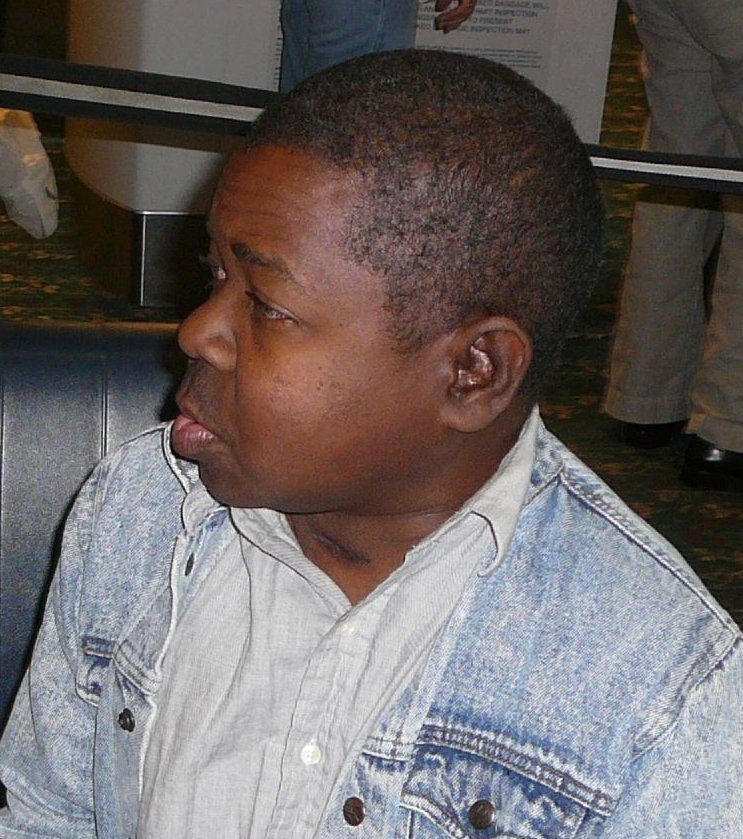
Arnold Jackson: The Smallest Star on Television
Gary Wayne Coleman was born on February 8, 1968, in Zion, Illinois, and adopted as an infant. He was born with a congenital kidney disease that stopped his kidneys from growing properly, and the disease and its treatment stunted his growth: as an adult he stood about 4 feet 8 inches tall. He underwent two kidney transplants, one in 1973 and another in 1984, and he needed dialysis for much of his life. His small stature, combined with a sharp comic timing that was obvious from his first auditions, made him a natural for television, and he began appearing in commercials and guest roles as a child, including spots on The Jeffersons and Good Times. Then, in 1978, came the role that would define him. On NBC's Diff'rent Strokes, Coleman played Arnold Jackson, a young boy from Harlem adopted, along with his older brother Willis, by a wealthy white businessman played by Conrad Bain.
The show was an immediate hit, and Coleman was its breakout star. Arnold's catchphrase, a skeptical "What'choo talkin' 'bout, Willis?" became one of the most quoted lines of the decade, and Coleman, still a child, became the highest-paid young actor on television. The show ran for eight seasons, from 1978 to 1986, moving from NBC to ABC for its final season, and at its height it drew tens of millions of viewers a week. But the fame came with a cost that was visible even then. Coleman was a child whose body did not grow while his fame did, and the gap between the cute television kid audiences loved and the young man he was becoming would only widen. By the time the show ended he was 18, no longer a child star, and facing an industry that did not know what to do with him.
A Childhood of Work, Illness, and Broken Trust
Coleman's health was never a footnote to his career; it was the condition of it. The kidney disease that kept him small also kept him in and out of hospitals, on dialysis, and on medication for most of his life, and he spoke later about how the treatments and the attention wore on him. He also grew up inside a financial arrangement he came to distrust. Like many child stars of his era, his earnings were managed by adults around him, and as he reached adulthood he became convinced that much of the money he had earned as Arnold Jackson was gone. In 1989, three years after Diff'rent Strokes ended, he sued his adoptive parents and his former business adviser, alleging that they had misappropriated his assets. The case was settled, and Coleman was awarded a substantial sum, but the lawsuit permanently broke his relationship with his parents, and he spoke of the estrangement for the rest of his life.
The lawsuit also set the tone for how the public would see him afterward: not as a former star planning a second act, but as a man in conflict with the people who had raised him. He worked through the 1990s in small film and television roles, including the comedy The Big Guy and voice work, and he became a frequent guest on talk shows and reality-style programs, where his willingness to argue with hosts made him a memorable, if uncomfortable, presence. He also became a punchline in ways he hated, including a recurring parody character in the Broadway musical Avenue Q, which featured a character named Gary Coleman working as a building superintendent. He sued over the use of his name at one point, then later appeared in the show's orbit himself, a contradiction that captured his complicated relationship with his own fame.
The Lawsuit, the Bankruptcy, and the Fight for His Earnings
The financial story of Coleman's adult life is often told as a simple tragedy, but the details matter, because they explain why he ended up where he did. After the 1989 lawsuit and settlement, his earnings did not recover to anything like their childhood level, and his medical bills never stopped. In 1995 he lost money on a failed arcade business, the Gary Coleman Game Parlor in Marina del Rey, California. In August 1999 he filed for bankruptcy protection, telling the court and reporters that many people shared responsibility for his situation, from himself to accountants, agents, lawyers, and his adoptive parents. After the bankruptcy he tried an online auction of personal memorabilia, including his couch and an autographed ice scraper, in a project called "Save Me!" that drew attention but little money. The pattern was consistent: a famous name, a shrinking bank account, and medical expenses that never went away.
It is worth being precise about what this meant in practice. Coleman was not living in luxury and quietly fading; he was working. He took jobs that other former stars might have refused, including a stint as a security guard, and he appeared at conventions and on television whenever work came. He also entered public life in an unexpected way: in 2003 he ran as a candidate in the California gubernatorial recall election, finishing well back in a field of 135 candidates but drawing national coverage for the novelty of a former child star on the ballot. He later said he ran partly as a joke and partly to make a point about celebrity politics. Either way, the campaign confirmed his status in the 2000s: famous enough that everyone recognized him, but no longer employable as an actor in the way he once had been.
Life After the Spotlight: Politics, Security Work, and Utah
By the mid-2000s Coleman had left Los Angeles behind. He settled in Santaquin, a small city in Utah County, Utah, where he lived a life that was quieter than his Hollywood years but not free of trouble. He married actress Shannon Price in 2007 after meeting her on the set of the low-budget film Church Ball, but the marriage quickly broke down amid domestic disputes that brought both of them into contact with the police, and they divorced in 2008. In the years that followed he was arrested more than once, including on an outstanding warrant in early 2010, and his health continued to decline: he underwent heart surgery in 2009, developed pneumonia afterward, and suffered seizures in January and February 2010, including one on the set of a television program. Neighbors in Santaquin knew him as a local oddity, a former television star living an ordinary, sometimes troubled life in an ordinary town.
There is a temptation to treat these years as a simple decline, but that misses something important about Coleman. He never stopped talking to the press, never stopped insisting on his version of events, and never accepted the role of a passive victim. He gave interviews in which he was funny, angry, and articulate by turns, and he remained convinced that he had been wronged by the industry and by the people who managed his childhood. He also kept working when work was offered, including his final film role in the independent comedy Midgets vs. Mascots, filmed in 2009. The Utah years were not a retirement. They were the last chapter of a working life that had begun when he was a small child and never really stopped, even when the work got smaller and the headlines got meaner.
The Fall in Santaquin and the Final Days
On May 26, 2010, Coleman fell at his home in Santaquin and hit his head, possibly after suffering another seizure. He was admitted to Utah Valley Regional Medical Center in Provo in critical condition with an epidural hematoma, a bleed between the skull and the brain's protective covering. According to a hospital spokesman, he was conscious and lucid the next morning, but his condition then worsened, and by the afternoon of May 27 he was unconscious and on life support. He died at 12:05 p.m. on May 28, 2010, at age 42. The news was carried around the world within hours, and tributes came from former co-stars, including Todd Bridges, who had played his brother Willis on Diff'rent Strokes, and from fans who had grown up watching Arnold Jackson after school.
The medical facts of his death are straightforward, and they should not be dressed up. A fall, a brain bleed, two days in a hospital, and a death at 42. What made the story linger was everything around it: the youth of the man, the fame of the child, and the sense that a life that had begun in front of millions had ended in a small Utah town with very little ceremony. Coleman had reportedly asked that there be no funeral service or memorial, a final wish that was consistent with his prickly relationship with public attention. The casts of the Broadway musical Avenue Q, which had parodied him for years, dedicated performances to his memory on the night he died, a gesture that captured the strange mixture of affection and mockery that had followed him for decades.
The Disputes After His Death
Coleman's death did not end the arguments about him; in some ways it intensified them. The decision to remove him from life support was approved by his ex-wife Shannon Price, who said Coleman had previously completed paperwork allowing her to make medical decisions for him. That decision was later questioned in tabloid coverage, and the hospital publicly defended Price, stating that she had proper authority. Price was never charged with any wrongdoing, but she was later denied a share of Coleman's estate: his will left his remaining assets to a former business partner, Anna Gray, who became executor of the estate after a legal contest. The disputes delayed his burial and kept his name in the headlines for months after his death, a final indignity for a man who had spent much of his life in courtrooms and tabloids.
A Peacock documentary titled Gary, which premiered on August 29, 2024, revisited his life and death with new interviews with friends and former co-stars, and it renewed public discussion of whether his death had been fully understood. The documentary's trailer featured talking heads questioning the circumstances, but no official finding has ever contradicted the hospital's account: a fall, an epidural hematoma, and death from that injury. This article reports the verified medical facts and notes the existence of the later speculation without endorsing it, because the distinction matters. Coleman deserves to be remembered for what is documented about his life, not for the theories that gathered around his death.
How Gary Coleman Is Remembered
So what happened to Gary Coleman? He grew up too fast, earned a fortune he believed was taken from him, fought the people who raised him, and spent his adult years trying to make a living with a famous name and a failing body. He died young, at 42, in a hospital far from the studios where he had made his name, after a fall at home. That is the short version, and it is a sad one. But it is not the whole story. The whole story includes eight seasons of a show that genuinely entertained millions, a catchphrase that entered the language, and a performer whose comic timing was real and whose intelligence was obvious to anyone who interviewed him at length. Audiences loved Arnold Jackson because Coleman played him with warmth and mischief, and that affection was real even when the industry around him was not kind.
His legacy is also a cautionary tale that changed how people think about child stars. Coleman's lawsuit was part of a wave of cases that led to stronger protections for child performers' earnings, and his public struggles with money, health, and the courts made him, unwillingly, a symbol of what can go wrong when a child becomes a product. He did not choose that role, and he often resented it. But it is part of why his name still comes up whenever a new child star breaks out, and why the question "what happened to Gary Coleman" still gets asked. The answer is not a mystery. It is a life: a famous childhood, a contested fortune, a long illness, and a death at 42 that came too soon for a man who had already lived several lifetimes in public.
Frequently asked questions
What happened to Gary Coleman?
Gary Coleman died on May 28, 2010, at age 42, at Utah Valley Regional Medical Center in Provo, Utah, from an epidural hematoma suffered in a fall at his Santaquin, Utah, home on May 26, 2010. He had spent his later years in Utah after his Diff'rent Strokes fame, a lawsuit over his childhood earnings, and a 1999 bankruptcy.
How did Gary Coleman die?
He fell at his home in Santaquin, Utah, on May 26, 2010, hit his head, and suffered an epidural hematoma, a bleed between the skull and the brain's covering. He was conscious the next morning but then worsened, was placed on life support, and died at 12:05 p.m. on May 28, 2010.
How old was Gary Coleman when he died?
He was 42 years old. He was born February 8, 1968, in Zion, Illinois, and died May 28, 2010.
Why was Gary Coleman so short?
He had a congenital kidney disease that stunted his growth, leaving him about 4 feet 8 inches tall as an adult. He underwent two kidney transplants, in 1973 and 1984, and required dialysis for much of his life.
What was Gary Coleman's catchphrase?
As Arnold Jackson on Diff'rent Strokes, his catchphrase was "What'choo talkin' 'bout, Willis?" addressed to his older brother Willis, played by Todd Bridges.
Did Gary Coleman sue his parents?
Yes. In 1989 he sued his adoptive parents and a former business adviser, alleging misappropriation of his childhood earnings. The case was settled, but it permanently broke his relationship with his parents.
Was Gary Coleman married?
Yes. He married actress Shannon Price in 2007 after meeting her on the set of the film Church Ball. They divorced in 2008 after a series of domestic disputes.
What was the Gary documentary on Peacock?
Gary, a Peacock documentary that premiered August 29, 2024, revisited Coleman's life and death with archival footage and interviews with friends and former co-stars, including Todd Bridges.
Sources
- EN WikipediaBiography, Diff'rent Strokes role, death details, bankruptcy, lawsuit
- YardbarkerDeath at Provo hospital, 1989 lawsuit, kidney transplants, Peacock documentary
- PrimidiDeath timeline, Santaquin fall, epidural hematoma, hospital course