What Happened to Fred Gwynne, Herman Munster?
A Stockbroker's Son From New York
Frederick Hubbard Gwynne was born on July 10, 1926, in New York City, the son of Frederick Walker Gwynne, a partner in the securities firm Gwynne Brothers, and his wife, Dorothy Goddard Ficken Gwynne, who, before her marriage, had been a successful illustrator, known for creating Sunny Jim, the first cereal mascot, for the breakfast cereal Force. He grew up, in part, in Tuxedo Park, New York, and spent much of his childhood in South Carolina, Florida, and Colorado, because his father traveled extensively, and after his father's death, his mother sent him to boarding school at Groton School, where he graduated in 1944, and where he was president of the drama club, and made his first stage appearance in a school production of Henry V.
After graduation, during World War II, Gwynne joined the United States Navy, serving as a radioman on the submarine chaser PC-581, and after the war, he attended art school at the Phoenix School of Design in New York, with the dream of doing Saturday Evening Post covers, and then transferred to Harvard College in 1948, graduating in 1951. At Harvard he was a member of the Fly Club, served as president of the Harvard Lampoon, and as an in-house cartoonist, sang with the Harvard Krokodiloes a cappella group, and acted for the Hasty Pudding Theatricals, and he was, by every account, a young man of unusual talent, and unusual range, who could draw, and sing, and act, and write, and who was, in the end, going to do all of it, for the rest of his life.
Officer Muldoon, 1961 to 1963
After Harvard, Gwynne joined the Brattle Theatre Repertory Company, and then moved to New York City, where he worked as a copywriter for the J. Walter Thompson advertising agency, and resigned in 1952 upon being cast in his first Broadway role, a gangster in a comedy called Mrs. McThing, starring Helen Hayes. He made his first film appearance in 1954, in an uncredited role as Slim in On the Waterfront, and he appeared on The Phil Silvers Show, where his comedic work impressed the writer and producer Nat Hiken, who cast him, in 1961, as Patrolman Francis Muldoon in the sitcom Car 54, Where Are You?, opposite Joe E. Ross as Officer Gunther Toody, and Al Lewis as Officer Leo Schnauser.
Car 54 ran from 1961 to 1963, for 60 episodes, and Gwynne played Muldoon as a tall, gentle, slightly bewildered cop, a man who was, in the show's world, the straight man to Toody's schemes, and who was, in the audience's world, the funniest thing on the show, because he played the part with a deadpan that made every line land, and with a physical presence, at six feet five and a quarter inches, that made him impossible to miss. He was, by then, 35, and he had been acting for a decade, and he had, in Muldoon, a character that was funny, and warm, and entirely his own, and he had, in Nat Hiken, a producer who understood what he could do, and who would, three years later, give him the role that would define him.
Herman Munster, 1964 to 1966
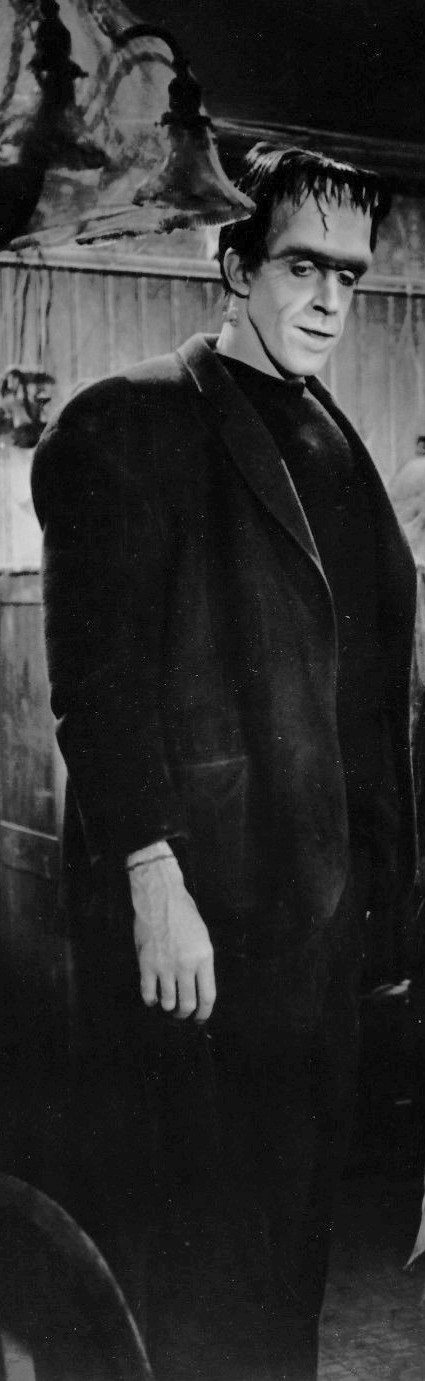
In 1964 Gwynne was cast as Herman Munster, the goofy, gentle, Frankenstein-like father on The Munsters, the CBS sitcom about a family of monsters living in a decaying mansion in the suburbs, and he played the role for two seasons, from 1964 to 1966, in 70 episodes, wearing 40 to 50 pounds of padding, makeup, and five-inch asphalt-spreader boots, with his face painted a bright violet, because it captured the most light on the black-and-white film. He was, at six feet five, the tallest man on the set, and he was, in the costume, the biggest, and he played Herman as a man who was, above all, kind, a father who loved his family, and who did not understand why the rest of the world was afraid of him, and who was, in the end, the most human character on the show, precisely because he was the least human-looking.
He loved the role, and he said so, in later life, in a line that has become famous: I might as well tell you the truth. I love old Herman Munster. Much as I try not to, I can't stop liking that fellow. He played Herman with a warmth that made the character last, long after the show ended, in reruns, and in reunion movies, and in the memory of everyone who watched it, and he did it by being, quite simply, the best actor on the show, a man who could make a monster into a father, and a father into a friend, and who could do it, week after week, in 50 pounds of padding, and five-inch boots, and violet makeup, without ever complaining, and without ever losing the character, or himself.
Typecast, Then the Stage
After The Munsters, Gwynne found himself typecast, unable to gain new film roles for over two years, because Hollywood could not see past Herman, and could not imagine the tall, gentle man in the makeup as anything else, and he was, by his own account, frustrated, and angry, and determined to prove them wrong. He did it by going back to the stage, where he had started, and where he was, by every account, superb, playing Jonathan Brewster in a television production of Arsenic and Old Lace in 1969, a role originally played by Boris Karloff, who had also played Frankenstein's monster, and Big Daddy Pollitt in the Broadway revival of Cat on a Hot Tin Roof in 1974, and the Stage Manager in Our Town in 1975, and Colonel J.C. Kinkaid in A Texas Trilogy in 1976, and by working, steadily, in regional theater across the United States, while maintaining a low Hollywood profile.
He also worked in radio, appearing in 83 episodes of the CBS Radio Mystery Theater from 1975 to 1982, and he returned to Broadway, and to television, in guest spots, and in films, in small roles, in The Cotton Club in 1984, and Fatal Attraction in 1987, and Ironweed in 1987, and he did it all, year after year, without ever becoming bitter, and without ever giving up, because he was, above all, a working actor, and because the work was what mattered, and because he knew, better than anyone, that Herman Munster was a great role, and that he had played it well, and that the rest, in the end, would take care of itself.
The Children's Books and Two Marriages
Alongside his acting, Gwynne was a talented artist and author, and he wrote and illustrated a series of children's books based on children's frequent misperceptions of things they hear from adults, including The King Who Rained, and A Chocolate Moose for Dinner, and A Little Pigeon Toad, and The Sixteen Hand Horse, and Pondlarker, and The Battle of the Frogs and Mice, books that were, at first, slow to find an audience, because their format was geared to a very young reader, but that eventually achieved critical success and became regular bestsellers for their publisher. He drew on his own childhood, and on his own children, for the books, and he illustrated them himself, with a style that was, like his acting, warm, and funny, and entirely his own.
He was married twice, first to Jean Foxy Reynard, a socialite and the granddaughter of New York City mayor William Jay Gaynor, in 1952, and the marriage lasted until their divorce in 1980, and produced five children: Gaynor, Kieron, Evan, Madyn, and Dylan, who drowned in 1963 at the age of three. The count is given as five by Wikipedia, although some profiles count only four, the four who survived him, a small disagreement that this article states plainly, because the record is, on this point, genuinely unclear, and because Gwynne deserves an accurate account. In 1988 he married Deborah Flater, and they remained married until his death in 1993, and she survived him, along with his four surviving children, and his books, and his roles, and his reputation as a man who had done it all, and done it well.
Pet Sematary, My Cousin Vinny, and the End
In his later years, Gwynne found, at last, the film career that had eluded him after The Munsters, playing Jud Crandall in Pet Sematary in 1989, a performance based, in part, on the author Stephen King, and playing Judge Chamberlain Haller in My Cousin Vinny in 1992, his final film, a role that gave him, at 66, one of the best reviews of his career, and that showed, to anyone who was still watching, that he had never lost it, and that he never would. He was, by then, living on a farm near Taneytown, Maryland, with his wife, Deborah, and he was, by every account, content, and at peace, and working, when the work came, and drawing, and writing, and being, in the end, the man he had always been: a tall, gentle, funny man, who loved old Herman Munster, and who loved his family, and his books, and his farm.
He was diagnosed with pancreatic cancer, and he died, at his home in Taneytown, on July 2, 1993, at 66, eight days short of his 67th birthday, of complications from the disease, and some profiles say he died in his sleep, in his home's cigar room, a small detail that this article notes because the record, on this point, is genuinely unclear. He is buried in an unmarked grave at Sandy Mount United Methodist Church Cemetery in Finksburg, Maryland, and he was survived by his wife, Deborah, and by his four surviving children, and by a career that had run from Harvard to the Navy to Broadway to Car 54 to The Munsters to Pet Sematary to My Cousin Vinny, and that had, in the end, made him one of the most beloved character actors of his generation.
What Happened to Fred Gwynne, in the End
So what happened to Fred Gwynne? He became Officer Muldoon, he became Herman Munster, he was typecast, he went back to the stage, he wrote children's books, he played Jud Crandall and Judge Haller, he was married twice, he had five children, he lost one of them, Dylan, at three, and he died on July 2, 1993, at his home in Taneytown, Maryland, at 66, of pancreatic cancer, eight days short of his 67th birthday, in an unmarked grave, in Finksburg, Maryland, with his wife, Deborah, and his children, and his books, and his roles, to remember him by. He had been, for more than forty years, a working actor, and an artist, and an author, and he had done it all, from the Harvard Lampoon to the Munsters' mansion, without ever losing himself, and without ever stopping, and without ever forgetting that the work was what mattered.
What remains is Herman Munster, still gentle, still green, still funny, still loving his family in reruns, and Officer Muldoon, still bewildered, still tall, still funny, and the children's books, still on shelves, still making children laugh at the chocolate moose and the king who rained, and the example of a man who was six feet five, and who wore 50 pounds of padding, and who made a monster into a father, and who loved old Herman Munster, much as he tried not to, and who could not stop liking that fellow, and who, in the end, was loved, in return, by everyone who watched him.
Frequently asked questions
What happened to Fred Gwynne?
Fred Gwynne died on July 2, 1993, at his home in Taneytown, Maryland, at 66, of complications from pancreatic cancer, eight days short of his 67th birthday. Some profiles say he died in his sleep in his home's cigar room.
Who did Fred Gwynne play on The Munsters?
Herman Munster, the gentle, Frankenstein-like father of the Munster family. He played the role from 1964 to 1966, in 70 episodes, wearing 40 to 50 pounds of padding and makeup and five-inch boots.
Who did Fred Gwynne play on Car 54, Where Are You?
Officer Francis Muldoon, the tall, gentle patrolman partnered with Joe E. Ross as Officer Gunther Toody. He played the role from 1961 to 1963, in 60 episodes.
Was Fred Gwynne typecast after The Munsters?
Yes. He found himself unable to gain new film roles for over two years after the show ended, and he rebuilt his career on stage, in regional theater and on Broadway, and in radio, before his late film comeback in Pet Sematary and My Cousin Vinny.
Did Fred Gwynne write children's books?
Yes. He wrote and illustrated several, including The King Who Rained, A Chocolate Moose for Dinner, and A Little Pigeon Toad, all based on children's mishearings of adult phrases. They became bestsellers for their publisher.
How many children did Fred Gwynne have?
Five with his first wife, Jean Reynard: Gaynor, Kieron, Evan, Madyn, and Dylan, who drowned in 1963 at age three. Some profiles count four, the four who survived him. He was also married to Deborah Flater from 1988 until his death.
What was Fred Gwynne last film?
My Cousin Vinny, in 1992, in which he played Judge Chamberlain Haller. His other late-career film highlight was Jud Crandall in Pet Sematary in 1989.
Where is Fred Gwynne buried?
In an unmarked grave at Sandy Mount United Methodist Church Cemetery in Finksburg, Maryland, near his home in Taneytown.
Sources
- EN WikipediaBirth, Muldoon and Herman Munster roles, Harvard, Navy, marriages, children, death
- Film ReferenceBirth July 10, 1926, death July 2, 1993, pancreatic cancer, Taneytown
- IMDbBirth, death, Muldoon and Herman Munster roles, My Cousin Vinny final film