What Happened to Franklin Cover, Tom Willis?
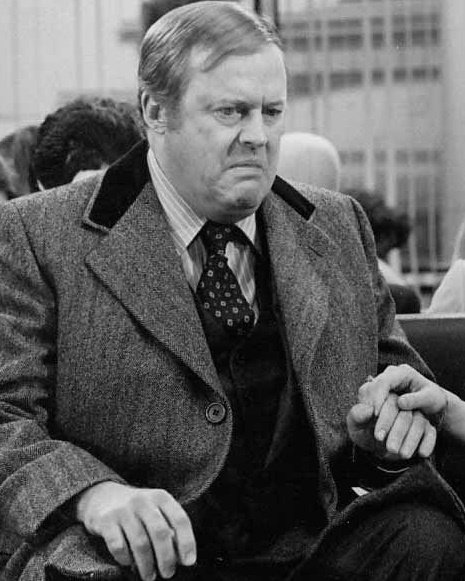
A Cleveland Boy Who Loved the Stage
Franklin Edward Cover was born on November 20, 1928, in Cleveland, Ohio, the son of Britta Schreck Cover and Franklin Held Cover, and he grew up loving the theater, and he pursued it the hard way, through college, and through regional stages, and through the kind of work that teaches an actor how to be heard in the back row, and how to be believed in the front. He was, by the 1960s, a working stage actor in New York, appearing in productions of Henry IV and Hamlet, in the classics that every serious actor wants on his resume, and in Forty Carats, with Julie Harris, a Broadway comedy that showed he could be funny as well as serious, and that he could hold his own opposite one of the great actresses of the era. He was not a star, and he never tried to be one, and he was, by every account, happy to be a working actor, a man who showed up, knew his lines, and made the scene work.
The stage was his first love, and it remained his home, even after television found him, and he kept returning to it, in between the television jobs, because the stage was where he had learned his craft, and where he felt most himself. His Broadway credits, by the time he died, included Born Yesterday in 1989, Wild Honey in 1986, Applause, in which he replaced Robert Mandan in the 1970 musical, Forty Carats in 1968, and a string of other productions that marked him, to anyone who was paying attention, as a serious, versatile, reliable actor, the kind of man directors hired when they needed a scene to be exactly right, and the kind of man audiences remembered, even when they could not quite place the name. He was 46 when television came calling, and he was ready, because he had been ready for twenty years.
Tom Willis, 1975 to 1985
The Jeffersons premiered on CBS in 1975, and Cover played Tom Willis, the white neighbor who lived in the same deluxe apartment building as George and Louise Jefferson, a man who was, in the show's terms, the Willises' half of the building's most famous couple, and who was, in the audience's terms, the funniest straight man on television. Tom was married to Helen Willis, played by Roxie Roker, and together they were the Jeffersons' best friends, and their most frequent sparring partners, and the couple who proved, week after week, that a marriage could be funny, and warm, and entirely ordinary, even when the world outside the apartment building had never seen a marriage quite like theirs. Cover played Tom for ten seasons, from 1975 to 1985, and he played him with a dry, understated comic timing that made every line land, and that made Tom Willis, in the end, one of the most beloved supporting characters in sitcom history.
Tom Willis was, in many ways, the perfect role for a stage actor, because he was a man who reacted, who listened, who gave the joke its shape by the way he received it, and Cover, who had spent twenty years on stage learning how to listen, was superb at it, and he made Tom into a character who was funny without ever trying to be the funniest person in the room. He was the neighbor who showed up, who helped, who complained, and who loved his wife, and his friends, and his life, and he did it all with a shrug, and a smile, and a timing that never missed. The show ran for eleven seasons, and Cover was there for ten of them, and when it ended in 1985, he was 56, and he had played Tom Willis for a decade, and he had, without ever seeking the spotlight, become a part of television history.
The First Interracial Marriage on Primetime
Tom and Helen Willis were, by every account that matters, half of one of the first interracial marriages ever seen on primetime television, a white man and a Black woman, married, and happy, and funny, and entirely normal, in an era when television had, for the most part, pretended that such marriages did not exist. The show did not make a fuss about it, and that was the point: Tom and Helen were not a statement, they were a couple, who argued about money, and about their children, and about George Jefferson, and who loved each other, and who were, in the end, the most stable marriage on the show, which was, given the Jeffersons themselves, saying something. Cover and Roker played them with a warmth, and an ease, that made the whole thing look simple, and it was not simple at all, and it was, in its quiet way, one of the bravest things television had ever done.
The Willises had two children in the show's world, and their daughter Jenny, played by Berlinda Tolbert, became, in time, a character in her own right, and the family, taken together, was a portrait of a mixed-race household that television had never attempted before, and that it would not attempt again for years. Cover never talked much, in public, about the significance of the role, and he did not need to, because the work spoke for itself, and because the audience understood, even if the critics did not always say so, that Tom Willis was a man who loved his wife, and who did not care what anyone thought about it, and that, in 1975, was a radical thing to show on television, and a necessary one, and Cover played it, for ten years, without ever once making it look like a lesson.
Broadway, Wall Street and Will and Grace
After The Jeffersons ended in 1985, Cover went back to the work he had always done, in the theater, and in guest spots on television, and in the occasional film, including a supporting role in Wall Street in 1987, Oliver Stone film about greed and ambition, in which Cover played a small part with the same quiet professionalism he had brought to everything else. He was, by then, in his late fifties, and he was not chasing stardom, and he was not chasing the spotlight, and he was, by every account, content to work, and to be good at it, and to go home to his wife, and his children, and his life, which was, in the end, the life he had always wanted: a working actor life, with a family, and a home, and a craft he loved.
His final television appearance came in 1999, in an episode of Will and Grace, the NBC sitcom that was, in its way, the descendant of the show he had starred in, a comedy about people who were different, and who loved each other anyway, and Cover, who was 70, played his part with the same dry timing he had always had, and then he went home, and he did not work again, not because he had retired, exactly, but because the work had slowed, and because his health had begun to fail, and because he was, by then, living with a heart condition that would, in the end, put him in the Actors Home in Englewood, New Jersey, where he spent his final months, and where he died.
Mary and Two Children
Cover was married once, to Mary Bradford Stone, in 1965, and the marriage lasted until his death forty-one years later, a long, quiet, happy marriage that produced two children, a daughter, Susan, and a son, Bradford, who became an actor himself, and who carried on, in his own way, the family business. Mary was with him at the end, and she survived him, along with their children, and the obituaries, when they came, all mentioned the marriage, and the children, and the family, because they were, in the end, the point of the life, and the reason he had worked so hard, and so long, and so well. He was, by every account, a devoted husband, and a devoted father, and a man who kept his private life private, and who did not seek the spotlight off camera any more than he had sought it on.
The family was, in the end, what mattered most to him, and what he talked about, when he talked about his life, and what he protected, when the fame of The Jeffersons came, and went, and what he returned to, when the work slowed, and the health failed, and the time grew short. He had been married for forty-one years, and he had raised two children, and he had played Tom Willis for ten seasons, and he had done it all without ever becoming a tabloid figure, or a scandal, or a cautionary tale, and that, in the end, is a rarer achievement than any award, and a better epitaph than any obituary could write.
The Final Months at the Actors Home
In December 2005 Cover moved into the Lillian Booth Actors Home in Englewood, New Jersey, the retirement home run by the Actors Fund of America, where he went to recover from a heart condition, and where he lived for two months, in the care of people who understood what his life had been, and who treated him, by every account, with the respect he deserved. He was 77, and he had been ill for some time, and the move to the Actors Home was, in its way, a homecoming, a return to the community of actors he had spent his life among, and a place where he could be, in the end, among his own. He died there on February 5, 2006, of pneumonia, as his publicist, Dale Olson, announced four days later, and the obituaries that followed all began with the same fact, because it was the fact that defined him: he had been Tom Willis, and Tom Willis had been half of the first interracial marriage on primetime television.
One low-tier profile prints his age at death as 78 and his death date as March 6, and this article does not use those figures, because the Associated Press, and Playbill, and EN Wikipedia all agree on February 5, 2006, at 77, and because the record, on this point, is clear, and because Cover deserves an accurate account, not a careless one. He was survived by his widow Mary, and by his son and his daughter, and by a legacy that runs from Henry IV to The Jeffersons, from the stage to the screen, from a Cleveland boy who loved the theater to a television actor who changed, quietly, what television could show, and who did it without ever raising his voice.
What Happened to Franklin Cover, in the End
So what happened to Franklin Cover? He became Tom Willis, he became half of the first interracial marriage on primetime television, he played the role for ten seasons, and he died on February 5, 2006, at the Lillian Booth Actors Home in Englewood, New Jersey, at 77, of pneumonia, while recovering from a heart condition, after a life that had run from Cleveland, to the stage, to Broadway, to the most famous apartment building in television history. He was married for forty-one years, he had two children, he had a son who became an actor, and he had a career that was, by every measure that matters, a success, even if it never made him a star, because he was, in the end, a working actor, and the work was the point.
What remains is Tom Willis, still living next door to the Jeffersons in reruns, still married to Helen, still funny, still ordinary, still, in his quiet way, groundbreaking, and the stage credits, still there, in the record, Henry IV and Hamlet and Forty Carats, and the example of a man who did the work, and did it well, and went home, and who changed television without ever trying to, and who died, in the end, among actors, in a home built for actors, at 77, of pneumonia, with his family around him, and his legacy secure.
Frequently asked questions
What happened to Franklin Cover?
Franklin Cover died on February 5, 2006, at the Lillian Booth Actors Home in Englewood, New Jersey, at 77, of pneumonia, while recovering from a heart condition. He had played Tom Willis on The Jeffersons from 1975 to 1985.
Who did Franklin Cover play on The Jeffersons?
Tom Willis, the white neighbor of George and Louise Jefferson, married to Helen Willis, played by Roxie Roker. Together they were half of one of the first interracial marriages seen on primetime television.
Was Franklin Cover a stage actor?
Yes. Before television he worked extensively on stage, in Henry IV, Hamlet, and Forty Carats with Julie Harris, and his Broadway credits included Born Yesterday, Wild Honey, and Applause.
Who was Franklin Cover married to?
Mary Bradford Stone, from 1965 until his death in 2006, a marriage of forty-one years. They had two children, Susan and Bradford, and Bradford became an actor.
What was Franklin Cover last TV role?
His final television appearance was in an episode of Will and Grace in 1999. He also had a supporting role in the film Wall Street in 1987.
How did Franklin Cover die?
Of pneumonia, at the Lillian Booth Actors Home in Englewood, New Jersey, on February 5, 2006. He had been living there since December 2005 while recovering from a heart condition.
How old was Franklin Cover when he died?
Seventy-seven. He was born November 20, 1928, in Cleveland, Ohio, and died February 5, 2006, in Englewood, New Jersey. One low-tier profile prints 78, which is not used here.
Was Tom Willis married to Helen Willis on The Jeffersons?
Yes. Tom Willis, played by Franklin Cover, was married to Helen Willis, played by Roxie Roker. Theirs was one of the first interracial marriages shown on primetime television.
Sources
- EN WikipediaBirth, Tom Willis role, interracial marriage, death, Will and Grace
- PlaybillDeath February 5, 2006, age 77, pneumonia, Actors Home, Broadway credits
- Encyclopedia.comBirth November 20, 1928, death February 5, 2006, Tom Willis role