What Happened to Fabian Forte?
Discovered Beside an Ambulance
Fabiano Anthony Forte was born on February 6, 1943, in Philadelphia, Pennsylvania, the son of a Philadelphia police officer. His discovery is one of the most famous stories in teen-idol history, and it is also, by all accounts, true. Talent manager Bob Marcucci spotted him as his father was being taken away in an ambulance after a heart attack. Frankie Avalon, also of South Philadelphia, had suggested the boy to Marcucci, and the manager saw what he needed: a handsome teenager with a look that could be shaped into a star.
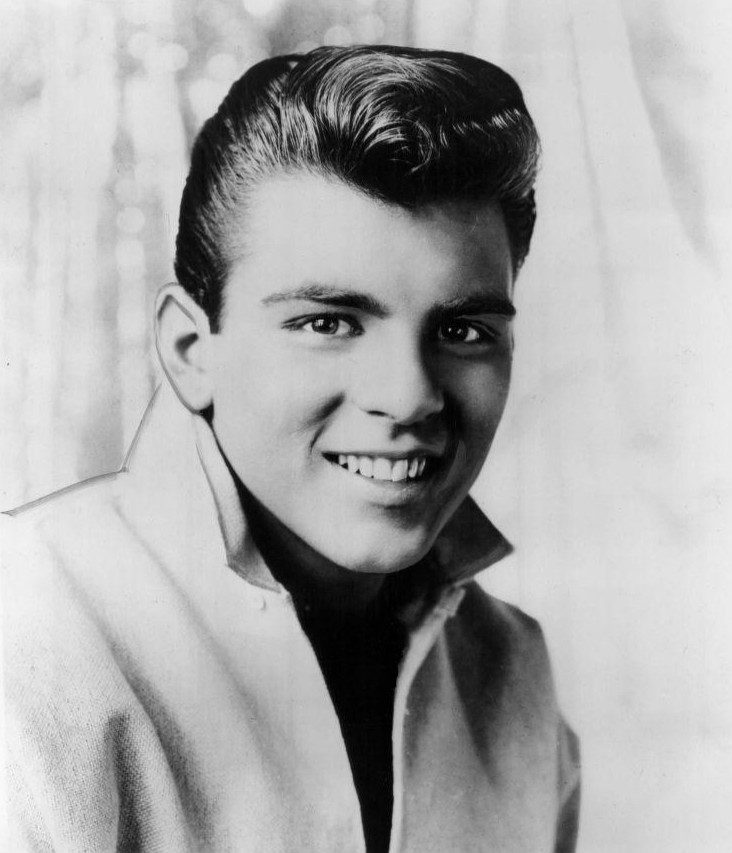
The shaping was deliberate. Fabian was given a pompadour and white bucks, kept working part-time at a pharmacy, and studied at South Philadelphia High School while recording. The image was wholesome, clean-cut, and safe, the kind of boy parents would approve of and teenage girls would adore. Whether he could actually sing was, at first, almost beside the point. The record industry of the late 1950s manufactured teen idols the way Hollywood had manufactured stars a decade earlier, and Fabian was one of its most successful products.
Tiger, Hound Dog Man and American Bandstand
The records worked. Turn Me Loose reached number nine in the United States, Hound Dog Man also reached number nine, and Tiger reached number three and earned a gold disc for more than a million copies. Eleven of his songs reached the Billboard Hot 100, and he became a regular on Dick Clark's American Bandstand, the television show that turned regional hits into national obsessions. For a few years, Fabian was everywhere: on television, on the radio, on magazine covers, and on bedroom walls.
Then came the payola hearings, and with them a crack in the facade. Fabian testified that his recordings had been doctored, an admission that confirmed what many critics had suspected: the voice on the records had been helped along in the studio. The hearings did not end his career overnight, but they changed how people talked about him, and they coincided with a broader shift in pop music. The teen-idol wave was breaking, and a new generation of self-written, self-played acts was coming. In 1961, Fabian bought out his contract with Marcucci, ending the management relationship that had made him famous.
From Records to the Movies
Like many teen idols, Fabian moved into films. He starred in Hound-Dog Man (1959), appeared in North to Alaska, took a role in the all-star war epic The Longest Day, and headlined the surfing picture Ride the Wild Surf (1964). The films were not masterpieces, but they kept him visible as his record sales cooled, and they gave him a second identity as a screen actor. He was no longer just a voice on a doctored record. He was a face in cinemas, and a reasonably popular one.
The film career did not last either. By the late 1960s, the teen-idol era was over, the studios were changing, and Fabian, now in his mid-twenties, was no longer a teenager and no longer a novelty. He kept working, but the white-hot fame of the Tiger years was behind him. In 1977, he retired from performing altogether. It was a clean break, and it lasted four years. In 1981, he resumed performing, and this time the context was different: not the charts, not the movies, but the nostalgia circuit, where audiences came to remember rather than to discover.
The Golden Boys Years
The nostalgia circuit gave Fabian his longest-running act. From 1985, he toured for about two decades with Frankie Avalon and Bobby Rydell as Dick Fox's Golden Boys, a package show built on three South Philadelphia singers who had all been teen idols together. Their initial tour ran close to three hundred dates, an astonishing workload for a nostalgia act, and the show became a reliable draw for audiences who had grown up with their records. Fabian was no longer chasing hits. He was celebrating them, alongside the two men who had shared his beginnings.
One correction matters here. When Bobby Rydell died in 2022, some accounts wrote as though the trio simply ended. That is not quite what happened. Golden Boys bills continued with Lou Christie joining Avalon and Fabian, including an American Music Theatre show on September 11, 2022, billed as Avalon, Fabian, and Lou Christie. The act evolved rather than stopping outright. But the broader point stands: Fabian's performing life after the 1980s was a nostalgia act, not a chart career, and it belonged to a different era of his life than the Tiger years.
The Idolmaker and the Marcucci Settlement
Fabian's relationship with his own story got a public airing in 1980 with The Idolmaker, a film dramatization of the Marcucci era. The film is a dramatization, not a documentary, and Fabian's own account of the dispute differs from the movie's version in ways that matter. According to Fabian, the dispute with Marcucci was settled out of court, with an apology and with Marcucci's 7.5 percent share passing to him. The film's version should not be quoted as fact.
The distinction is worth making because The Idolmaker shaped how a generation understood the teen-idol machine. It is a good film, but it is fiction built on real people, and Fabian has spent years correcting its details. The real story is less dramatic than the movie and more ordinary: a teenager, a manager, a contract, a buyout, and a settlement. The drama was in the fame itself, not in the paperwork that ended it.
Twenty Acres in Dunbar
Fabian's private life has been quieter than his public one, and longer. He married Kathleen Regan in 1966, and they divorced in 1979; their children are Christian and Julie. He married Kate Netter in 1980, and they divorced in 1990. In 1998 he married Andrea Patrick, a former Bituminous Coal Queen and Miss Pennsylvania USA, who designed the home where they live on 20 acres in Dunbar, in southwestern Pennsylvania. It is a long way, geographically and otherwise, from South Philadelphia and American Bandstand.
In 2013, he gave a revealing account of his later performing life, saying he played 25 shows a year, adding that it got him out of the house and that he had never been happier. The quote is worth repeating because it inverts the usual faded-star narrative. Fabian did not describe himself as clinging to fame or mourning its loss. He described a modest, enjoyable routine, a few dozen shows a year, a home in the Pennsylvania hills, and a life that suited him. No current performance frequency beyond that 2013 quote is publicly documented, and this article does not assert one.
The Golden Boys tours themselves were a feat of stamina that younger performers might envy. An initial tour running close to three hundred dates meant months on the road, night after night, for three men in their forties and fifties singing songs they had first recorded as teenagers. The audiences came to remember, and the three singers, all South Philadelphia boys who had known each other since the beginning, gave them exactly that: the hits, the harmonies, and the shared history of a vanished pop era.
Where Fabian Forte Is Now
So what happened to Fabian? He grew up, left the charts, left the movies, retired once, came back for the nostalgia circuit, and settled into a quiet life in Pennsylvania. He is alive, married, and out of the spotlight, with no current chart project, no current film, and no series role. His fame belongs to a specific moment, the late 1950s, when a pompadour and a doctored record could make a Philadelphia teenager into a national obsession.
That moment is long gone, but the records remain, and so does the story of how they were made. Fabian's career is a useful reminder of how the pop machine worked before rock and roll rewrote its rules: a manager, a look, a television show, and a string of hits, followed by a long, ordinary life after the machine moved on. He seems, by his own account, content with the trade.
How the Teen Idol Machine Worked
Fabian's career is a textbook case of how the late-1950s pop machine operated. A manager spotted a good-looking teenager, built an image around him, put him on television, and sold records to an audience that cared more about the face than the voice. Dick Clark's American Bandstand was the engine: a daily show where teenagers danced to the week's hits and learned, from Clark's calm authority, which records mattered. Fabian was a regular, and regularity on Bandstand was worth more than talent, because it turned a record into a shared national event.
The machine had a short lifespan for any single idol, and Fabian's story shows why. The payola hearings exposed the doctored recordings and the paid promotion behind many hits, and then a new wave of acts arrived who wrote their own songs and played their own instruments. The Beatles, the British Invasion, and the folk-rock movement made the manufactured teen idol look old-fashioned within a few years. Fabian's response was sensible: he moved into films, then out of performing, then back for nostalgia, where the audience wanted the memory rather than the moment. He never pretended the machine had been art, and he never apologized for having ridden it while it ran.
Frequently asked questions
What happened to Fabian Forte?
Fabian Forte left pop stardom decades ago. He retired from performing in 1977, resumed in 1981, toured for about two decades from 1985 as a Golden Boy, and now lives on 20 acres in Dunbar, Pennsylvania.
Is Fabian Forte still alive?
Yes. He was born February 6, 1943, and lives in Dunbar, in southwestern Pennsylvania, in a home his wife designed.
What were Fabian's biggest hits?
Tiger reached number three in the United States and earned a gold disc, while Turn Me Loose and Hound Dog Man each reached number nine. Eleven of his songs reached the Billboard Hot 100.
How was Fabian discovered?
Talent manager Bob Marcucci spotted him as his father was being taken away in an ambulance after a heart attack. Frankie Avalon, also of South Philadelphia, had suggested him.
Did Fabian's recordings get doctored?
Yes. He testified in the payola hearings that his recordings had been doctored, and in 1961 he bought out his contract with Marcucci.
What happened to the Golden Boys after Bobby Rydell died?
The act did not simply end. Golden Boys bills continued with Lou Christie joining Frankie Avalon and Fabian, including a September 11, 2022, show billed as Avalon, Fabian, and Lou Christie.
Was The Idolmaker a true story?
No. The Idolmaker (1980) is a dramatization, not a documentary. Fabian's account is that his dispute with Marcucci was settled out of court with an apology and Marcucci's 7.5 percent share passing to him.
Who is Fabian Forte married to?
He married three times: Kathleen Regan (1966-1979), Kate Netter (1980-1990), and Andrea Patrick (1998), a former Bituminous Coal Queen and Miss Pennsylvania USA.
Sources
- EN WikipediaBiography, hits, films, Golden Boys, marriages
- Atlantic City WeeklyLater career and 2013 performing account
- ProQuest newspaper archive via MBRLCareer profile