What Happened to Esther Rolle of Good Times?
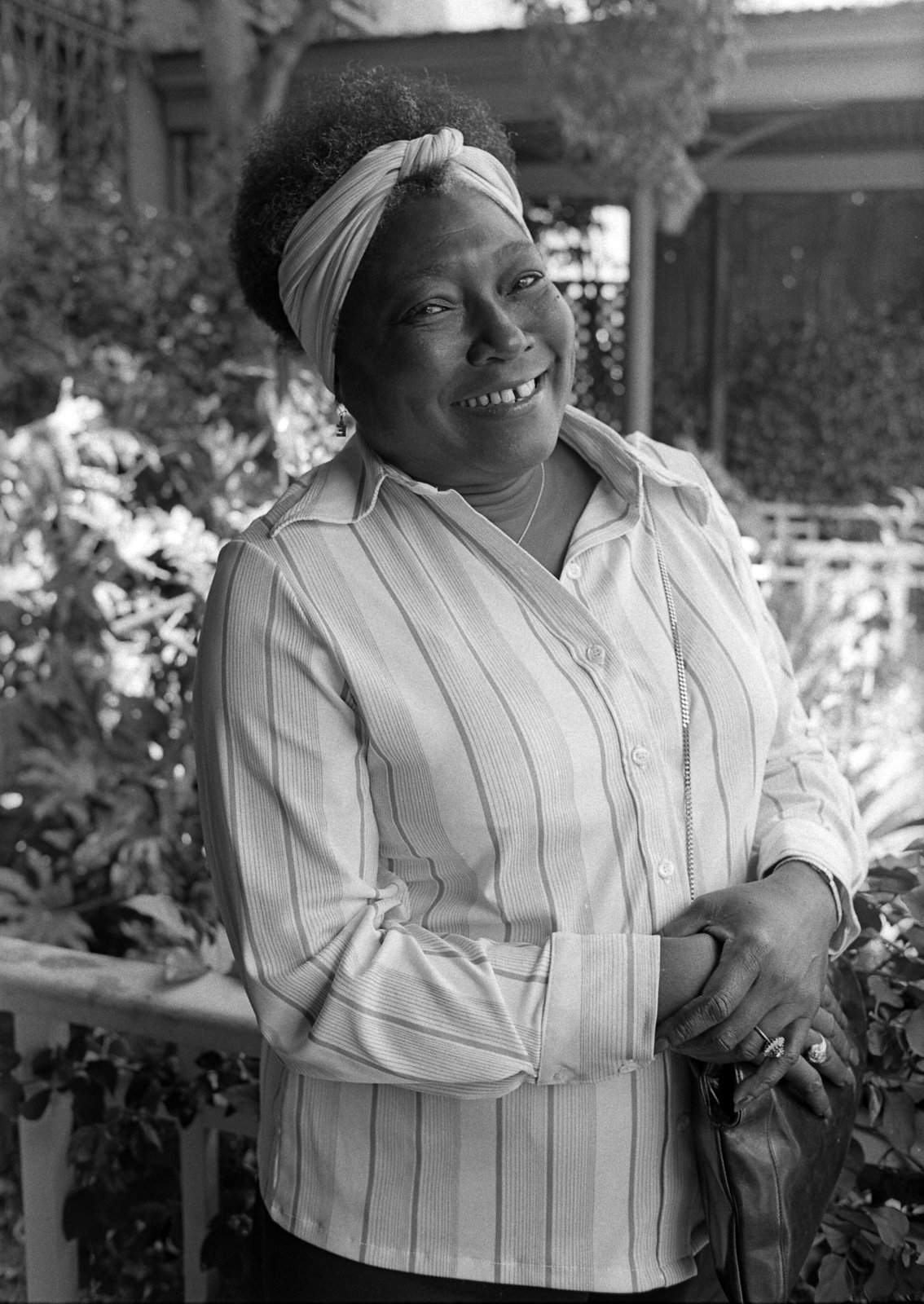
Tenth of Eighteen in Pompano Beach
Esther Elizabeth Rolle was born on November 8, 1920, in Pompano Beach, Florida, the tenth of eighteen children of Jonathan Rolle, a farmer and a Baptist deacon, and Elizabeth Rolle, Bahamian immigrants who had come to Florida to work, and to raise a family, and who raised, in the end, eighteen children, in a house where faith mattered, and where hard work mattered, and where a daughter who wanted to act was not discouraged, even if nobody quite knew how she would do it. She grew up in Pompano Beach, and she left for New York, and she worked her way through the theater, in the Black companies of the era, and in the Broadway productions that would, in time, make her a veteran, and she was, by the early 1970s, a respected stage actress, with a voice that could fill a theater, and a presence that could stop a show, and a reputation for being exactly what she was: spirited, and iron-willed, and impossible to ignore.
She was performing in Melvin Van Peebles's Don't Play Us Cheap in 1972 when a casting director asked her to audition for a new Norman Lear sitcom, Maude, for the role of the maid, and Rolle, who understood exactly what the part could become, and exactly what it could not, agreed to take it only on the understanding that her character would not be a typical maid, and that she would be given the dignity, and the depth, that the character deserved. It was a condition that said everything about who she was, and what she would spend the next seven years fighting for, and it was a condition that the producers, who wanted her, agreed to, and then, in time, forgot, and that forgetting would, in the end, cost them their star, and cost her three years of her career.
Florida Evans, 1972 to 1974
Maude premiered on CBS in September 1972, and Rolle played Florida Evans, the housekeeper for Maude Findlay, played by Bea Arthur, a woman who was funny, and sharp, and devout, and who gave as good as she got, in a show that was, at the time, the most outspoken comedy on television. Florida was the foil to Maude, the working-class Black woman who saw through the liberal pieties of her white employer, and who said so, with a gruff voice, and a gap-toothed smile, and a timing that made every line land, and Rolle played her for two seasons, from 1972 to 1974, in 45 episodes, and she was so good, and the character was so popular, that Norman Lear decided to give her a show of her own. Good Times premiered on February 8, 1974, and it was, from the first episode, a landmark: the first American television show to depict a Black nuclear family, a mother, and a father, and three children, living in a housing project on the South Side of Chicago, and trying, week after week, to make it through.
Good Times was a spin-off of a spin-off, a show that had been spun out of All in the Family, through Maude, into its own series, and it was, for Rolle, the role of a lifetime, and the fight of a lifetime, because Florida Evans, on Good Times, was no longer the maid, she was the mother, and the center of the show, and the woman who held the family together, and Rolle played her with everything she had, for five seasons, from 1974 to 1979, in 109 episodes, and she made Florida Evans into one of the most beloved mothers in television history, and one of the most important. She was nominated for a Golden Globe for the role, a nomination that sources date to 1975 in some accounts and 1976 in others, and this article does not pin the year down, because the record is genuinely unclear, and because the nomination itself is not in dispute.
Good Times and the Fight Over J.J.
The fight came, as Rolle had feared it would, over J.J. Evans, the oldest son, played by Jimmie Walker, a fast-talking, womanizing character whose catchphrase, Dyn-o-mite, made him the breakout star of the show, and whose portrayal Rolle believed had become a buffoon, a caricature, a joke at the expense of the very family the show was supposed to honor. She fought the producers over it, and so did her co-star John Amos, who played James Evans, Florida's husband, and who shared her concerns, and who was, in the end, fired after the third season, in the same dispute, and Rolle, who had had enough, left the show in March 1977, at the end of the fourth season, and the show, without her, and without Amos, was not the same, and everyone knew it, including the producers, who had, in the end, lost the heart of their show over a catchphrase.
On the show, Florida married Carl Dixon, played by Moses Gunn, and moved to Arizona, a farewell that was, in its way, as dignified as Rolle could make it, and that left the door open, and the producers, who had learned their lesson, came back to her, and agreed to the changes she had demanded, and she returned for the final season, in 1978-79, to show, as one profile put it, that the television family had reconciled, and she played Florida Evans for one more year, and then the show was cancelled, on August 1, 1979, and Rolle, who was 58, went back to the work she had always done, in the theater, and in films, and on television, and she never again had a role to match Florida Evans, and she never expected to, because Florida was, as she said herself, the role of a lifetime.
The Emmy for Summer of My German Soldier
In 1979 Rolle won the Primetime Emmy Award for Outstanding Supporting Actress in a Limited Series or Special, for her work in Summer of My German Soldier, a television film about a young Jewish girl in the American South during World War II, and the win made her the first Black actress ever to win in that category, a historic first that came, fittingly, in the same year that Good Times ended, and that said, better than any speech, what she had always known: that she was one of the great actresses of her generation, and that the work, and not the catchphrase, was the point. She had been nominated for a Golden Globe, and she had been, for years, the best actress on a sitcom, and now, at 58, she had an Emmy, and she had it for a dramatic role, in a film about a girl, and a soldier, and a war, and she had earned it the hard way, by being, quite simply, that good.
She kept working after Good Times, because stopping had never occurred to her, and she appeared in films that showed her range, in Driving Miss Daisy, in Rosewood in 1995, John Singleton film about a Florida town destroyed by racial violence, in Down in the Delta in 1998, Maya Angelou directorial debut, in which she played a woman suffering from Alzheimer disease, and in I Know Why the Caged Bird Sings, and in A Raisin in the Sun on stage and on television in 1989, as Lena, and in Member of the Wedding in 1989, as Bernice, and she was, in every one of them, the same actress she had always been: precise, and powerful, and impossible to ignore, and she was, by the end of the decade, one of the most respected actresses in America, with an Emmy, and a Golden Globe nomination, and a place in the NAACP Hall of Fame, which she entered in 1987, and the distinction of being the first woman to win the NAACP Chairman Civil Rights Leadership Award, in 1990.
One Marriage, No Children of Her Own
Rolle was married once, to Oscar Robinson, in 1955, and the marriage ended in divorce, although sources disagree on when: one encyclopedia gives the divorce year as 1960, and other profiles give it as 1975, and this article states the disagreement, because the record is genuinely unclear, and because Rolle deserves an honest account, not a smoothed-over one. She had no children of her own, and she had a stepdaughter, Sherley Mae Robinson, and she was, by every account, a devoted aunt, and a devoted friend, and a woman whose family was, in the end, the people she worked with, and the people she loved, and the community she had come from, in Pompano Beach, and in New York, and in Los Angeles, where she lived for many years, and where she died.
She was, off camera, as outspoken as she was on it, a woman who had fought producers over a character, and who had won, and who had never once apologized for it, and who had, in the end, paid the price for it, in three years away from the show she had built, and in a career that never quite recovered the momentum it had lost. She did not seem to mind, and she kept working, and she kept fighting, and she kept being, by every account, exactly herself: a devout Methodist, a proud Bahamian-American, a woman who had come from Pompano Beach to Broadway to Hollywood, and who had done it on her own terms, and who had, in the end, left a body of work that runs from Maude to Good Times to Rosewood, and that will not be forgotten.
Diabetes, Dialysis and the Final Days
Rolle had diabetes, and in the 1990s her health failed, and toward the end of her life she was on kidney dialysis, and she kept working anyway, because stopping had never occurred to her, and because the work was the point, and she appeared in Down in the Delta in 1998, in her final film role, as a woman with Alzheimer disease, a performance that was, by every account, one of the best of her career, and that showed, once more, what she could do, even when she was ill, and even when she was tired, and even when the work was hard. She died on November 17, 1998, in Culver City, California, at 78, of complications from diabetes, nine days after her 78th birthday, and her body was flown back to her hometown, Pompano Beach, Florida, where she was buried at Westview Community Cemetery, one of the oldest Black cemeteries in South Florida, after a funeral at Bethel African Methodist Episcopal Church.
One encyclopedia prints her death date as November 18, and one profile says she died in a Los Angeles hospital, rather than in Culver City, and this article notes both differences, because the public record is, on this point, genuinely unclear, and because Rolle deserves an accurate account. Her Good Times co-stars John Amos, Ja'Net DuBois, Bern Nadette Stanis, Johnny Brown and Ralph Carter attended the service, and her surviving family members donated many of her personal items, including her gowns and her awards, to the African-American Research Library and Cultural Center in Fort Lauderdale, Florida, where they are kept, and where they are, in the end, a fitting memorial to a woman who had come from Pompano Beach, and who had given everything she had to the work.
What Happened to Esther Rolle, in the End
So what happened to Esther Rolle? She became Florida Evans, she became the mother on Good Times, she fought the producers over J.J., she left, she came back, she won an Emmy in 1979, she was the first Black actress to win in her category, and she died on November 17, 1998, in Culver City, California, at 78, of complications from diabetes, nine days after her 78th birthday, after a life that had run from Pompano Beach, to Broadway, to Maude, to Good Times, to Rosewood, and that had been, from beginning to end, a fight for dignity, and for depth, and for the right to be more than a maid, and more than a joke, and more than a catchphrase.
What remains is Florida Evans, still holding the family together in reruns, still telling J.J. when he is wrong, still the mother every viewer recognizes, and the Emmy, still the first, still the only one in its category for a Black actress in 1979, and the NAACP Hall of Fame plaque, still there, and the awards, still in Fort Lauderdale, in the library, where her family donated them, and the example of a woman who was born the tenth of eighteen children in Pompano Beach, who became, at 58, an Emmy winner, and who never once forgot where she came from, or who she was playing for, or what the work was for.
Frequently asked questions
What happened to Esther Rolle?
Esther Rolle died on November 17, 1998, in Culver City, California, at 78, of complications from diabetes. She had played Florida Evans on Maude and Good Times, and she won the 1979 Emmy for Outstanding Supporting Actress in a Limited Series or Special.
Who did Esther Rolle play on Good Times?
Florida Evans, the mother of the Evans family, on the CBS sitcom Good Times from 1974 to 1979, in 109 episodes. She had first played Florida as the housekeeper on Maude from 1972 to 1974, in 45 episodes.
Why did Esther Rolle leave Good Times?
She left in March 1977 because she believed the producers had turned her son J.J. Evans, played by Jimmie Walker, into a buffoon, and because the show had become frivolous. Her co-star John Amos, who shared her concerns, was fired after season three. She returned for the final season in 1978-79 after the producers agreed to changes.
What Emmy did Esther Rolle win?
The 1979 Primetime Emmy for Outstanding Supporting Actress in a Limited Series or Special, for Summer of My German Soldier. She was the first Black actress to win in that category.
Was Esther Rolle married?
Once, to Oscar Robinson, in 1955. Sources disagree on when the marriage ended: one encyclopedia gives the divorce year as 1960, and other profiles give it as 1975. She had no children of her own, and a stepdaughter, Sherley Mae Robinson.
What did Esther Rolle die of?
Complications from diabetes. She had been on kidney dialysis toward the end of her life. Most sources give her death date as November 17, 1998, in Culver City, though one encyclopedia prints November 18, and one profile says a Los Angeles hospital.
What was Esther Rolle last film?
Down in the Delta (1998), Maya Angelou directorial debut, in which she played a woman suffering from Alzheimer disease. She also appeared in Rosewood (1995) and Driving Miss Daisy.
How old was Esther Rolle when she died?
Seventy-eight. She was born November 8, 1920, in Pompano Beach, Florida, and died November 17, 1998, in Culver City, California, nine days after her 78th birthday.
Sources
- EN WikipediaBirth, Florida Evans role, Golden Globe nomination, Emmy 1979, death
- BlackPastBirth, tenth of 18 children, Maude and Good Times, death November 17, 1998
- Encyclopedia.comDeath November 18, 1998, diabetes, left Good Times 1977, returned 1978