What Happened to Eddie Albert, Green Acres?
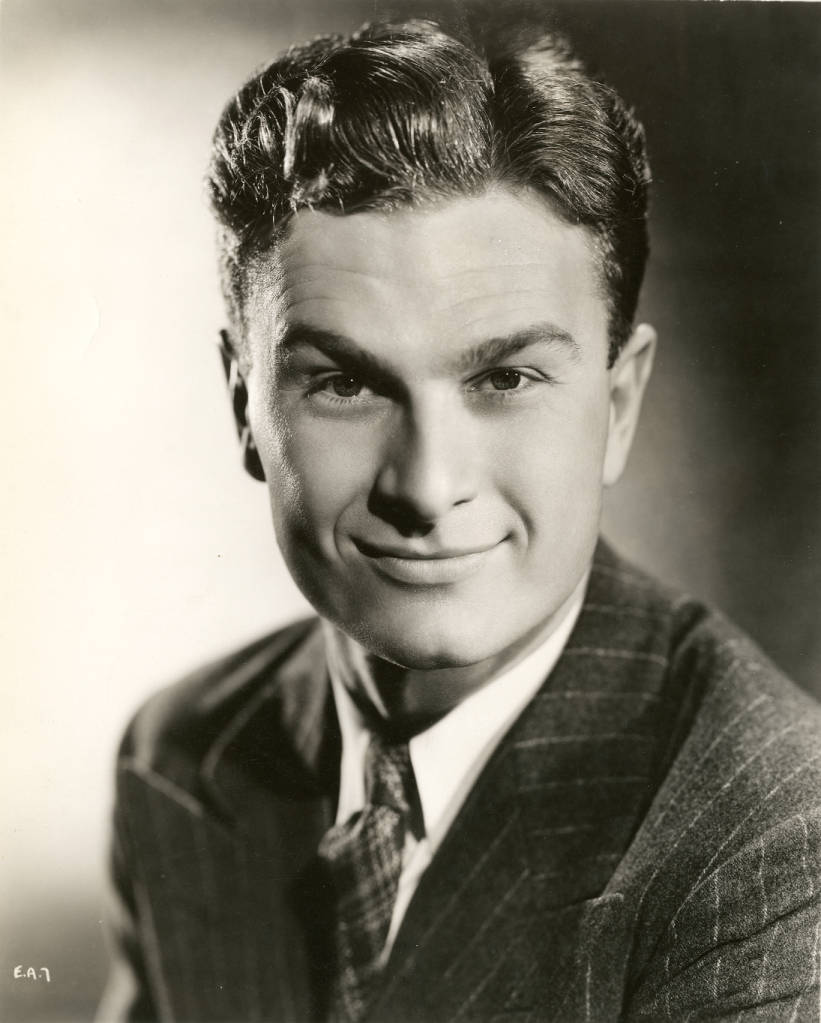
A Rock Island Boy Who Sang
Edward Albert Heimberger was born on April 22, 1906, in Rock Island, Illinois, and he grew up in Minneapolis, Minnesota, where he worked his way through two years at the University of Minnesota and began singing on the radio, a clear, pleasant tenor that got him work on NBC and that brought him, eventually, to New York and to Broadway. He appeared in Brother Rat in 1936 and in The Boys from Syracuse in 1938, and he made his film debut in Brother Rat in 1938, a comedy about cadets at a military academy, and he spent the next few years building a career as a reliable, charming leading man, in films such as On Your Toes in 1939, who was handsome, earnest and funny in a dry, understated way, and who seemed destined for a long, comfortable career in Hollywood.
He changed his name along the way, dropping Heimberger for Albert, a shorter, sharper name for marquees, and he was, by 1941, a working actor with a growing reputation and a future that looked secure. Then America entered the Second World War, and Albert, who was 36, did something that changed his life and that he would later say meant more to him than anything else he ever did: he enlisted, and he went to the Pacific, and he came back a hero, with a medal and a story that he rarely told, because the men he had saved were the ones who mattered, and not him.
Tarawa
On September 9, 1942, Albert enlisted in the United States Coast Guard, and he was discharged in 1943 to accept an appointment as a lieutenant in the United States Naval Reserve, and he was assigned to the troop transport USS Sheridan, and then to a landing craft that served as an assistant control boat for the landings at Tarawa in November 1943, one of the bloodiest battles in the history of the Pacific war. As the coxswain of a Coast Guard landing craft, under heavy enemy machine-gun fire, he rescued 47 Marines who were stranded offshore, and supervised the rescue of 30 more, making repeated trips to and from the landing zone while the battle raged around him, and he was awarded the Bronze Star with a combat V for his bravery that day. The rescue totals vary by source: IMDb prints up to 70, and one profile prints 142, but EN Wikipedia prints 47 rescued and 30 supervised, and this article follows those figures.
Albert rarely talked about Tarawa in later years, but when an interviewer asked him, many years into his career, which of his many accomplishments meant the most to him, he replied that it was his stint as a landing craft commander on the beaches of Tarawa, a role that had earned him a Bronze Star and the gratitude of the Marines who lived to see another day. He was 37 when he was commissioned, he had been a singer on NBC radio, he had played on Broadway and acted in six Hollywood movies, and he had walked away from all of it to go to war, and he came back with a medal and a story that he carried, quietly, for the rest of his life, and that his son, Edward, would tell to reporters after his death, because his father would not tell it himself.
Roman Holiday and the Oscar Near-Misses
After the war Albert returned to Hollywood and rebuilt his career, and in 1953 he gave the performance that would define his film work, playing Irving Radovich, the photographer who befriends Audrey Hepburn runaway princess, in Roman Holiday, a role that earned him his first Academy Award nomination, for Best Supporting Actor, and that showed he could be funny and touching in the same scene, a skill that would serve him for the next fifty years. He went on to appear in The Teahouse of the August Moon in 1956, and in dozens of other films, always as the reliable supporting player, always as the man who made the scene work, and in 1972 he earned his second Oscar nomination, for playing Mr. Corcoran, the father of the bride, in The Heartbreak Kid, a performance of such quiet desperation that it remains one of the great supporting turns of the decade. He never won an Oscar, and he never seemed to mind: the nominations were the proof, and the work was the point.
He also worked steadily on television in the 1950s and 1960s, in dramas and anthologies, and he was, by the mid-1960s, a respected veteran with a long resume and no signature role, a character actor in the truest sense, who could play anything and who had played everything, and who was, at 59, about to become famous in a way he had never been famous before. The role that did it was a sitcom, and it was a role that, on paper, should not have worked: a Manhattan lawyer who gives up his practice to become a farmer, in a town full of eccentrics, with a wife who hates the farm and a pig named Arnold Ziffel.
Oliver Douglas, 1965 to 1971
Green Acres premiered on CBS in 1965, and Albert played Oliver Wendell Douglas, a New York lawyer who settles in the rural town of Hooterville with his glamorous Hungarian wife Lisa, played by Eva Gabor, and finds himself perplexed by the antics of a host of eccentrics, including a pig named Arnold Ziffel, who is treated, by everyone in town, as a person. The show ran for six seasons and 170 episodes, from 1965 to 1971, and it made Albert, at 59, a television star for the first time in his life, and it made Oliver Douglas one of the most beloved characters in the history of the sitcom: the straight man in a world that had gone mad, the only sane person in Hooterville, who was, of course, the maddest person of all for having moved there in the first place.
Albert played Oliver with total sincerity, which was the joke, and the sincerity made it hilarious, and he and Gabor, who were, off camera, fond of each other and professional to a fault, created one of the great comic partnerships in television, a marriage that worked because they were opposites in every way that mattered. When the show ended in 1971, Albert was 65, and he could have retired, and he did not: he went on to star with Robert Wagner in the crime drama Switch from 1975 to 1978, playing Frank MacBride, a retired con man turned private detective, and he was a semi-regular on Falcon Crest in 1988, and he returned to Hooterville one last time for the television film Return to Green Acres in 1990, putting on Oliver overalls at 84, and proving that some characters never really leave you.
Switch, Falcon Crest and the Activist
Albert was, off camera, a tireless conservationist and activist, a man who crusaded for endangered species, for healthful food, for the cleanup of Santa Monica Bay pollution, and for a dozen other causes that he believed in with the same sincerity he brought to Oliver Douglas, and he was, by every account, as passionate about the environment as he was about acting, and as willing to put his time and his money behind his beliefs. He was an early advocate for organic farming, he served on the boards of environmental organizations, and he used his fame, when he had it, to draw attention to causes that had no other champion, a role he took as seriously as any he ever played on screen.
He worked, in one form or another, for more than fifty years, in radio, on Broadway, in films, on television, and in the cause of the planet, and he did it all without ever becoming a celebrity in the modern sense, without ever chasing fame for its own sake, and without ever losing the decency that had made him a hero at Tarawa. He was, by the end of his career, a man who had done everything, and who had done it well, and who had, in the process, become one of the most respected figures in the business, not because he had sought respect, but because he had earned it, day by day, for sixty years.
Margo, Alzheimer and the Last Month
Albert was married once, to the Mexican actress and dancer Margo, whom he married in 1945 and to whom he remained married until her death in 1985, forty years that produced two children, a son, Edward Albert Jr., who became an actor in his own right, in Butterflies Are Free and 40 Carats, and a daughter, Maria. Margo death, in 1985, left Albert a widower at 79, and he lived on, working, gardening, and advocating for the causes he believed in, until, in 1995, he was diagnosed with Alzheimer disease, a diagnosis that would define his last decade. His son Edward put his own acting career on hold for the past eight years of his father life, to aid him, becoming his primary caregiver, and Albert remained, by his son account, physically healthy and active up to just one month before his death.
He died of pneumonia on May 26, 2005, at his home in Pacific Palisades, California, at 99, in the presence of his caregivers, with his son Edward holding his hand, as the Associated Press reported that day. The United States Naval Institute Proceedings, in its obituary, printed that he died of pneumonia on May 27, 2005, but the Associated Press, Legacy, IMDb and EN Wikipedia all print May 26, and this article follows May 26. He was interred at Westwood Village Memorial Park Cemetery in Los Angeles, next to his late wife Margo and near his Green Acres co-star Eva Gabor, who had died in 1995. His son Edward died just over a year later, in 2006, of lung cancer, at 55, a loss that compounded the family grief, and that left Maria as the last of Albert immediate family.
What Happened to Eddie Albert, in the End
So what happened to Eddie Albert? He became a radio singer, he became a Broadway actor, he became a war hero at Tarawa, he became an Oscar-nominated film actor, and then, at 59, he became Oliver Douglas, and Oliver Douglas is what the world remembers, which is fitting, because Oliver was the role that let him be everything he was: decent, funny, sincere, and slightly bewildered by a world that had gone mad. He died on May 26, 2005, at his home in Pacific Palisades, at 99, of pneumonia, with his son holding his hand, after a decade with Alzheimer disease, and he was buried next to Margo, his wife of forty years, in Westwood Village Memorial Park.
What remains is the record, and the record is extraordinary: two Oscar nominations, a Bronze Star with a combat V, six seasons of Green Acres, three seasons of Switch, fifty years of film and television, and a lifetime of activism that outlived him, in the organizations he served and the causes he championed. Albert was a hero at Tarawa before he was a star on television, and he was a star on television because he was, first and last, a decent man who did his job well, and who, when asked what mattered most to him, did not say the Oscars or the Emmys or Green Acres, but the morning he spent in a landing craft, under fire, bringing wounded Marines home.
Frequently asked questions
What happened to Eddie Albert?
Eddie Albert died on May 26, 2005, at his home in Pacific Palisades, California, at 99, of pneumonia, with his son Edward holding his hand. He had played Oliver Douglas on Green Acres and had been diagnosed with Alzheimer disease in 1995.
Who did Eddie Albert play on Green Acres?
Oliver Wendell Douglas, a Manhattan lawyer who gives up his practice to become a farmer in Hooterville, with his wife Lisa, played by Eva Gabor. The show ran from 1965 to 1971 for 170 episodes.
Was Eddie Albert a war hero?
Yes. He served in the Coast Guard and Naval Reserve in World War II, and at Tarawa in November 1943 he rescued 47 Marines under heavy fire, supervising the rescue of 30 more, and won the Bronze Star with a combat V. He later said it meant more to him than any of his acting accomplishments.
Did Eddie Albert win an Oscar?
No, although he was nominated twice for Best Supporting Actor: for Roman Holiday (1953) and for The Heartbreak Kid (1972).
When did Eddie Albert die?
May 26, 2005. The US Naval Institute Proceedings prints May 27, but the Associated Press, Legacy, IMDb and EN Wikipedia all print May 26, and this article follows May 26.
Who was Eddie Albert married to?
He was married once, to Mexican actress and dancer Margo, from 1945 until her death in 1985. They had two children: son Edward Albert Jr., an actor, and daughter Maria.
Did Eddie Albert have Alzheimer disease?
Yes. He was diagnosed with Alzheimer disease in 1995, and his son Edward put his acting career on hold for eight years to care for him. Albert remained physically healthy until about a month before his death.
Where is Eddie Albert buried?
At Westwood Village Memorial Park Cemetery in Los Angeles, next to his wife Margo and near his Green Acres co-star Eva Gabor.
Sources
- EN WikipediaBirth, Tarawa rescue figures, Green Acres, Oscar nominations, death
- US Naval InstituteTarawa service, Bronze Star, death date printed as May 27, conservation work
- Legacy / APDeath May 26, 2005, pneumonia, home in Pacific Palisades, son Edward holding his hand