What Happened to Ed Asner, TV's Lou Grant?
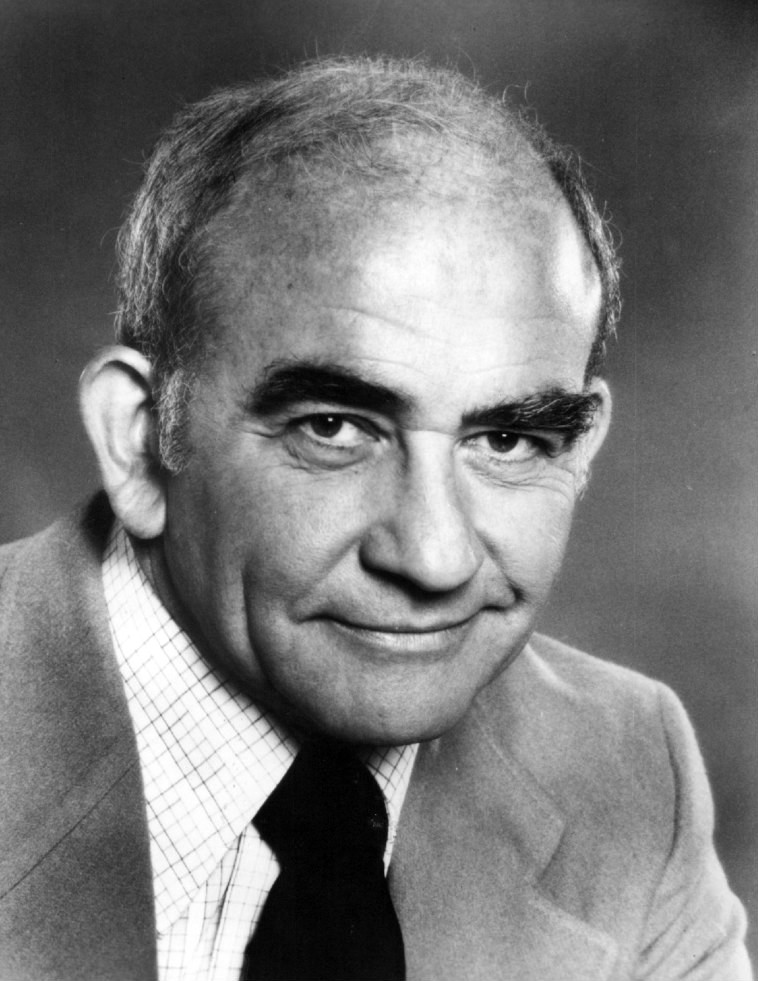
Kansas City Youngest of Five
Edward David Asner was born on November 15, 1929, in Kansas City, Missouri, the youngest of five children of Morris and Lizzie Asner, Orthodox Jewish immigrants from Russia, who had come to America with nothing and who raised their children to work hard, to speak their minds, and to never forget where they came from. Asner grew up in Kansas City, attended the University of Chicago, served in the United States Army in the early 1950s, and then went to New York, where he began working on stage, and then to Chicago, where he joined the Second City, the improvisational company that would produce a generation of comic actors, and where he learned the timing and the toughness that would define his career. He appeared on Broadway in Face of a Hero in 1960, and he began collecting television credits on the best dramas of the era, in The Outer Limits, The Fugitive, Gunsmoke, The Untouchables and The Alfred Hitchcock Hour, playing heavies and cops and working men, always with a gruffness that was, underneath, warm.
He was, by 1970, a respected character actor with a long resume and no signature role, a man who had played everything and who had never been a star, and who was, at 40, about to be offered the part that would make him famous, and that would, in the end, define him. He was not, by his own account, an obvious choice for the role: he was too tough, too big, too gruff, and the producers, who had seen him play villains, were not sure he could be funny. They were wrong, and he was right, and the next twelve years would prove it, in two shows, in two genres, and with five Emmy Awards for the same character.
The Long Climb to Lou Grant
Asner early television work was in dramas, and he was good at them, playing men who were tough because they had to be, and warm because they could not help it, and he built a reputation as a reliable, professional actor who arrived on time, knew his lines, and made the scene work. He appeared in El Dorado in 1966, opposite John Wayne, and he worked steadily through the 1960s, in films and on television, always as the supporting player, always as the man who made the stars look better, and he was, by 1970, ready for a break, even if he did not know it was coming. When the call came for a new sitcom about a single woman in Minneapolis, he auditioned for the role of her boss, a gruff news director named Lou Grant, and he got it, and the show premiered in September 1970, and nothing was ever the same.
The Mary Tyler Moore Show ran for seven seasons, from 1970 to 1977, and won 29 Primetime Emmy Awards, and Asner, as Lou Grant, won three of them, for Outstanding Supporting Actor in a Comedy, in 1971, 1972 and 1975, and he became, in the process, one of the most beloved characters in American television: the blustering, warm-hearted newsman who growled at his staff, who loved Mary Richards like a daughter, and who, in the show most famous line, told her that she had spunk, and that he hated spunk. He was the boss every viewer wished they had, and the father figure every viewer wished they had, and he played him with a gruffness that was, underneath, pure affection.
Lou Grant, Twice
When The Mary Tyler Moore Show ended in 1977, Asner did something no actor had ever done: he took the same character, Lou Grant, and moved him from a half-hour comedy to an hour-long drama, in a spin-off called Lou Grant, in which Grant left Minneapolis to become the city editor of the Los Angeles Tribune, a fictional newspaper, and the show, which ran from 1977 to 1982, was a gritty, serious, socially conscious drama that tackled the issues of the day, from nuclear power to police corruption, and that won Asner two more Emmy Awards, for Outstanding Lead Actor in a Drama, in 1978 and 1980. He is one of only two actors to win Emmy Awards in both comedy and drama for the same role, on different shows, a record that has never been matched, and that says, better than any biography, how good he was: he could make you laugh as Lou Grant, and he could make you think as Lou Grant, and he could do both without ever changing the character.
CBS cancelled Lou Grant in 1982, claiming the show was losing its punch, and Asner, who had been elected president of the Screen Actors Guild in 1981, and who had been outspoken in his opposition to American policy in El Salvador, believed his politics had contributed to the decision, a belief that has never been proven and that has never quite gone away. He served as SAG president from 1981 to 1985, two terms, and he was, by every account, a fierce, effective advocate for actors, who fought for residuals and for health care and for the dignity of the profession, and who made enemies in the process, and who did not care. He was, in the end, as tough off camera as he was on it, and the guild was better for it.
Rich Man, Poor Man, Roots and the Other Emmys
Asner seven Emmy Awards were not all for Lou Grant. He won his first Emmy, in 1976, for playing Axel Jordache, the German immigrant patriarch, in the miniseries Rich Man, Poor Man, a performance of such quiet authority that it remains one of the great turns in the history of the miniseries, and he won his seventh, in 1977, for playing Captain Thomas Davies, the slave ship captain, in Alex Haley Roots, a role that showed he could play a villain with the same conviction he brought to a hero, and that he was not afraid to be hated. He was nominated for 17 Emmy Awards in total, and he won seven, and he was, at the time of his death, the most honored male performer in the history of the Primetime Emmys, a record that stood for years and that he wore lightly, joking that he had run out of shelf space, which, given the number of awards, was probably true.
He also won five Golden Globe Awards, and he was nominated for many more, and he received the Screen Actors Guild Life Achievement Award in 2002, the guild highest honor, a recognition that came from his peers, and that meant, by every account, more to him than any Emmy, because it was given by the actors he had served as president, and by the profession he had spent his life defending. He was, by then, in his seventies, and he was still working, and he would go on working for another nineteen years, because stopping had never occurred to him, and because the work was the point.
Up, Elf and the Voice Years
Asner found his second act, in his seventies and eighties, as a voice actor, and his most famous role came in 2009, when he voiced Carl Fredricksen, the 78-year-old widower who ties balloons to his house and floats away to Paradise Falls, in Pixar Up, a performance of such warmth and such grief that it made grown men cry in theaters, and that introduced Asner to a generation of children who had never seen Lou Grant and who knew him, instead, as the old man with the balloons. He had played Santa Claus in Elf in 2003, a role that showed he could be jolly as well as gruff, and he went on to voice characters in dozens of animated series and films, and to appear, in live action, in The Good Wife, in Grace and Frankie, and in Cobra Kai, where he played Johnny Lawrence father-in-law in his final years, a role that showed he could still command a scene at 91.
He worked, in one form or another, until the end of his life, and he was, by every account, in good health until the end, appearing in public, doing interviews, and taking roles that interested him, with the same energy he had brought to Lou Grant fifty years earlier. Aside from a brief hospitalization for exhaustion in 2013, he had no major health problems, and he died, in the end, of natural causes, at home, with his family around him, which is, for a man of 91 who had worked for sixty years, about as good an ending as anyone could ask for.
Two Marriages and Four Children
Asner was married twice. His first marriage, to Nancy Sykes, lasted from 1959 to 1988, and produced three children: twins Matthew and Liza, and a daughter, Kate, who became an actress and a producer in her own right, and who, with her siblings, survived him. His second marriage, to Cindy Gilmore, began in 1998, and the couple separated in 2007, with Gilmore filing for divorce in 2015, a long, unhappy ending that Asner did not discuss publicly, and that the obituaries, when they came, mentioned only in passing. He had a fourth child, a son named Charles, with Gilmore, and he was survived, at his death, by all four of his children, and by a family that had watched him work, without stopping, for more than sixty years.
He was, off camera, an activist as well as an actor, a man who had been president of the Screen Actors Guild, who had spoken out against American policy in Central America, who had fought for the rights of actors and for the dignity of the profession, and who had made enemies in the process, and who did not care. He was, by every account, a warm, funny, generous man, who loved his family, who loved his work, and who loved to argue, and who, in the end, was loved back, by the people who knew him and by the millions who had watched him on television for fifty years.
What Happened to Ed Asner, in the End
Asner died on August 29, 2021, at his home in Tarzana, a neighborhood of Los Angeles, at 91, of natural causes, as his publicist confirmed that day, and as his family announced on his official Twitter account, writing that their beloved patriarch had passed away that morning, peacefully, and that they were sorry to share the news. Some outlets printed only that he died at home in Los Angeles, but the Hollywood Reporter, Entertainment Tonight and the Jewish Journal all specified his home in Tarzana, and this article follows Tarzana, because it is the more precise account, and because the family statement, which was the source for the news, was specific. He was 91, he had been working until the end, and he died, in the end, as he had lived: at home, with family, and without drama.
The tributes came from every corner of the business, from the casts of the shows he had anchored, from the actors he had served as SAG president, from the animators who had worked with him on Up, and from the fans who had grown up with Lou Grant, and they all said the same thing in different words: that he had been tough, that he had been warm, that he had been funny, and that he had been, for fifty years, the best actor in the room. He was survived by his four children, Matthew, Liza, Kate and Charles, and by a legacy that runs from The Mary Tyler Moore Show to Up, from the newsroom to the guild hall, from the comedy to the drama, and that will not be matched, because no one else has ever won Emmys for the same character in two genres, and no one else ever will.
So what happened to Ed Asner? He became Lou Grant, twice, in a comedy and in a drama, and he won seven Emmys for it, and he became Carl Fredricksen, and he became Santa Claus, and he became the president of the Screen Actors Guild, and he became, in his nineties, a regular on Cobra Kai and Grace and Frankie, and he died on August 29, 2021, at his home in Tarzana, Los Angeles, at 91, of natural causes, with his family around him, and he was survived by his four children, and by a record that will stand for as long as the Emmys are given: seven wins, the most by a male performer, five of them for the same character, in two different shows, in two different genres.
What remains is Lou Grant, still growling in reruns, still telling Mary she has spunk, still running the Tribune in the drama that followed, and Carl Fredricksen, still floating to Paradise Falls in Up, still breaking hearts in the first ten minutes of a children film, and the guild he led, still fighting for actors, and the example of a man who started as the youngest of five children of immigrants, who became the most honored actor of his generation, and who, when asked what mattered, said the work, and the family, and the fight, in that order, and who lived long enough to prove it.
Frequently asked questions
What happened to Ed Asner?
Ed Asner died on August 29, 2021, at his home in Tarzana, Los Angeles, at 91, of natural causes. He had played Lou Grant on The Mary Tyler Moore Show and Lou Grant, winning seven Primetime Emmy Awards, and he voiced Carl Fredricksen in Up.
How many Emmys did Ed Asner win?
Seven Primetime Emmy Awards, the most won by a male performer. Five were for playing Lou Grant: three for The Mary Tyler Moore Show and two for Lou Grant. The other two were for Rich Man, Poor Man and Roots.
Who did Ed Asner play in Up?
Carl Fredricksen, the 78-year-old widower who ties balloons to his house and floats away to Paradise Falls, in Pixar Up (2009).
Was Ed Asner married?
Twice. His first marriage, to Nancy Sykes, lasted from 1959 to 1988 and produced three children: twins Matthew and Liza, and Kate. His second marriage, to Cindy Gilmore, began in 1998; they separated in 2007. He had a fourth child, a son named Charles.
Was Ed Asner president of the Screen Actors Guild?
Yes. He served as president of the Screen Actors Guild from 1981 to 1985, two terms, and he received the guild Life Achievement Award in 2002.
Why was Lou Grant cancelled?
CBS cancelled Lou Grant in 1982, saying the show was losing its punch. Asner, who had been outspoken against American policy in El Salvador, believed his politics contributed to the decision, a belief that has never been proven.
What did Ed Asner die of?
Natural causes, at his home in Tarzana, Los Angeles, on August 29, 2021. He was 91 and had been working until the end of his life, appearing in Cobra Kai and Grace and Frankie.
How old was Ed Asner when he died?
Ninety-one. He was born November 15, 1929, in Kansas City, Missouri, and died August 29, 2021, in Tarzana, Los Angeles.
Sources
- EN WikipediaBirth, Lou Grant roles, seven Emmys, SAG president, marriages, death
- Entertainment TonightDeath August 29, 2021, age 91, home in Tarzana, natural causes, born November 15, 1929
- Jewish JournalDeath August 29, 2021, home in Tarzana, seven Emmys, SAG president, Lou Grant run