What Happened to Don Grady?
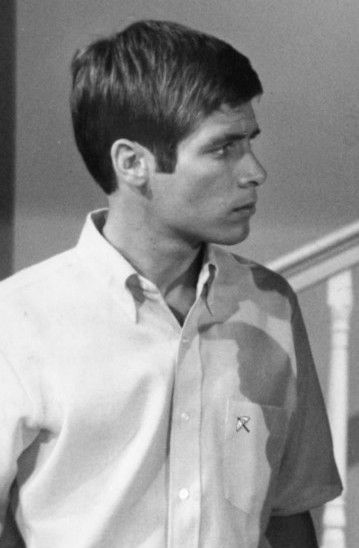
A San Diego Boy Named Agrati
Don Louis Agrati was born on June 8, 1944, in San Diego, California, the son of talent agent Mary B. Castellino and sausage maker Lou Anthony Agrati. His sister Lanita became the actress Lani O'Grady, so show business was a family affair from the start. He grew up in Lafayette, California, and graduated from Burbank High School in the class of 1962, by which time he was already a television veteran. The name change to Don Grady came with his professional career, a common studio-era practice, and it stuck: for the rest of his life, he was Don Grady to the public, and Don Agrati only to his family and his earliest friends.
His background mattered to his career in a specific way. His mother was a talent agent, which meant he grew up understanding the business side of acting, not just the performance side. That understanding would serve him later, when he made the hardest decision of his professional life: to walk away from a hit show and a secure acting career, and start over as a composer. He knew what he was giving up, and he did it anyway.
An Original Mouseketeer
Grady began his television career as an original Mouseketeer on The Mickey Mouse Club, the Disney variety show that launched a generation of young performers. The Mouseketeers were the training ground for child stardom in the 1950s: singing, dancing, acting, and appearing daily before a national audience of children. Grady thrived in that environment, and it gave him the polish and the visibility that led to dramatic guest roles. He was not just a cute kid in ears. He was a performer, and the industry noticed.
The Mickey Mouse Club also gave Grady a peer group that included future stars, and a work ethic forged in daily production. Child performers on the show worked hard, learned fast, and either burned out or became professionals. Grady became a professional, and the discipline of those years stayed with him. When he later said that acting had become automatic, like putting on clothes, he was speaking from decades of having done it since childhood.
Western Guest Spots and Zane Grey Theatre
After the Mouseketeer years, Grady built a resume of western guest spots, the standard proving ground for young male actors in the late 1950s. He appeared on The Restless Gun, Have Gun, Will Travel, Buckskin, Wagon Train, and The Rifleman, playing Jeff in the episode The Patsy on September 29, 1959. In December 1959 he appeared in two episodes of Dick Powell's Zane Grey Theatre, opposite Joan Crawford and Dick Powell, a significant credit for a teenager. These were not starring roles, but they were serious dramatic work, and they showed a range beyond the variety-show polish of his Mouseketeer days.
The western work also taught Grady something about the limits of his acting career. He could play the young cowboy, the son, the earnest teenager, but the roles were interchangeable, and the industry had a clear idea of what he was for. He was a nice young man, good-looking, reliable, and a little bland. That image would carry him to his biggest role, and it would also, eventually, become the thing he wanted to escape.
Robbie Douglas on My Three Sons
My Three Sons made Don Grady a star. He played Robbie Douglas, the middle son of widower Steve Douglas, beginning in 1960, in an eleven-year run that made him one of the most familiar faces on American television. The show aired on ABC and then on CBS from 1965, and Robbie grew up on screen, from a frustrated middle brother into the confident eldest brother after Tim Considine's Mike was eased out and Barry Livingston's Ernie was adopted into the family. Grady played Robbie with warmth and humor, and audiences watched him grow from a teenager into a young husband and father.
The role was both a blessing and a trap. It gave Grady steady work, national fame, and a character that viewers loved, but it also fixed him in the public mind as Robbie Douglas, permanently. He was Robbie in the supermarket, Robbie at the airport, Robbie for the rest of his life, in the eyes of strangers. For eleven years, he played one man, and he played him well, but the longer it went on, the more it felt like a uniform he could not take off. That feeling would drive his decision to leave.
The Greefs and The Yellow Balloon
Grady was also a musician, and My Three Sons gave him a chance to show it. On the show, he performed with The Greefs, the fictional band that included Robbie, and sang two original songs, A Good Man to Have Around the House and Leaving It Up to You. Off the show, he recorded with the Palace Guard, whose single Little People backed with Summertime Game came out in 1966, and he played drums for The Yellow Balloon, whose self-titled song became a minor hit in 1967. Music was not a hobby for Grady. It was a parallel career, and it was the one he actually wanted.
The pop work of the 1960s shows a different Grady from the sitcom son: a working musician in the Los Angeles scene, playing drums, writing songs, and chasing a sound that had nothing to do with the Douglas family living room. It was the beginning of his second career, and it happened while his first career was still at its peak. He was already planning his exit, even if he did not know it yet.
Cutting the Umbilical Cord
Grady left My Three Sons at the end of 1970, and his explanation has become one of the most quoted farewells in sitcom history. He said he would cut the umbilical cord, that acting was not where his head was, and that Robbie is something you do automatically like putting on your clothes, and that it has got no challenge. It was a blunt, honest statement from a man who had played one character for eleven years and wanted to be challenged again. He also served four years in the United States Army Reserve, a commitment that underscored how seriously he took the idea of a life outside acting.
The series itself continued without him, airing until April 13, 1972, but Grady's run is correctly dated 1960 to 1971, reflecting his departure at the end of 1970 and the episodes that aired into the following year. The distinction matters, because it is easy to assume he stayed until the show ended. He did not. He left while it was still a hit, while he was still wanted, because staying had become automatic, and automatic was the one thing he could no longer tolerate.
Composer, Stage Performer, Recording Artist
After acting, Grady became a composer and songwriter, and his credits are substantial. He wrote the theme song for The Phil Donahue Show, one of the most famous daytime talk-show themes in television history, and he composed music for Blake Edwards's film Switch. He wrote the music for EFX, the Las Vegas multimedia stage spectacular that starred, at various times, Michael Crawford, David Cassidy, Tommy Tune and Rick Springfield. On stage, he toured nationally in Pippin, Godspell and Damn Yankees, proving that his performing talent had not left him, only his interest in playing Robbie Douglas.
He also recorded as a solo artist. His album Homegrown came out on Elektra in 1973, and his second solo album, Boomer: JazRokPop, arrived in 2008, his first original album as an artist since Homegrown. The thirty-five-year gap between solo albums tells its own story: Grady was not chasing a recording career. He was making music when he had something to say, and the 2008 album was a late-career statement from a man who had spent decades writing for other people and other shows.
That composing career also included work that audiences heard without ever connecting it to Robbie Douglas, which was exactly how Grady liked it. A talk-show theme plays every weekday, unnoticed and indispensable, and a Las Vegas spectacular needs music that supports acrobats, illusions and stars without stealing the show. Grady was good at that kind of writing: professional, melodic, and self-effacing, the same qualities that had made him a reliable sitcom son, now applied to a craft where reliability was the whole job.
Marriage, Death and Legacy
Grady married twice. His first wife was Julie Boonisar, whom he married in 1976; they divorced in 1979 and had no children. In 1985 he married Virginia Ginny Lewsader, whom he had met at Disneyland, and they had two children, Joey and Tessa. They were married for twenty-seven years, until his death, and Ginny was the person who spoke publicly about his final illness, describing a four-year battle with cancer and a death at home under hospice care. He was buried at Pierce Brothers Valley Oaks Memorial Park in Westlake Village, California, and his former co-star Barry Livingston confirmed the death to the Associated Press.
Grady's legacy is twofold, and both halves matter. As Robbie Douglas, he is part of the furniture of American television, rerun endlessly, remembered by generations who grew up with My Three Sons. As a composer, he wrote music that millions of people heard every day without knowing his name, from a talk-show theme to a Las Vegas spectacular. He wanted a challenge, and he found one, and he spent the second half of his life meeting it. He died on June 27, 2012, at sixty-eight, having cut the cord and built a second career on the other side of it.
Frequently asked questions
What happened to Don Grady?
Don Grady died June 27, 2012, in Thousand Oaks, California, at age 68, of myeloma, after a four-year battle with cancer. He had left acting in 1970 to become a composer and songwriter.
Why did Don Grady leave My Three Sons?
He left at the end of 1970, saying he would cut the umbilical cord, that acting was not where his head was, and that playing Robbie had become automatic, like putting on clothes, with no challenge.
Who did Don Grady play on My Three Sons?
He played Robbie Douglas, the middle son who became the eldest brother, from 1960 until he left at the end of 1970.
Was Don Grady a Mouseketeer?
Yes. He was an original Mouseketeer on The Mickey Mouse Club before his dramatic guest roles and My Three Sons.
What music did Don Grady compose?
He wrote The Phil Donahue Show theme, music for Blake Edwards's Switch, and the music for the Las Vegas spectacular EFX. He also toured in Pippin, Godspell and Damn Yankees.
Did Don Grady record albums?
Yes. Homegrown on Elektra in 1973, and Boomer: JazRokPop in 2008, his first original album as an artist since Homegrown.
Who was Don Grady married to?
Julie Boonisar (1976-1979, no children) and Virginia Ginny Lewsader (married 1985, met at Disneyland, children Joey and Tessa, married 27 years until his death).
How did Don Grady die?
Of myeloma on June 27, 2012, at home under hospice care in Thousand Oaks, after a four-year battle with cancer, according to his wife Ginny's account. He is buried at Pierce Brothers Valley Oaks Memorial Park, Westlake Village.
Sources
- EN WikipediaBiography, roles, music career, marriages, death
- Los Angeles TimesObituary via secondary reporting: death at home under hospice care after a four-year battle with cancer, wife Ginny's account
- Television AcademyMy Three Sons and composing career summary