What Happened to Dirk Bogarde, Matinee Idol?
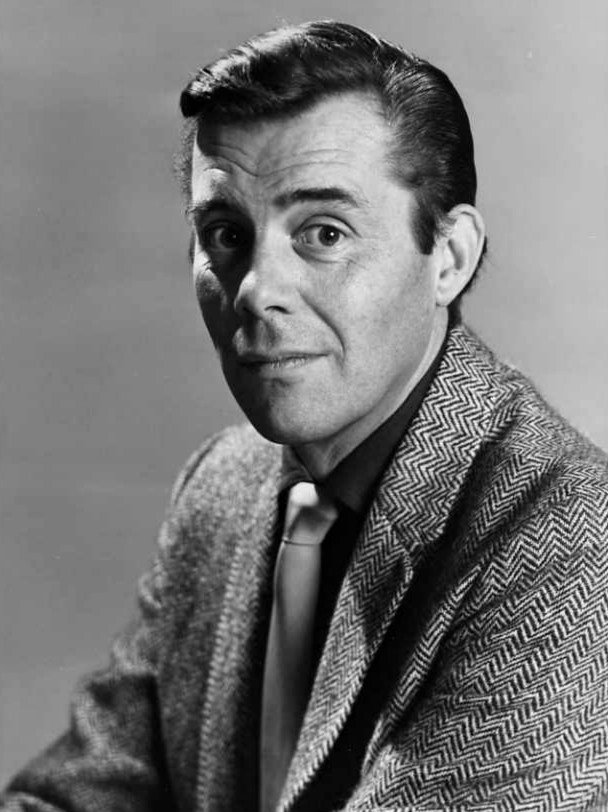
A Times Art Editor's Son
Dirk Bogarde was born Derek Jules Gaspard Ulric Niven van den Bogaerde on March 28, 1921, in West Hampstead, London, the son of Ulric van den Bogaerde, the art editor of The Times, and Margaret Niven, an actress who had appeared on the stage in Glasgow. He was educated at University College School in Hampstead, and then at the Glasgow School of Art, where he studied for a time before he decided that acting was what he wanted, and he made his stage debut in 1939 in J. B. Priestley's Cornelius at the Queen's Theatre in London, and his first film appearance the same year, uncredited, in Come On George!, with George Formby, and he was, at eighteen, a young actor with a handsome face and a serious manner, and with a career in front of him, and then the war came, and everything stopped.
He was, from the start, a man of two parts: the public face, the handsome young actor, and the private man, who wrote, who drew, who kept his own counsel, and who never talked about his private life, and who, when he did write about it, wrote in code, and who said, of his memoirs, that if you had your wits about you, you would know who he was. He was born with a name that sounded like a novel, and he spent his life living up to it, and he was, in the end, a man who had two careers, and who was good at both of them, and who was, in the end, remembered for both.
War, Belsen, and a Crash in India
Bogarde enlisted in the Royal Corps of Signals, and on April 2, 1943, he was commissioned as a second lieutenant in the Queen's Royal Regiment, and he served as an intelligence officer in France, Belgium, Holland and Germany, and he landed in Normandy on D-Day, and he rose to the rank of major, and he was awarded seven medals, and he saw, in the course of the war, things that he never talked about, and that he never wrote about, except once, when he said that he had been one of the first Allied officers to reach the Bergen-Belsen concentration camp, on April 20, 1945, and to see what was there. The claim was disputed for years, and some historians doubted it, and his biographer John Coldstream later concluded that he had at least set foot inside the camp, and this article states both the claim and the dispute, because both are part of the record, and because the truth, in the end, is that he was there, and that he saw it, and that it marked him.
On VJ Day, in India, he was involved in a car crash in which soldiers were killed, and he never drove again, and he came home from the war a different man, and he went back to acting, and he was signed by the Rank Organisation, and he began, slowly, to build the career that would make him famous. The war had made him serious, and it had made him private, and it had made him determined, and it had made him, in the end, a man who did not talk about himself, and who did not talk about the war, and who did not talk about what he had seen, and who let the work speak for him.
Doctor in the House and Matinee Idol
Doctor in the House came in 1954, and it made Bogarde a star. He played Simon Sparrow, a young medical student, in a comedy that was a hit in Britain and in America, and he played him again in Doctor at Sea in 1955 and Doctor at Large in 1957, and he became, overnight, the matinee idol of the Rank Organisation, the smiling young doctor in a white coat, the man whose face was on every poster, and whose name was on every marquee, and who was, for a time, the most popular actor in Britain. He played in The Blue Lamp in 1950, as the killer Tom Riley, and in The Spanish Gardener in 1956, and in A Tale of Two Cities in 1958, as Sydney Carton, and in Libel in 1959, and he was, by the end of the 1950s, a star, and a rich man, and a man who could have gone on playing the same part for the rest of his life, and who chose, instead, to do something else.
He was, by now, tired of being a matinee idol, and tired of being a pretty face, and tired of being told what to do, and he began to look for parts that asked more of him, and he found them, and the first of them was Victim, in 1961, in which he played Melville Farr, a successful barrister who is being blackmailed because he is gay, and who decides to fight back, and the film was a risk, because no star had played a gay man before, and because the subject was illegal, and because the film could have ended his career, and it did not, and it made him, instead, a serious actor, and a brave one, and a man who was willing to take a risk for a part he believed in.
Victim, The Servant, and the Art House
The Servant came in 1963, directed by Joseph Losey, in which Bogarde played Hugo Barrett, a manservant who takes over the life of his employer, played by James Fox, and the performance won him the BAFTA for Best Actor, and it made him, in the eyes of the critics, a serious actor, and a dangerous one, and a man who could play a part that was, in the end, about power, and about class, and about sex, and about the things that British films did not talk about. Darling came in 1965, directed by John Schlesinger, in which he played Robert Gold, a television interviewer, opposite Julie Christie, and it won him a second BAFTA for Best Actor, and it made him, in the eyes of the public, a star again, and a man who could do both, who could be a matinee idol and a serious actor, and who could be, in the end, whatever he wanted to be.
King and Country came in 1964, in which he played Captain Hargreaves, a lawyer defending a deserter in the First World War, and Accident came in 1967, again with Losey, and Death in Venice came in 1971, directed by Luchino Visconti, in which he played Gustav von Aschenbach, a dying composer who falls in love with a beautiful boy on the Lido, and the performance is now regarded as one of the great performances in film, a quiet, still, haunted performance from a man who had spent his career being loud, and who had, in the end, learned to be quiet. The Night Porter came in 1974, in which he played Max, a former SS officer, and A Bridge Too Far came in 1977, in which he played Lieutenant General Browning, and by the end of the 1970s he had made more than sixty films, and he had left acting, and he had begun a second career, as a writer.
He made Modesty Blaise in 1966, in which he played Gabriel, a villain, and the film was a flop, and he made The Damned in 1969, directed by Luchino Visconti, in which he played Friedrich Bruckmann, a Nazi industrialist, and the film was a hit, and it made him, again, a serious actor, and he made Justine in 1969, directed by George Cukor, in which he played Pursewarden, and the film was a flop, and he made Oh! What a Lovely War in 1969, directed by Richard Attenborough, and he was, by the end of the 1960s, a man who had worked with the greatest directors in the world, and who had, in the end, proved that he could do anything, and who had, in the end, done it, and who was, in the end, a man who was, in the end, tired, and who was, in the end, ready to stop, and who was, in the end, ready to write, and who was, in the end, ready to be, in the end, a writer, and not an actor, and who was, in the end, a man who had, in the end, two careers, and who was good at both of them.
Anthony Forwood and a Life in France
Bogarde never married, and he had no children, and he lived, for more than fifty years, with his friend and manager Anthony Forwood, an actor who had become his manager, and who had, in the end, become the person who mattered most to him, and who had, in the end, become the person who ran his life, and who had, in the end, become the person who kept him going. He never wrote about the relationship, and he never talked about it, and he said, of his memoirs, that the clues to his private life were in his books, and that if you had your wits about you, you would know who he was, and the documentary The Private Dirk Bogarde, made in 2001 with the permission of his family, stressed that he and Forwood were committed lifelong partners, and that was, in the end, all that was said, and all that needed to be said.
Forwood died in 1988, of liver cancer and Parkinson's disease, and Bogarde was, by then, living in France, where he had moved in 1968, to an estate called Le Pigeonnier in Grasse, in the south of France, and where he had written his memoirs, and where he had written his novels, and where he had, in the end, been happy, and where he had, in the end, been alone. He returned to London in 1983, to a flat in Chelsea, and he lived there for the rest of his life, and he wrote, and he drew, and he kept his own counsel, and he was, in the end, a man who had lived a long life, and who had done a great deal, and who had, in the end, nothing left to prove.
The Writer, the Stroke, and the Living Will
His second career, as a writer, began with A Postillion Struck by Lightning, the first volume of his memoirs, published in 1977, and he went on to write seven volumes of memoirs, six novels, and a volume of collected journalism, mainly from articles he had written for The Daily Telegraph, and he was, in the end, as good a writer as he had been an actor, and he was, in the end, remembered for both. He was knighted in 1992, and he was, in the end, Sir Dirk Bogarde, and he was, in the end, a man who had been honoured by his country, and who had, in the end, earned it. His last film was Daddy Nostalgie, released in 1990, in which he played a dying man, and the part, in the end, was too close to home, and he never acted again.
He had a minor stroke in November 1987, and in September 1996 he underwent an angioplasty, and he suffered a major stroke following the operation, which left him partly paralysed, and in a wheelchair, and he lived, for the last three years of his life, in his flat in Chelsea, and he was, in the end, a man who had been a star, and who had been a writer, and who had been a knight, and who was, in the end, a man in a wheelchair, who could not walk, and who could not write, and who could not act, and who had, in the end, only his memories. He had made a living will, in which he had said that he did not want to be kept alive by machines, and he had become a vice-president of the Voluntary Euthanasia Society, and the living will, in the end, proved unnecessary, because he died, in the end, of a heart attack, and not of a machine.
What Happened to Dirk Bogarde, in the End
So what happened to Dirk Bogarde? He was born in West Hampstead in 1921, the son of the art editor of The Times, he was educated at University College School and the Glasgow School of Art, he made his stage debut in 1939, he served in the war, he was commissioned in 1943, he landed in Normandy on D-Day, he reached Belsen, he was involved in a crash in India, he never drove again, he was signed by the Rank Organisation, he became a matinee idol in Doctor in the House in 1954, he played a gay barrister in Victim in 1961, he won a BAFTA for The Servant in 1963, he won a BAFTA for Darling in 1965, he played a dying composer in Death in Venice in 1971, he moved to France in 1968, he returned to London in 1983, his partner Anthony Forwood died in 1988, he was knighted in 1992, he had a minor stroke in 1987, he had a major stroke in 1996, he made a living will, and he died on May 8, 1999, at 78, of a heart attack, at his home in Chelsea, London.
He had spent the day before his death with Lauren Bacall, who had been a friend for many years, and he had been, by all accounts, in high spirits and reasonably good health, despite the stroke, and he had, in the end, died suddenly, and quietly, and at home, and his body was cremated, and his ashes were scattered at his former estate, Le Pigeonnier, in Grasse, in the south of France, in accordance with his wishes, and there was a private family funeral, and no memorial service, because he had asked, in his own words, just to be forgotten. What remains is the Doctor, still smiling, still in a white coat, still a matinee idol, and the Servant, still dangerous, still quiet, still taking over, and the composer in Venice, still dying, still watching the boy on the beach, and the writer, still writing, still remembering, still, in the end, a man who had two careers, and who was good at both of them.
Frequently asked questions
What happened to Dirk Bogarde?
Dirk Bogarde died on May 8, 1999, at 78, of a heart attack, at his home in Chelsea, London. He had suffered a major stroke in 1996 that left him partly paralysed, and he spent his final three years in his Chelsea flat. He was cremated and his ashes were scattered at his former estate in Grasse, France.
What was Dirk Bogarde most famous for?
The Doctor films of the 1950s, in which he played Simon Sparrow, and his serious roles in Victim (1961), The Servant (1963), Darling (1965) and Death in Venice (1971). He won BAFTAs for The Servant and Darling.
Was Dirk Bogarde married?
No. He never married and had no children. He lived for more than fifty years with his friend and manager Anthony Forwood, who died in 1988. Bogarde never wrote directly about the relationship.
Did Dirk Bogarde serve in World War II?
Yes. He was commissioned as a second lieutenant in the Queen's Royal Regiment in April 1943, served as an intelligence officer in France, Belgium, Holland and Germany, landed in Normandy on D-Day, and rose to major. He said he was among the first Allied officers inside Bergen-Belsen, a claim that was disputed but later partly confirmed by his biographer.
What books did Dirk Bogarde write?
Seven volumes of memoirs, beginning with A Postillion Struck by Lightning (1977), six novels, and a volume of collected journalism, mainly from articles he wrote for The Daily Telegraph.
What was Dirk Bogarde's last film?
Daddy Nostalgie (1990), in which he played a dying man. He left acting in 1977 to become a writer, returning only for that one final film.
Was Dirk Bogarde knighted?
Yes, in 1992. He became Sir Dirk Bogarde, and the knighthood was for his services to acting and to literature.
What happened to Dirk Bogarde after his stroke?
He had a minor stroke in November 1987, then a major stroke in September 1996 after an angioplasty, which left him partly paralysed and in a wheelchair. He made a living will and became a vice-president of the Voluntary Euthanasia Society, but the living will proved unnecessary: he died of a heart attack in 1999.
Sources
- EN WikipediaBirth, war service, Doctor films, Victim, BAFTAs, Forwood, stroke, death
- Dirk Bogarde EstateBirth, career, Forwood, stroke, death, ashes at Grasse
- The Guardian (via Estate)Obituary, May 10 1999: finest actor on the screen, heart attack at 78