What Happened to DeForest Kelley, Bones?
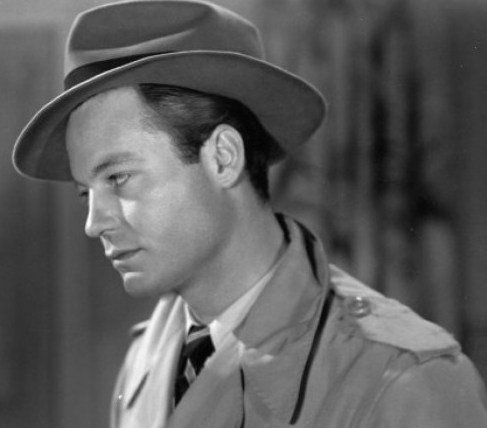
A Baptist Minister's Son From Toccoa
Jackson DeForest Kelley was born on January 20, 1920, in Toccoa, Georgia, the son of Clora Casey Kelley and Ernest David Kelley, a Baptist minister, and he grew up in the Atlanta area, where he sang in the church choir and discovered, as a child, that he enjoyed singing and that he was good at it, and he graduated from Decatur Boys High School in 1938, and he began his entertainment career singing on an Atlanta radio station and performing on stage at the Paramount Theater with Lew Forbes and his orchestra. Some profiles give his birthplace as Atlanta, and this article states the conflict plainly, because the record is, on this point, genuinely unclear, and because Kelley deserves an accurate account, and because Toccoa, the small town in the Georgia hills where he was delivered by his uncle at his parents' home, is the place Wikipedia gives, and the place this article uses.
During World War II Kelley served as an enlisted man in the United States Army Air Forces, from March 10, 1943, to January 28, 1946, assigned to the First Motion Picture Unit, and when the war ended he went to California, to try his luck as an actor, and he made his film debut in the chorus of New Moon, in 1940, a small part in a film that nobody remembers, and he nearly won the lead in This Gun for Hire, in 1942, a part that went, in the end, to Alan Ladd, and that would, in time, make Ladd a star, and Kelley would, in the end, have to wait a few more years for his own first leading role, and for the part that would make him famous, and he would spend those years learning, in the hard school of small parts, how to be an actor.
Fear in the Night and Nine Years of Villains
His first leading role came in 1947, in Fear in the Night, a low-budget film noir in which he played Vince Grayson, and the film was a hit, and it brought him to the attention of a national audience, and it gave him reason to believe that he would soon become a star, and then, for the next nine years, he played villains, almost exclusively, in westerns, in films and on television, in Gunfight at the O.K. Corral, in 1957, in Raintree County, in 1957, alongside Elizabeth Taylor, Montgomery Clift and Lee Marvin, in Warlock, in 1959, alongside Henry Fonda and Anthony Quinn, and on television in The Lone Ranger, in Gunsmoke, in Route 66, and in Bonanza, from 1961 to 1966, and he was, by every account, very good at it, because he had a face that could be menacing and a voice that could be cold, and because he understood, as all good villains do, that the villain never thinks he is the villain.
He played a doctor several times before he did so on Star Trek, including a small supporting role as a medic in The Man in the Gray Flannel Suit, in 1956, in which he utters a diagnosis that has become, in time, a small piece of trivia, and he played, in 1955, Ike Clanton, in a television recreation of the Gunfight at the O.K. Corral, and he played, over those nine years, an impressive list of villains, alternating between television and motion pictures, and building, over time, a reputation as a reliable, professional actor who showed up, knew his lines, and made the scene work, and who was, in the end, going to be famous, not for the villains, but for the doctor, and for a role that Gene Roddenberry had, in fact, offered him in a different form, years before.
The Spock He Turned Down
In 1964 Gene Roddenberry offered Kelley the role of Spock, the half-Vulcan science officer, in his new series, Star Trek, and Kelley refused it, and the part went, in the end, to Leonard Nimoy, and Kelley, two years later, took the role that Roddenberry had written for him instead: Dr. Leonard McCoy, the ship's doctor, the man who would, for three seasons, be the emotional core of the Enterprise, the old-fashioned country doctor who was ill at ease with gallivanting across the cosmos, who did not trust the transporter, who argued with Spock about logic and with Kirk about orders, and who was, in the end, the conscience of the ship, the man who said what the audience was thinking, and who said it with a warmth and a crankiness that made him, in time, one of the most beloved characters in science fiction.
The role made Kelley famous, and it made him, in the end, a star, and it gave him lines that have entered the language, 'He's dead, Jim,' and 'I'm a doctor, not a bricklayer,' and 'I'm a doctor, not an engineer,' and a dozen variations on the same joke, and he delivered them with an impassioned conviction that made the audience laugh and made them believe, absolutely, that this man was a doctor, and that he cared, deeply, about his patients, and about his ship, and about his friends, and that he would, if he had to, stand up to a captain and to a Vulcan and to the whole of Starfleet to do what was right.
Bones, 1966 to 1991
Kelley played Dr. McCoy on Star Trek from 1966 to 1969, in 76 episodes, and he reprised the character in a voice-over role in Star Trek: The Animated Series, from 1973 to 1974, and in the first six Star Trek motion pictures, from 1979 to 1991, and he made a cameo, in 1987, as a 137-year-old Admiral McCoy, in the first episode of Star Trek: The Next Generation, a small, lovely appearance that said, in a single scene, that McCoy had outlived them all, and that he was, in the end, still a doctor, and still cranky, and still, after all those years, the conscience of Starfleet, and the audience, which had loved him for twenty years, loved him even more for it.
When the original series ended in 1969 Kelley found himself, like his castmates, typecast as McCoy, and he worked, in the years that followed, in the films, and in the conventions, and in the hearts of the fans who had never forgotten him, and he was, by every account, a shy man, and the only cast member of the original Star Trek series who never wrote or published an autobiography, a fact that says, in a single line, who he was: a man who did not seek the spotlight off camera any more than he had sought it on, and who was, in the end, remembered, by his friends, not as a television star but as a kind, quiet man who loved his wife, and his work, and his fans, and who was, in the end, the first of the original cast to die.
Poetry, Painting, and a Quiet Life
Kelley was married to Carolyn Dowling from 1949 until his death in 1999, a marriage of fifty years, and he had no children, at least none that the public record discloses, and this article says so plainly rather than guessing, because the record does not answer the question, and because Kelley deserves an accurate account. Later in life he developed an interest in poetry, and he published two books, The Big Bird's Dream, in 1977, and The Dream Goes On, in 1984, the first two books in a series he would never finish, and he was, by all accounts, a talented singer and a talented painter, who enjoyed painting in his spare time and often gave his artwork as gifts to friends and colleagues, and who collected rare books, particularly books about history and science fiction, and who was, in the end, a man of many quiet talents, and of a quiet life.
He received a star on the Hollywood Walk of Fame in 1991, and in 1999, shortly before he died, he was awarded a Golden Boot Award for his contribution to the genre of western television and movies, a small, fitting honor for a man who had spent nine years playing villains in westerns before he ever set foot on the Enterprise, and who had, in the end, come full circle, from the westerns to Star Trek and back to the westerns, and his authorized biography, From Sawdust to Stardust, was written posthumously, in 2005, by Terry Lee Rioux, of Lamar University, because Kelley himself had never written one, and because someone, in the end, had to tell his story, and tell it right.
Stomach Cancer and the First Goodbye
Kelley died of stomach cancer on June 11, 1999, at 79, at the Motion Picture and Television Country House and Hospital in Woodland Hills, Los Angeles, although one source says he died at his home in Sherman Oaks, and this article states both, because the record is, on this point, genuinely unclear, and because Kelley deserves an honest account. His last role had been the voice of Viking 1, in The Brave Little Toaster Goes to Mars, in 1998, a small, fitting last part for a man who had spent his life lending his voice to characters, and his ashes were scattered in the Pacific Ocean, and he was, in the end, the first of the original Star Trek cast to die, a fact that the fans, and his castmates, felt keenly, because he had been, for thirty-three years, the heart of the Enterprise, and because the Enterprise, without Bones, was never quite the same.
The obituaries remembered him, rightly, as Dr. McCoy, and they remembered, too, the line that has outlived them all, 'He's dead, Jim,' a line that Kelley himself had made famous, and that has become, in time, a part of the language, and they remembered that he was a shy man, and a kind man, and a man who had never written an autobiography, and who had, in the end, let his work speak for him, and his work, in Star Trek, and in the westerns, and in the poetry, speaks, still, and will go on speaking, as long as there are people who watch Star Trek, and who love Dr. McCoy, and who remember the doctor who said, 'I'm a doctor, not a magician,' and who meant it.
What Happened to DeForest Kelley, in the End
So what happened to DeForest Kelley? He became Dr. Leonard 'Bones' McCoy, he played the part for three seasons and 76 episodes, he reprised it in the animated series and in six films, he made a cameo as a 137-year-old admiral on The Next Generation, he was married to Carolyn Dowling for fifty years, he published two books of poetry, he received a star on the Hollywood Walk of Fame in 1991, he won a Golden Boot Award in 1999, and he died on June 11, 1999, at 79, of stomach cancer, at the Motion Picture and Television Country House and Hospital in Woodland Hills, or at his home in Sherman Oaks, according to one source, and his ashes were scattered in the Pacific Ocean, and he was the first of the original Star Trek cast to die.
What remains is Bones, still on the bridge of the Enterprise, still arguing with Spock, still telling Kirk that he is a doctor, not a bricklayer, still saying, 'He's dead, Jim,' and the example of a man who started in Toccoa, Georgia, in 1920, as Jackson DeForest Kelley, the son of a Baptist minister, and ended in California, in 1999, as DeForest Kelley, having done exactly what he set out to do: act, for more than fifty years, in westerns, in science fiction, and in poetry, without ever stopping, and without ever needing to be the star, and who died, in the end, as he had lived, as a doctor, and a husband, and a man who loved his work, and who did it well.
Frequently asked questions
What happened to DeForest Kelley?
DeForest Kelley died on June 11, 1999, at 79, of stomach cancer, at the Motion Picture and Television Country House and Hospital in Woodland Hills, Los Angeles. One source says he died at his home in Sherman Oaks. He had played Dr. McCoy on Star Trek.
Who did DeForest Kelley play on Star Trek?
Dr. Leonard 'Bones' McCoy, the chief medical officer of the USS Enterprise, from 1966 to 1969, in 76 episodes. He reprised the role in the animated series and in the first six Star Trek films, and cameoed as a 137-year-old Admiral McCoy on The Next Generation.
Did DeForest Kelley turn down the role of Spock?
Yes. Gene Roddenberry offered him the role of Spock in 1964, and Kelley refused it. The part went to Leonard Nimoy, and Kelley took the role of Dr. McCoy instead.
What did DeForest Kelley do before Star Trek?
He played villains in westerns for nine years, in films like Gunfight at the O.K. Corral (1957), Raintree County (1957) and Warlock (1959), and on television in The Lone Ranger, Gunsmoke, Route 66 and Bonanza. His first leading role was in Fear in the Night (1947).
Was DeForest Kelley married?
Yes, to Carolyn Dowling, from 1949 until his death in 1999, a marriage of fifty years. Whether he had children is not publicly disclosed.
Did DeForest Kelley write an autobiography?
No. He was the only cast member of the original Star Trek series who never wrote or published one. The authorized biography From Sawdust to Stardust was written posthumously in 2005 by Terry Lee Rioux. Kelley did publish two books of poetry, The Big Bird's Dream (1977) and The Dream Goes On (1984).
What was DeForest Kelley last role?
The voice of Viking 1 in The Brave Little Toaster Goes to Mars (1998). His last on-screen Star Trek appearance was as Admiral McCoy in the first episode of Star Trek: The Next Generation in 1987.
How did DeForest Kelley die?
Of stomach cancer, on June 11, 1999, at 79. His ashes were scattered in the Pacific Ocean. He was the first of the original Star Trek cast to die.
Sources
- EN WikipediaBirth, Army Air Forces service, Fear in the Night, villains, Star Trek, poetry, death
- TV InsiderBirth, death, Star Trek role, westerns
- Encyclopedia.com (TheFreeDictionary)Birth, career, Star Trek, death