What Happened to David Cassidy?
Born Into Show Business
David Bruce Cassidy was born on April 12, 1950, in New York City, the son of actor Jack Cassidy and actress Evelyn Ward. His parents divorced, and in 1956 his father married another actress, Shirley Jones. Cassidy spent much of his childhood with his maternal grandparents in suburban West Orange, New Jersey, and he later described painful feelings of rejection caused by the divorce. He decided, still a teenager, to follow his parents into the business, ping-ponging between Los Angeles and New York before signing a contract with his father and Jones's manager. He went to California for a screen test in 1969, booked episodes of Bonanza and Marcus Welby, M.D., and within a year had the role that would define his life.
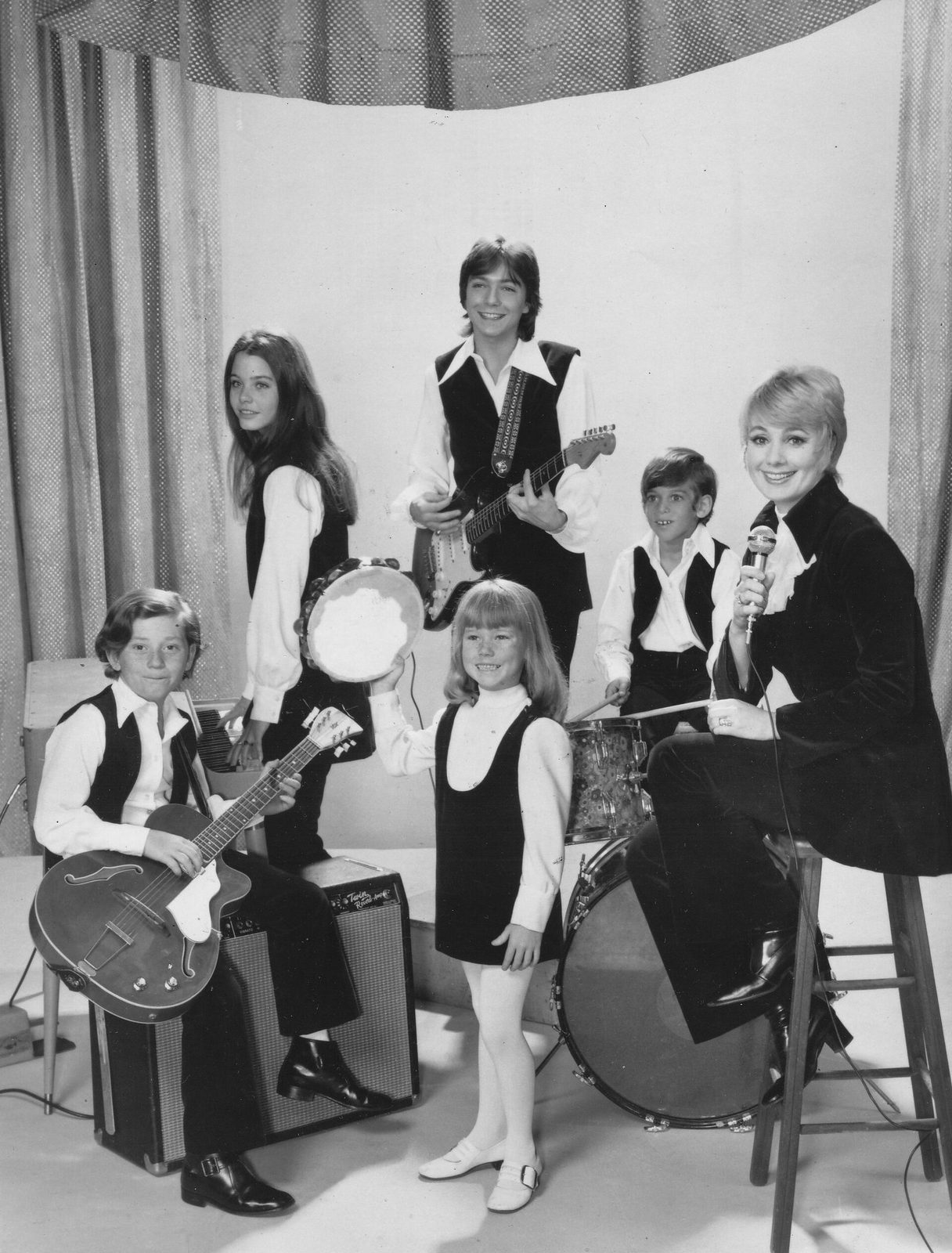
The role was Keith Partridge, the eldest son in a family band on The Partridge Family, a sitcom built loosely on the real-life Cowsills and intended at first as a vehicle for Shirley Jones. Jones played Shirley Partridge, a widow with five children who form a pop-rock group and travel in a psychedelic bus. Cassidy played her eldest son, and the show's producers had no idea, at the auditions, that the lead actress and the young actor reading for the lead guy were stepmother and stepson. By the time he was 20, Cassidy was one of the most recognizable television and music stars in the world, even though, as his obituaries noted, he had never sung publicly until he became Keith Partridge.
Keith Partridge and Overnight Fame
The Partridge Family aired from 1970 to 1974, and its success was immediate and enormous. The single I Think I Love You reached number one, the albums sold in the millions, and Cassidy, with his glowing, boyish good looks, became the object of a devotion that had a name: Cassidymania. Fans ripped his clothes, took rooms next door to his in hotels, and slipped notes under his door all night. He told one interviewer in 1972 that it was cute when fans got flustered, but no fun when they would not leave him alone, and told another that he was exploited by people who put him on the back of cereal boxes, so that he could not even eat breakfast without seeing his own face.
The fame was also, from the start, a family business with complications. His stepmother was his co-star and his television mother, his father was a famous actor with his own troubles, and the boy at the center of it all was barely out of his teens. He earned millions during the show's four-year run, and he spent much of it trying to be taken seriously as a musician while the industry treated him as a product. The tension between the idol and the person would shape the rest of his life.
Cassidymania
As a solo artist, Cassidy was even bigger than the show. Cherish reached number nine in the United States, number two in the United Kingdom, and number one in Australia and New Zealand, and he released 14 albums over the course of his career, touring the globe with sold-out concerts. For a period he was described as the highest-paid entertainer in the world. He played stadiums, including dates at the Houston Astrodome in 1972 and Wembley in 1973, and the crowds were so large, and so young, and so desperate to get close to him, that the concerts themselves became dangerous. The danger was not theoretical. It arrived, all at once, on a night in London in 1974.
The scale of it is hard to grasp now. Teen idols before him had been mobbed, but Cassidy was mobbed on a global scale, in an era before security planning had caught up with pop hysteria. Girls fainted, barriers broke, and the shows became exercises in crowd control as much as music. He was 24 years old, rich, famous, and exhausted, and he had already begun to understand that the thing making him famous was also making him a prisoner.
The Night That Haunted Him
On May 26, 1974, at the penultimate show of a world tour at London's White City Stadium, nearly 800 people were injured in a stampede at the front of the stage. Thirty were taken to the hospital, and a 14-year-old girl, Bernadette Whelan, died four days later at London's Hammersmith Hospital without regaining consciousness. A deeply affected Cassidy faced the press, trying to make sense of what had happened. Out of respect for the family, and to avoid turning Whelan's funeral into a media circus, he did not attend the service. He spoke privately to her parents and sent flowers, and he said at the time that the girl's death would haunt him until the day he died.
It did. In every interview afterward, the stampede sat underneath the conversation, the moment when the fantasy curdled. Cassidy never blamed his fans, and he never pretended the show had been safe. But the guilt, and the knowledge that his fame had literally killed someone, stayed with him, and it colored the way he talked about his career for the rest of his life. He had wanted to be a musician. He had become a hazard.
After the Partridge Bus Stopped
After the series ended its 96-episode run, Cassidy's life went, in the words of one hometown profile, downhill. He continued to act in theater and television, with guest roles on Malcolm in the Middle and CSI, and he kept touring as a singer, but the multimillionaire of the early 1970s dissipated his fortune through depression, financial problems, and drug and alcohol abuse. He married three times: Kay Lenz (1977-1983), Meryl Tanz (1984-1987), and Sue Shifrin (1991-2016). His daughter, actress Katie Cassidy, was born in 1986 from a relationship with fashion model Sherry Williams and raised by her mother and stepfather; his son Beau was born to Shifrin. He lived for a time in Ridgefield, Connecticut, in the mid-1990s, then moved to Fort Lauderdale, Florida, in 2002, where he would spend his final years.
The troubles were public and persistent. He was arrested three times for driving under the influence between 2010 and 2014, was ordered into rehabilitation in 2014, and filed for bankruptcy in 2015. He told interviewers he had given up drinking, and he told his family the same. The drinking, as he would later admit, had not stopped, and neither had the sadness and emptiness he said he was covering up. By 2017 he was 67, estranged from Katie as of February of that year, and still performing, still trying to be the singer he had been at 20.
The Dementia Announcement and the Retraction
On February 20, 2017, following a performance in Agoura Hills, California, in which he had difficulty remembering the lyrics of songs he had been performing for nearly 50 years and appeared to fall off the stage, Cassidy announced that he was living with dementia and was retiring from all further performing. He said his mother and grandfather had also suffered from dementia at the end of their lives, and told People magazine: I was in denial, but a part of me always knew this was coming. The announcement was reported around the world, and it reframed his final performances as the brave farewell of a man losing his mind.
Later in 2017, after falling ill at a recording studio and being hospitalized, Cassidy told an A&E producer a different story. He said he had just met with his doctor, that he had liver disease, and that his life had changed dramatically. He said he had been unconscious and near death for the first few days after the incident, but that his memory had returned. He acknowledged that there was no sign of dementia at that stage of his life, adding that it was complete alcohol poisoning, and that he had lied about his drinking. You know, I did it to myself, man, he said. I did it to myself to cover up the sadness and the emptiness. This article reports both statements, in his own words, and draws no medical conclusion about which account was correct. What is certain is that by November 2017 he was critically ill, and that the argument about his mind had become, tragically, beside the point.
The Songs That Outlived the Hysteria
Strip away the screaming crowds and what remains is a run of pop records that has never really gone away. I Think I Love You reached number one, Cherish reached number nine in the United States, number two in the United Kingdom, and number one in Australia and New Zealand, and across his career Cassidy released 14 albums. The Partridge Family still turns up in reruns, and the songs still play on oldies radio, carried by listeners who first heard them as teenagers and never let them go. Cassidy kept touring as a singer long after the television show ended, performing those songs for nostalgia audiences who knew every word. The hysteria faded, as hysteria always does. The melodies, simpler and sturdier than the frenzy around them, did not.
His Death and Legacy
On November 18, 2017, Cassidy was hospitalized with liver and kidney failure and placed in a medically induced coma. He came out of the coma two days later, remaining in critical but stable condition, while doctors hoped to keep him stable until a liver became available for transplant. He died of liver failure on November 21, 2017, at the age of 67, in Fort Lauderdale. His family said he died surrounded by those he loved, with joy in his heart and free from the pain that had gripped him for so long. His daughter Katie, who had been with him before his death despite their estrangement earlier that year, said his final words were: So much wasted time.
What he left behind is complicated, and that is the point. There is Keith Partridge, still rerun, still beloved, a character who made millions of teenagers happy. There is Cherish and I Think I Love You, still on oldies radio. There is the stampede, the guilt, the addiction, the bankruptcy, and the final year in which he told two different stories about his own mind. And there is the man himself, who once said he had never sung publicly until television made him a star, and who spent forty years trying to prove he was more than the poster on the wall. He was, and the proof is in the songs, which outlived the hysteria that made them famous.
Frequently asked questions
What happened to David Cassidy?
David Cassidy died on November 21, 2017, in Fort Lauderdale, Florida, at age 67, of liver failure after being hospitalized with liver and kidney failure. His family said he died surrounded by those he loved.
What was David Cassidy famous for?
He played Keith Partridge on The Partridge Family (1970-1974) and became a global teen idol, with the number-one single I Think I Love You and the solo hit Cherish.
Did David Cassidy have dementia?
He announced in February 2017 that he was living with dementia and retiring. Later that year he told an A&E producer there was no sign of dementia at that stage of his life and that his problems were alcohol poisoning and liver disease. This article reports both of his statements and draws no medical conclusion.
What happened at David Cassidy's 1974 London concert?
On May 26, 1974, at White City Stadium, a stampede injured nearly 800 people, and 14-year-old Bernadette Whelan died four days later. Cassidy said her death would haunt him until the day he died.
Who were David Cassidy's wives?
He married three times: Kay Lenz (1977-1983), Meryl Tanz (1984-1987), and Sue Shifrin (1991-2016). His children are actress Katie Cassidy and his son Beau.
What were David Cassidy's final words?
According to his daughter Katie Cassidy, his final words were: So much wasted time.
Was David Cassidy related to Shirley Jones?
Yes. Shirley Jones, who played his mother on The Partridge Family, was his real-life stepmother: his father Jack Cassidy married Jones in 1956.
What was David Cassidy's biggest solo hit?
Cherish, which reached number nine in the United States, number two in the United Kingdom, and number one in Australia and New Zealand.
Sources
- EN WikipediaBiography, Partridge Family, stampede, dementia statements, death
- Associated PressDeath at 67, family statement, organ failure, dementia announcement
- NPR via KSUTDeath, liver failure, Cherish chart positions, career
- Entertainment TonightFamily statement, Cherish, 14 albums, later TV roles