What Happened to David Caruso?
The Golden Globe Years: Detective John Kelly
David Caruso was born January 7, 1956, in Forest Hills, Queens, New York, and worked his way up through bit parts in the early 1980s - including a small role as a deputy in First Blood (1982) - before landing the role that made him a star. In 1993, he was cast as Detective John Kelly on ABC's gritty new police drama NYPD Blue, and the chemistry with the show was immediate. Caruso's Kelly was intense, physical, and magnetic, and in 1994 he won the Golden Globe for Best Actor in a Television Drama. The show itself was a cultural phenomenon, winning a stack of Emmys and pulling in an audience that made Caruso one of the most talked-about actors on television. But Caruso was restless almost from the start. He clashed with the show's famously demanding production, and the tension behind the scenes became one of TV's worst-kept secrets. Showrunner Steven Bochco later wrote in his memoir that Caruso's behavior on the set was, in his words, 'cancerous' - emotionally unavailable, demanding exorbitant salary raises, unusual schedules, and lavish accommodations. Caruso has never fully addressed the characterization, but the outcome is undisputed: in 1994, just four episodes into the show's second season, he quit the biggest hit on television to become a movie star.
The Flop Era: Kiss of Death and Jade
The movie career Caruso walked away from NYPD Blue for never materialized. His first big swing, the 1995 crime drama Kiss of Death, underperformed, and the erotic thriller Jade (also 1995) was a genuine disaster with critics and audiences alike. Both films earned him Razzie nominations for Worst New Star, and TV Guide would later rank his NYPD Blue exit among television's biggest 'blunders.' There were bright spots - a strong turn opposite Christopher Walken in Abel Ferrara's King of New York (1990) and solid work in Mad Dog and Glory (1993) - but nothing that translated into a leading-man film career. By the late 1990s, Caruso was working in TV movies and small guest spots, a cautionary tale people trotted out whenever a TV star talked about quitting a hit show. The industry consensus was that he had blown it: he had walked away from one of the defining roles of 1990s television and had nothing to show for it. For most of a decade, David Caruso was a punchline about Hollywood hubris. What nobody expected was that he would get a second act that eclipsed the first.
The Comeback: Horatio Caine and the Sunglasses
In 2002, Caruso returned to television as Lieutenant Horatio Caine on CBS's CSI: Miami, and this time everything clicked. Caine was a procedural superhero: the grieving widower with the perfect one-liners, the slow walk, and - most famously - the sunglasses, which he would put on with surgical precision before delivering each episode's closing zinger. The show was an enormous hit, at one point reportedly the most-watched television series in the world, and Caruso appeared in all 232 episodes across 10 seasons. The 'sunglasses thing' became a meme before memes were an industry - parodied endlessly, most famously by Jim Carrey on the Late Show with David Letterman - and Caruso seemed to understand exactly what he was doing. In a crowded procedural landscape, he gave the show a hook, and it worked spectacularly well for a decade. He co-owned the South Miami clothing boutique Steam on Sunset during these years and reportedly earned around $375,000 per episode by the end of the run. Critics who had written him off after the NYPD Blue debacle had to admit the obvious: Caruso had pulled off one of the great career comebacks in TV history, becoming more famous as Horatio Caine than he had ever been as John Kelly.
The Second Exit: Walking Away in 2012
When CBS canceled CSI: Miami in 2012 after its 10th season - citing declining ratings and a bloated budget - Caruso did something remarkable: nothing. He didn't chase another series. He didn't launch into the aging-actor circuit of reality shows, direct-to-video action movies, or prestige cable cameos. He simply stopped. Years active on his professional biography read 1975-2012, and they have never been amended. He gave no farewell interview and announced no retirement; he just walked away from the business a second time, exactly as he had in 1994, except this time there was no comeback planned. People who followed his career closely describe it as a deliberate, almost philosophical exit: a man who had achieved fame, wealth, and creative satisfaction and decided he was done with the machinery. The contrast with his 1994 exit is striking. The first time, he left hungry, chasing something bigger. The second time, he left full. He had been working since the mid-1970s, had headlined two of television's biggest shows, and reportedly told friends he wanted a quieter life. The spotlight, which he had chased and conquered and then discarded twice, stayed off.
The Art Business: A Gallery in Westlake Village
Caruso's post-Hollywood life has been defined by one word: art. According to multiple reports, he transitioned into the art world as a dealer and gallery owner, operating a gallery space in Westlake Village, California, where he curated and sold contemporary works. Details are scarce because Caruso grants no interviews and maintains no public social media, but the art connection keeps surfacing in the few sightings that leak out. In April 2025, new photos captured him transporting vibrant paintings to his gallery, looking, as one outlet put it, 'unrecognizable' - fuller frame, casual clothes, long hair. By February 2026, reports had him again moving paintings, and in May 2026 he was spotted running errands in Sherman Oaks in sweatpants, Crocs, a fedora, and black sunglasses, his signature red hair worn long. One report noted that the Westlake Village gallery space closed in 2025, which may mean the art business has contracted to a more private operation. What is consistent across every sighting is the contentment: this is a man who looks, by all accounts, genuinely happy to be out of the suits and off the red carpets. He also previously dabbled in digital ventures, founding DavidCarusoTelevision.tv and LexiconDigital.tv.
The NYPD Blue Feud: Bochco's Memoir
The one piece of Caruso business that keeps resurfacing long after his retirement is the Steven Bochco memoir. The NYPD Blue co-creator's posthumous 2016 memoir painted an unflattering portrait of Caruso's 1993-94 stint: emotionally unavailable, prone to shutting down in conversations, swinging between moods, and making what Bochco described as over-the-top demands on salary, scheduling, and accommodations as part of what Bochco interpreted as a strategy to alienate colleagues and force his own exit. The account gets revived in retrospectives every few years, and Caruso has never mounted a detailed public rebuttal - consistent with his post-2012 policy of silence. What is verifiable is the tension itself: Caruso's departure after four episodes of season 2 was abrupt and messy by any measure, and his replacement storyline - Jimmy Smits as Detective Bobby Simone - had to be engineered in a hurry. Whether Bochco's characterization was fair or a score-settling memoirist's exaggeration is not something either man is around to litigate anymore. What matters for the story of David Caruso is that the feud, real or inflated, explains the first exit - and the second exit, from CSI: Miami, had no feud at all. He just left.
Family Life: Three Children
Caruso's private life has been as drama-filled at times as his on-screen personas. He has been married three times: to Cheri Maugans (1979-1984), to actress Rachel Ticotin (1984-1987), with whom he has a daughter, Greta, and to Margaret Buckley (1996-2007). He has two younger children, son Marquez and daughter Paloma, with former girlfriend Liza Marquez - the relationship with whom was complicated by a 2009 lawsuit she filed against him. In the years since CSI: Miami ended, Caruso has focused on family life away from the cameras, spending time with his children and maintaining the privacy that fame never allowed him. The rare family sighting - a 2017 public appearance with his children was one of the first after his retirement - shows a man who guards his personal life fiercely. Friends describe the priorities of his second act as family and art, in that order: the two things that the grueling schedule of a network television lead had squeezed out for decades. If there is a throughline in the Caruso story, it is a man repeatedly choosing to walk away from the biggest stages in entertainment in favor of the life happening off-camera.
Where Is David Caruso Now? (October 2026)
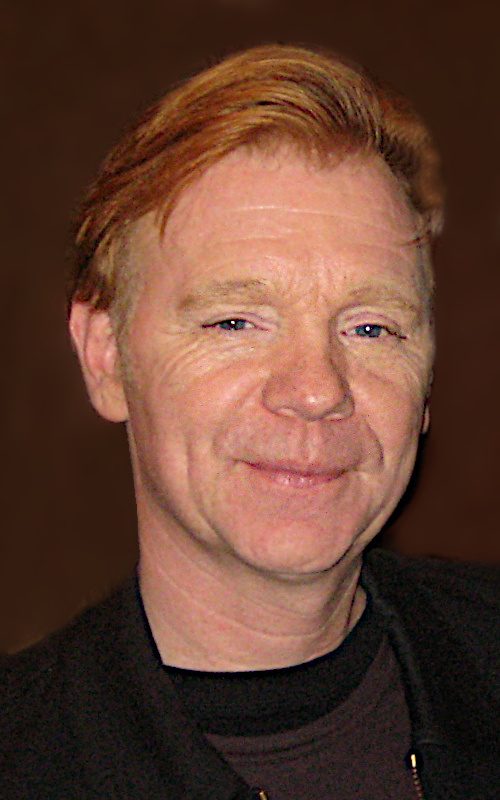
As of October 2026, David Caruso is 70 years old and living a low-profile life in Southern California, focused on the art business and his family. He has not acted since CSI: Miami aired its final episode in 2012, has no announced projects, no public social media accounts, and gives no interviews. He surfaces only in paparazzi sightings - the May 2026 Sherman Oaks photos being the most recent widely reported - which consistently show a man at peace with his disappearance from public life: casual clothes, long hair, no entourage, running ordinary errands like anyone else. His legacy, meanwhile, has settled into two indelible poles. For the 1990s generation, he is Detective John Kelly, the Golden Globe-winning performance he walked away from. For the 2000s generation, he is Horatio Caine - the sunglasses, the one-liners, the most-watched procedural hero in the world - a character so iconic it became a meme, a catchphrase, and a permanent fixture of pop culture. Very few actors get to define two separate television eras and then, at the peak of the second, simply stop. David Caruso did it twice, and the silence since 2012 is, in its own way, the most Caruso move of all.
Frequently asked questions
What is David Caruso doing now?
As of October 2026, David Caruso lives privately in Southern California and works in the art business, having operated a gallery space in Westlake Village. He retired from acting when CSI: Miami was canceled in 2012 and has taken no film or TV roles since. He is occasionally photographed on rare public outings - most recently in 2026 - but maintains no public social media and gives no interviews.
Why did David Caruso leave NYPD Blue?
Caruso quit NYPD Blue in 1994, just four episodes into its second season, to pursue a movie career. He had won the Golden Globe for playing Detective John Kelly and was one of the biggest stars on television, but he clashed with the show's production and wanted to become a film leading man. The exit was abrupt and messy, and showrunner Steven Bochco later described Caruso's on-set behavior as difficult in his memoir.
Did David Caruso retire from acting?
Effectively, yes. After CSI: Miami ended its 10-season run in 2012, Caruso never took another acting job. He announced no formal retirement and gave no farewell interview - he simply stopped. His listed years active remain 1975-2012. He has made no returns to acting, not even cameos, in the 14 years since.
What happened to David Caruso's movie career?
It never took off. After leaving NYPD Blue, Caruso starred in Kiss of Death (1995) and Jade (1995), both of which flopped and earned him Razzie nominations for Worst New Star. His strong earlier work in King of New York (1990) and Mad Dog and Glory (1993) was not enough to establish him as a film star. The failure sent him back to television, where CSI: Miami (2002-2012) became his greatest success.
What is David Caruso's art business?
Caruso moved into the art world after retiring from acting, working as an art dealer and operating a gallery space in Westlake Village, California, where he curated contemporary works. Reports in 2025 and 2026 described him transporting paintings to the gallery. One report noted the Westlake Village space closed in 2025, suggesting the operation may now be more private. Details remain scarce because Caruso grants no interviews.
Is David Caruso married?
David Caruso has been married three times - to Cheri Maugans (1979-1984), actress Rachel Ticotin (1984-1987), and Margaret Buckley (1996-2007). He has three children: daughter Greta with Ticotin, and son Marquez and daughter Paloma with former girlfriend Liza Marquez.
What does David Caruso look like now?
Recent paparazzi photos from 2025 and 2026 show Caruso, now 70, looking very different from the tailored Horatio Caine: long red hair, a fuller frame, and casual outfits of sweatpants, t-shirts, and Crocs, sometimes with a fedora. Outlets have described him as 'unrecognizable,' though fans generally reacted with support, saying he looked like a man happy to be out of the spotlight.
What were David Caruso's most famous roles?
His two defining roles were Detective John Kelly on NYPD Blue (1993-1994), for which he won the 1994 Golden Globe, and Lieutenant Horatio Caine on CSI: Miami (2002-2012), appearing in all 232 episodes. He also had early film roles in First Blood (1982), King of New York (1990), and Mad Dog and Glory (1993).
Sources
- David Caruso - WikipediaWikipedia
- David Caruso Rare Public Appearance in Sherman Oaks (2026)Sinergia News
- Why the Sunglasses King Left Hollywood BehindWinter Cycling Congress
- CSI Star Appears Unrecognizable in Rare Los Angeles SightingEl-Balad