What Happened to Cloris Leachman, Phyllis?
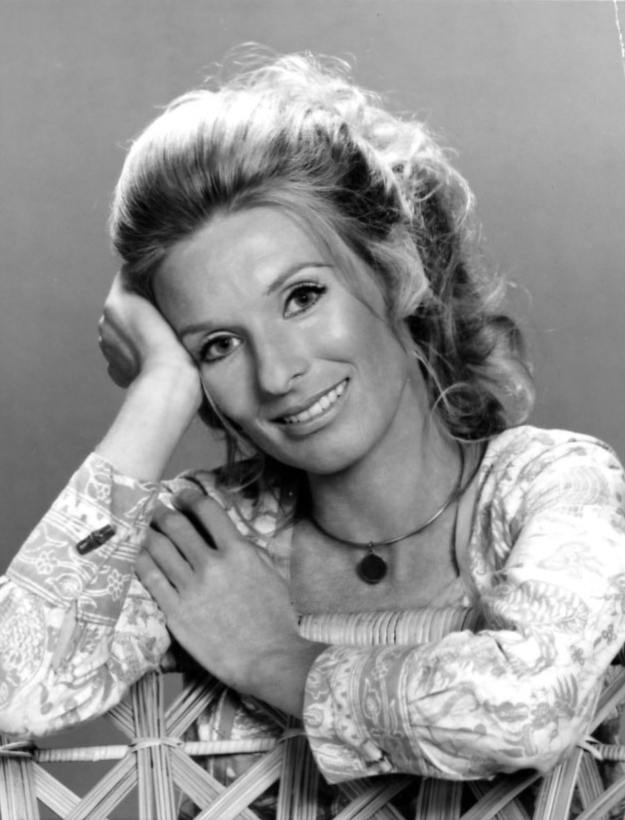
A Des Moines Girl With Big Plans
Cloris Leachman was born on April 30, 1926, in Des Moines, Iowa, the eldest of three daughters, and she grew up knowing she wanted to perform. She studied drama at Northwestern University, then moved to New York, where she joined the Actors Studio and began working on stage, and in 1946 she won the Miss Chicago title and competed in the Miss America pageant, a detour that gave her a taste of national attention before her acting career had properly begun. Her film debut came in 1947 in Kiss of Death, a small role in a hard-boiled noir, and she spent the next two decades building the kind of career that character actors dream of: Broadway, live television, guest spots on the best shows of the era, and a reputation among directors as a performer who could do anything, from tragedy to farce, without ever repeating herself.
Television audiences first got to know her in the late 1950s, when she played Ruth Martin on Lassie from 1957 to 1958, and in 1961 she gave one of the most memorable guest performances in the history of The Twilight Zone, playing the mother of the monstrous child Anthony in the episode It is a Good Life, a role that showed she could be funny and frightening in the same breath. She worked constantly through the 1960s, in westerns and dramas and comedies, in films such as Butch Cassidy and the Sundance Kid, and she was, by 1970, a respected veteran with an Actors Studio pedigree and almost no public fame. That changed with a single audition, for a new sitcom about a single woman in Minneapolis, and a character who was meant to be a minor neighbor.
Phyllis Lindstrom, 1970 to 1975
The Mary Tyler Moore Show premiered in 1970, and Leachman played Phyllis Lindstrom, Mary Richards snobbish, self-absorbed and interfering friend and downstairs neighbor, a woman who delivered every line as if it were a judgment and who became, almost immediately, the funniest person on the show. Phyllis was a marvel of comic writing and comic acting: vain, competitive, endlessly certain of her own superiority, and yet somehow lovable, because Leachman played her with total commitment and not a trace of apology. She won the Emmy for Outstanding Supporting Actress in a Comedy in 1974 and again in 1975, and when she left the show in 1975, it was to star in her own spin-off, Phyllis, in which her character moved to San Francisco after her husband died. The spin-off ran for two seasons, from 1975 to 1977, and won her the Golden Globe for Best Actress in a Television Comedy.
Phyllis made Leachman a star at 44, an age when Hollywood usually stops noticing actresses, and it also made her a target: she was so good as the character that producers kept offering her variations on the same woman, and she spent years turning them down. She had already won an Oscar by the time Phyllis ended, and she had a film career to protect, but the sitcom had given her something the films never had: a character the whole country recognized, a catchphrase-free fame built entirely on the precision of her timing. She never resented Phyllis, and she never tried to escape her, but she also never let the role define the rest of her working life, which would run for another four decades.
An Oscar and Frau Blucher
Leachman won the Academy Award for Best Supporting Actress for The Last Picture Show in 1971, playing Ruth Popper, the lonely, neglected wife of a high school football coach in a dying Texas town, a performance of such quiet devastation that it remains one of the great supporting turns in American film. Director Peter Bogdanovich cast her against type, trusting that the comic actress could find the tragedy in Ruth, and she did, in scenes of such stillness that audiences who knew her only as Phyllis barely recognized her. She also won the BAFTA for the role, and the Oscar changed her film career overnight, bringing her offers for serious dramatic work that she had never received before. Three years later she stole Young Frankenstein, Mel Brooks 1974 horror spoof, as Frau Blucher, the housekeeper whose very name made horses whinny, a performance so broad and so committed that it became one of the most quoted comic turns of the decade.
The two roles, Ruth Popper and Frau Blucher, taken together, explain Leachman better than any biography: she could be heartbreaking and hilarious, often in the same scene, and she refused to choose between the two. She worked steadily in films through the 1970s and 1980s, in comedies and dramas, in big studio pictures and small independent films, and she never stopped working on television, where the offers never stopped coming. She was, by the end of the decade, one of the most respected actresses in America, with an Oscar, a shelf of Emmys and a reputation for being impossible to cast badly, because whatever the part was, she would find the truth in it and then make it funny.
Malcolm, Raising Hope and the Longest Act
Leachman found her third great television role in 2000, when she joined Malcolm in the Middle as Grandma Ida, the boys terrifying, chain-smoking, Eastern European grandmother, a character she played until the show ended in 2006 and for which she won two more Emmy Awards, for guest actress in a comedy in 2002 and 2006. Ida was Phyllis with the volume turned up and the manners turned off, and Leachman played her with such gleeful malice that a new generation of viewers, who had never seen The Mary Tyler Moore Show, knew her as the scariest grandmother on television. Her ninth Emmy, the 2006 win for Ida, made her total nine, eight Primetime and one Daytime, more than any other female performer, a record that stood for years and that she wore lightly, joking that she had run out of shelf space.
She kept going after Malcolm, because stopping had never occurred to her. She competed on Dancing with the Stars in 2008 at 82, the oldest contestant the show had ever had, and she was inducted into the Television Academy Hall of Fame in 2011. From 2010 to 2014 she played Maw Maw, the senile great-grandmother, on the Fox comedy Raising Hope, and in her late eighties she joined the cast of American Gods as Zorya Vechernyaya, a Slavic goddess of the evening star, a role that showed she could still command a scene without saying very much at all. She published her memoir, Cloris, in 2009, co-written with her former husband George Englund, and she worked, in one form or another, until the year she died.
Five Children and a Marriage That Ended
Leachman was married once, to Hollywood producer and director George Englund, from 1953 to 1979, and the marriage produced five children: four sons, Adam, Bryan, George Jr. and Morgan, and one daughter, Dinah. Englund was the son of character actress Mabel Albertson and the nephew of actor Jack Albertson, and the couple met at the Actors Studio in New York, where they had both been studying. They were married for 26 years, raised their children in the middle of two busy careers, and divorced in 1979, but they remained on good terms, co-parenting their children and, decades later, collaborating on her memoir. Englund died in 2017, at 91, after complications from a fall.
The family knew tragedy as well as success. In 1986 Leachman son Bryan, an aspiring actor, died at 30, found dead in a room at a Manhattan YMCA, with police reporting that he had overdosed on medication prescribed for an ulcer. He left a wife, Pamela Pietri, and a one-year-old daughter, Portia. Leachman rarely spoke publicly about Bryan death, but friends said it marked her deeply, and she carried the loss through the rest of her life. She never remarried after Englund, and she was survived, at her death, by her four living children, Adam, George Jr., Morgan and Dinah, and by six grandchildren, a family that had watched her work, without stopping, for more than seventy years.
The Final Years in Encinitas
Leachman spent her final years at her home in Encinitas, in San Diego County, California, living quietly by the standards of a woman who had never been quiet on screen, and working when the work interested her. She was 94 and still recognizable everywhere she went, still funny in interviews, still refusing to behave like a retired legend, and her death, when it came, was gentle: she died in her sleep of natural causes on January 27, 2021, with her daughter Dinah by her side, as her publicist Monique Moss confirmed that day. Some outlets printed January 26 as the date, but the Associated Press, Entertainment Tonight and NPR all reported that she died on Wednesday, January 27, and this article follows that date. She was 94.
The tributes came from every corner of the business, from Mel Brooks, who had directed her as Frau Blucher, to the casts of the shows she had anchored, and they all said the same thing in different words: that she had been fearless, that she had been funny in a way nobody else was funny, and that she had worked longer and better than almost anyone in the history of television. She was cremated, and her family asked for privacy, and the obituaries that followed all began with the same list, because the list was the story: an Oscar, nine Emmys, a Golden Globe, a BAFTA, a career that had started in 1947 and had not really stopped until 2021.
What Happened to Cloris Leachman, in the End
So what happened to Cloris Leachman? She became Phyllis, she became Ruth Popper, she became Frau Blucher, she became Grandma Ida, and she kept becoming new people until she was 94, because she never believed an actress had a shelf life. She won an Oscar at 45, her ninth Emmy at 80, and she competed on a dance show at 82, and she did it all while raising five children, losing one of them, and staying, by every account, exactly herself: blunt, funny, tireless and impossible to embarrass. She died in her sleep at home in Encinitas on January 27, 2021, at 94, of natural causes, with her daughter beside her, and she left behind a body of work that runs from Kiss of Death to American Gods, from the Mercury Theatre tradition to the Fox comedy lineup, from the most serious drama to the broadest farce.
What remains is the record, and the record is unmatched: nine Emmy Awards, eight Primetime and one Daytime, an Academy Award, a BAFTA, a Golden Globe, and a place in the Television Academy Hall of Fame, all earned by a woman who started as a beauty queen from Des Moines and ended as one of the most honored performers in the history of the medium. Phyllis Lindstrom is still snobbish in reruns, Frau Blucher still makes the horses whinny, Grandma Ida still terrifies the boys on Malcolm in the Middle, and Ruth Popper still breaks hearts in The Last Picture Show, and none of them would exist without the actress who played them all and never once played the same woman twice.
Frequently asked questions
What happened to Cloris Leachman?
Cloris Leachman died on January 27, 2021, at her home in Encinitas, California, at 94, in her sleep of natural causes, with her daughter Dinah by her side. She had won an Oscar for The Last Picture Show and nine Emmy Awards, and she was still working in her nineties.
How many Emmys did Cloris Leachman win?
Nine in total: eight Primetime Emmy Awards and one Daytime Emmy Award. Some outlets print eight, counting only the Primetime wins. She won two Primetime Emmys for playing Phyllis on The Mary Tyler Moore Show and two more for playing Grandma Ida on Malcolm in the Middle.
What did Cloris Leachman win an Oscar for?
Best Supporting Actress for playing Ruth Popper, the lonely wife of a football coach, in The Last Picture Show (1971). She also won the BAFTA for the role.
Who was Cloris Leachman married to?
She was married once, to producer and director George Englund, from 1953 to 1979. They had five children: Adam, Bryan, George Jr., Morgan and Dinah. Her son Bryan died in 1986 at 30.
What was Cloris Leachman last TV role?
She played Maw Maw on Raising Hope from 2010 to 2014, and Zorya Vechernyaya on American Gods in her late eighties. She also competed on Dancing with the Stars in 2008 at 82.
Who did Cloris Leachman play on The Mary Tyler Moore Show?
Phyllis Lindstrom, Mary Richards snobbish, self-absorbed neighbor, from 1970 to 1975. She then starred in the spin-off Phyllis from 1975 to 1977, winning a Golden Globe for the role.
Was Cloris Leachman in Young Frankenstein?
Yes. She played Frau Blucher, the housekeeper whose name made horses whinny, in Mel Brooks 1974 film Young Frankenstein.
How old was Cloris Leachman when she died?
Ninety-four. She was born April 30, 1926, in Des Moines, Iowa, and died January 27, 2021, in Encinitas, California.
Sources
- EN WikipediaBirth, Phyllis role, Oscar, nine Emmys, marriage, children, death
- Television AcademyEight Primetime Emmys and one Daytime Emmy, Hall of Fame 2011, Phyllis role
- Entertainment TonightDeath January 27, 2021, natural causes, Encinitas, daughter Dinah by her side