What Happened to Charlton Heston, Actor?
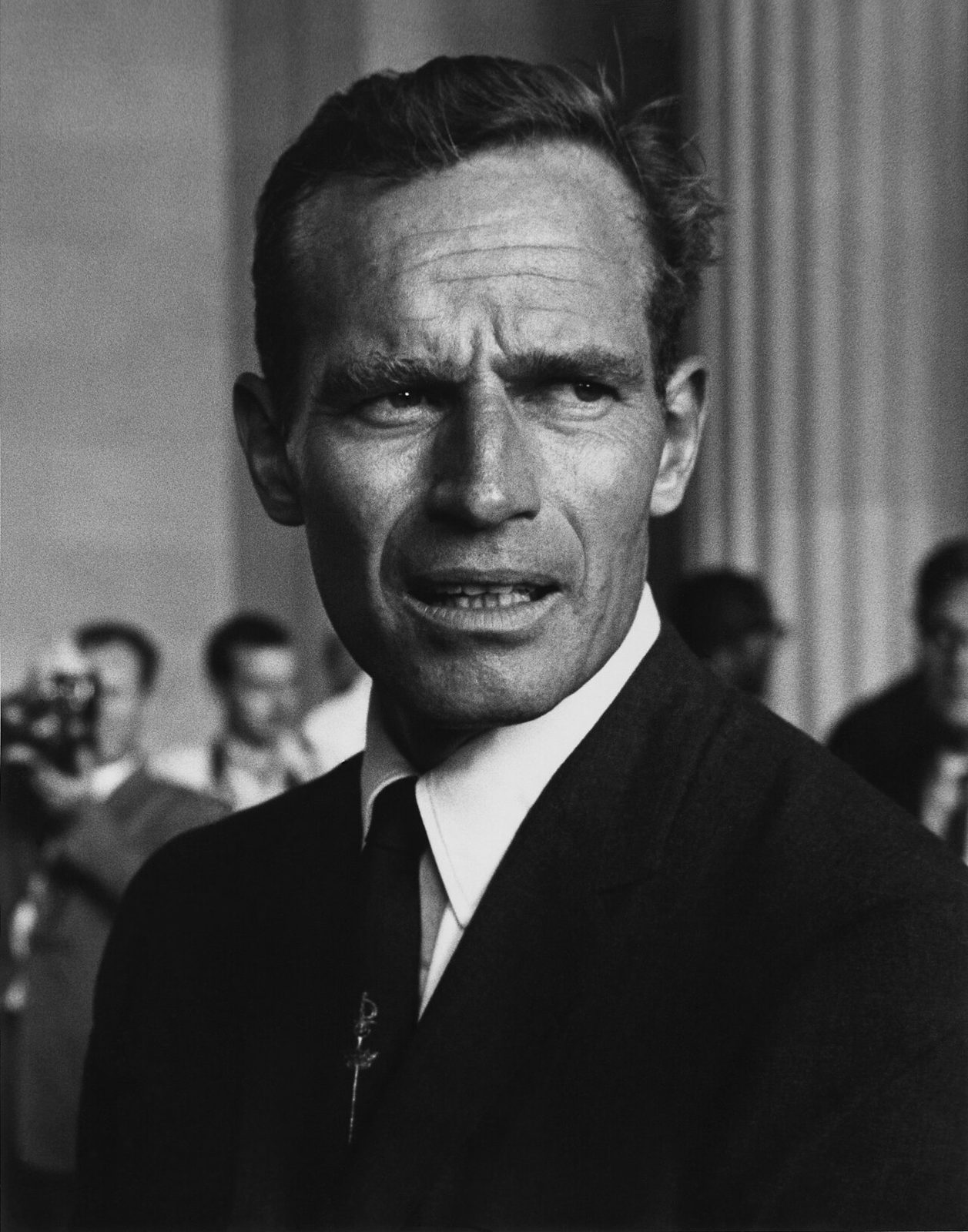
John Charles Carter of Evanston
Charlton Heston was born John Charles Carter on October 4, 1923, in Evanston, Illinois, a Chicago suburb, and he was raised in the Michigan lumber country around St. Helen, where his stepfather ran a lumber business and the boy grew up outdoors, tall and broad-shouldered, with the chiseled jaw and resonating voice that would later make him the natural choice for every heroic figure Hollywood could imagine. He took his stage name from his mother's maiden name, Charlton, and his stepfather's surname, Heston, and he won an acting scholarship to Northwestern University in 1941, where he met Lydia Clarke, the actress he would marry in 1944 and stay married to for sixty-four years, until his death.
He served three years in the Air Force during the Second World War, and after the war he worked in radio and on the stage in New York, building the classical training that set him apart from the pretty boys of the studio system, and that made him, when Hollywood came calling, an actor who could carry a biblical epic on his shoulders and make it feel like history rather than costume. His first films were small, but his presence was not, and by the early fifties he was playing the leads in Cecil B. DeMille's The Greatest Show on Earth and in Secret of the Incas, and the epics had found their man.
Moses and the Ten Commandments
In 1956 Heston played Moses in DeMille's The Ten Commandments, the role that made him a star of the first rank, and the parting of the Red Sea became one of the most famous images in the history of the movies, and Heston's Moses, bearded and thunderous, became the image of the prophet for a generation of moviegoers who had never read the Book of Exodus and never needed to, because they had seen the film. His newborn son, Fraser Clarke Heston, played the infant Moses in the film, a piece of casting that tied the family to the epic in the most literal way, and that Heston remembered fondly for the rest of his life.
The Ten Commandments was the biggest film of its year, and it fixed Heston's screen identity for good, because after Moses, no one else could play the heroes of history, and Heston played them all, one after another, with the same gravity and the same voice, and the voice was the thing, because it was deep and certain, and it made even the most preposterous dialogue sound like scripture. He was, by the end of the fifties, the most bankable epic star in Hollywood, and the epics were the biggest business in Hollywood, and the two facts together made him, for a decade, one of the most famous men in America.
Ben-Hur and the Chariot Race
His greatest role came in 1959, when he played Judah Ben-Hur in William Wyler's Ben-Hur, a part that Marlon Brando, Burt Lancaster and Rock Hudson had all declined, and that Heston took on with the seriousness of a man who knew it was the role of his life. He rehearsed for two months for the chariot race, the furious, nine-minute sequence that remains the most famous action scene ever filmed, and he did much of the driving himself, and he joked afterward that he could not drive the chariot well, but that it did not matter, because MGM had guaranteed he would win the race. The film won eleven Academy Awards, a record that stood for decades, and Heston won the Academy Award for Best Actor, the only competitive Oscar of his career.
Ben-Hur was the peak, and the peak was high, because the film was the most expensive Hollywood had ever made and the most successful, and Heston's Judah, a Jewish prince betrayed and enslaved and redeemed, was the performance that defined him, and that every obituary led with, and that every retrospective returned to. He also won a second Oscar later, the Jean Hersholt Humanitarian Award in 1977, for his charitable work, and the two Oscars together tell the story of the man, because one was for acting and the other was for the life he lived when he was not acting, and he took both seriously.
El Cid, Planet of the Apes and the Later Films
After Ben-Hur came El Cid in 1961, and The Big Country, and Touch of Evil, Orson Welles's noir in which Heston played a Mexican narcotics officer, and The Greatest Story Ever Told, in which he played John the Baptist, and the epics kept coming, because the audience kept coming, and Heston was the man they came to see. In 1968 he played the astronaut George Taylor in Planet of the Apes, a film that became a cultural phenomenon and a franchise, and he returned for its sequel, Beneath the Planet of the Apes, and the ape films gave him a second act in science fiction, alongside The Omega Man in 1971 and Soylent Green in 1973, both of them dystopian hits that kept him at the top of the box office into the seventies.
He worked steadily for another three decades, in more than one hundred film and television roles in all, with later appearances in True Lies, Armageddon and the animated Hercules, and his final film role came in 2003, when he played the war criminal Josef Mengele in My Father, Rua Alguem 5555, and voiced Ben-Hur in an animated version of the story, and the symmetry was fitting, because the last role and the first great role were the same man, and the circle closed. He also wrote several books, including The Actor's Life, Beijing Diary, the autobiography In the Arena, and To Be a Man, a collection of letters to his grandson, and the books were the record of a thoughtful man, not merely a famous one.
The Civil Rights March and the NRA
Heston's public life was as large as his screen life, because in 1963 he marched in Washington with Martin Luther King Jr., alongside Marlon Brando, James Garner and Burt Lancaster, and he was, in the sixties, a visible supporter of the civil rights movement, and he served as president of the Screen Actors Guild and as chairman of the American Film Institute, and he was, for a time, the liberal conscience of Hollywood, the epic star who put his fame behind the causes he believed in. The politics changed, as his politics did, and by the nineties he had become one of Hollywood's most prominent conservatives, and in 1998 he was elected president of the National Rifle Association, a post he held for five years, until he stepped down in April 2003.
His most famous moment as NRA president came at the 2000 convention, when he held a rifle above his head and told the crowd that it could be taken from his cold, dead hands, a line that became the defining image of the gun-rights movement and that his critics never forgave and his supporters never forgot. The arc from the civil rights march to the NRA presidency puzzled many observers, but Heston himself saw no contradiction, because he believed, in both cases, that he was defending a constitutional right, and the belief was sincere, and the sincerity was the thing that made him, even to his opponents, a formidable figure, a man who said what he believed and believed what he said.
Illness and the Long Goodbye
Heston was treated for prostate cancer in 1998, and the cancer went into remission, and he was treated for alcoholism in 2000, and the two illnesses were the first signs that the big man was mortal, and then, on August 9, 2002, he announced that he was experiencing symptoms consistent with Alzheimer's disease, and the announcement ended his career, because he retired from acting and from public life, and the retirement was total, and the goodbye was long. He received the Presidential Medal of Freedom in July 2003, the highest civilian honor in America, and the medal was the last public honor of his life, and he accepted it as a man who knew his time in the public eye was over.
His final public appearance came soon after, and then he withdrew to his home in Beverly Hills, where Lydia cared for him, and where the family guarded his privacy, and where the man who had played Moses and Ben-Hur and El Cid lived out his last years away from the cameras, and the privacy was the point, because he had always been a private man, and the private man wanted to be left alone, and the family honored that, and the honoring of it was the last act of a sixty-four-year marriage.
What Happened to Charlton Heston, in the End
So what happened to Charlton Heston? He was born John Charles Carter in Evanston, Illinois, in 1923, and he won an acting scholarship to Northwestern, and he served three years in the Air Force, and he married Lydia Clarke in 1944, and he played Moses in The Ten Commandments, and he played Judah Ben-Hur and won the Academy Award for Best Actor, and he played El Cid and George Taylor in Planet of the Apes, and he marched with Martin Luther King Jr. in 1963, and he was president of the Screen Actors Guild and chairman of the American Film Institute, and he was president of the National Rifle Association for five years, and he was treated for prostate cancer, and he announced in 2002 that he had symptoms consistent with Alzheimer's disease, and he received the Presidential Medal of Freedom in 2003, and he died on April 5, 2008, at 84, at his home in Beverly Hills, with Lydia at his side.
His family declined to state a cause of death, and the obituaries respected that, and later accounts have given pneumonia as the cause, and the article notes the later account without adopting it as certain, because the family's silence was deliberate, and the deliberateness deserves respect. He is survived by Lydia, by his son Fraser and his daughter Holly, and by his grandchildren, and he is buried in the columbarium of Saint Matthew's Episcopal Church in Pacific Palisades, California, and he is remembered as the epic star, the man who played the heroes of history, and who marched for civil rights, and who led the NRA, and who died, in the end, at home, with his wife of sixty-four years at his side, having lived one of the fullest lives in the history of Hollywood.
Frequently asked questions
What happened to Charlton Heston?
Charlton Heston died at his home in Beverly Hills, with his wife Lydia at his side. His family did not publicly disclose a cause of death, though later accounts have pointed to pneumonia.
What was Charlton Heston's most famous role?
He is best remembered as Judah Ben-Hur, the role that won him the Academy Award for Best Actor, and as Moses in The Ten Commandments, the part that made him a star.
Did Charlton Heston win an Oscar?
Yes, he won the Academy Award for Best Actor for Ben-Hur, and he later received a second Oscar, the Jean Hersholt Humanitarian Award, for his charitable work.
Was Charlton Heston in Planet of the Apes?
Yes, he played the astronaut George Taylor in the original film and returned for its sequel, and the ape films gave him a major second act in science fiction.
What was Charlton Heston's role in the civil rights movement?
He marched in Washington with Martin Luther King Jr., alongside fellow actors including Marlon Brando and James Garner, and he was a visible supporter of the movement in the sixties.
What did Charlton Heston say about the NRA?
As president of the National Rifle Association, he famously held a rifle above his head at a convention and said it could be taken from his cold, dead hands.
Was Charlton Heston married?
Yes, he was married to the actress Lydia Clarke for more than six decades, from their wedding until his death, and they had two children, Fraser and Holly.
What was Charlton Heston's last film role?
His final film role was playing Josef Mengele in a drama released in his last years, and he also voiced Ben-Hur in an animated version of the story.
Sources
- Legacy.comAP obituary: died April 5 2008 at home in Beverly Hills age 84, wife Lydia at his side, family declined to state cause, Ben-Hur Oscar, NRA president stepped down April 2003
- Simple WikipediaBorn John Charles Carter October 4 1923 Wilmette, died April 5 2008 Beverly Hills age 84, Ben-Hur, Planet of the Apes, Omega Man, Soylent Green, died of pneumonia, NRA president 1998-2003
- WikinewsDied April 5 2008 Beverly Hills, family did not state cause, diagnosed with Alzheimer's 2002, Ben-Hur won 11 Academy Awards, twice winner of an Academy Award